# Defeating Marine Diesel Overheating in South Florida
South Florida’s relentless heat and warm ocean waters create the perfect storm for marine diesel engine overheating. When ambient air temperatures regularly exceed 90°F and seawater temperatures hover between 80-85°F during summer months, your cooling system operates with minimal thermal margin. A marine diesel engine running at 180-195°F needs every component of its cooling system functioning flawlessly when the water you’re drawing for cooling is already at 82°F.
Overheating isn’t just an inconvenience—it’s one of the fastest ways to destroy a marine diesel engine that should last 40+ years with proper maintenance. Warped cylinder heads, blown head gaskets, seized pistons, and damaged turbochargers are expensive consequences of cooling system failures that proper preventive maintenance could have prevented.
Understanding Marine Diesel Cooling System Design
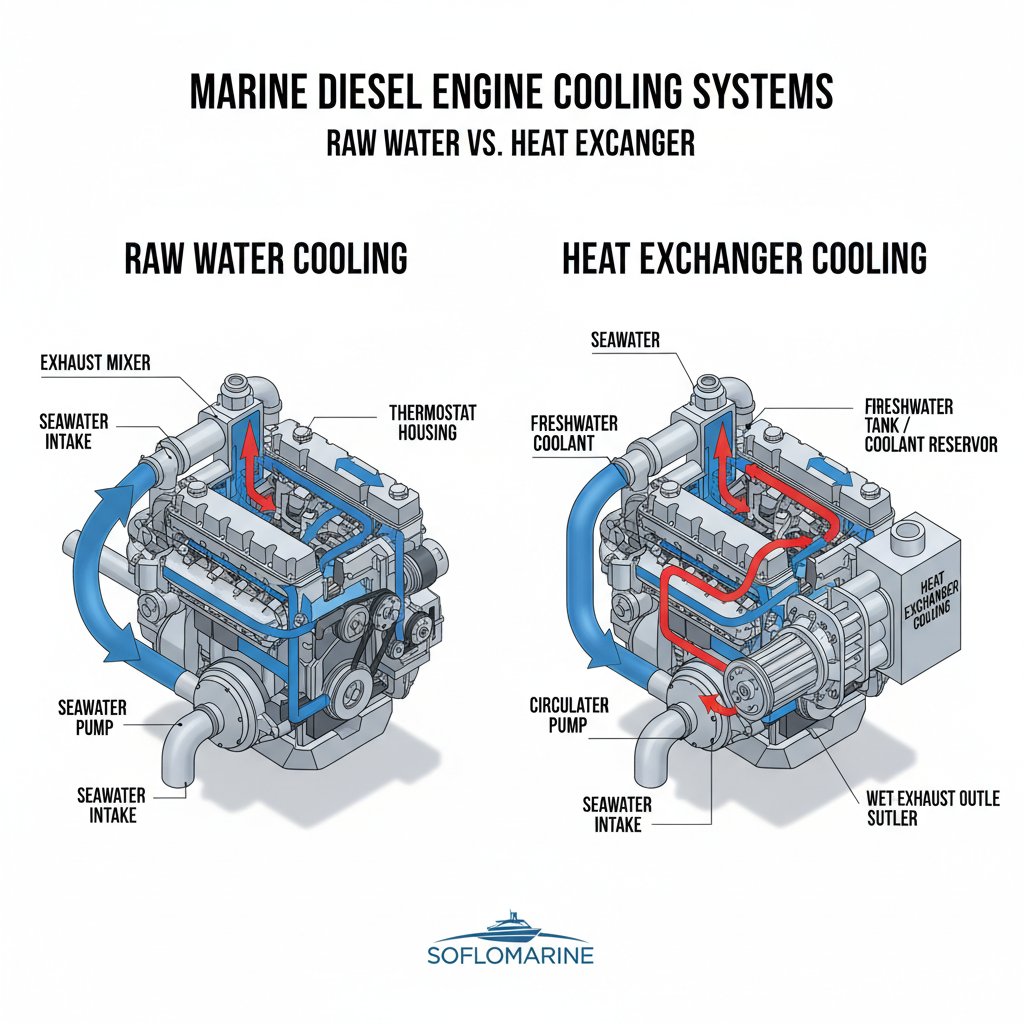
Most pleasure yachts and commercial vessels utilize raw water or heat exchanger cooling systems. Raw water systems pump seawater directly through the engine block, while heat exchanger systems use a closed freshwater loop cooled by seawater passing through a heat exchanger. Heat exchanger systems dominate modern installations on brands like Detroit Diesel/MTU, Northern Lights, Kohler, and Westerbeke because they provide better temperature control and reduce internal corrosion.
The cooling system performs several critical functions beyond preventing overheating. It maintains optimal combustion temperatures for fuel efficiency, prevents thermal stress on engine components, and ensures proper lubrication viscosity. When South Florida’s environmental conditions push these systems to their limits, any deficiency becomes immediately apparent.
Factory specifications for coolant flow rates, thermostat opening temperatures, and heat exchanger capacity are engineered with specific thermal margins. Detroit Diesel marine engines, for example, require precise coolant-to-water flow ratios that become critical when raw water temperatures exceed 80°F. Operating outside these parameters accelerates wear and reduces engine longevity dramatically.
Primary Causes of Overheating in Tropical Climates
Raw Water System Restrictions
The raw water intake system represents the most common failure point for overheating issues. Seacocks and strainers accumulate marine growth, plastic debris, and sediment that restrict flow. In South Florida waters rich with organic material, a strainer basket can become 50% blocked within weeks without regular cleaning.
Raw water pumps with worn impellers create the illusion of adequate flow while actually moving insufficient water volume. Rubber impeller blades become brittle in high heat, losing flexibility and pumping efficiency. A impeller operating at 70% efficiency might provide adequate cooling in 72°F water but fails completely when water temperatures climb to 84°F.
Seawater-cooled aftercoolers and heat exchangers develop scale deposits from minerals in seawater, particularly in South Florida’s waters. Calcium carbonate and other mineral buildup insulates heat transfer surfaces, progressively reducing cooling capacity. What begins as a barely noticeable temperature increase becomes a critical overheat condition within a single season.
Heat Exchanger Degradation
Heat exchanger tubes corrode and foul from both sides—scale on the seawater side and corrosion or deposits on the coolant side. Zinc pencil anodes protecting heat exchangers require replacement on schedule, typically every 400-600 hours depending on water conditions. When anodes deplete completely, galvanic corrosion attacks heat exchanger tubes directly.
Tube failures allow seawater to mix with engine coolant, reducing coolant effectiveness and introducing corrosive saltwater into the closed cooling system. Early detection through coolant testing and pressure checks prevents catastrophic engine damage from this common failure mode.
Comprehensive Marine Engine Preventive Maintenance
A proper yacht engine maintenance schedule tailored for South Florida conditions prevents the majority of overheating incidents. Factory-authorized service providers follow manufacturer-specific procedures that account for regional environmental factors.
Daily and Underway Checks
Before departing, verify raw water discharge from the exhaust. Reduced flow immediately indicates strainer blockage or impeller problems requiring attention before casting off. Engine room walk-throughs should include visual inspection of cooling system hoses for bulging, cracking, or weepage.
Monitor gauge temperatures during the first 20 minutes of operation when thermostats open and systems reach operating temperature. Temperature increases beyond normal ranges or fluctuating readings signal developing problems requiring professional boat diesel engine troubleshooting.
Scheduled Service Intervals
Every 50 hours or monthly, clean raw water strainers thoroughly and inspect impellers for damage. Replace impellers annually or every 500 hours as preventive maintenance regardless of apparent condition. Impeller failure often occurs without warning, and replacement cost is minimal compared to emergency service or engine damage.
At 250-hour intervals, verify coolant condition, strength, and pH levels. Coolant degrades from heat cycling and combustion gas contamination, losing its protective properties. Detroit Diesel marine service specifications require specific coolant formulations—substituting automotive antifreeze voids warranties and causes corrosion.
Annual comprehensive marine diesel engine service includes pressure testing the cooling system, inspecting heat exchangers for scale buildup, replacing zinc anodes, and checking thermostat operation. Heat exchanger cleaning requires factory-approved chemical treatments or mechanical cleaning to restore design heat transfer rates without damaging tubes.
MTU Marine Engine Service Considerations
MTU marine engines incorporate sophisticated electronic controls monitoring multiple temperature sensors. These systems provide early warning of cooling problems but require proper diagnosis with factory-level scan tools. MTU marine engine service demands specialized training—attempted diagnosis with generic tools misses critical data and leads to incorrect conclusions.
MTU specifications for coolant mixtures, flow rates, and temperature ranges are precise. The cooling systems on these high-performance engines operate with less thermal margin than older designs, making preventive maintenance absolutely critical in South Florida heat.
Recognizing Warning Signs Before Failure
Marine diesel engines communicate impending cooling problems through observable symptoms. Temperature gauge readings creeping upward over weeks indicate progressive restrictions or heat exchanger fouling. Sudden temperature spikes suggest thermostat failure, impeller disintegration, or catastrophic coolant loss.
Steam from the engine room, coolant odors, or visible leaks demand immediate shutdown and professional inspection. Continuing operation with coolant leaks causes air pockets in the cooling system, creating hot spots that warp cylinder heads even if gauge temperatures appear acceptable.
Reduced performance, excessive exhaust smoke, or unusual engine sounds accompanying temperature increases indicate overheating has begun damaging engine components. Immediate professional service may prevent minor damage from becoming complete engine failure requiring replacement.
Generator Set Cooling Challenges
Northern Lights, Kohler, and Westerbeke marine generators face identical cooling challenges as propulsion engines but often receive less attention. Generators enclosed in soundshields require adequate ventilation—restricted airflow compounds cooling problems from seawater system issues.
Generator maintenance schedules should mirror propulsion engine intervals. Because generators often run continuously during vessel occupancy in South Florida’s heat, they accumulate hours quickly. A generator supporting air conditioning in summer conditions may log 400 hours in a single season, requiring multiple service intervals.
When Professional Service Becomes Necessary
Certain cooling system problems exceed owner-operator capabilities and require factory-authorized expertise. Diagnosing intermittent overheating demands systematic testing of thermostats, flow rates, temperature sensors, and control systems. Specialized equipment measures actual coolant flow rates against specifications—guesswork leads to replacing components unnecessarily while missing actual problems.
Heat exchanger replacement, cylinder head removal, or turbocharger service following overheating damage requires precision following manufacturer procedures. Head bolt torque sequences, gasket types, and surface finish specifications are critical—improvisation guarantees repeat failures.
RPM Diesel’s 70-year history servicing marine diesel engines provides the depth of experience necessary for complex diagnostics. With parts in stock and factory authorization for Detroit Diesel/MTU, Northern Lights, Kohler, and Westerbeke, we eliminate delays waiting for components while ensuring OEM quality parts.
The Value of Factory-Authorized Service
Factory-authorized service centers maintain current technical information, specialized tools, and trained technicians following manufacturer procedures exactly. Software updates, technical service bulletins, and engineering changes are incorporated into service procedures—information unavailable to general repair facilities.
When cooling system repairs involve warranty claims, factory authorization ensures coverage. Unauthorized repairs or non-OEM parts void warranties, converting covered repairs into major out-of-pocket expenses.
Proper diagnosis prevents unnecessary parts replacement. A skilled technician identifies whether temperature problems stem from restricted seawater flow, air pockets in coolant, failing sensors, or actual overheating conditions. Each scenario requires different solutions—replacing parts randomly wastes money without solving problems.
Protecting Your Investment
Marine diesel engines represent substantial investments designed for decades of reliable service. A properly maintained Detroit Diesel or MTU engine delivers 40+ years of dependable operation. Neglecting cooling system maintenance in South Florida’s demanding environment cuts that lifespan dramatically while increasing operating costs from reduced efficiency and emergency repairs.
Preventive maintenance costs represent a fraction of repair expenses from overheating damage. Annual cooling system service totaling several hundred dollars prevents cylinder head replacement costing tens of thousands. The return on investment is undeniable.
Worldwide service capabilities ensure your vessel receives proper support wherever you cruise. Factory-authorized service networks provide consistent quality whether you’re in Fort Lauderdale, the Caribbean, or Mediterranean waters.
Take Action to Protect Your Marine Diesel Investment
South Florida’s heat challenges marine cooling systems daily. Establishing a comprehensive preventive maintenance program with a factory-authorized service provider protects your engine investment and ensures reliable operation when you need it most.
Don’t wait for temperature warning lights or gauge readings in the red zone. Schedule a comprehensive cooling system inspection and establish a customized yacht engine maintenance schedule based on your vessel’s specific equipment and operating conditions. Contact RPM Diesel today to discuss your marine diesel engine service needs and discover how proper maintenance ensures decades of reliable performance from your marine power systems.