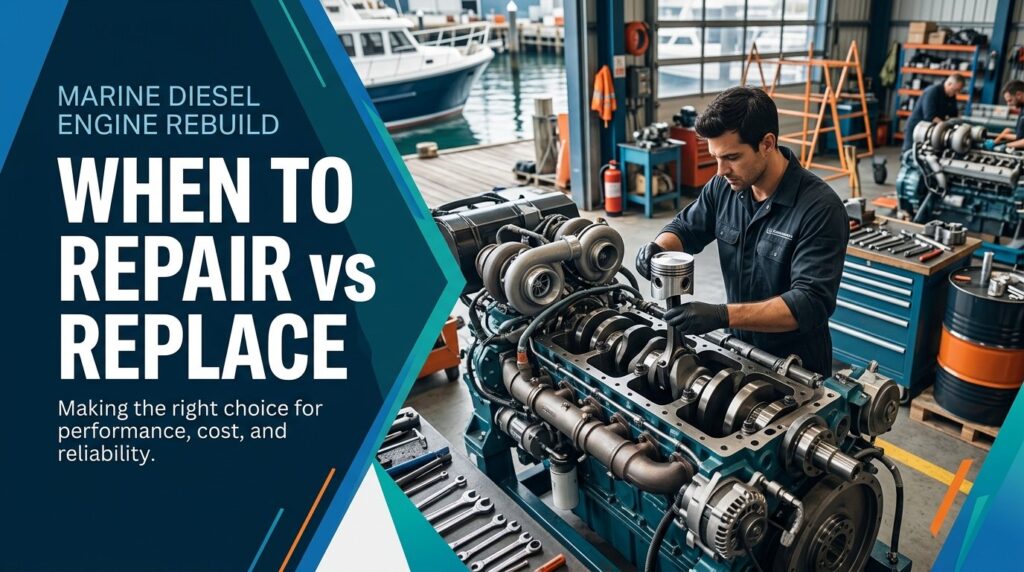
Every marine diesel owner faces this critical decision eventually: should you rebuild your engine or replace it entirely? With proper maintenance, marine diesel engines routinely deliver 40+ years of reliable service, but even the best-maintained powerplants eventually need major attention. The answer isn’t always straightforward, and making the wrong choice can cost you tens of thousands of dollars or leave you stranded at sea.
Understanding when a marine diesel engine rebuild makes financial and operational sense versus complete replacement requires examining multiple factors: engine condition, operational history, technological advancements, and your vessel’s intended use. This decision impacts not just your wallet but your vessel’s safety, reliability, and resale value.
Understanding Marine Diesel Engine Lifecycles
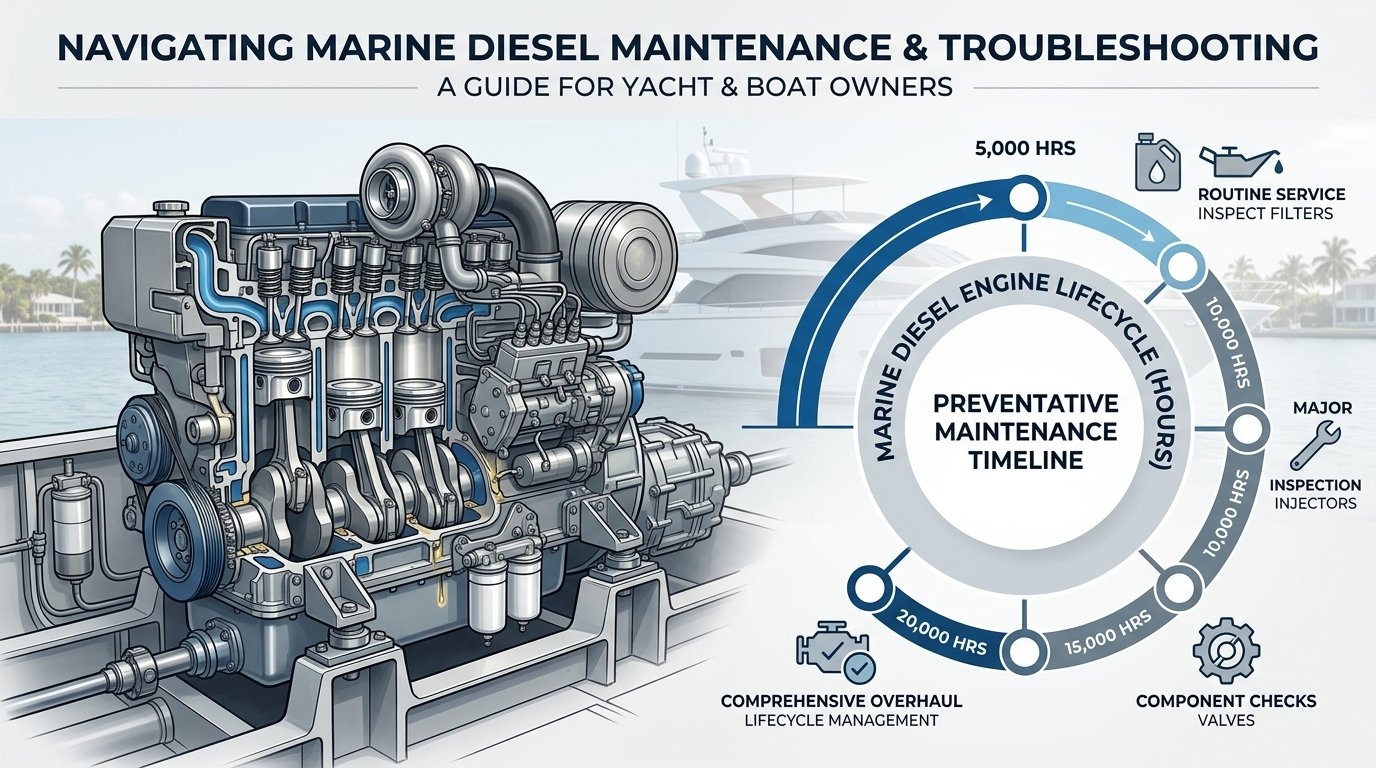
Marine diesel engines are built for longevity. Unlike automotive engines that might last 200,000 miles, properly maintained marine diesels from manufacturers like Detroit Diesel/MTU, Northern Lights, Kohler, and Westerbeke regularly exceed 15,000-20,000 operating hours. Commercial vessels with rigorous maintenance programs often see 30,000+ hours before major overhauls.
The key phrase here is “properly maintained.” Engines that receive factory-authorized service at manufacturer-specified intervals, use OEM parts, and operate within designed parameters reach these impressive lifespans. Those subjected to deferred maintenance, low-quality parts, or improper operating conditions deteriorate much faster.
A marine engine overhaul marine professionals perform typically involves rebuilding the engine to near-original specifications by replacing worn components, machining surfaces, and updating critical systems. This process essentially resets the engine’s operational life, providing another 10,000-15,000 hours of service when performed correctly.
Signs Your Engine Needs Professional Evaluation
Several indicators suggest your engine requires more than routine maintenance:
- Excessive oil consumption: Burning more than one quart per 50 hours indicates worn rings, cylinders, or valve guides
- Persistent overheating: When not resolved by cooling system service, suggests internal problems
- Loss of power: Difficulty reaching rated RPM or reduced cruising speed under normal load
- Metal in oil: Visible particles or high metal content in oil analysis results
- Excessive blow-by: Pressure escaping past piston rings into the crankcase
- Low compression: Readings below manufacturer specifications across cylinders
- Unusual noises: Knocking, rattling, or grinding sounds indicating bearing or component wear
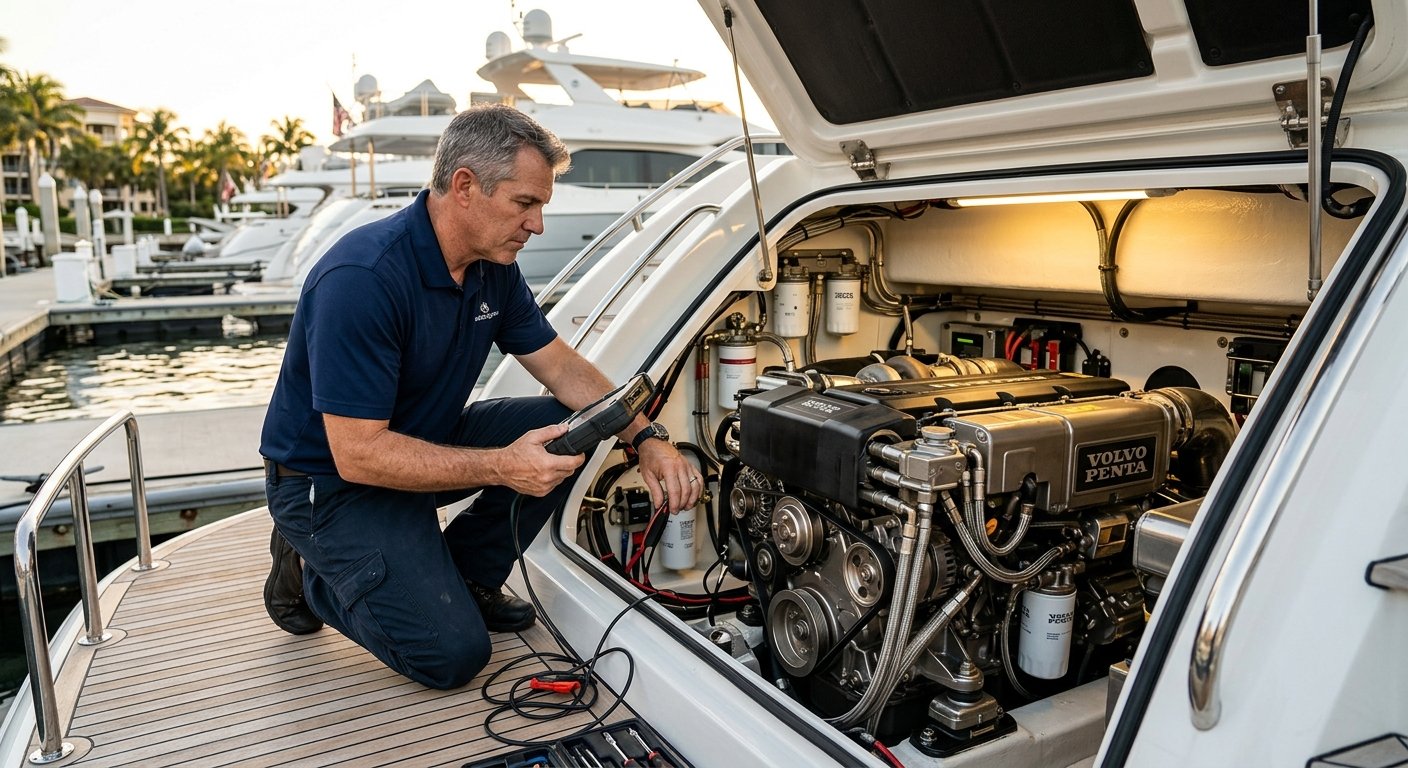
When you notice these symptoms, immediate professional diagnosis is critical. What starts as a repairable issue can quickly escalate into catastrophic failure requiring complete replacement. Factory-authorized service providers have the diagnostic equipment and technical knowledge to accurately assess engine condition and provide reliable recommendations.
The Case for Marine Diesel Engine Rebuild
A marine diesel engine rebuild makes excellent sense in several scenarios. When the engine block, crankshaft, and major castings remain in good condition, rebuilding costs typically run 40-60% less than replacement while delivering comparable performance and reliability.
Financial Advantages
Cost considerations extend beyond the immediate rebuild expense. A quality marine engine rebuild services package preserves your vessel’s original engine specifications, maintaining manufacturer certifications and warranty eligibility for new components. For Detroit Diesel marine engine repair or MTU marine engine repair, factory-authorized rebuilds use genuine OEM parts engineered specifically for marine environments.
Consider a typical scenario: replacing twin diesel engines on a 55-foot yacht might cost $150,000-$250,000 including engines, installation, controls, and associated systems. A comprehensive rebuild performed by qualified technicians typically costs $60,000-$100,000 for the same vessel, representing substantial savings while delivering reliable performance.
When Rebuilding Makes the Most Sense
Rebuilding represents the optimal choice when:
- The engine has fewer than 8,000-10,000 hours with good maintenance history
- Core components including block, heads, and crankshaft are within serviceable specifications
- No catastrophic failure has occurred (thrown rod, cracked block, etc.)
- Current engine meets your power requirements and operational needs
- Replacement would require significant modifications to engine room or systems
- The vessel itself has substantial remaining service life
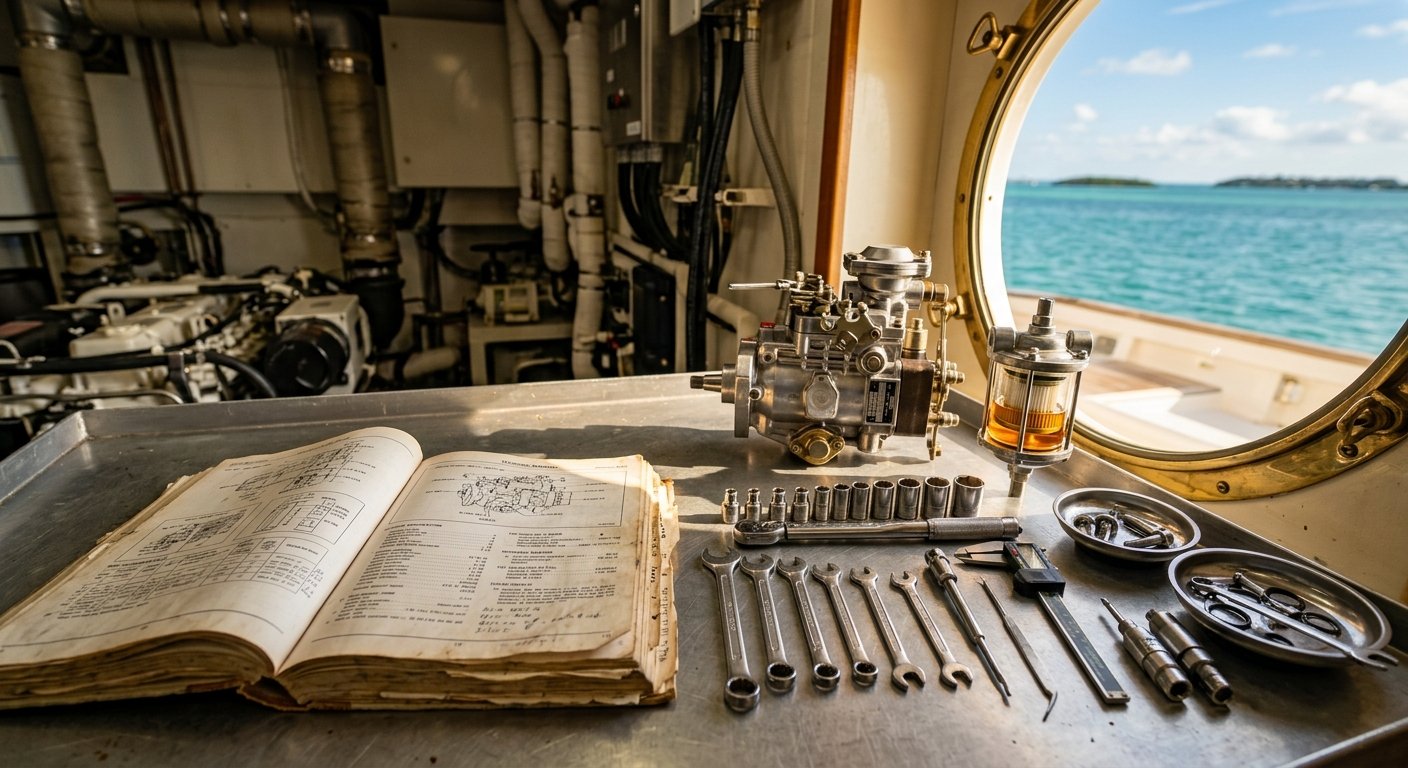
Modern boat diesel engine troubleshooting reveals that most wear occurs in predictable areas: cylinder walls, piston rings, bearings, and valve train components. These are precisely the elements addressed in a proper overhaul, using precision machining and OEM replacement parts to restore factory specifications.
When Replacement Becomes the Better Option
Despite the cost advantages of rebuilding, replacement sometimes represents the wiser long-term investment. Understanding when replacement makes more sense protects you from throwing good money after bad.
Catastrophic Damage
Certain failures compromise an engine beyond economical repair. A thrown connecting rod that cracks the block, severe overheating that warps heads beyond machining limits, or saltwater intrusion causing extensive corrosion throughout the engine often makes rebuilding financially impractical.
When catastrophic damage occurs, even if technically repairable, the costs approach or exceed replacement. Additionally, the structural integrity of heavily damaged engines remains questionable even after repairs, creating ongoing reliability concerns.
Technological Obsolescence
Marine diesel technology has advanced significantly in recent years. Modern engines deliver improved fuel efficiency, reduced emissions, quieter operation, and enhanced electronic monitoring. If your current engines date back 20-30 years, replacement provides access to these improvements.
Parts availability also factors into this decision. As engines age beyond 25-30 years, certain components become increasingly difficult to source, even from specialists maintaining comprehensive inventories. When critical parts require custom fabrication or extended lead times, operational reliability suffers.
Power and Efficiency Considerations
Vessel use changes over time. Perhaps you’re cruising longer distances, carrying heavier loads, or seeking better fuel economy. If your current engines no longer meet operational requirements, replacement with appropriately sized modern diesels makes more sense than rebuilding undersized or inefficient powerplants.
Contemporary engines offer remarkable efficiency improvements. A vessel burning 25 gallons per hour with 20-year-old engines might consume only 18-20 gallons per hour with current-generation power, saving thousands of dollars annually in fuel costs while reducing environmental impact.
The Hybrid Approach: Major Overhaul vs. Complete Rebuild
Not every situation requires choosing between full marine engine overhaul marine services and complete replacement. A “major overhaul” addresses specific problem areas while leaving sound components in place, reducing costs while extending service life.
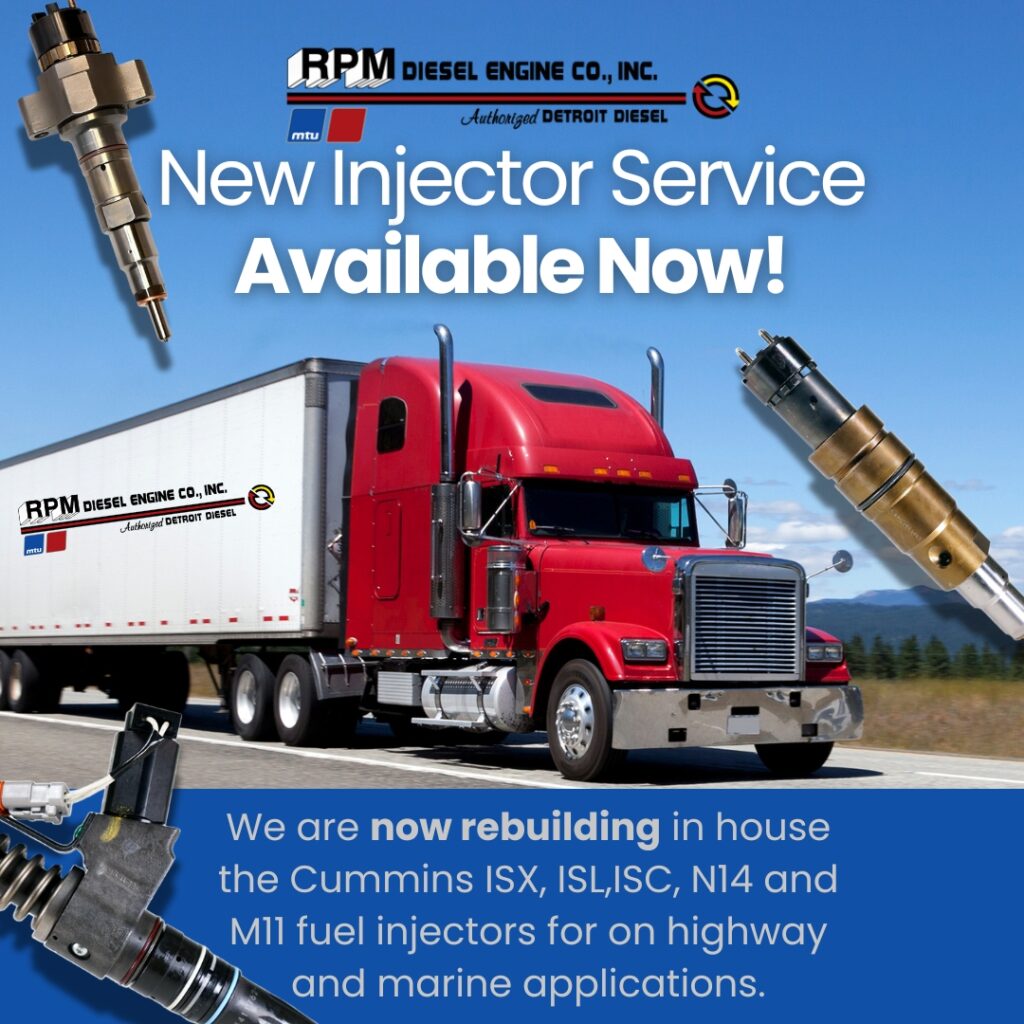
This approach works well when boat diesel engine troubleshooting identifies localized wear patterns. For example, cylinder work including new pistons, rings, and liner reconditioning might address power loss and oil consumption without requiring complete teardown. Similarly, fuel system rebuilds resolve injection issues without touching the bottom end.
Experienced technicians at factory-authorized facilities can accurately assess which components require attention and which retain adequate service life. This selective approach maximizes value while maintaining reliability.
Why Factory-Authorized Service Matters
Whether rebuilding or diagnosing for potential replacement, factory-authorized service providers offer critical advantages. Facilities with decades of specialized experience, comprehensive parts inventories, and manufacturer training deliver results that general marine mechanics simply cannot match.
For yacht engine repair Fort Lauderdale and surrounding areas, choosing specialists with proven track records on your specific engine brand ensures proper procedures, genuine parts, and warrantied workmanship. A facility with a deep parts inventory can complete projects without extended delays waiting for components.
Factory-authorized Detroit Diesel marine engine repair and MTU marine engine repair requires specialized diagnostic equipment, technical service bulletins, and trained technicians familiar with each model’s particular characteristics. Generic rebuild facilities lack these resources, often leading to repeated failures or incomplete repairs.
Making Your Decision: Key Questions to Ask
When facing the rebuild versus replace decision, ask your service provider these essential questions:
- What is the actual measured condition of core components (block, crank, heads)?
- What specific work does the rebuild include, and what warranty is provided?
- Are all replacement parts genuine OEM components?
- What is the realistic service life expectation after rebuild?
- How does rebuild cost compare to replacement including all installation factors?
- Are there known issues with this engine model that rebuilding won’t resolve?
- What efficiency or operational improvements would new engines provide?
Request detailed written estimates covering all work, parts, and potential additional costs if unexpected issues arise during teardown. Reputable facilities provide comprehensive proposals explaining exactly what you’re receiving.
Long-Term Value and Reliability
The rebuild versus replace decision ultimately centers on long-term value and reliability. A properly executed marine diesel engine rebuild by qualified professionals delivers years of dependable service at substantially lower cost than replacement. However, replacement makes better financial sense when damage is extensive, technology is outdated, or the vessel’s remaining service life justifies the investment.
Neither decision should be made hastily or based solely on initial cost. Consider the total ownership picture: operational reliability, fuel efficiency, maintenance requirements, parts availability, and your vessel’s intended use over the next 5-10 years.
Trust Experience for Critical Decisions
With 70 years of marine diesel expertise and worldwide service capabilities, RPM Diesel provides the technical knowledge and proven track record yacht and boat owners need when facing major engine decisions. Our factory-authorized technicians specialize in Detroit Diesel/MTU, Northern Lights, Kohler, and Westerbeke engines, delivering rebuild services that meet or exceed manufacturer specifications.
Whether your vessel operates in South Florida waters or cruises internationally, having a trusted service partner with comprehensive parts inventory and technical expertise ensures your engines receive proper care. Don’t risk your vessel’s reliability and your investment on uncertain repairs or inexperienced providers.
Contact RPM Diesel today for a comprehensive engine evaluation and honest assessment of your rebuild versus replacement options. Our team provides the detailed analysis and transparent recommendations you need to make the right decision for your vessel and budget.