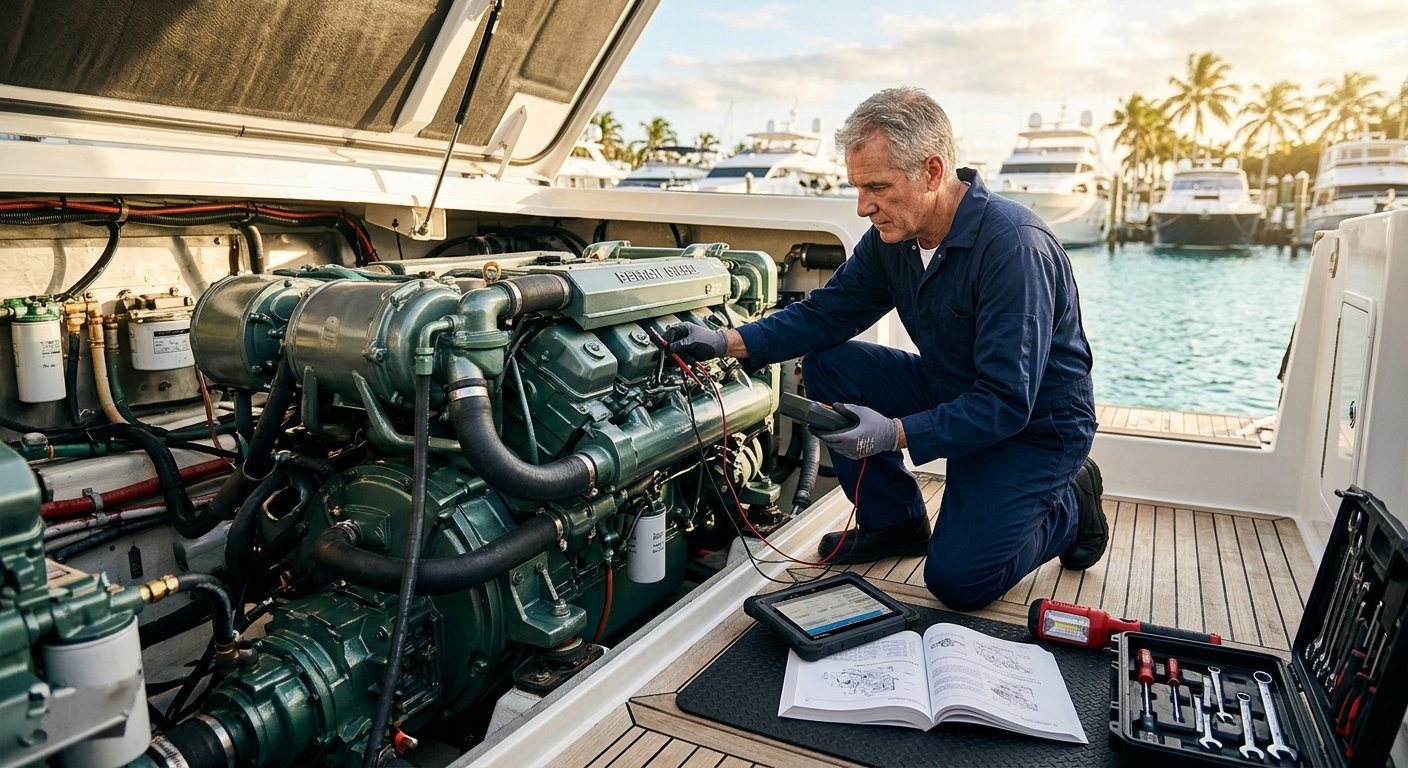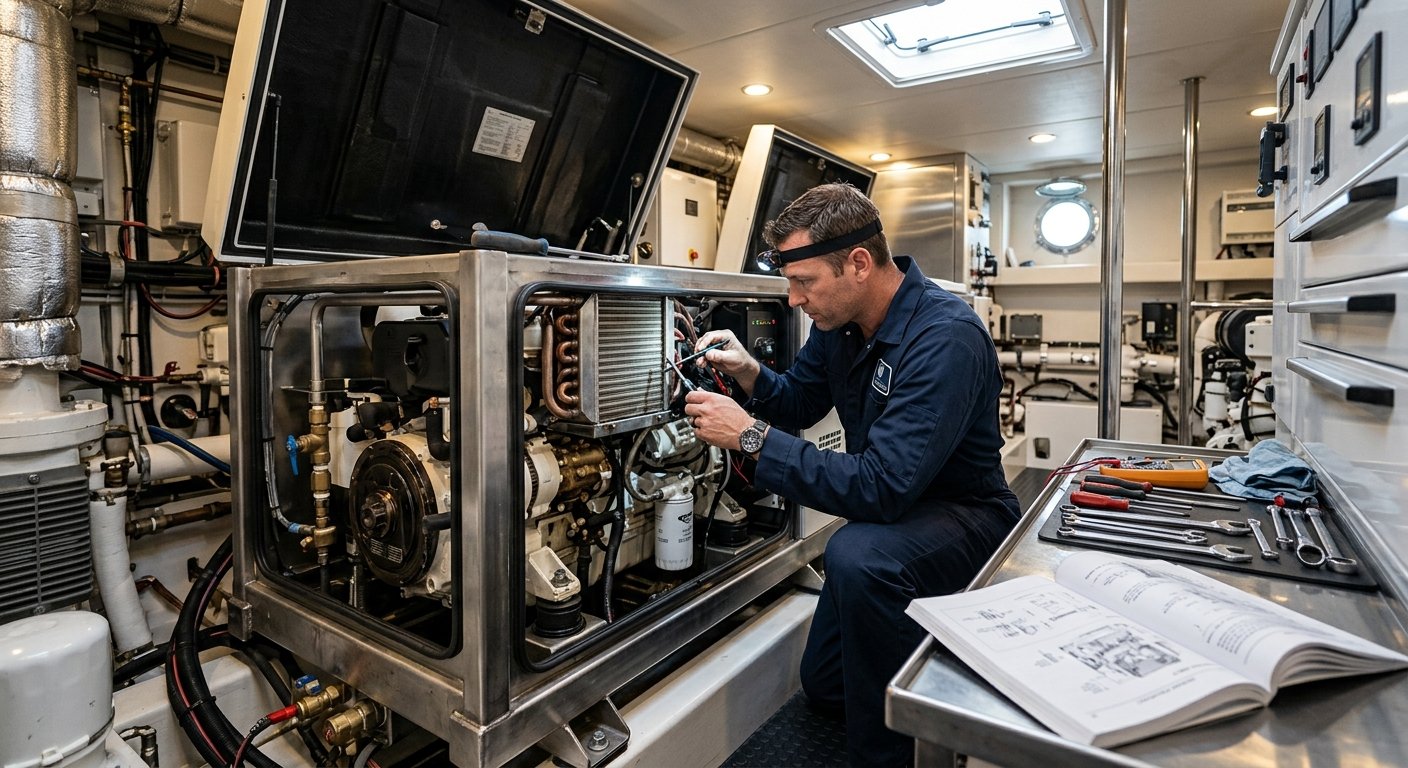
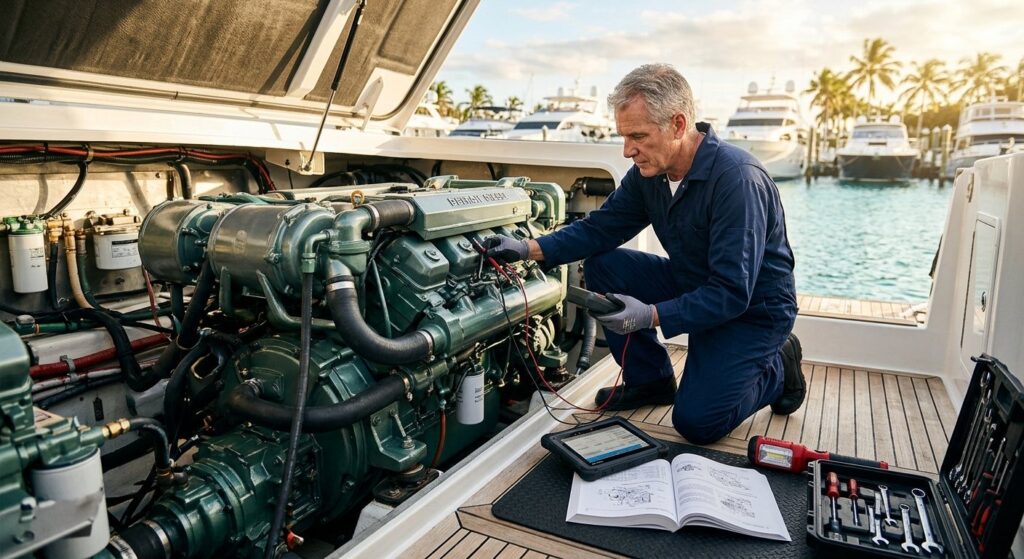
On-site marine diesel service means a factory-authorized technician travels directly to your vessel at the dock, marina, or boatyard to perform maintenance, diagnostics, or repairs without requiring a haul-out or long-distance transport. This approach applies to propulsion engines, generators, and auxiliary systems on yachts and commercial vessels. It saves time, reduces logistics complexity, and keeps your boat where it belongs.
- On-site diesel service covers engine maintenance, generator service, and diagnostics performed dockside by certified technicians.
- Factory-authorized service ensures work is completed to manufacturer specifications using OEM parts — not aftermarket substitutes.
- Equipment from Detroit Diesel/MTU, Northern Lights, Kohler, and Westerbeke all qualifies for mobile service visits.
- Preparing your vessel properly before the technician arrives makes the visit more efficient and effective.
- Preventative maintenance performed on-site can extend diesel engine life well beyond 40 years when followed consistently.
What On-Site Marine Diesel Service Actually Covers
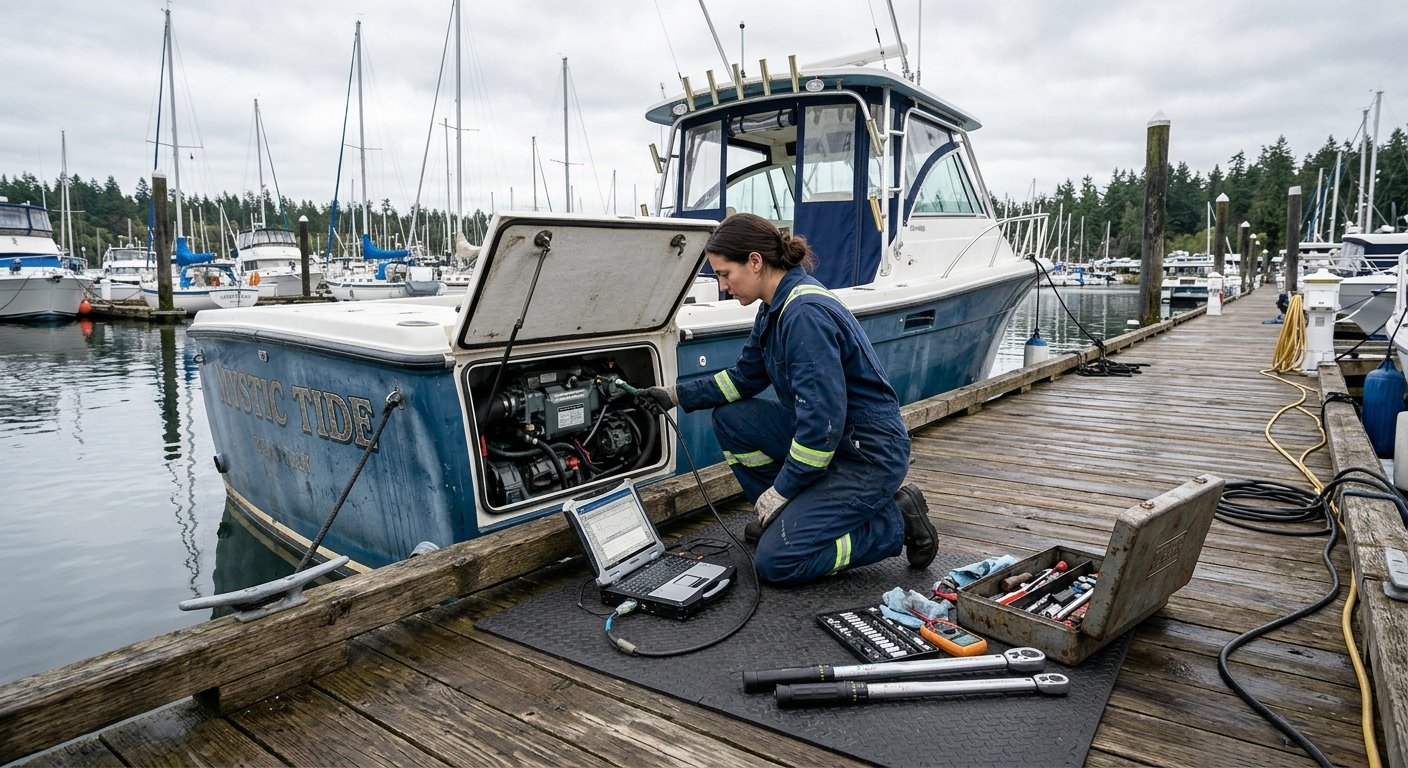
The term “on-site” often gets confused with light-duty oil changes or visual inspections. In reality, a properly equipped mobile marine diesel technician can perform a broad range of services at the dock — many of the same procedures done in a traditional shop environment. What distinguishes a qualified provider is the diagnostic equipment, specialized tooling, and factory training they bring aboard.
At RPM Diesel, our on-site service capabilities span the full spectrum of diesel engine care: scheduled maintenance, engine diagnostics, fuel system service, cooling system inspections, raw water pump overhauls, turbocharger assessments, and marine generator service. We carry a comprehensive parts inventory specifically stocked for the brands we specialize in, which means fewer delays waiting on parts sourcing.
Factory-authorized technicians carry brand-specific diagnostic tools that connect directly to engine control modules on modern diesel platforms like MTU Series engines. Generic scanners simply cannot access the same data, which is why factory authorization matters beyond just credentials on paper.
For vessel owners managing yachts with Detroit Diesel or MTU propulsion paired with Northern Lights or Kohler generators, having a single provider capable of servicing all systems dockside is a significant operational advantage.
Which Equipment Qualifies for On-Site Service
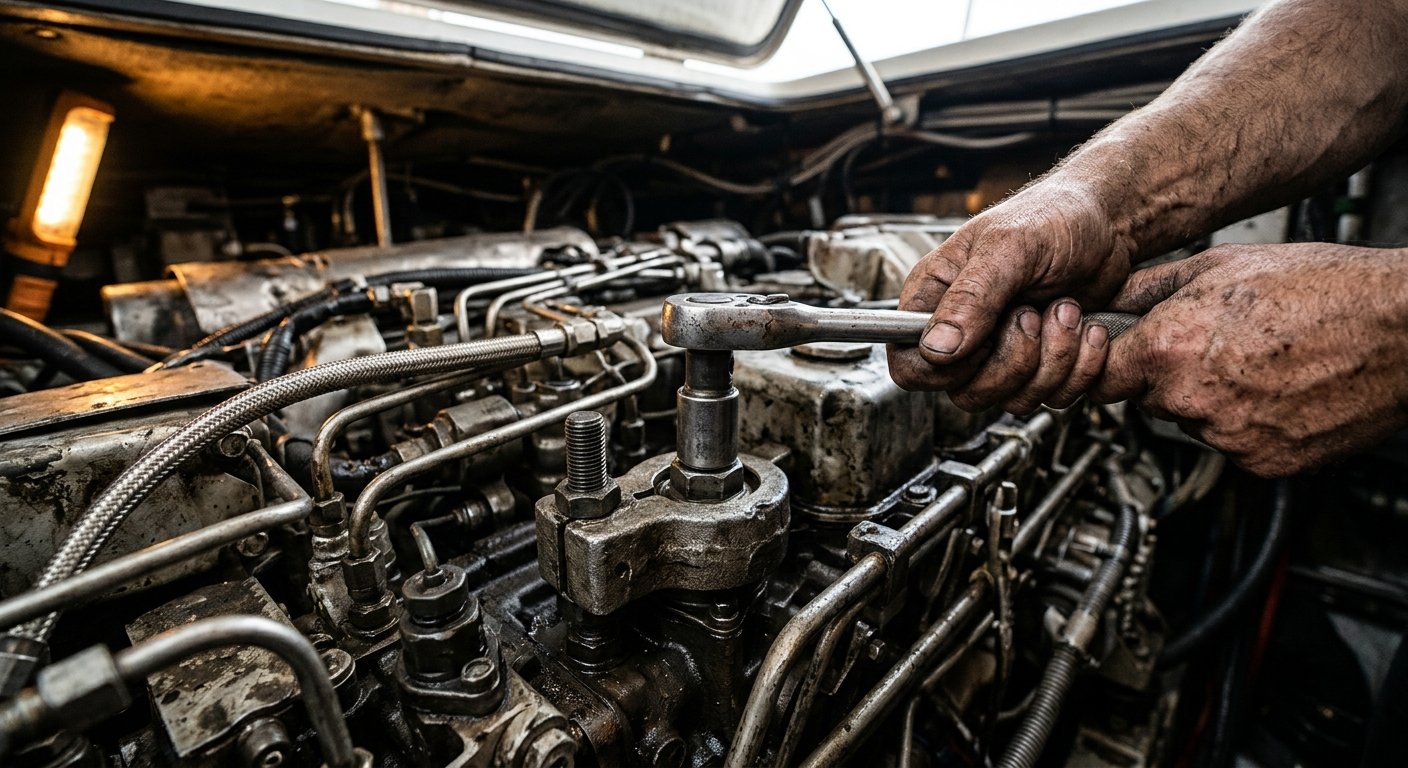
Most diesel-powered vessels — recreational yachts, sportfishers, motor yachts, and commercial marine platforms — are strong candidates for on-site engine service. The determining factors are engine access aboard the vessel, the type of service needed, and whether the work falls within on-site scope or requires a machine shop environment.
Propulsion engines well-suited to dockside service include Detroit Diesel two-cycle and four-cycle engines, MTU high-performance marine diesels, and a range of auxiliary power units. On the generator side, Northern Lights, Kohler Marine, and Westerbeke units are routinely serviced at the dock. If you’re evaluating your engine platform’s long-term fit, our comparison of Detroit Diesel vs MTU marine engines is worth reading before your next major service decision.
Work that generally requires a controlled shop environment includes deep cylinder head reconditioning, crankshaft machining, and major block work. However, even in those situations, proper on-site diagnosis is essential before any decision is made about pulling an engine. Unnecessary removals are costly and often avoidable with thorough dockside assessment first.
Never authorize a major engine removal based on a visual inspection alone. A proper compression test, oil analysis, and electronic diagnostic scan should precede any decision about engine-out repairs. Skipping diagnosis leads to unnecessary teardowns and missed root causes.
How an On-Site Service Visit Works: Step by Step
Initial Consultation and Scope Definition
Before scheduling, RPM’s team reviews the service history, engine make and model, hours logged, and any symptoms the captain or owner has noted. This determines which tools, parts, and specialists need to be on-site.
Arrival and Safety Setup
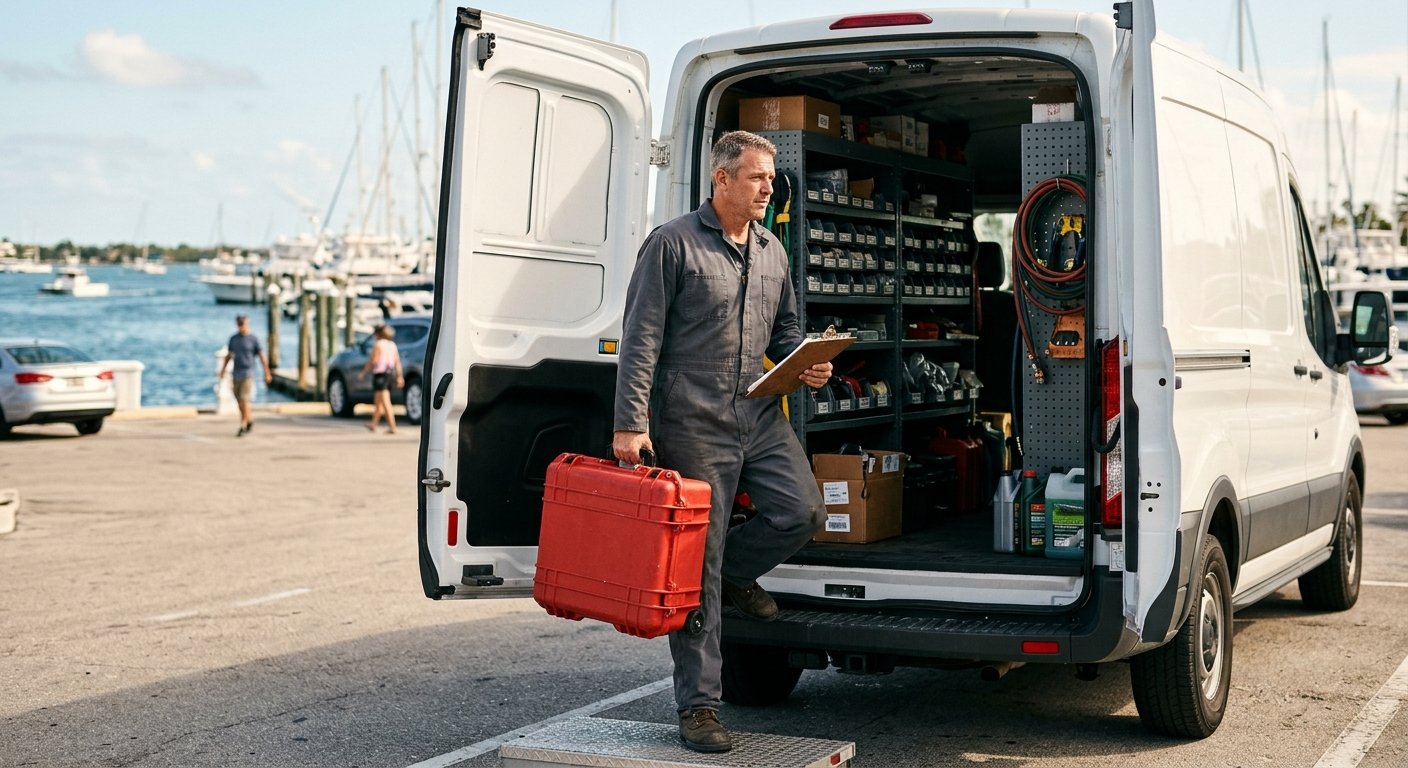
Technicians arrive with a fully equipped service vehicle carrying diagnostic gear, OEM parts, fluids, and specialty tools. Vessel access, engine room ventilation, and bilge safety are verified before any work begins.
Diagnostics and Condition Assessment
Electronic diagnostics connect to the engine management system to pull fault codes and performance data. Physical inspection of filters, belts, hoses, heat exchangers, and fluid condition follows. This is where problems are identified — not assumed.
Authorized Service Execution
All maintenance and repair work follows manufacturer specifications. OEM parts are used exclusively. Fluid fill levels, torque specifications, and clearances are verified against the specific engine’s service manual — not generic approximations.
Post-Service Verification and Documentation
After service is complete, the engine is run up to operating temperature and all systems are verified. The owner receives documentation of work performed, parts installed, and any follow-up items noted for the next service interval.
How to Prepare Your Vessel for a Mobile Diesel Service Visit
A well-prepared vessel translates directly into a more productive service visit. Owners and captains can take several practical steps in advance to ensure the technician has immediate, safe access to the work area.
- Clear the engine room: Remove stored gear, lines, fenders, or personal items that obstruct access to engine components, service points, and electrical panels.
- Have service records available: Maintenance logs, previous service invoices, and any warranty documentation help technicians identify the service history at a glance.
- Note any symptoms: Unusual sounds, exhaust color changes, warning alarms, or performance changes should be written down with approximate hours and conditions when observed.
- Ensure shore power and ventilation: Adequate shore power for diagnostic equipment and proper engine room ventilation are both necessary for safe, effective work.
- Plan for dock availability: Confirm the vessel can remain at the dock for the expected service duration, particularly for multi-system service visits covering both propulsion and generators.
Owners who understand what OEM parts mean for long-term reliability tend to have better service outcomes. If you’ve ever wondered whether aftermarket parts are a reasonable alternative, our article on the real cost of non-OEM marine diesel parts covers the subject thoroughly.
A well-prepared vessel and a clear symptom history cut diagnostic time and deliver better outcomes — every time.
The Case for Factory-Authorized On-Site Service
The phrase “factory-authorized” carries real weight in marine diesel service. It means the technician has completed manufacturer-approved training programs, uses manufacturer-specified diagnostic tools, and sources genuine OEM parts through authorized channels. For warranty-eligible equipment, factory authorization is often a requirement for claim validity under the manufacturer’s service terms.
The National Association of State Boating Law Administrators consistently emphasizes proper vessel maintenance as foundational to marine safety — a standard that factory-authorized service is specifically designed to meet. Similarly, the U.S. Coast Guard’s inspection and compliance standards for commercial marine operators underscore the importance of documented, specification-compliant maintenance records.
RPM Diesel has operated since 1956 — over 70 years of continuous marine diesel service in South Florida. That institutional knowledge, combined with current factory authorizations from Detroit Diesel/MTU, Northern Lights, Kohler, and Westerbeke, means the technician arriving at your dock brings both historical context and current manufacturer specifications to every visit. For owners dealing with complex cylinder or internal engine issues, understanding the scope of work involved in something like yacht engine cylinder repair is essential before authorizing any disassembly.
Service Area: Palm Beach and Broward Counties
RPM Diesel provides on-site marine diesel engine service throughout Palm Beach County and Broward County, Florida. Whether your vessel is docked in Fort Lauderdale, Boca Raton, West Palm Beach, or anywhere in between, our mobile service team reaches you with the same factory-authorized capabilities available at our facility. For yacht captains and vessel managers whose schedules don’t allow for extended downtime, this dockside access is a meaningful operational benefit.
Our parts inventory is maintained specifically to support the brands we service — which means technicians arrive prepared for the most common service requirements on Detroit Diesel, MTU, Northern Lights, Kohler, and Westerbeke equipment without extended lead times on components.
Frequently Asked Questions
What types of repairs can actually be done at the dock?
Most scheduled maintenance, electronic diagnostics, fuel system service, cooling system work, generator service, and raw water pump overhauls can be performed dockside. Work requiring machine shop equipment — such as crankshaft machining or cylinder head reconditioning — typically requires the engine to be removed, but this decision should only be made after thorough on-site diagnosis.
Does on-site service void my engine warranty?
Not when performed by a factory-authorized service provider. In fact, using non-authorized service or non-OEM parts is more likely to create warranty complications. Factory-authorized technicians document all work to manufacturer standards, supporting warranty validity rather than undermining it.
How often should diesel marine engines be serviced?
Service intervals vary by engine make, model, and usage hours. Most manufacturers specify intervals in operating hours rather than calendar time. Following the manufacturer’s recommended maintenance schedule — not a generic approximation — is the correct approach, and your factory-authorized technician can establish that schedule based on your specific engine’s documentation.
Can generators be serviced at the same visit as propulsion engines?
Yes. RPM Diesel services both propulsion engines and marine generators from Northern Lights, Kohler, and Westerbeke during the same visit. Coordinating both systems in one appointment reduces downtime and provides a complete picture of the vessel’s mechanical condition.
What should I do if my engine shows a warning alarm before the service visit?
Document the alarm code or indicator light, note the engine hours and operating conditions when it appeared, and avoid running the engine hard until the technician can assess it. Continuing to operate under a fault condition without diagnosis can convert a minor issue into a major repair.
Schedule On-Site Service for Your Vessel
Contact RPM Diesel to arrange a factory-authorized on-site marine diesel service visit at your Palm Beach or Broward County dock — no haul-out required.
About RPM Diesel
RPM Diesel is a factory-authorized marine diesel engine service provider specializing in yacht and boat engine maintenance, repair, and generator service throughout South Florida. With expertise in Detroit Diesel/MTU, Northern Lights, Kohler, and Westerbeke equipment, RPM combines deep technical knowledge with a comprehensive parts inventory to deliver reliable, manufacturer-specification service. The company serves recreational yacht owners, commercial marine operators, and vessel managers who value proper maintenance procedures and long-term engine reliability. Visit rpmdiesel.com →