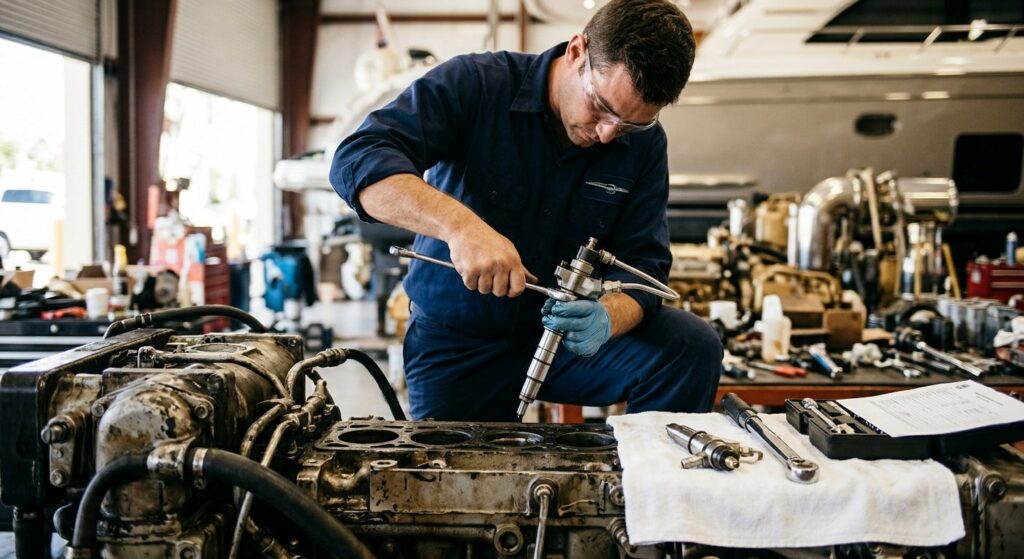
Marine diesel fuel injector replacement involves removing worn or failed injectors, inspecting the injector bore, and installing calibrated OEM units to manufacturer specifications. It applies to any diesel-powered yacht or vessel showing hard starts, rough running, black smoke, or declining fuel economy — and it should always be performed by a factory-authorized marine diesel technician using properly tested injectors.
- Failing injectors are among the most common causes of power loss, rough running, and excessive smoke in marine diesel engines.
- Signs of injector failure include hard starts, uneven idle, black or white exhaust smoke, and elevated fuel consumption.
- Injectors must be bench-tested and calibrated before installation — not simply swapped from a shelf.
- OEM replacement injectors matched to your engine’s manufacturer specifications protect long-term performance and warranty.
- Factory-authorized service ensures proper torque values, seal integrity, and return-line configuration are correct from the first start.
Why Fuel Injectors Matter More Than Most Owners Realize
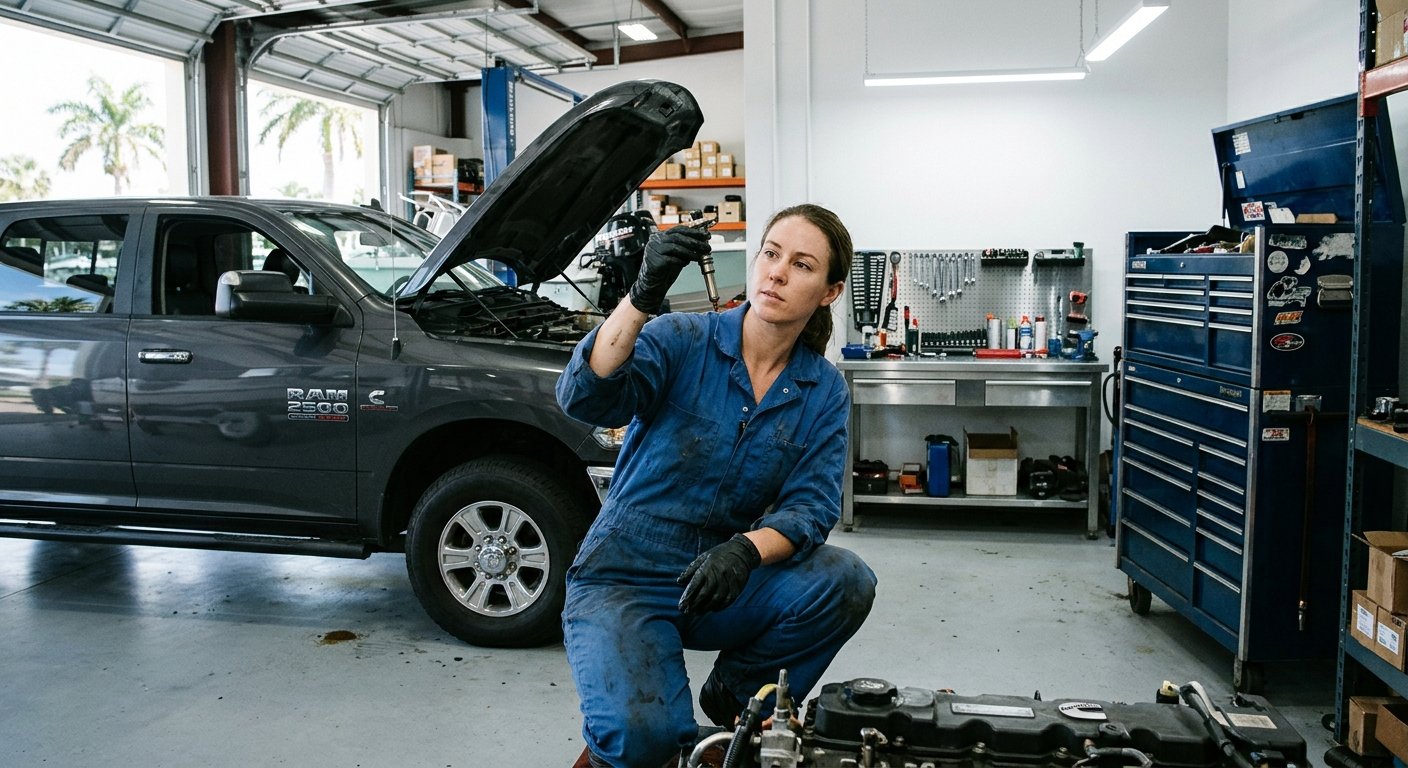
The fuel injector is the final precision component between your engine’s fuel system and its combustion chamber. It atomizes diesel fuel at extremely high pressure and delivers it in a precisely timed, shaped spray pattern that the engine’s design demands. When an injector drifts out of specification — whether through wear, contamination, or internal seal failure — the entire combustion event is compromised. Power drops, fuel consumption rises, and in some cases, raw fuel washes cylinder walls and accelerates wear that affects far more than the injector itself.
According to the maritime industry’s maintenance literature, fuel system issues — including injector degradation — rank among the leading causes of unplanned engine downtime on commercial and recreational vessels alike. For yacht owners in Palm Beach County and Broward County who depend on engine reliability for safety and schedule, understanding when and how injectors are replaced is essential knowledge.
The fuel injector is the final precision component between your engine’s fuel system and its combustion chamber — when it drifts, everything downstream suffers.
Warning Signs That Indicate Injector Service Is Needed
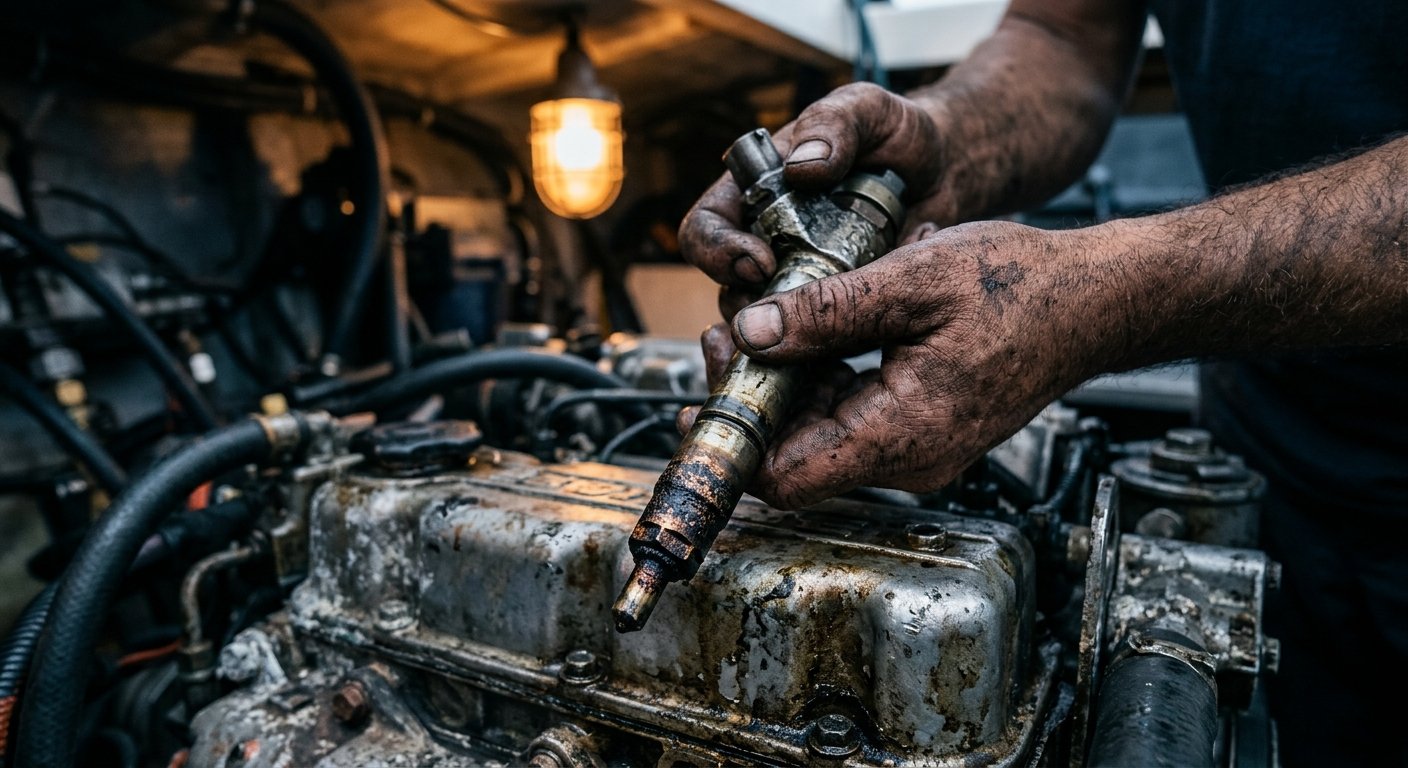
Injectors rarely fail overnight. They degrade gradually, and the symptoms often overlap with other fuel system issues. That is exactly why proper diagnosis must precede any replacement decision. Here are the most reliable indicators that your vessel’s injectors warrant professional inspection:
- Hard or extended cranking before start — especially in engines that previously started quickly
- Rough idle or misfire — uneven combustion across cylinders creates vibration and irregular exhaust pulses
- Black exhaust smoke under load — signals incomplete combustion from poor atomization or over-fueling
- White or gray smoke at idle — may indicate a leaking injector allowing raw fuel into the cylinder
- Elevated fuel consumption — a drifting injector delivers fuel inefficiently, burning more to produce less power
- Loss of power or throttle response — particularly noticeable when coming up to cruise speed
- Unusual knock or diesel “clatter” — timing-related noise that worsens as injector response deteriorates
Running a vessel with known injector problems is not simply a performance issue — raw fuel entering a cylinder can wash lubrication from cylinder walls, leading to accelerated bore wear and potentially expensive cylinder damage. If multiple symptoms appear together, schedule service before the next departure.
When these symptoms appear on Detroit Diesel, MTU, Northern Lights, Kohler, or Westerbeke equipment, the diagnostic approach differs by platform. Each manufacturer specifies its own pressure thresholds, spray patterns, and return-line characteristics. That is why using the correct OEM parts and factory procedures matters significantly — generic injectors calibrated to loose tolerances simply cannot replicate what the original equipment design requires.
The Marine Fuel Injector Replacement Process
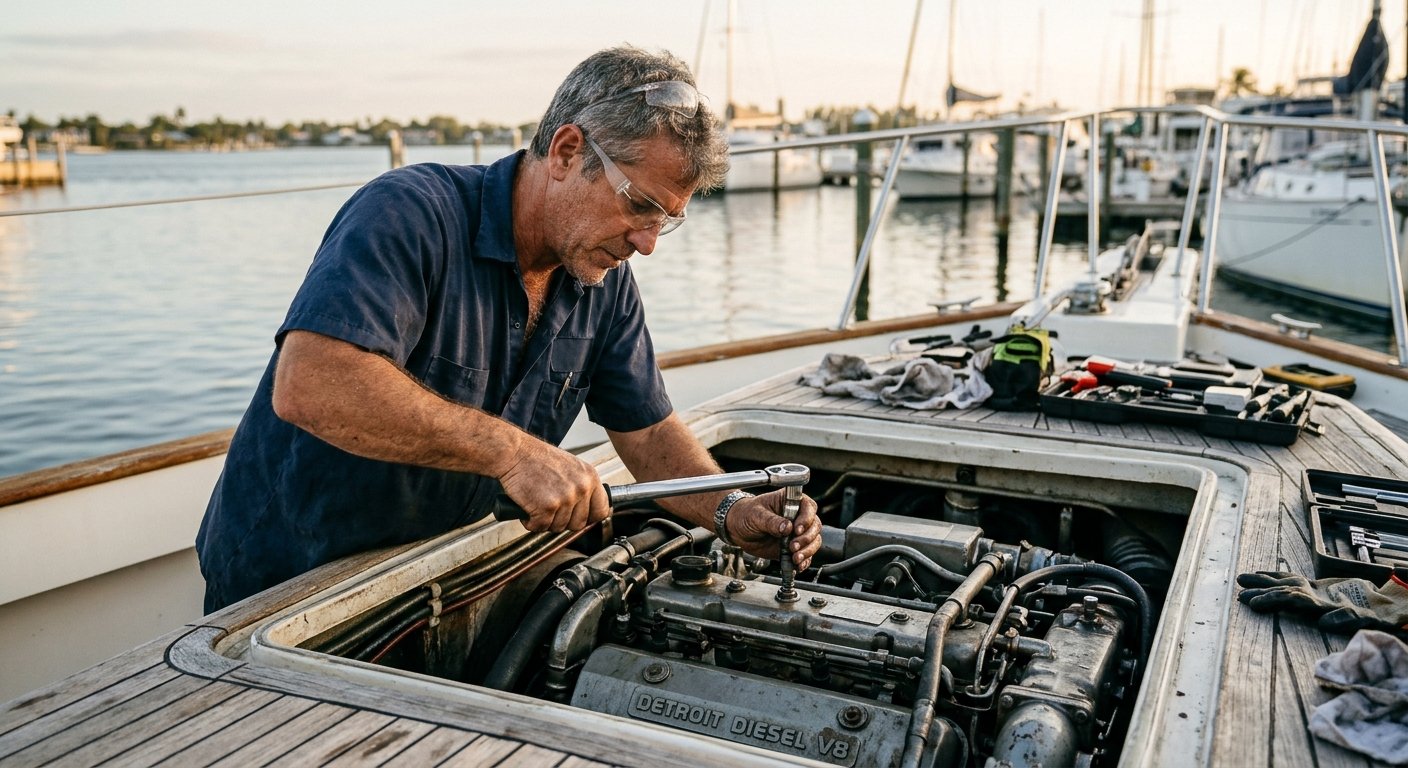
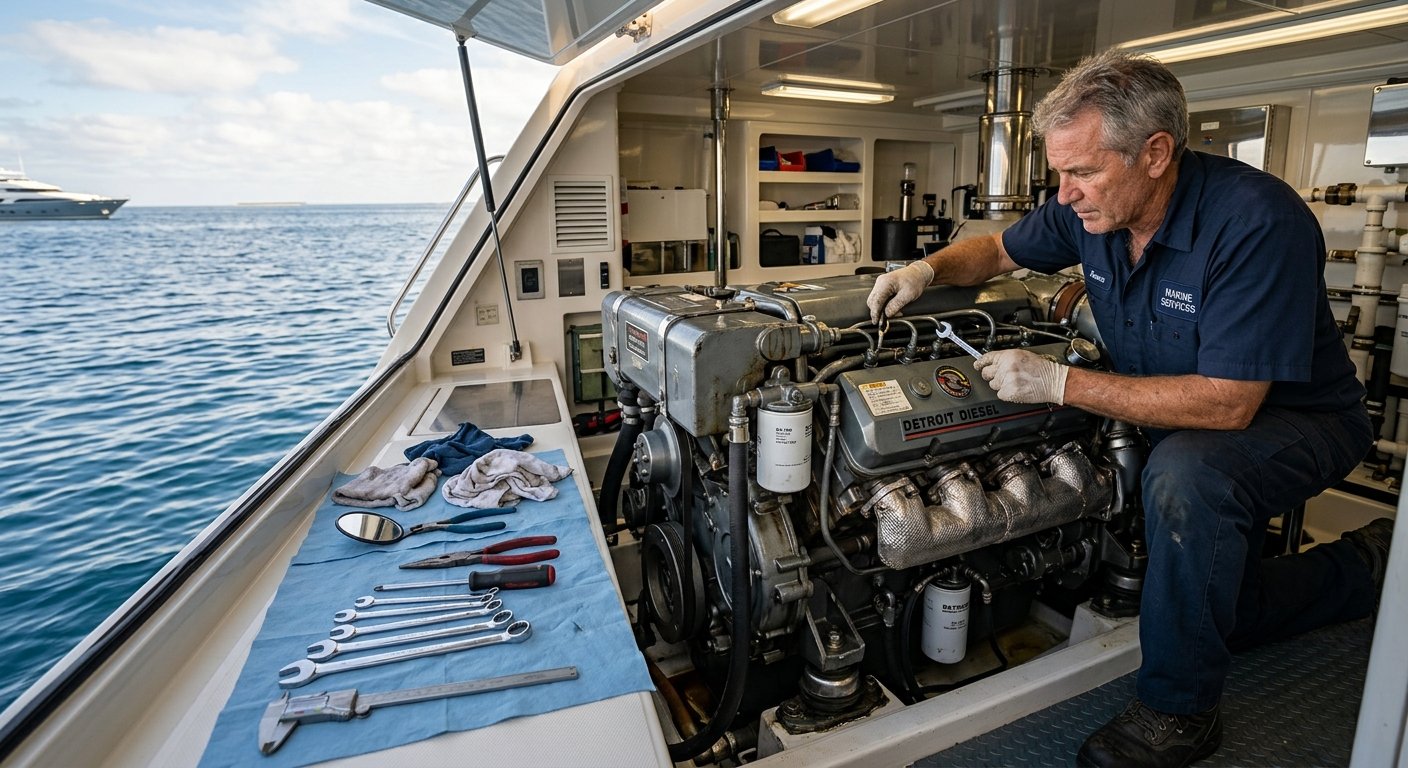
What follows is a professional overview of the replacement sequence used by factory-authorized technicians. This is not a DIY tutorial — marine diesel injector work requires specialized tooling, a calibrated test bench, and manufacturer-specific torque and timing specifications. The goal is to help vessel owners understand what a proper service entails and what questions to ask their service provider.
Proper Diagnosis First
Before any injector is removed, a qualified technician conducts a cylinder cut-out test, compression check, and fuel system pressure evaluation. On electronically managed engines, fault codes are retrieved and cross-referenced. Replacing injectors without confirmed diagnosis risks missing the root cause — a clogged primary filter or failed lift pump can mimic injector symptoms entirely.
Fuel System Depressurization and Preparation
High-pressure common rail systems on modern MTU and similar engines hold fuel at pressures that require specific depressurization procedures before work begins. The technician follows the manufacturer’s service manual procedure exactly, isolates the fuel supply, and prepares the work area to prevent contamination of the fuel system — a single particle of debris introduced during service can damage the new injector immediately.
Injector Removal and Bore Inspection
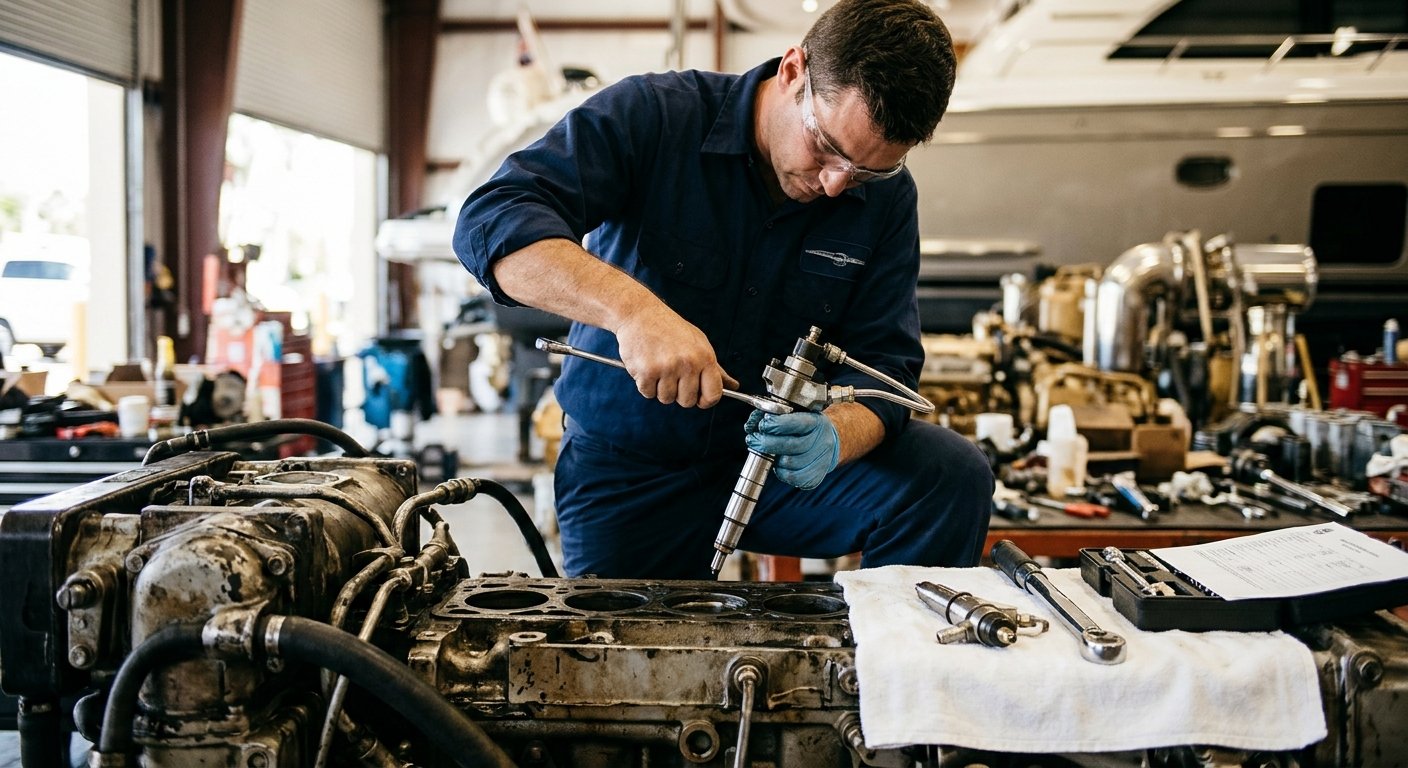
Injectors are extracted using the correct puller tool for the specific engine — forced removal with improper tools damages the injector bore or the cylinder head. Once removed, the bore is carefully cleaned and inspected for carbon deposit buildup, erosion, or corrosion. Any sealing surface damage is addressed before the new injector is installed.
Bench Testing and Calibration of New Injectors
OEM replacement injectors are tested on a calibrated injector test bench before installation. This confirms the spray pattern, opening pressure, and leak-off rate meet manufacturer specifications. Injectors that arrive within specification tolerances proceed to installation; those outside tolerance are returned. This step is non-negotiable on quality marine diesel injector service.
Installation to Manufacturer Torque Specifications
New copper sealing washers or O-rings (as specified for the engine) are fitted. The injector is threaded in by hand first, then torqued in stages to the exact value in the manufacturer’s service manual. Over-torquing distorts the injector tip; under-torquing risks a combustion gas leak. Neither is acceptable on a vessel engine that may be running far offshore.
Return-Line and High-Pressure Connection Checks
All fuel return lines and high-pressure supply fittings are reconnected and verified for proper seating and torque. On engines with electronic injection systems, injector coding or adaptation values may need to be programmed to the ECU using manufacturer diagnostic software. The fuel system is then bled per the service manual before the first start attempt.
Post-Installation Verification
After the first start, the technician monitors exhaust color, listens for injector knock, checks for fuel leaks at all connection points, and confirms fuel rail pressure reaches the target value. A short-duration load test verifies power delivery is restored across the RPM range. Any fault codes set during the first start cycle are diagnosed and cleared.
When one injector fails on a high-hour engine, it is worth discussing with your technician whether adjacent injectors — which have accumulated identical hours — should be replaced preventively at the same service visit. The labor to access injectors represents the majority of the service cost, so replacing marginal units simultaneously can be more economical than a return visit weeks later.
OEM Parts and Why They Are Not Optional
Marine diesel fuel injectors are precision-manufactured components with tolerances measured in microns. The spray pattern geometry, needle lift, and opening pressure are engineered specifically for each engine’s combustion chamber design, compression ratio, and timing curve. An injector that sprays even slightly off-axis or opens at the wrong pressure point shifts combustion heat toward the piston crown or cylinder wall — accelerating wear in components far more expensive than the injector itself.
The U.S. Environmental Protection Agency’s emissions standards for marine diesel engines are another reason OEM specification matters: engines certified to Tier compliance levels must maintain fuel delivery within defined parameters. Non-OEM injectors that alter spray characteristics can push an engine out of its certified operating envelope.
As a factory-authorized marine diesel service provider, RPM Diesel maintains a comprehensive parts inventory that includes OEM injectors for Detroit Diesel, MTU, Northern Lights, Kohler, and Westerbeke equipment. That inventory depth means properly matched components are available without extended lead times that leave your vessel sidelined.
If you are evaluating your engine platform’s long-term service needs, the comparison between Detroit Diesel and MTU marine engines covers important differences in injection system design and service requirements between these two related but distinct platforms.
Maintenance Intervals That Prevent Premature Failure
Properly maintained diesel injectors on a well-serviced marine engine can last tens of thousands of operating hours. The variables that shorten injector life most reliably are contaminated fuel, inadequate filtration, and deferred maintenance. According to manufacturer guidance from leading marine diesel producers, fuel quality and filtration maintenance are the two most controllable factors in injector longevity.
As part of a complete marine diesel engine service schedule, injector inspection intervals are typically tied to operating hours and fuel filter replacement cycles. Your engine’s specific manufacturer service manual defines these intervals — and factory-authorized service providers follow them precisely rather than applying generic estimates.
- Replace fuel filters at or before manufacturer-specified intervals — never extend them
- Use only marine-grade diesel fuel from reputable suppliers
- Treat fuel with approved biocide products in South Florida’s warm, humid marina environments where microbial growth is accelerated
- Address any fuel system leaks or air intrusion immediately — air in the system causes injector cavitation damage
- Schedule compression and injector checks as part of annual engine service, not only when symptoms appear
Frequently Asked Questions
How do I know if my marine diesel injector needs replacement versus cleaning?
The distinction requires bench testing. Some injectors respond well to ultrasonic cleaning and recalibration if the needle and seat are in good condition. Others have internal wear or erosion that cleaning cannot correct. A factory-authorized technician performs a bench test first to determine which path is appropriate for your specific injectors and engine platform.
Can I replace just one injector, or do they need to be replaced as a set?
A single injector can be replaced if the others test within specification. However, on high-hour engines where multiple injectors show borderline readings, replacing them together at one service visit is often more practical and cost-effective than scheduling separate return visits. Your technician’s bench test results on the remaining injectors will inform that decision.
How long does marine fuel injector replacement typically take?
The time required varies significantly by engine type, the number of injectors being replaced, and whether any bore cleaning or repair is needed. Engines with mechanical injection systems are generally more accessible than modern high-pressure common rail configurations. Your service provider can give a realistic estimate after a preliminary inspection confirms the scope of work.
Will new injectors improve my engine’s fuel economy?
If degraded injectors were contributing to incomplete combustion, yes — restoring proper atomization and spray pattern typically improves fuel efficiency and restores power output closer to the engine’s original specification. However, fuel economy is affected by multiple factors including hull condition, propeller pitch, and load. Injector replacement resolves the fuel system component specifically.
Does RPM Diesel service injectors on generator engines as well as main propulsion?
Yes. RPM Diesel provides factory-authorized injector service on marine generator engines including Northern Lights, Kohler, and Westerbeke equipment, as well as main propulsion diesels. Generator injector maintenance follows the same manufacturer-specification process and is equally important to reliable onboard power systems.
Schedule Injector Service with South Florida’s Marine Diesel Specialists
RPM Diesel serves Palm Beach County and Broward County as a factory-authorized marine diesel service provider — with a full OEM parts inventory and certified technicians ready to diagnose, test, and restore your fuel injection system to manufacturer specifications.
About RPM Diesel
RPM Diesel is a factory-authorized marine diesel engine service provider specializing in yacht and boat engine maintenance, repair, and generator service throughout South Florida. With expertise in Detroit Diesel/MTU, Northern Lights, Kohler, and Westerbeke equipment, RPM combines deep technical knowledge with a comprehensive parts inventory to deliver reliable, manufacturer-specification service. The company serves recreational yacht owners, commercial marine operators, and vessel managers who value proper maintenance procedures and long-term engine reliability. Visit rpmdiesel.com →