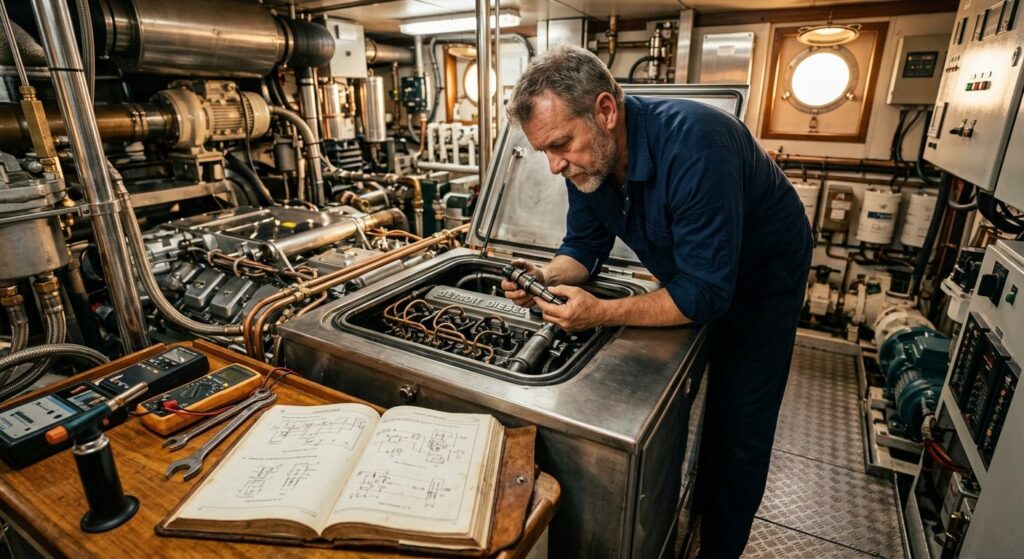
A hard-starting diesel that smokes excessively, surges under load, or loses power unexpectedly isn’t just an inconvenience — it’s a warning. Marine diesel fuel systems are precision assemblies where a single compromised component can cascade into expensive engine damage. Knowing how to read those warnings, and when to call in a factory-authorized specialist, is one of the most valuable skills a vessel owner can develop.
This guide walks through the fundamentals of boat fuel system diagnostics — what to observe, what it means, and what requires professional intervention. Whether your vessel runs Detroit Diesel/MTU propulsion engines, a Northern Lights generator, or Kohler and Westerbeke auxiliary power, the diagnostic principles are consistent across platforms.
How Marine Diesel Fuel Systems Work
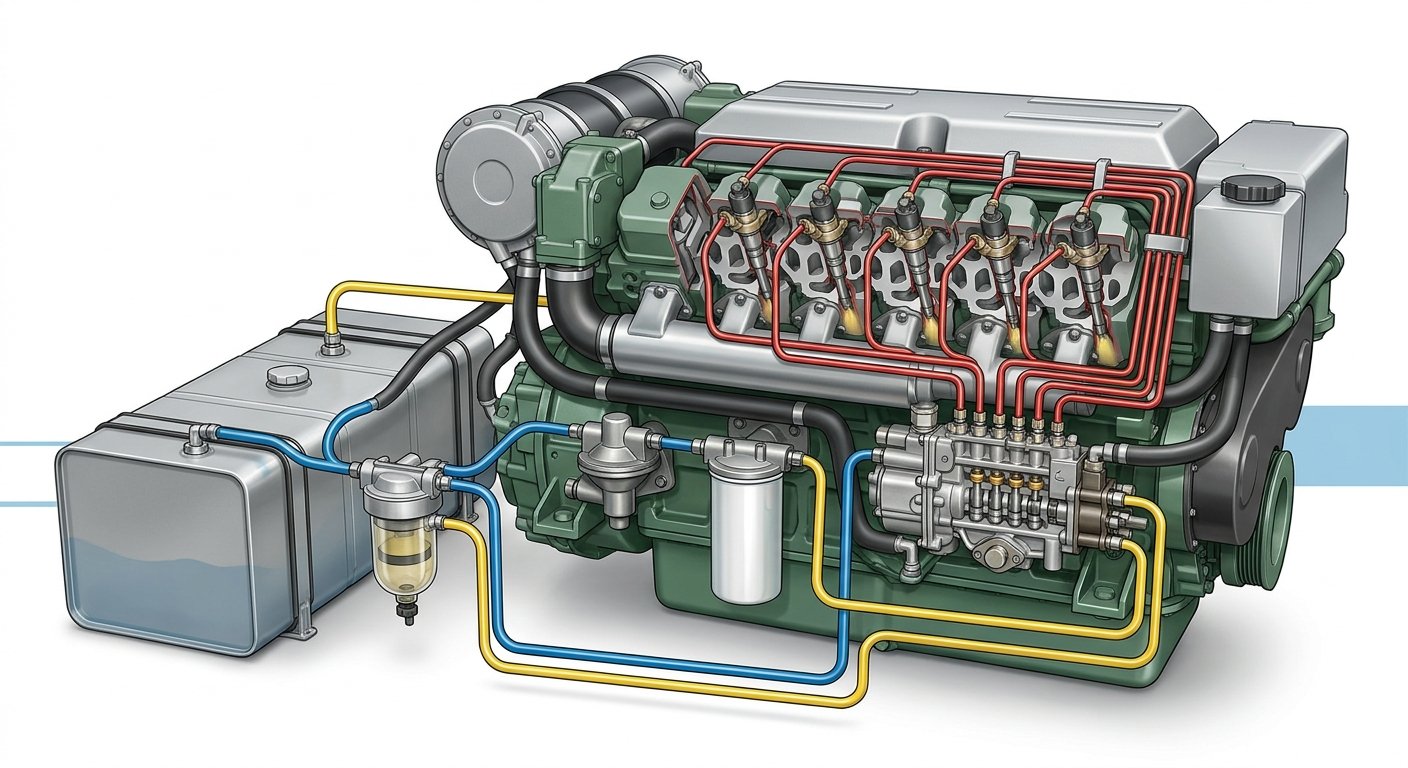
Understanding the system helps you interpret its symptoms accurately. A marine diesel fuel system performs one primary job: deliver clean, pressurized, air-free fuel to the injectors at the precise moment combustion is needed. That seemingly simple task involves multiple components working in precise coordination.
The typical system includes:
- Fuel tanks — often aluminum, fiberglass, or stainless steel, prone to contamination and sediment buildup
- Primary fuel filter/water separator — the first line of defense against contamination
- Lift pump (transfer pump) — moves fuel from the tank to the secondary filter
- Secondary fuel filter — finer filtration before the injection system
- High-pressure injection pump — pressurizes fuel for delivery to injectors
- Fuel injectors — atomize fuel into the combustion chamber
- Return lines — route excess fuel back to the tank
Air, water, and microbial contamination are the three most common threats to this system. Any one of them can compromise engine performance or cause serious damage.
Common Symptoms and What They Indicate
Hard Starting or Failure to Start
If your diesel cranks but won’t start, or requires extended cranking before firing, the fuel system is a primary suspect. Common causes include a failing lift pump that can’t generate adequate delivery pressure, air in the fuel lines from a suction-side leak, a clogged primary filter starving the system, or a compromised injection pump that can’t build sufficient pressure for atomization.
A quick check: inspect your primary filter bowl for air bubbles while cranking. Visible bubbling confirms an air intrusion problem on the suction side of the system.
Rough Running and Misfiring
Uneven combustion — felt as vibration, irregular RPM, or a loping idle — often points to injector problems. Worn or partially clogged injectors deliver inconsistent spray patterns, resulting in incomplete combustion in one or more cylinders. This is a condition that worsens over time and should not be ignored.
Black or White Exhaust Smoke
Exhaust color is one of the most informative diagnostic signals available to a vessel operator. Black smoke indicates over-fueling or incomplete combustion — often caused by worn injectors delivering too much fuel or a fuel delivery issue disrupting timing. White or gray smoke at operating temperature typically signals water contamination in the fuel or a leak allowing coolant into the combustion chamber. Blue smoke points toward oil, but heavy white smoke with a sweet smell warrants immediate shutdown and professional diagnosis.
Power Loss Under Load
Marine diesel engines are tuned to deliver consistent torque across a range of RPMs. If your vessel loses power climbing onto plane, struggles in following seas, or can’t hold rated RPM under normal load, the fuel delivery system may be the cause. Restricted fuel flow from a partially clogged filter, a weak lift pump, or an injection pump losing pressure accuracy will all manifest as load-dependent power loss.
Fuel Pressure Fluctuation
Erratic fuel pressure readings — either from a gauge or noted as surging RPM — suggest a failing lift pump, air entrainment, or a restricted fuel line. According to DieselNet’s fuel injection technical overview, consistent fuel pressure is fundamental to proper injection timing and combustion efficiency. Any deviation from the manufacturer’s specified pressure range degrades performance and accelerates injector wear.
Marine Diesel Fuel Injection Troubleshooting: A Systematic Approach
Effective marine diesel fuel injection troubleshooting follows a logical sequence. Chasing symptoms without isolating root causes wastes time and often results in replacing components that weren’t actually faulty.
Step 1: Start with Fuel Quality
Pull a fuel sample from the primary filter bowl and inspect it. Clean diesel is clear to slightly amber. Cloudiness indicates water contamination. Dark, murky fuel suggests microbial growth — a significant concern in South Florida’s warm climate where diesel bug thrives in tanks that sit between seasonal use. The EPA’s diesel fuel standards documentation provides context on fuel quality specifications that affect combustion performance.
Step 2: Inspect and Service Filters
Both the primary and secondary filters should be inspected as part of any fuel system diagnostic. A filter that appears clean on the outside can be internally compromised. Note the color of any sediment in the bowl and the condition of the filter media. This is also the point where Racor or equivalent primary filter elements should be replaced if they’re near their service interval — never skip this step during diagnostics.
Step 3: Check for Air Intrusion
Air in the fuel system creates symptoms that mimic a dozen other problems. Walk the entire suction side of the system — from tank to lift pump — inspecting every fitting, connection, and flexible section of hose. Aged fuel line that has developed micro-cracks is a common culprit on older vessels. If you can’t definitively rule out air intrusion visually, a pressure test of the suction side is warranted.
Step 4: Verify Lift Pump Function
A mechanical or electric lift pump that’s operating near the end of its service life may still function at idle but fail under demand. Pressure testing the lift pump output against the manufacturer’s specification — not just confirming “there’s some pressure” — is essential. A pump producing 2 PSI when the spec calls for 5 PSI will cause real problems under load, even though it technically “works.”
Step 5: Evaluate Injection System
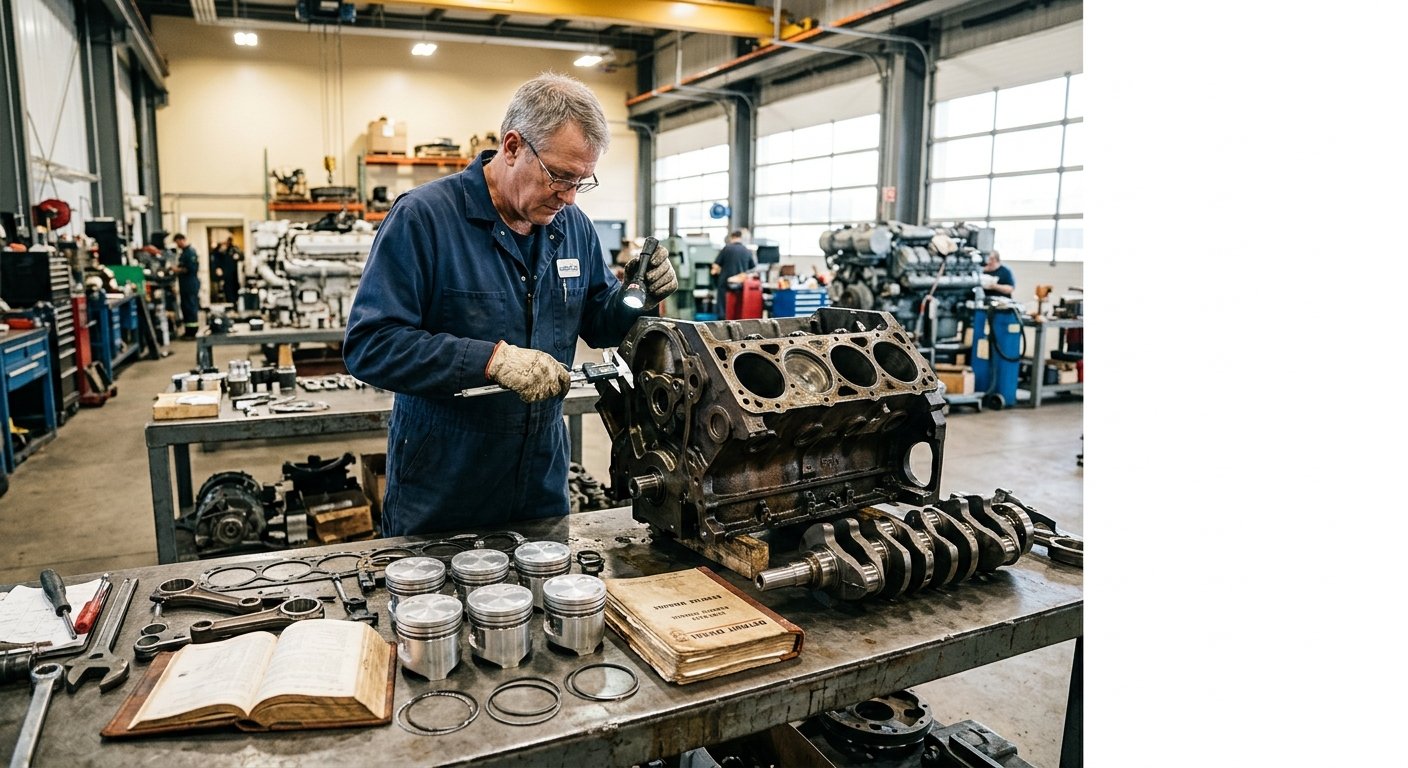
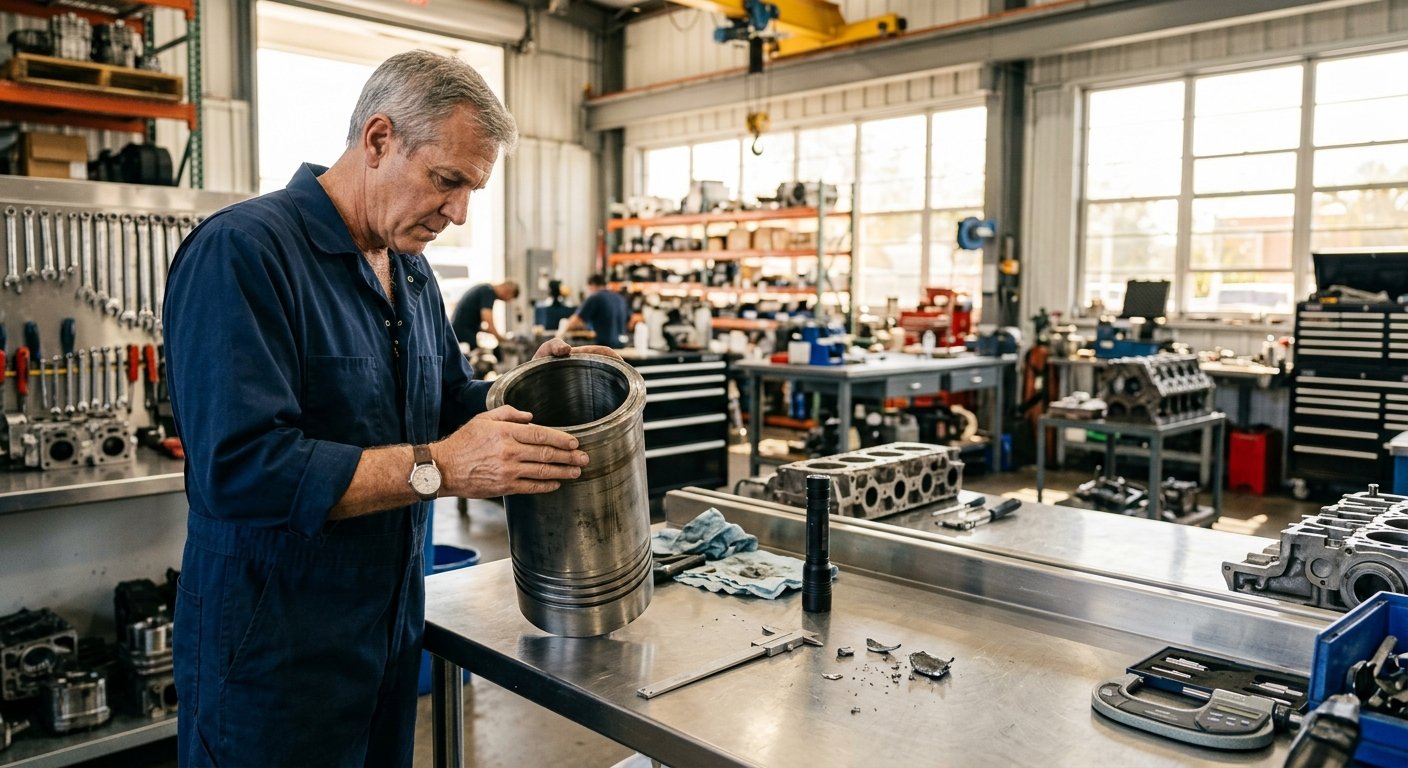
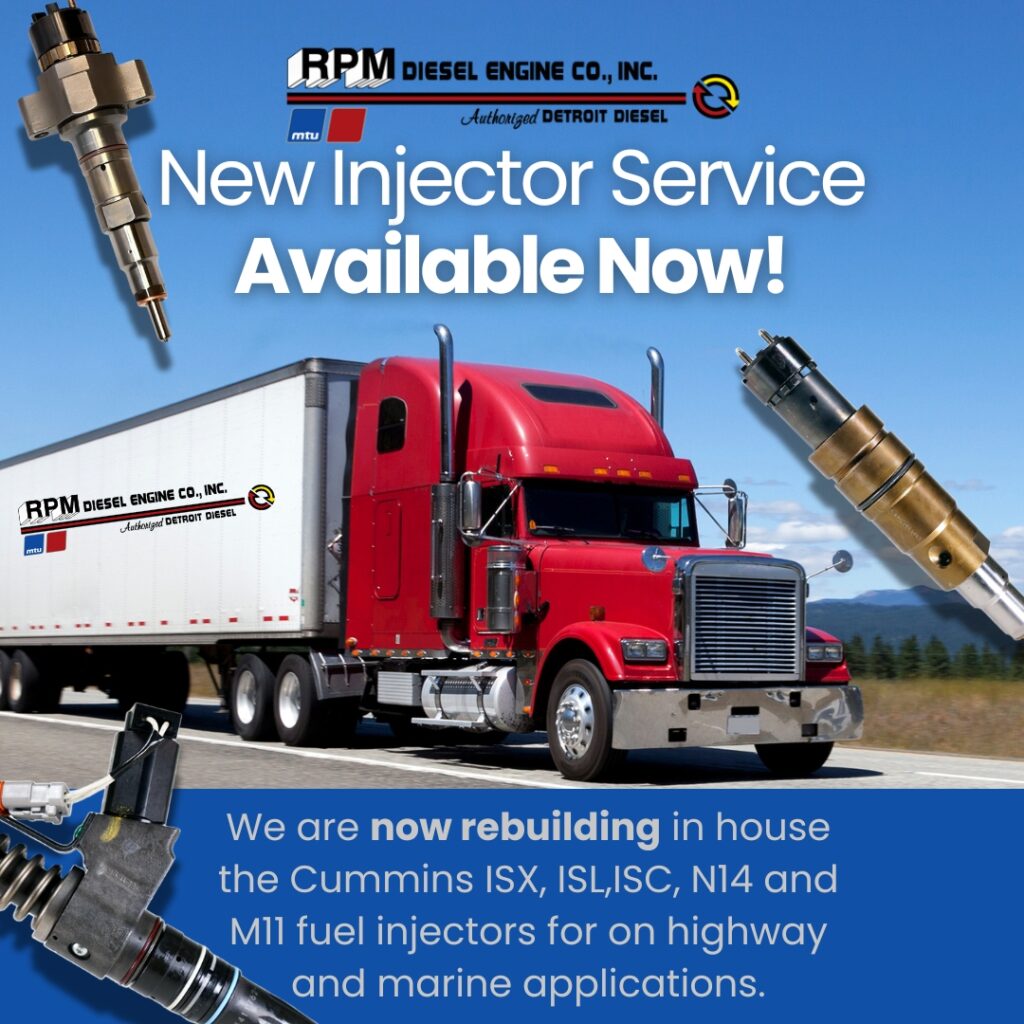
Injector diagnostics require specialized equipment and should be performed by a factory-authorized technician with experience on your specific engine platform. Injector pop pressure testing, spray pattern analysis, and return flow volume measurement are not tasks for general diagnosis — they require bench testing equipment and manufacturer specifications. Improper injector diagnosis leads to unnecessary replacements or, worse, missed failures that cause engine damage.
Yacht Fuel System Maintenance: Prevention Over Repair
The most reliable approach to fuel system health is consistent, scheduled maintenance. Diesel engines that receive proper care regularly outlast their projected service lives — we routinely service vessels with engines that have accumulated decades of reliable operation through disciplined maintenance practices.
A foundational yacht fuel system maintenance schedule should include:
- Primary filter bowl inspection before every departure
- Primary and secondary filter replacement at manufacturer-specified intervals (or annually at minimum)
- Fuel tank inspection and cleaning every three to five years depending on usage
- Biocide treatment when evidence of microbial growth is detected
- Injector service at engine manufacturer’s recommended intervals
- Fuel system pressure testing during annual service
The American Boat and Yacht Council (ABYC) standards provide industry-recognized guidelines for marine fuel system installation and maintenance that serve as a valuable reference for vessel owners and technicians alike.
When to Call a Factory-Authorized Technician
There’s a clear line between owner-level observation and technician-level diagnosis. Vessel owners should feel confident checking filter bowls, evaluating exhaust smoke, and monitoring fuel pressure gauges. But marine diesel fuel delivery problems that involve the injection pump, individual injectors, high-pressure lines, or electronic fuel management systems require factory-authorized expertise and proper diagnostic tooling.
As South Florida’s factory-authorized service specialists for Detroit Diesel/MTU, Northern Lights, Kohler, and Westerbeke equipment, RPM Diesel brings manufacturer-certified diagnostic procedures and OEM parts to every service. Our marine diesel engine repair capabilities are built around proper diagnosis — not guesswork — and every fuel system repair follows the manufacturer’s specification, not approximations.
For vessels in Palm Beach County and Broward County, our on-site marine engine service brings that same factory-authorized capability directly to your slip or marina, minimizing disruption and keeping your vessel in the water.
Frequently Asked Questions
What are the most common causes of marine diesel fuel delivery problems?
The most frequent causes are water or microbial contamination in the fuel tank, clogged primary or secondary filters, air intrusion on the suction side of the fuel system, and failing lift pumps. Injector wear is also common on high-hour engines that haven’t received manufacturer-specified injector service.
How often should marine diesel fuel filters be replaced?
Follow your engine manufacturer’s specified interval — typically every 250 to 500 hours of operation, or annually for vessels with lower usage. In South Florida’s conditions, where fuel quality can vary and tanks are susceptible to condensation and microbial growth, erring toward more frequent replacement is sound practice.
Can I perform diesel fuel injection diagnostics myself?
Owner-level checks — filter inspection, exhaust smoke observation, fuel pressure gauge monitoring — are appropriate and encouraged. However, actual injection system diagnostics involving injector pop testing, high-pressure pump evaluation, and electronic fuel management require factory-authorized technicians with proper equipment and manufacturer specifications.
What does black smoke from a marine diesel engine indicate?
Black smoke typically indicates incomplete combustion caused by over-fueling, worn injectors with poor spray patterns, or restricted air intake. It warrants prompt fuel system and injector inspection. Persistent black smoke under load is not a condition to monitor — it’s one to diagnose immediately.
How do I know if my fuel tank needs cleaning?
Recurring filter contamination, dark or cloudy fuel samples, frequent water-in-fuel alarms, and visible sediment in the primary bowl are all indicators that tank inspection and cleaning may be overdue. A professional fuel polishing and tank inspection should be part of every vessel’s long-term maintenance planning.
Protect Your Engine Investment
Marine diesel engines are engineered to last — when they receive proper care. Fuel system integrity is foundational to that longevity. If your vessel is showing any of the symptoms discussed here, or if you’re overdue for fuel system service, contact RPM Diesel. Our factory-authorized team serves Palm Beach and Broward County vessel owners with manufacturer-certified expertise and a comprehensive OEM parts inventory. Explore our full marine diesel engine service capabilities, or reach out directly to schedule a fuel system diagnostic today.