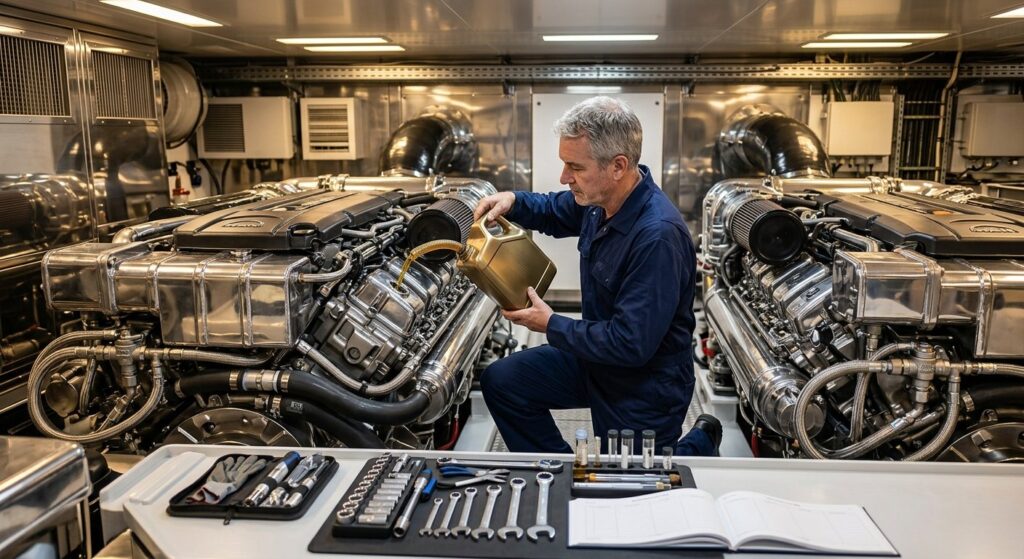
A neglected oil change is one of the most common—and costly—mistakes yacht owners make. Engine oil doesn’t just lubricate; it cools internal components, neutralizes acids, suspends contaminants, and protects bearing surfaces operating under extreme load. When that oil degrades beyond its service limit, the damage compounds with every hour of operation. For diesel engines aboard yachts, where replacement costs can run into six figures, proper oil change intervals aren’t optional—they’re the foundation of every marine engine preventive maintenance program.
Whether you operate a twin Detroit Diesel/MTU setup, a Northern Lights generator, or a Westerbeke auxiliary, understanding what a proper marine diesel oil change involves—and what separates adequate service from manufacturer-specification service—can extend engine life by decades.
Why Marine Diesel Oil Changes Are Different
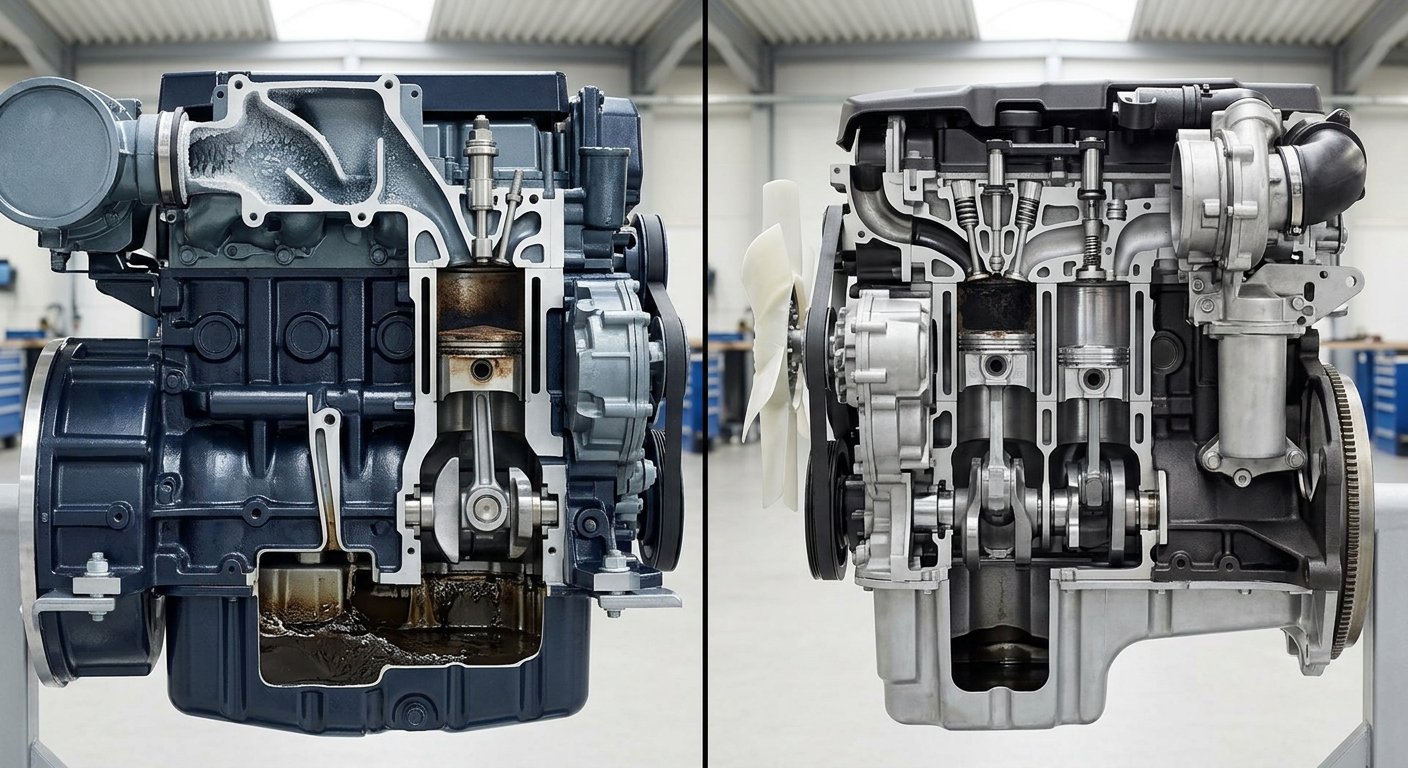
Marine diesel engines face conditions that no automotive or industrial application replicates. They operate in humid, salt-laden environments, often at sustained high loads for extended periods, with limited airflow compared to land-based machinery. Combustion byproducts accumulate differently at sea, and the consequences of engine failure offshore are far more serious than a roadside breakdown.
Marine engine oil must manage:
- High sulfur byproducts from diesel combustion that acidify oil over time
- Moisture contamination from temperature cycling and the marine environment
- Sustained high-load operation that depletes additive packages faster than intermittent use
- Extended idle periods between voyages that allow acids and moisture to concentrate
This is why using the correct oil specification—as defined by the engine manufacturer—is non-negotiable. The American Petroleum Institute’s diesel engine oil categories provide the baseline, but marine engine manufacturers like Detroit Diesel/MTU publish specific viscosity grades and performance classifications that supersede generic recommendations. Using the wrong specification doesn’t just void warranties; it compromises the additive chemistry designed for that specific engine architecture.
How Often Should You Change Marine Diesel Engine Oil?
The honest answer: it depends on your engine manufacturer’s specifications, your actual operating hours, and the conditions of use. Generic intervals posted on boating forums are not a substitute for the OEM maintenance schedule in your engine manual.
As a general framework, most large marine diesel engines fall into one of these service categories:
- Every 250–500 operating hours for high-load propulsion engines
- Every 150–250 hours for continuous-duty generator sets
- Annually at minimum, regardless of hours, for lightly used vessels
Detroit Diesel/MTU propulsion engines, for example, have specific oil drain intervals tied to engine series, load factor, and fuel sulfur content. Northern Lights and Kohler generator sets have their own defined service intervals that differ from propulsion engines because generator duty cycles place consistent, constant loads on engine components. A marine diesel oil change performed at the wrong interval—too early or too late—fails to deliver the protection or the cost efficiency the schedule was designed to achieve.
If your vessel has been sitting for six months or longer without use, change the oil before returning to service regardless of the hour count. Acids and moisture that accumulate in degraded oil will corrode bearing surfaces during startup—the most wear-intensive moment in any engine’s operation.
What a Proper Marine Diesel Oil Change Involves
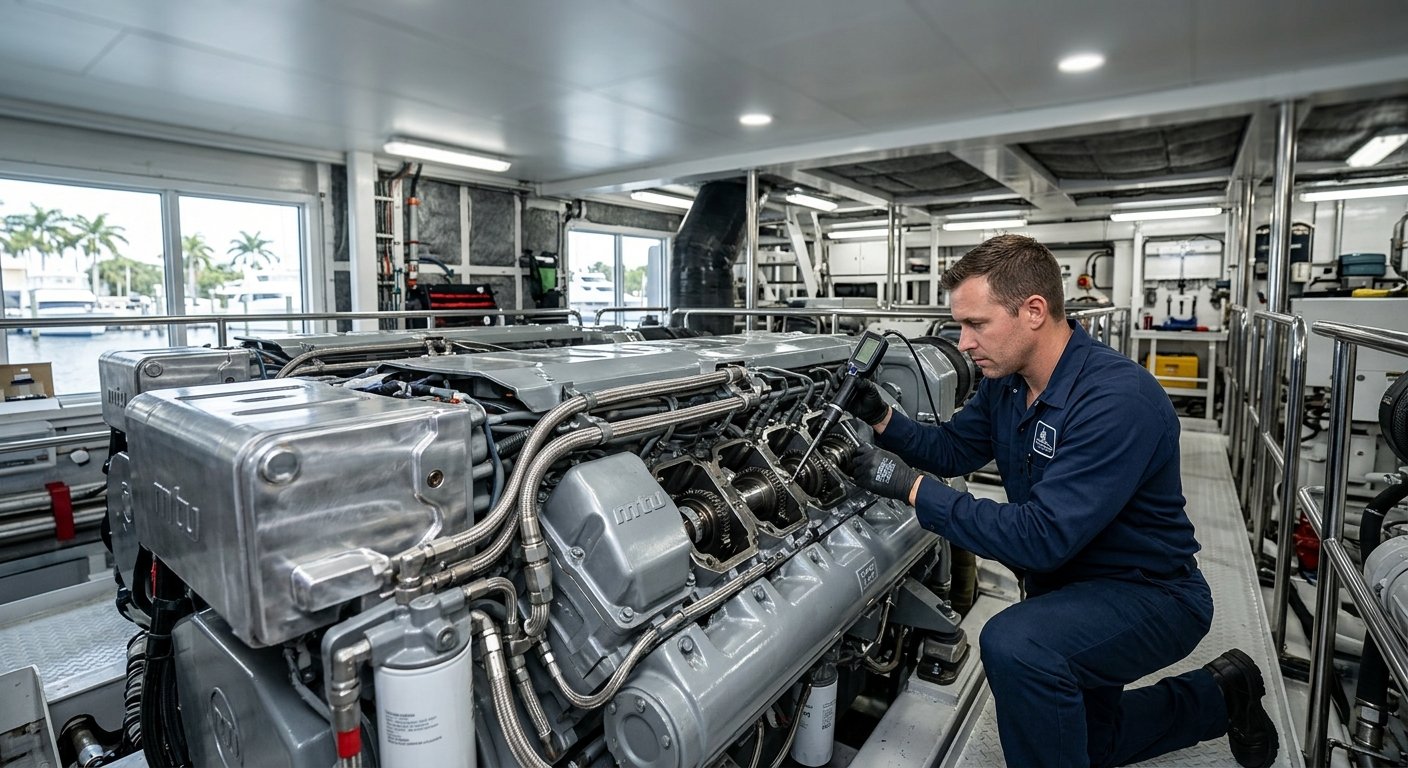
A factory-authorized marine diesel oil change is not simply draining and refilling. Executed correctly by a qualified technician, it includes a systematic inspection of interconnected systems that share the same service interval. Here’s what that process looks like at the professional level:
Oil Analysis Before the Drain
Taking an oil sample before draining provides diagnostic data on wear metal concentrations, fuel dilution, coolant contamination, and remaining additive life. This information identifies developing problems—bearing wear, injector leaks, head gasket seepage—before they become critical failures. Many yacht owners managing their maintenance budget find that oil analysis pays for itself by catching one serious issue early.
Filter Replacement with OEM Components
Oil filters in marine diesel engines are precision components engineered to specific bypass pressure ratings, micron ratings, and anti-drainback valve specifications. Substituting an aftermarket filter that looks identical on the outside but differs in these parameters can result in inadequate filtration, early bypass, or oil starvation at startup. Factory-authorized service providers use OEM filters—not alternatives that are merely close enough.
Inspection of Adjacent Systems
During a proper oil service, technicians inspect the raw water cooling circuit, check zinc anodes where accessible, examine belt and hose condition, inspect the crankcase ventilation system, and verify that the oil cooler is performing correctly. These items take minutes to check during an oil change but can take hours to diagnose when they cause failures offshore.
Fluid Top-Off and System Verification
After refilling with the manufacturer-specified oil grade and quantity, the engine is started, brought to operating temperature, and checked for leaks at the drain plug, filter, and gasket surfaces. Oil pressure readings are verified against specification. This step is not optional—it’s the confirmation that the service was completed correctly.
Warning Signs Your Engine Oil Needs Attention Now
Between scheduled services, several indicators suggest your engine oil or lubrication system needs immediate professional attention:
- Oil pressure gauge reading below normal operating range — stop the engine and investigate before continuing
- Milky or gray oil on the dipstick — indicates coolant contamination, a serious finding requiring immediate diagnosis
- Dark, fuel-smelling oil — suggests fuel dilution from injector or injection pump issues
- Excessive oil consumption between changes — points to ring wear, valve seal failure, or turbocharger oil seal degradation
- Oil leaks on the engine exterior or bilge — can indicate gasket failure or fitting issues that will worsen under load
None of these symptoms should be monitored from a distance. Each one points to a condition that a qualified marine diesel technician needs to diagnose properly. The BoatUS Foundation’s engine safety guidelines emphasize that engine warning signs should be addressed before the next voyage, not after.
The Long-Term Case for Factory-Authorized Oil Service
Marine diesel engines are built to last. Properly maintained Detroit Diesel engines have logged 40,000+ hours in commercial service. Westerbeke auxiliaries and Northern Lights generators aboard well-maintained yachts routinely outlast the vessels themselves. That longevity is not accidental—it’s the direct result of disciplined, manufacturer-specification maintenance performed by technicians who understand the equipment at a fundamental level.
As factory-authorized marine diesel specialists serving Palm Beach County and Broward County, RPM Diesel approaches every oil service as part of a long-term engine health program, not a quick-turn commodity job. Our team works specifically with Detroit Diesel/MTU, Northern Lights, Kohler, and Westerbeke equipment, using OEM parts and fluids that meet or exceed factory specifications.
Our marine diesel engine service program is built around manufacturer schedules, which means we’re not guessing at intervals or substituting equivalent-enough parts. We follow the same procedures the factory defines—because that’s what protects your investment over the long term.
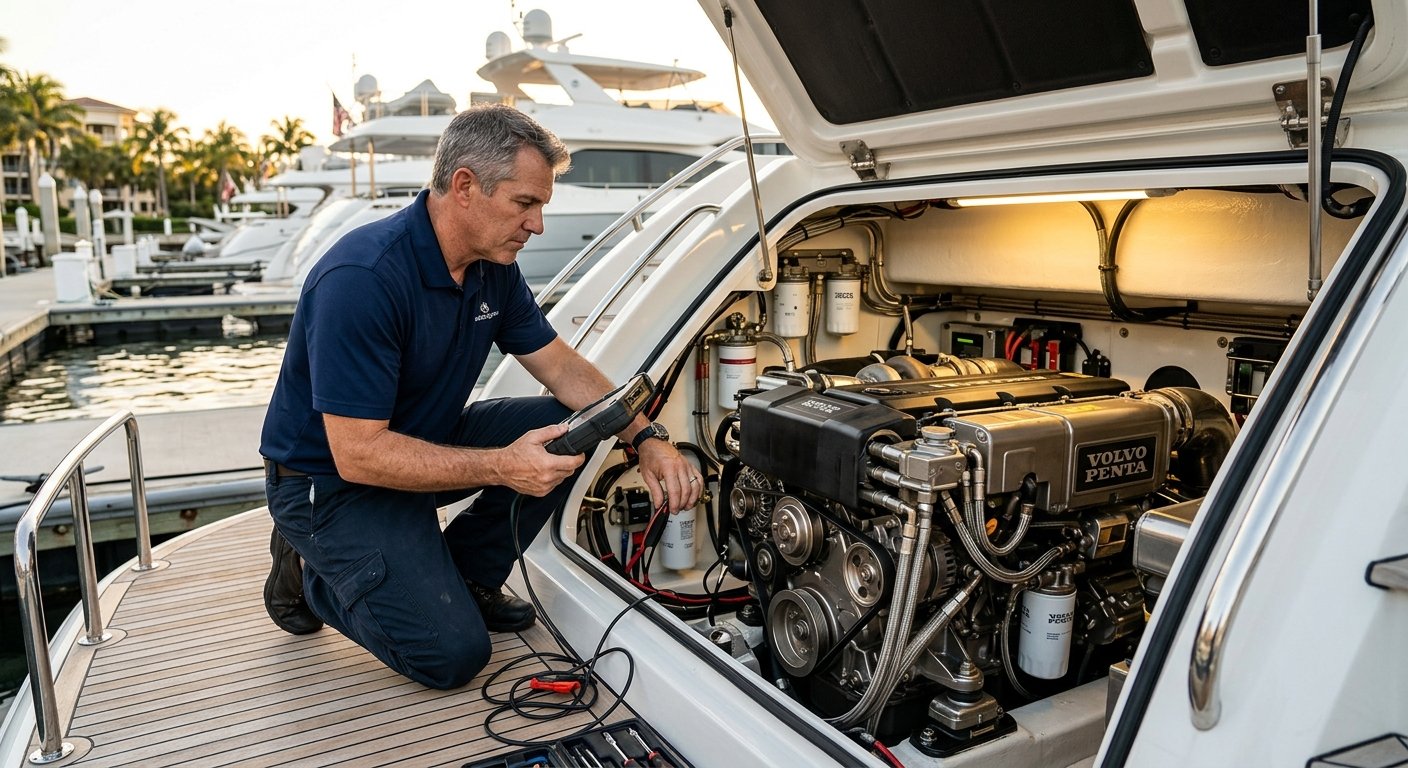
For vessels that cannot come to us, our on-site diesel marine engine service brings factory-authorized capability directly to your dock or slip. South Florida yacht owners throughout Palm Beach and Broward County rely on this service to keep their maintenance current without disrupting vessel schedules.
Frequently Asked Questions
How do I know which oil specification my marine diesel engine requires?
Your engine’s operation and maintenance manual specifies the required oil viscosity grade and API/ACEA performance classification. Detroit Diesel/MTU, Westerbeke, Northern Lights, and Kohler all publish detailed fluid specifications for each engine model and series. If your manual is unavailable, a factory-authorized service provider like RPM Diesel can look up the correct specification by engine model and serial number.
Can I use automotive diesel oil in my marine engine?
Some automotive diesel oils meet the minimum API classification required by marine engines, but marine applications demand careful verification. Marine engines operate under different duty cycles, heat loads, and environmental conditions than automotive applications. Using an oil that meets the exact factory-specified classification—including any marine-specific additive requirements—is the only way to maintain manufacturer compliance and warranty coverage where applicable.
What happens if I go past the recommended oil change interval?
Extended oil change intervals accelerate wear metal accumulation, deplete acid-neutralizing additives, degrade viscosity index improvers, and allow oxidation products to build up in the oil. In marine diesel engines, this translates to accelerated bearing wear, increased risk of oil oxidation-related varnish deposits, and reduced protection during the next startup cycle. The cost of an overdue oil change compounds with every hour of operation past the service limit.
How is a generator set oil change different from a propulsion engine service?
Generator sets like Northern Lights, Kohler, and Westerbeke units typically run at constant RPM under continuous load, which creates a different oil degradation profile than propulsion engines that operate across a range of throttle positions. Generator service intervals are often shorter on an hourly basis and require specific attention to the governor system, alternator connections, and load bank testing as part of a complete service.
Should I have my oil analyzed at every service?
Oil analysis is strongly recommended for high-hour engines, engines with known histories of issues, and vessels operating in demanding conditions. For newer engines on regular service intervals, analysis at every other service provides useful trend data without unnecessary expense. Any time an oil sample shows abnormal wear metals or contamination, the next service should include analysis to confirm the issue is resolved.
Protect Your Engine Investment
The marine diesel oil change is the single most cost-effective service a vessel owner can invest in. Done correctly, at manufacturer-specified intervals, with OEM-specification fluids and filters, it is the backbone of a comprehensive marine diesel engine service program that extends engine life, reduces unplanned repair costs, and keeps your vessel operating reliably when it matters most.
RPM Diesel serves yacht and boat owners throughout Palm Beach County and Broward County with factory-authorized service on Detroit Diesel/MTU, Northern Lights, Kohler, and Westerbeke equipment. Contact our team to schedule your next marine diesel oil service or to establish a preventive maintenance program tailored to your vessel’s specific engines and operating profile.