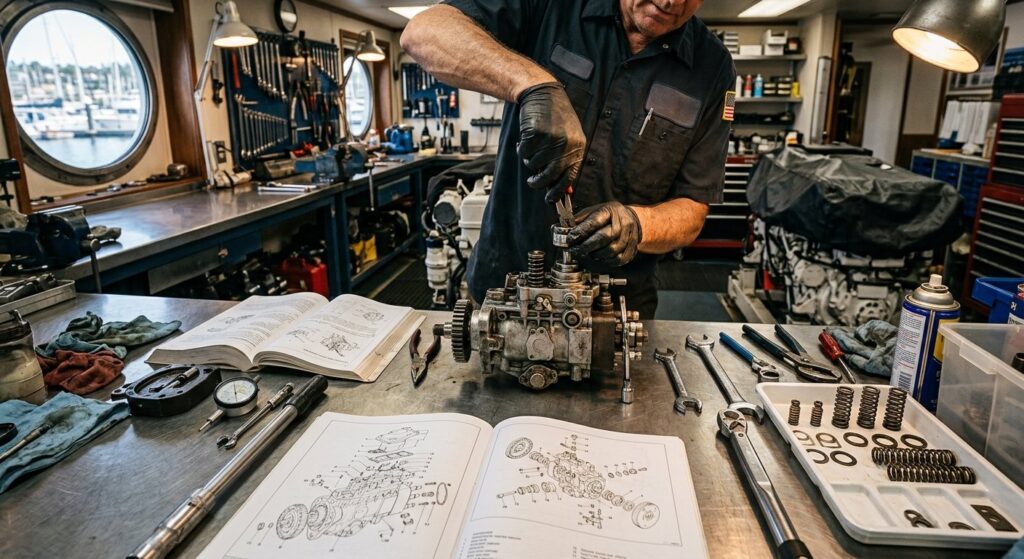
Your yacht’s injection pump is the heartbeat of its fuel system. When it starts to fail, you don’t get a lot of warning — and when it finally goes, you’re looking at a vessel that won’t start, won’t perform, or won’t get you home safely. Understanding what marine diesel injection pump repair involves helps you make better decisions about your vessel before a problem becomes a crisis.
This is a component that demands respect. Injection pumps operate under extreme pressure — often exceeding 20,000 PSI in modern common-rail systems — and they’re precision-machined to tolerances measured in microns. That’s not hyperbole. According to DieselNet’s fuel injection technology overview, modern diesel injection systems require component precision that makes them among the most technically demanding assemblies in any engine. One worn component, contaminated fuel event, or missed service interval can compromise the entire system.
Here’s what South Florida yacht owners need to know about the repair process, what causes failure, and why the technician and parts source you choose makes all the difference.
How the Injection Pump Fits Into Your Fuel System
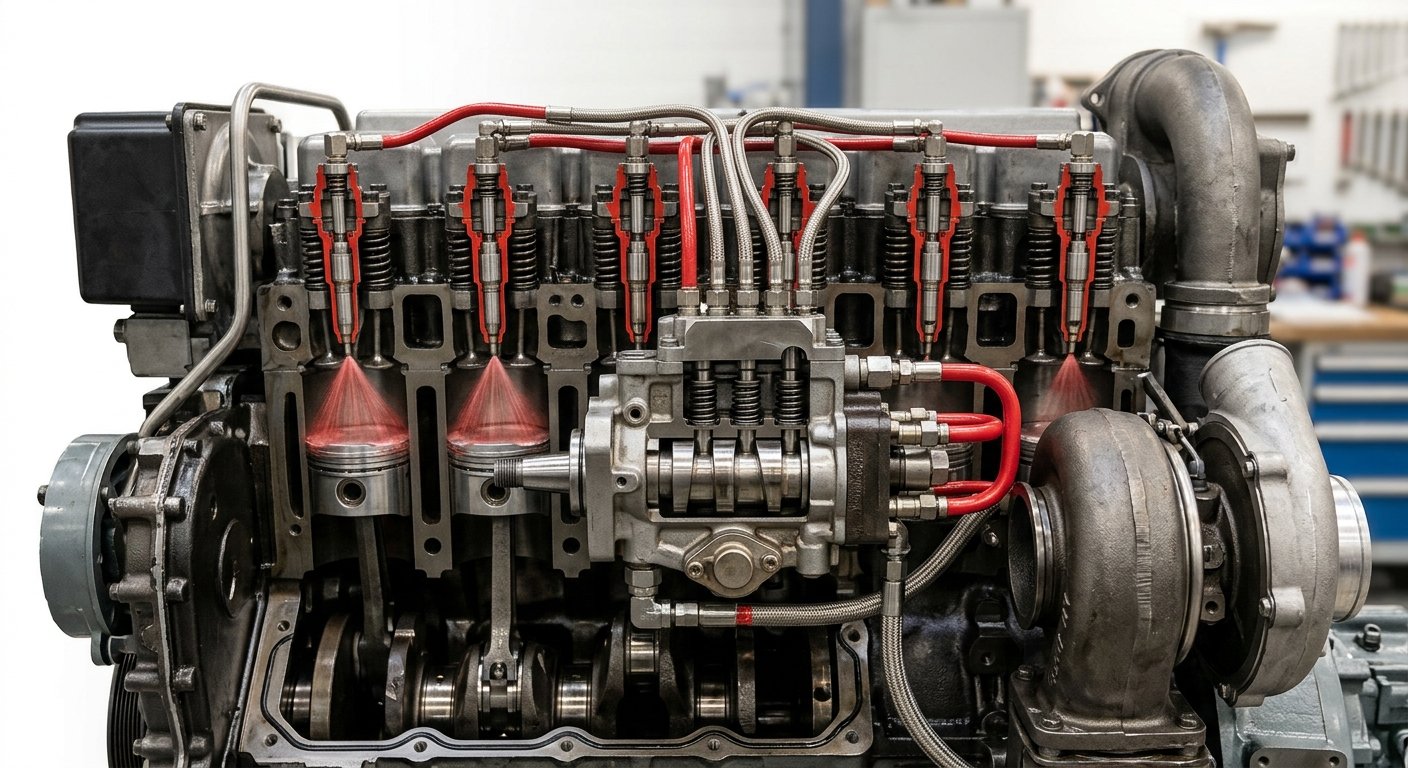
The injection pump’s job is to deliver precisely metered, high-pressure fuel to each injector at exactly the right moment in the combustion cycle. Timing, pressure, and volume all have to be right — simultaneously, every time the engine fires. On Detroit Diesel/MTU engines, this system is engineered to manufacturer specifications that govern everything from injection timing advance curves to maximum delivery tolerances.
Marine diesel fuel delivery problems often originate at the injection pump because it’s the component under the most stress in the fuel system. It interfaces with engine timing, responds to throttle input, compensates for load changes, and keeps the fuel-air ratio in balance across a wide RPM range. When it starts to wear, nothing downstream can compensate.
Warning Signs That Indicate Injection Pump Problems
Catching injection pump issues early is the difference between a repair and a full replacement. Watch for these symptoms on your vessel:
- Hard starting or extended cranking: If the engine requires significantly more cranking than usual before it fires, low fuel pressure from a worn pump is a likely culprit.
- Black or excessive smoke from the exhaust: Rich-running conditions caused by poor fuel metering produce dark exhaust smoke that’s visible even at idle.
- Loss of power or sluggish throttle response: If the vessel struggles to reach normal cruising RPM or feels flat under load, injection volume may be insufficient.
- Rough idle or misfiring: Uneven fuel delivery between cylinders creates an unsteady idle, surging, or a knocking sound at low RPM.
- Increased fuel consumption: A pump that’s out of calibration can cause the engine to run inefficiently, burning more fuel for less output.
- Fuel in engine oil: A leaking high-pressure pump seal can allow diesel to migrate into the crankcase — a serious condition requiring immediate attention.
These symptoms overlap with other marine diesel fuel delivery problems — clogged filters, failing lift pumps, or deteriorated injectors — which is exactly why yacht injection pump troubleshooting requires proper diagnosis rather than guesswork. Replacing a pump that doesn’t need replacing is an expensive mistake.
The Diagnostic Process: Where Repair Begins
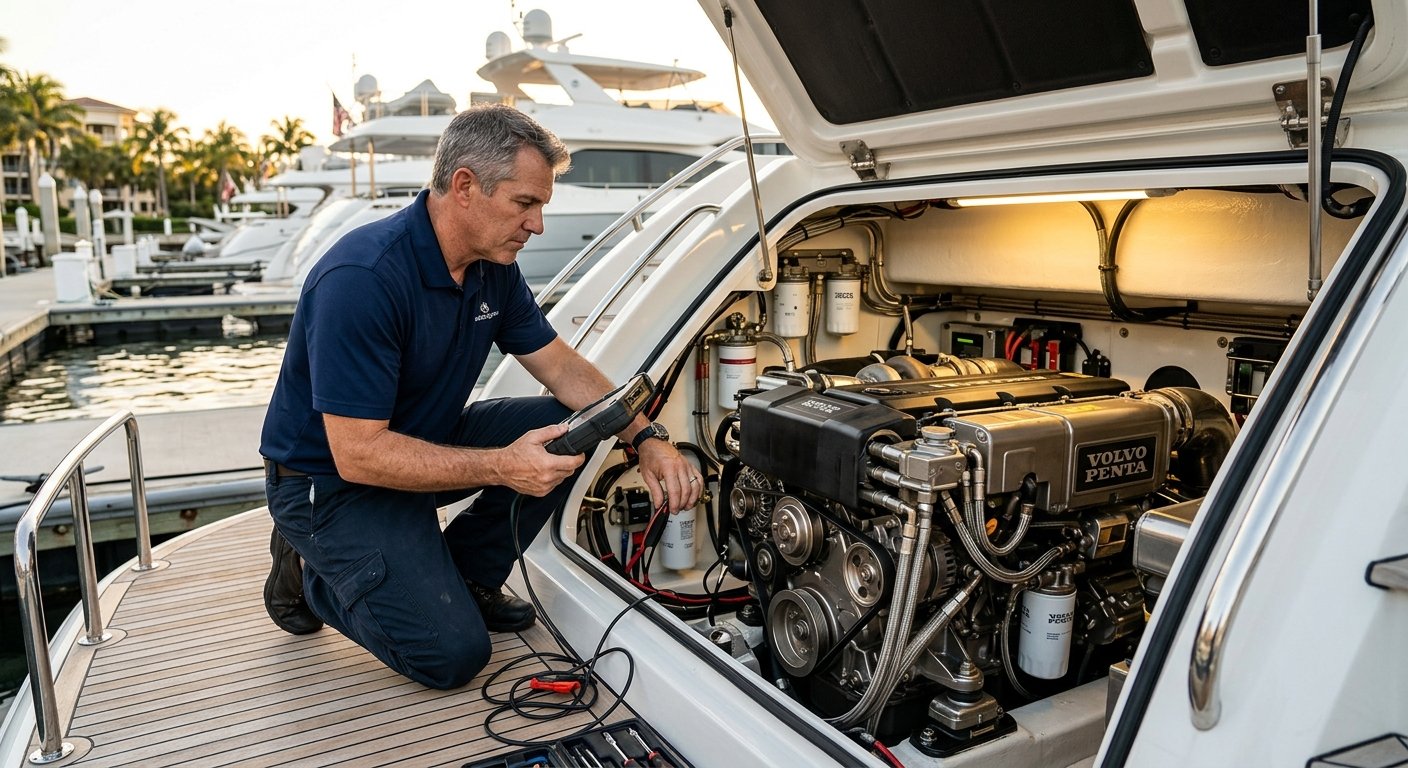
Experienced marine diesel technicians don’t start with parts — they start with data. A proper diagnostic evaluation will include:
Fuel Pressure Testing
Testing supply pressure from the lift pump, checking fuel delivery volume, and measuring pressure drop across filters helps isolate whether the problem is upstream of the injection pump or within it.
Injection Timing Verification
Timing that has drifted out of specification causes performance problems that can mimic pump failure. Verifying timing against manufacturer specs is a fundamental first step before any pump work begins.
Cylinder Balance Testing
On multi-cylinder engines, cutting out cylinders individually while monitoring RPM drop helps identify whether one or more cylinders are receiving inadequate fuel — a sign of uneven pump delivery or injector failure.
Fuel Quality Inspection
Water contamination, microbial growth, and fuel degradation are significant drivers of injection pump failure in marine environments. Any repair without addressing fuel quality is likely to result in repeat failure. The EPA’s diesel fuel standards documentation reinforces why fuel quality specifications matter — contaminated or off-spec fuel accelerates wear throughout the injection system.
What Boat Fuel Injection Pump Service Actually Involves
Once the diagnostic work confirms an injection pump problem, the repair scope becomes clearer. Depending on the findings, service may involve:
In-Place Adjustments and Calibration
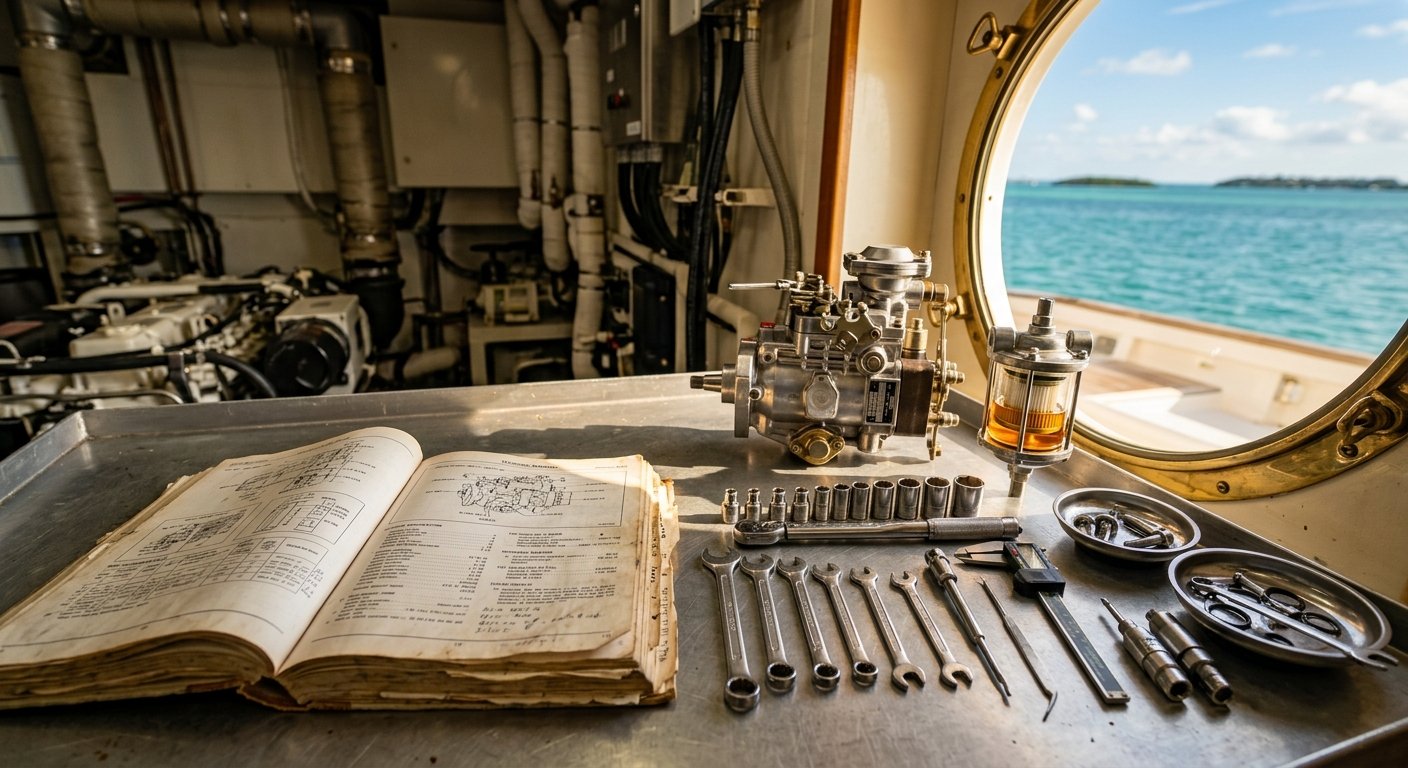
If the pump mechanism is mechanically sound but timing or delivery volume has drifted, recalibration to manufacturer specifications may restore proper function. This is performed using factory-specified tooling and procedures — not approximations.
Pump Removal and Bench Testing
Many injection pump issues can only be fully evaluated off the engine, on a calibrated test bench. This allows technicians to measure delivery volume at various RPM points, check pressure output, and identify internal wear that isn’t apparent during on-engine testing.
Internal Component Replacement
Plunger and barrel assemblies, delivery valves, governor components, and seals are precision parts that wear over time. Replacement with OEM components — not aftermarket alternatives — ensures the pump returns to factory specification. On Detroit Diesel/MTU engines, this distinction matters significantly; manufacturer-spec components are designed and toleranced specifically for those engines.
Complete Pump Replacement
In cases where internal wear is extensive or where a factory-remanufactured unit is available and economically sensible, replacement may be the right path. A quality remanufactured pump from the original manufacturer is not the same as a cheap aftermarket substitute — the difference is in the standards applied during rebuilding.
Why Factory-Authorized Service Matters for Injection Pumps
Injection pump work is not a job for generalist mechanics or shops without marine diesel specialization. The precision involved, the manufacturer-specific procedures required, and the diagnostic equipment needed make factory-authorized service the only appropriate choice for a vessel you depend on.
As a factory-authorized marine diesel service provider specializing in Detroit Diesel/MTU, Northern Lights, Kohler, and Westerbeke equipment, RPM Diesel brings manufacturer-certified expertise to every injection system repair. This means access to factory technical documentation, proprietary diagnostic tooling, and OEM parts that meet the original specifications your engine was designed around.
This matters because injection pump tolerances are not suggestions — they’re engineering requirements. A pump calibrated outside specification may appear to run, but will deliver degraded performance, reduced service life, and potentially damage injectors or other downstream components. Learn more about our comprehensive approach to marine diesel engine service and why manufacturer-specification procedures protect your investment.
Diesel engines that are properly maintained by qualified technicians using OEM parts can deliver 40 or more years of reliable service. That’s not a marketing claim — it’s the documented track record of well-maintained marine diesels around the world. Cutting corners on a precision component like the injection pump is a false economy that shortens that lifespan significantly. The American Boat and Yacht Council’s standards similarly emphasize the importance of qualified service and proper procedures throughout marine engine systems.
After the Repair: What to Monitor
Following injection pump service, a properly conducted sea trial will verify performance across the RPM range. Your technician should confirm:
- Clean exhaust at all throttle positions
- Smooth idle without surging or misfiring
- Normal fuel consumption relative to load and RPM
- Full power delivery at wide-open throttle
- Proper throttle response during acceleration and deceleration
Ongoing preventive maintenance — keeping fuel systems clean, maintaining proper filter change intervals, and using quality fuel with appropriate biocide treatment in South Florida’s warm-water environment — is the best way to protect a rebuilt or replaced pump from early failure.
For Palm Beach County and Broward County vessel owners, our marine diesel engine repair services include complete fuel system evaluation as part of any injection system work.
Frequently Asked Questions
How do I know if my injection pump needs repair or full replacement?
This determination requires proper bench testing and internal inspection. Some pumps can be restored to specification through calibration or internal component replacement; others have wear that makes rebuilding impractical. A qualified technician will evaluate the pump and provide an honest recommendation based on its actual condition — not a blanket answer.
How long does marine diesel injection pump repair typically take?
Repair timeframes depend on diagnostic findings, parts availability, and whether the pump can be serviced in place or requires bench work. Having access to a comprehensive parts inventory significantly reduces delays. At RPM Diesel, our extensive parts stock supports faster turnaround on most common Detroit Diesel, MTU, and other major brand components.
Can contaminated fuel damage my injection pump?
Yes — and this is one of the most common causes of premature injection pump failure in marine applications. Water, microbial growth, and particulate contamination cause accelerated wear to precision internal components. Any pump repair should include a full assessment and remediation of the fuel system to prevent repeat failure.
What is yacht injection pump troubleshooting, and why can’t I diagnose it myself?
Proper injection pump troubleshooting requires specialized test equipment including flow benches, pressure gauges calibrated to manufacturer specifications, and diagnostic knowledge of the specific engine platform involved. Without this equipment and expertise, it’s not possible to accurately differentiate between pump failure, injector problems, and upstream fuel delivery issues — and misdiagnosis leads to unnecessary parts replacement and continued problems.
Does RPM Diesel service injection pumps on generators as well as propulsion engines?
Yes. Marine generator sets — including Northern Lights, Kohler, and Westerbeke units — use diesel injection systems that require the same level of precision service as propulsion engines. Our marine diesel generator repair services include complete fuel system work on all major generator brands we’re authorized to service.
Schedule Injection System Service in South Florida
If your vessel is showing signs of fuel system trouble — hard starting, rough running, smoke, or power loss — don’t wait for a complete failure at sea. RPM Diesel serves Palm Beach County and Broward County with factory-authorized marine diesel expertise and a comprehensive parts inventory that supports fast, accurate repairs to manufacturer specification.
Contact RPM Diesel today to schedule a diagnostic evaluation and get your vessel’s injection system performing the way it was designed to.