Yacht engine cylinder repair involves diagnosing and restoring worn, scored, or cracked cylinder components inside a marine diesel engine — including sleeves, pistons, rings, and cylinder heads. The process can range from a sleeve replacement on a single cylinder to a full block overhaul. For yacht owners in Palm Beach or Broward County, understanding what this work entails helps you make informed decisions about your vessel’s long-term reliability.
- Cylinder problems rarely appear without warning — oil consumption, white or blue smoke, and power loss are early indicators.
- Factory-authorized diagnosis is essential before any cylinder work begins; guessing leads to repeat failures.
- OEM parts and manufacturer-specification procedures are what separate a lasting repair from a temporary fix.
- Properly rebuilt marine diesels — Detroit Diesel/MTU in particular — can deliver reliable service for 40+ years.
- Deferring cylinder repair rarely saves money; it typically accelerates collateral damage to bearings, turbochargers, and injectors.
Why Cylinder Condition Is Central to Engine Health
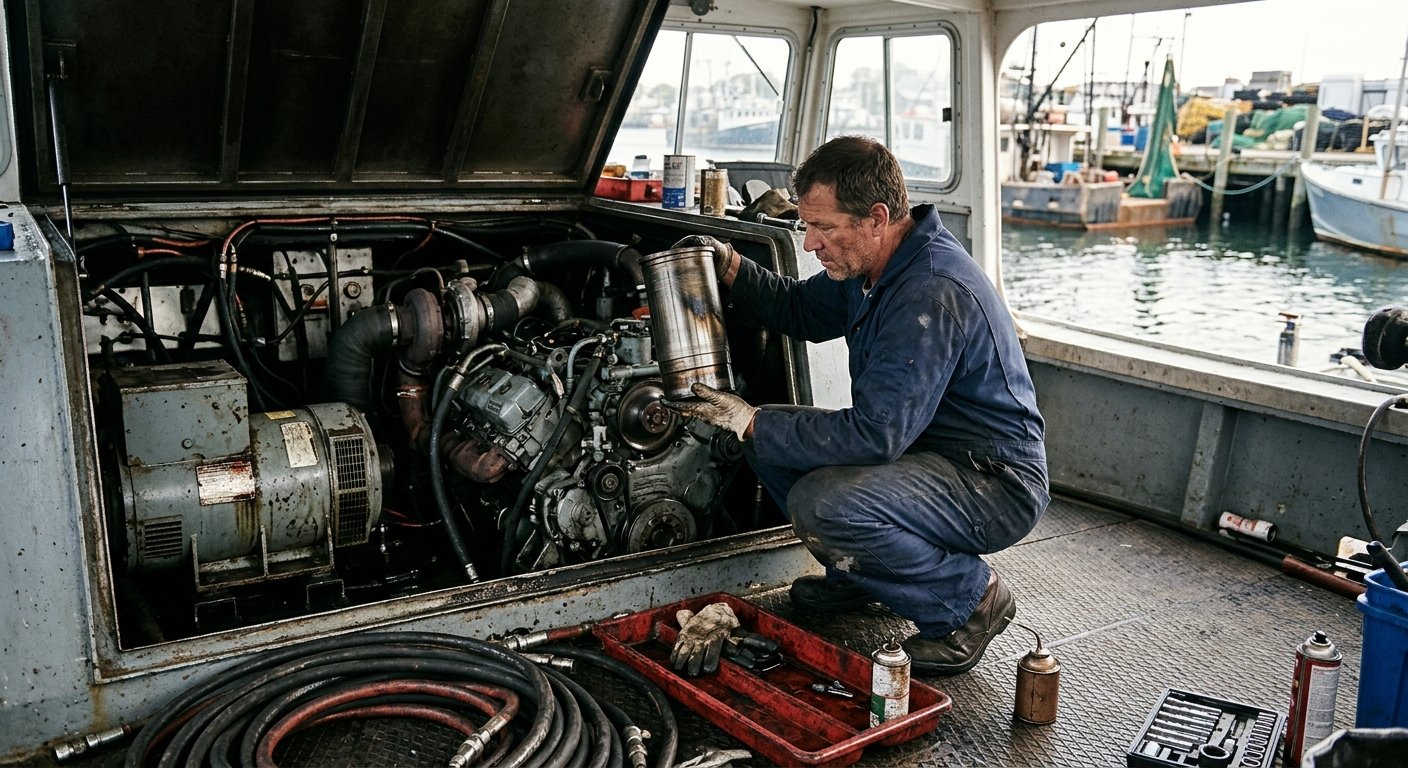
The cylinder is where combustion actually happens. Inside each one, a precisely machined sleeve, piston, and ring set work together to compress air-fuel mixture, contain the power stroke, and seal combustion gases away from the crankcase. When any part of that system degrades — through wear, overheating, cavitation erosion, or contaminated fuel — the entire engine suffers.
Marine diesel engines operate under conditions that are demanding in ways automotive engines are not. They run at sustained loads for extended periods, cycle through temperature extremes as you move from a cool marina to open water, and are exposed to the corrosive effects of a saltwater environment. According to the U.S. Coast Guard, engine failure remains one of the leading causes of maritime distress calls — and a significant portion of those failures trace back to deferred maintenance on core engine components like cylinders and cooling systems.
Continuing to operate a vessel with a misfiring or smoking cylinder doesn’t just worsen that cylinder — it overloads adjacent cylinders, stresses the turbocharger, and can push coolant or oil contamination through the entire engine. What starts as a sleeve issue can become a full block replacement if ignored.
Signs Your Yacht Engine Needs Cylinder Attention
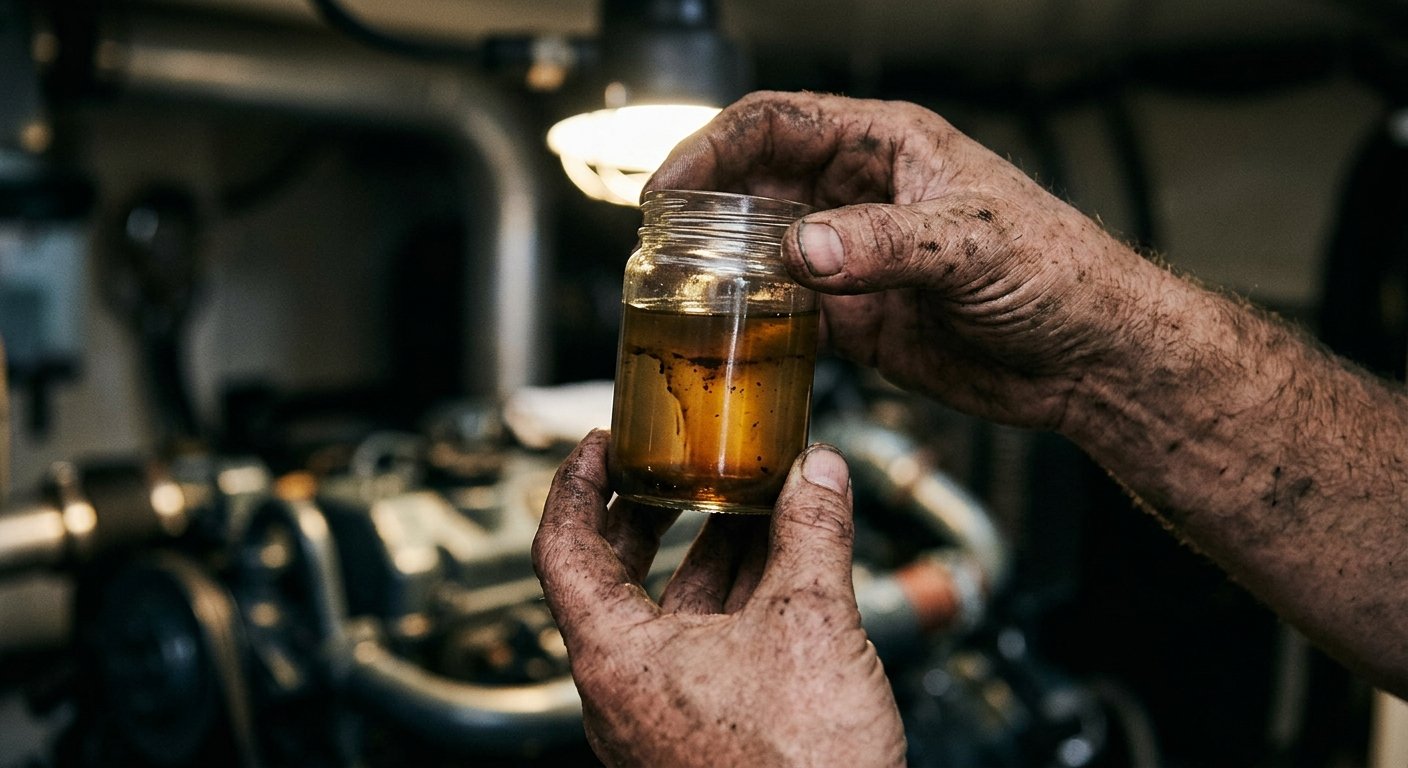
Most cylinder problems give you a window of warning before catastrophic failure. Recognizing these symptoms early and scheduling professional marine diesel engine repair is the difference between a targeted fix and a complete engine rebuild.
- Excessive oil consumption with no visible external leaks — worn rings or scored sleeves allow oil to enter the combustion chamber.
- Blue or gray exhaust smoke under load, indicating oil burning in the cylinder.
- White smoke and coolant loss — a cracked cylinder head or blown head gasket allowing coolant into the combustion space.
- Loss of compression on one or more cylinders — measurable during a compression test and a direct indicator of cylinder seal failure.
- Rough running or misfires that persist after fuel system checks are cleared.
- Milky oil — the classic sign of coolant and oil mixing, almost always tied to a head gasket or sleeve O-ring failure.
None of these symptoms should be self-diagnosed and treated with additives or temporary fixes. Proper boat diesel engine troubleshooting requires pressure testing, borescope inspection, compression testing, and in many cases a full teardown to accurately assess cylinder condition.
What the Cylinder Repair Process Actually Looks Like
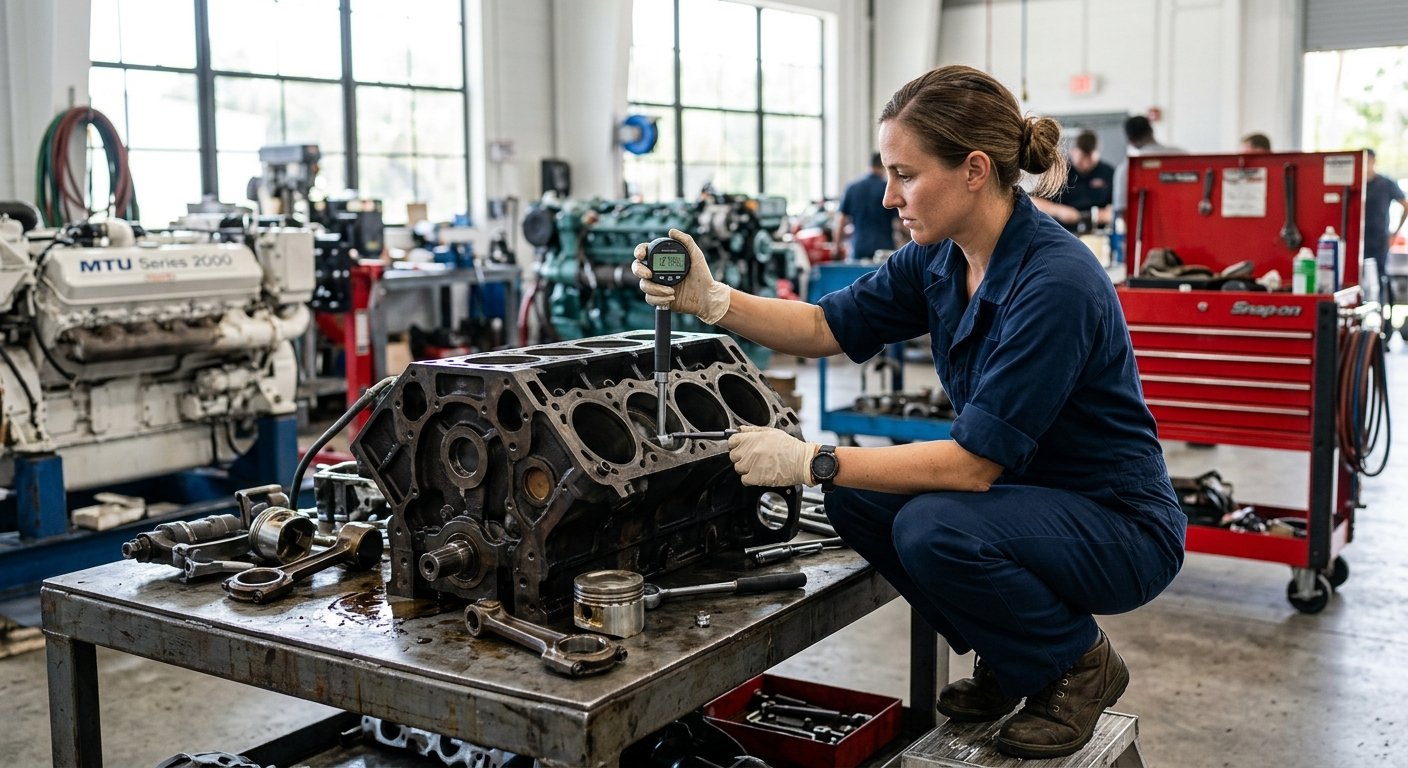
When a factory-authorized technician approaches cylinder repair, the process is methodical. Nothing is assumed. Every decision is driven by measurement and manufacturer specifications — not guesswork.
Diagnosis and Documentation
The engine is thoroughly tested before disassembly. Compression tests, cylinder leakdown tests, oil analysis, and borescope inspection establish a baseline. This determines whether the issue is isolated to one cylinder or systemic across the block.
Disassembly and Measurement
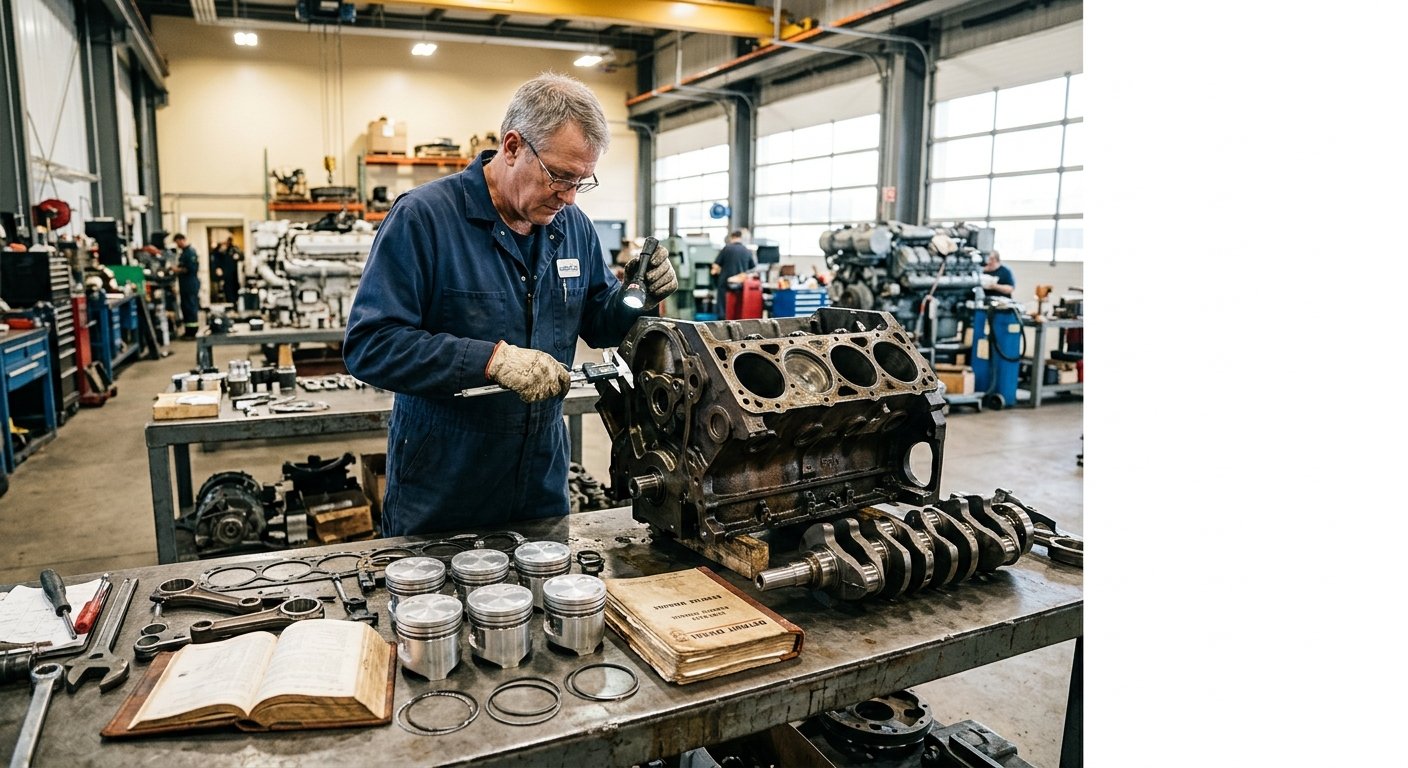
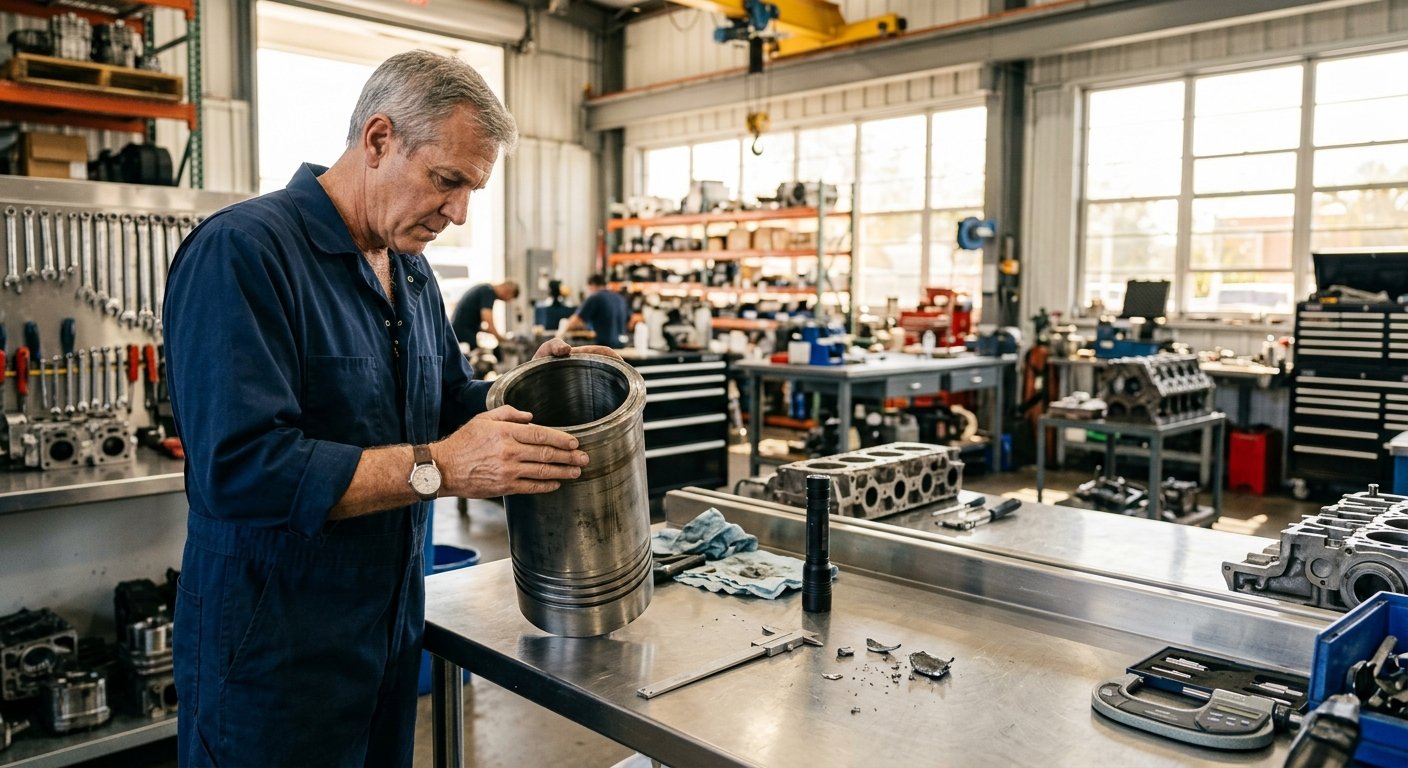
The cylinder head is removed and all components are measured against OEM specifications. Sleeve bore diameter, piston skirt clearance, ring end gaps, and head flatness are all checked. Detroit Diesel/MTU engines, for example, have very specific tolerances that must be met exactly.
Component Evaluation
Worn or damaged parts are identified. Cylinder sleeves showing cavitation erosion, scoring, or out-of-round wear are flagged for replacement. Pistons, rings, wrist pins, and head gaskets are evaluated. Only OEM replacement components meet the metallurgical and dimensional standards required for long-term reliability.
Machining and Reconditioning
Cylinder heads are surfaced to manufacturer flatness specifications. Block decks are inspected. Sleeves are pressed in and finish-honed to the correct bore diameter. All valve seats and guides are reconditioned to restore proper combustion sealing.
Reassembly and Testing
Reassembly follows torque specifications to the letter. After the engine is reinstalled or started in place, it goes through a controlled break-in and load test to confirm compression, oil pressure, coolant temperatures, and exhaust characteristics are all within spec.
Cylinder Repair vs. Full Engine Rebuild: How to Decide
One of the most common questions vessel owners face is whether to repair specific cylinder components or invest in a comprehensive marine engine rebuild service. The answer isn’t one-size-fits-all — it depends on engine hours, the condition of the rest of the bottom end, and the specific failure mode.
| Factor | Targeted Cylinder Repair | Full Engine Rebuild |
|---|---|---|
| Damage scope | Isolated to 1-2 cylinders | Multiple cylinders or crankshaft/bearing wear |
| Engine hours | Below typical overhaul interval | At or beyond manufacturer overhaul interval |
| Oil analysis results | Single-cylinder contamination | Widespread metal particles across engine |
| Compression readings | One or two cylinders low | Multiple cylinders significantly below spec |
| Cost profile | More targeted, lower scope | Higher upfront, lower long-term risk |
For Detroit Diesel/MTU engines — which RPM Diesel specializes in as a factory-authorized service provider — manufacturer overhaul intervals and rebuild specifications are well-documented and should guide this conversation. The Society of Naval Architects and Marine Engineers consistently emphasizes that planned maintenance based on manufacturer intervals outperforms reactive repair in both cost and reliability over a vessel’s lifecycle.
A targeted cylinder repair done correctly to factory specifications is always preferable to a rushed job that leaves the root cause unresolved.
The OEM Parts Difference in Cylinder Work
When cylinder sleeves, piston rings, head gaskets, or valve components are replaced, the parts used determine how long that repair lasts. OEM components from Detroit Diesel/MTU, Northern Lights, Kohler, or Westerbeke are engineered to exact tolerances, made from materials that match the original metallurgy, and backed by manufacturer specifications. This matters in a marine environment where thermal cycling, vibration, and saltwater exposure stress every component continuously.
RPM Diesel keeps parts in stock, including hard-to-find and obsolete parts, to support fast, OEM-compliant repairs without extended downtime waiting on special orders. For South Florida yacht owners in Palm Beach and Broward counties, that inventory depth translates directly into faster turnaround on cylinder work.
The ABYC (American Boat and Yacht Council) sets standards for marine engine installation and maintenance that inform best practices across the industry. Factory-authorized service procedures from manufacturers like Detroit Diesel/MTU are aligned with these standards — ensuring that cylinder repairs don’t introduce new risks to vessel safety or systems. Learn more at the ABYC website.
Frequently Asked Questions
How do I know if I need cylinder repair versus other engine work?
Compression testing and cylinder leakdown tests are the most reliable diagnostic tools for isolating cylinder-specific problems. If compression is within spec but you have rough running or smoke, the issue may be fuel system or turbocharger related. A factory-authorized marine diesel technician can perform proper boat diesel engine troubleshooting to identify the exact cause before any repairs begin.
Can a single cylinder be repaired without pulling the entire engine?
In some cases, yes — particularly with wet-sleeve diesel designs like many Detroit Diesel engines, where individual sleeves can be replaced without removing the entire block. However, the cylinder head must still be removed, and a thorough inspection of adjacent components is always warranted. RPM Diesel offers on-site diesel marine engine service for certain repairs that can be performed at the dock.
How long does yacht engine cylinder repair typically take?
Timing depends on the extent of damage, parts availability, and whether machining is required. Because RPM Diesel maintains an extensive OEM parts inventory, many cylinder repairs avoid prolonged waits for components. Your technician will provide a realistic scope assessment after the initial diagnosis is complete.
What happens if I delay cylinder repairs?
Deferred cylinder work rarely stays contained. A worn sleeve accelerates piston and ring wear. A leaking head gasket introduces coolant into the oil system, contaminating bearings and damaging the crankshaft. What could have been a targeted cylinder repair can escalate into a full marine engine rebuild service with significantly greater cost and downtime.
Does RPM Diesel handle cylinder work on generator engines as well?
Yes. RPM Diesel provides cylinder repair and rebuild services for Northern Lights, Kohler, and Westerbeke marine generators in addition to propulsion diesel engines. Generator engines experience similar cylinder wear mechanisms and benefit from the same factory-authorized repair approach as main engines.
Protecting Your Investment with the Right Service Partner
A yacht engine is a long-term asset. Detroit Diesel/MTU engines that receive proper care — including timely cylinder repair when needed — routinely deliver 40 or more years of reliable service. That kind of longevity doesn’t happen by accident. It happens through disciplined maintenance, manufacturer-specification repairs, and working with a service provider who has both the technical authority and the parts inventory to do the job right.
For South Florida vessel owners, RPM Diesel brings factory-authorized expertise in Detroit Diesel/MTU, Northern Lights, Kohler, and Westerbeke equipment to every cylinder repair — whether it’s a single-sleeve replacement or a comprehensive marine diesel engine repair project. Our technicians follow manufacturer procedures precisely, use only OEM components, and perform thorough post-repair testing before any vessel returns to service. Learn more about our full scope of marine diesel engine service capabilities, or explore our on-site diesel marine engine service options for repairs that can be performed at your dock.
Schedule Cylinder Diagnosis with RPM Diesel
If you’re seeing the warning signs of cylinder wear, don’t wait — contact South Florida’s factory-authorized marine diesel specialists to schedule a proper diagnostic evaluation today.
About RPM Diesel
RPM Diesel is a factory-authorized marine diesel engine service provider specializing in yacht and boat engine maintenance, repair, and generator service throughout South Florida. With expertise in Detroit Diesel/MTU, Northern Lights, Kohler, and Westerbeke equipment, RPM combines deep technical knowledge with a comprehensive parts inventory to deliver reliable, manufacturer-specification service. The company serves recreational yacht owners, commercial marine operators, and vessel managers who value proper maintenance procedures and long-term engine reliability. Visit rpmdiesel.com →