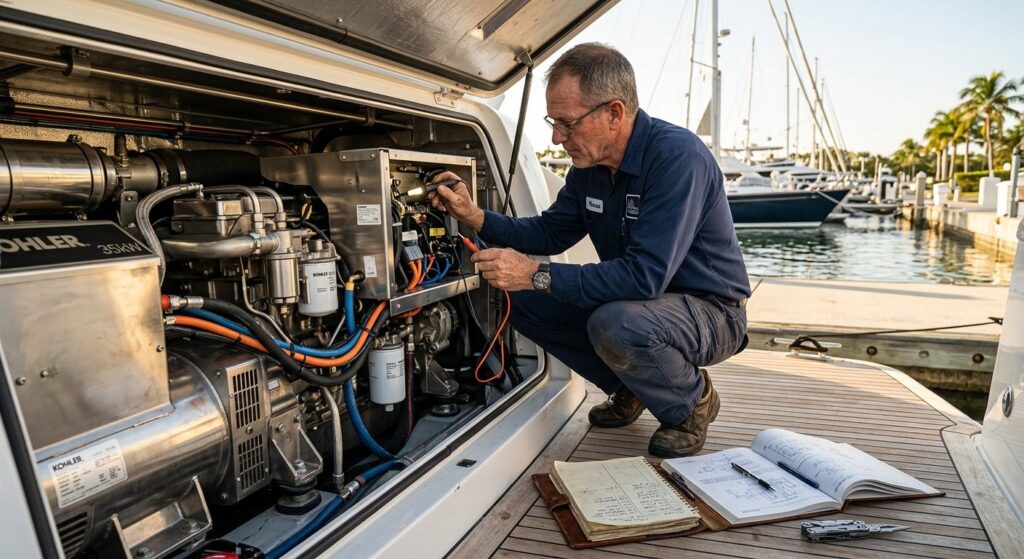
A failed generator at anchor doesn’t just mean discomfort — it can compromise navigation systems, climate control, and safety equipment aboard your vessel. Yet despite being one of the most mechanically stressed systems on any yacht, the genset is often the last thing owners think about until something goes wrong. Understanding marine genset repair, how to recognize early warning signs, and when to call a factory-authorized specialist can mean the difference between a minor service visit and a catastrophic failure at sea.
Why Marine Generators Demand Specialized Attention
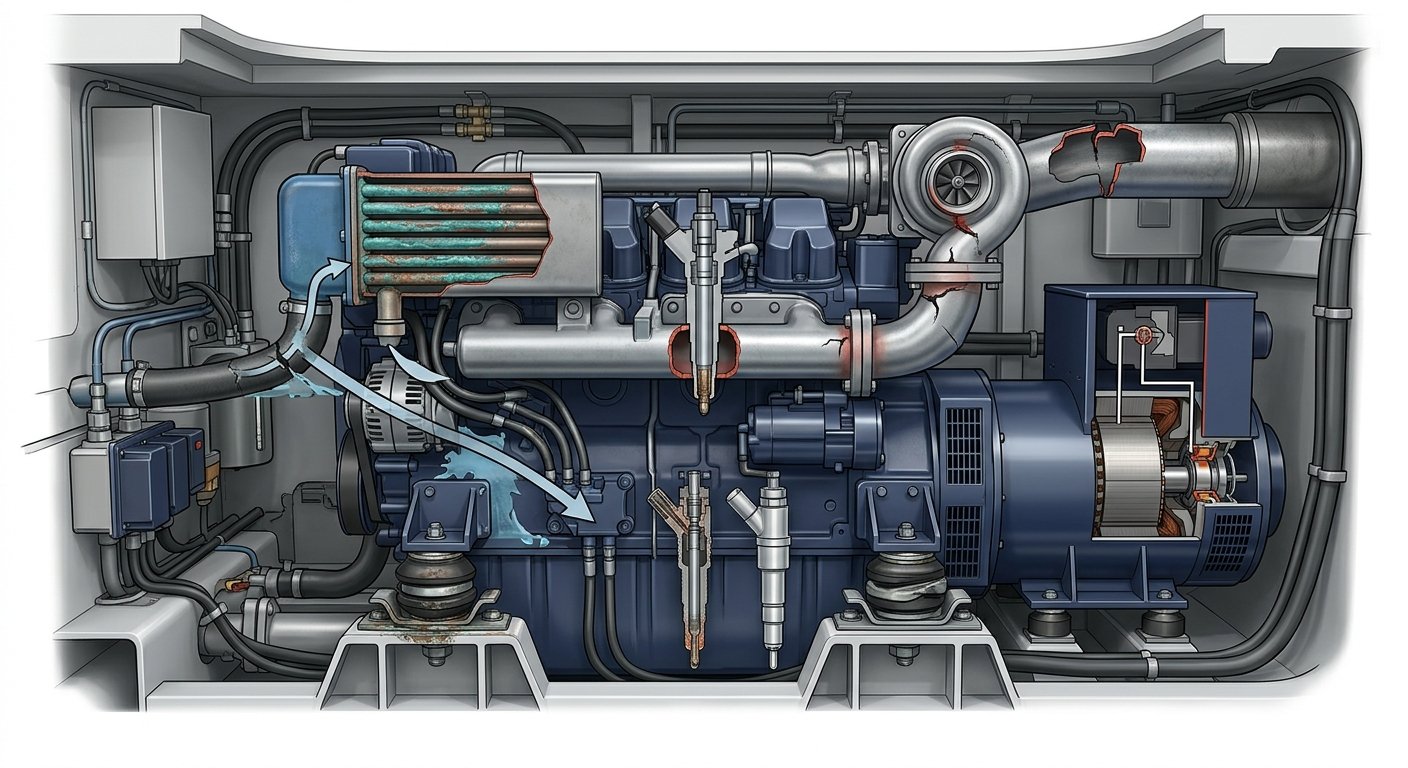
Marine gensets operate in an environment that land-based generators never face: constant vibration, saltwater exposure, variable loads from onboard electronics and HVAC systems, and extended idle periods followed by full-load operation. These conditions accelerate wear on fuel injectors, heat exchangers, impellers, and electrical components in ways that require hands-on expertise to properly diagnose and address.
Unlike automotive or commercial generators, marine diesel generators must meet strict standards for ventilation, fuel safety, and electrical isolation. The American Boat and Yacht Council (ABYC) publishes standards that govern marine electrical and mechanical systems, including generator installations, and factory-authorized service providers are trained to work within those parameters.
Brands like Northern Lights, Kohler, and Westerbeke each have proprietary engineering in their gensets — specific torque specs, fuel timing parameters, load-sharing configurations, and cooling system designs. Servicing these units correctly requires brand-specific knowledge, manufacturer-approved procedures, and access to genuine OEM parts. As South Florida’s factory-authorized specialists for Northern Lights, Kohler, and Westerbeke equipment, RPM Diesel brings that exact expertise to Palm Beach County and Broward County.
Common Marine Genset Problems and What Causes Them
Most genset failures don’t happen without warning. The key is knowing what to look and listen for before a small issue becomes a full breakdown.
Failure to Start or Hard Starting
Hard starting is one of the most frequent complaints in marine genset repair. The causes range from degraded fuel — especially from extended periods of inactivity — to weak glow plugs, clogged fuel filters, or a failing raw water pump that prevents the engine from reaching proper operating temperature. In some cases, extended storage without proper fuel treatment leads to microbial growth in the tank, which can clog the entire fuel delivery system.
Low Output Voltage or Frequency Instability
If your generator runs but sensitive electronics are behaving erratically, or you’re noticing flickering aboard, the genset may be producing unstable output. This often points to a failing alternator, worn brushes, a faulty voltage regulator, or load imbalance. These are issues that require proper electrical diagnostics — not guesswork — to avoid damaging expensive electronics aboard your vessel.
Overheating
Overheating in marine gensets typically traces back to raw water cooling system issues: a worn impeller, clogged heat exchanger, restricted sea strainer, or failed thermostat. Given that the cooling water is drawn directly from the ocean, debris, marine growth, and corrosion are constant threats. Operating a genset in an overheated state even briefly can cause cylinder head damage and warped components requiring major repairs.
Excessive Smoke or Unusual Exhaust
Black smoke typically indicates over-fueling or incomplete combustion — often caused by dirty injectors or incorrect timing. White smoke can indicate coolant intrusion into the combustion chamber, which is a serious red flag for head gasket failure. Blue smoke suggests oil burning. Each color tells a different diagnostic story, and each demands proper equipment and expertise to address correctly.
Abnormal Vibration or Noise
A knocking, rattling, or unusually rough-running genset often points to mounting system wear, injector issues, or internal mechanical problems. Marine generators are mounted on vibration-isolating mounts that degrade over time, and loose or worn mounts can transmit stress to the entire drivetrain and exhaust system.
Yacht Generator Maintenance: Following Manufacturer Schedules
Preventative maintenance is the single most effective way to extend the life of your marine generator and avoid expensive repairs. Properly maintained diesel gensets from brands like Northern Lights and Kohler are engineered to provide reliable service for decades — but only when serviced according to manufacturer specifications.
A standard yacht generator maintenance program typically includes:
- Every 250 hours or annually: Engine oil and filter change, fuel filter replacement, raw water impeller inspection and replacement, belt inspection, and coolant check
- Every 500 hours: Zincs and heat exchanger inspection, injector check, valve clearance adjustment per manufacturer spec, and electrical connection inspection
- Every 1,000 hours: Full injector service, coolant flush and replacement, comprehensive load testing, and exhaust system inspection
- As needed: Sea strainer cleaning, battery service, voltage regulator testing, and raw water hose inspection
These intervals are guidelines based on manufacturer specifications. Actual service needs will vary based on how the vessel is used, where it operates, and how well fuel quality is maintained. A factory-authorized technician will tailor a service schedule to your specific equipment and usage pattern.
Northern Lights, Kohler, and Westerbeke: Brand-Specific Expertise Matters
Not all marine generators are created equal, and not all service providers are qualified to work on every brand. Here’s why brand-specific expertise is critical:
Northern Lights generators are built for demanding offshore and commercial applications. Their cooling systems and load-management capabilities require technicians trained to Northern Lights factory standards. Incorrect service procedures — particularly around injector timing and heat exchanger maintenance — can reduce output efficiency and shorten engine life significantly.
Kohler marine generators are widely used aboard mid-size to large recreational yachts. Kohler’s proprietary control boards and voltage regulation systems require Kohler-specific diagnostic tools and software for accurate troubleshooting. Attempting to diagnose these systems without the proper equipment can lead to misdiagnosis and unnecessary parts replacement.
Westerbeke generators are trusted across a wide range of vessels for their compact design and reliability. Westerbeke’s fuel systems and cooling configurations are distinct, and their service manuals provide detailed specifications that must be followed precisely. RPM Diesel is an authorized Westerbeke service provider, meaning our technicians receive ongoing factory training and have access to the full Westerbeke parts catalog.
For more information on our full marine diesel generator repair capabilities, including the specific brands we service and our diagnostic approach, visit our dedicated service page.
When to Call a Factory-Authorized Specialist
Some genset issues benefit from owner awareness, but diagnosis and repair should always be handled by trained professionals — especially for systems that power critical safety equipment aboard your vessel. Call a marine diesel specialist when you notice:
- Any change in exhaust color or smell
- Generator that won’t start or runs erratically
- Voltage or frequency output outside normal parameters
- Coolant, oil, or fuel leaks around the genset
- Unusual knocking, vibration, or noise during operation
- Warning lights or fault codes on the control panel
- Generator running hotter than normal operating temperature
The U.S. Coast Guard’s Office of Design and Engineering Standards emphasizes that generator-related electrical faults are among the leading causes of onboard fires on recreational vessels — reinforcing why proper, certified service is never optional. Our marine diesel engine service team applies the same factory-specification rigor to generator systems that we bring to main propulsion engines.
Frequently Asked Questions
How often should a marine genset be serviced?
Most manufacturers recommend service intervals based on operating hours rather than calendar time — typically every 250 hours for basic maintenance and every 500–1,000 hours for more comprehensive service. However, vessels that sit idle for extended periods should receive inspection and service at least annually, regardless of hours, since fuel degradation and corrosion can occur without use.
What causes a marine generator to overheat?
The most common causes of marine genset overheating are raw water cooling system failures — specifically a worn or failed impeller, a clogged heat exchanger, a blocked sea strainer, or a failed thermostat. Operating an overheated generator, even briefly, risks serious internal engine damage and should prompt immediate shutdown and inspection by a qualified technician.
Can I use aftermarket parts for marine genset repairs?
RPM Diesel exclusively uses OEM parts for all marine generator repairs. Aftermarket parts may appear compatible but often fail to meet the precise tolerances and material specifications required by manufacturers like Northern Lights, Kohler, and Westerbeke. Using non-OEM components can void your warranty and compromise long-term reliability.
How do I know if my yacht generator needs a major repair?
Indicators of more serious genset issues include white or blue exhaust smoke, loss of power output, internal coolant or oil leaks, unusual metallic noises, and repeated hard-starting despite recent fuel filter service. These symptoms warrant a comprehensive diagnostic inspection by a factory-authorized technician before continued operation.
Does RPM Diesel service generators throughout South Florida?
Yes. RPM Diesel provides factory-authorized marine genset repair and yacht generator service throughout Palm Beach County and Broward County. Our team is equipped with brand-specific diagnostic tools and a comprehensive parts inventory to support Northern Lights, Kohler, and Westerbeke generator service with minimal delay.
Protect Your Investment With the Right Service Partner
A marine genset is one of the most important — and most overlooked — mechanical systems aboard any yacht. Keeping it in proper working order requires more than basic upkeep; it demands brand-specific expertise, adherence to manufacturer service schedules, and genuine OEM parts installed by trained professionals.
RPM Diesel serves yacht owners and vessel managers throughout Palm Beach County and Broward County as a factory-authorized service provider for Northern Lights, Kohler, and Westerbeke marine generators. Whether you’re dealing with a breakdown, scheduling routine maintenance, or diagnosing a persistent issue, our team is ready to help. Contact RPM Diesel today to schedule your marine genset inspection or service appointment.