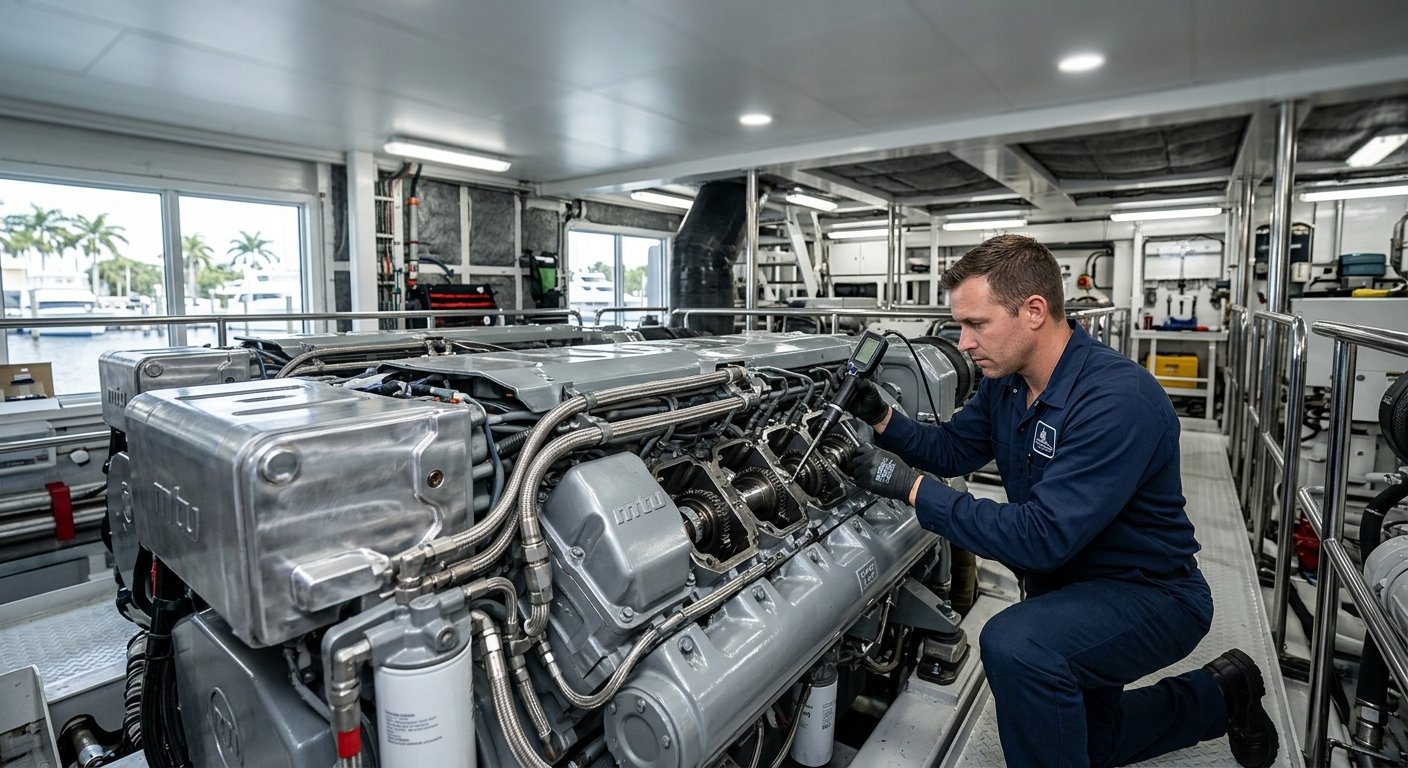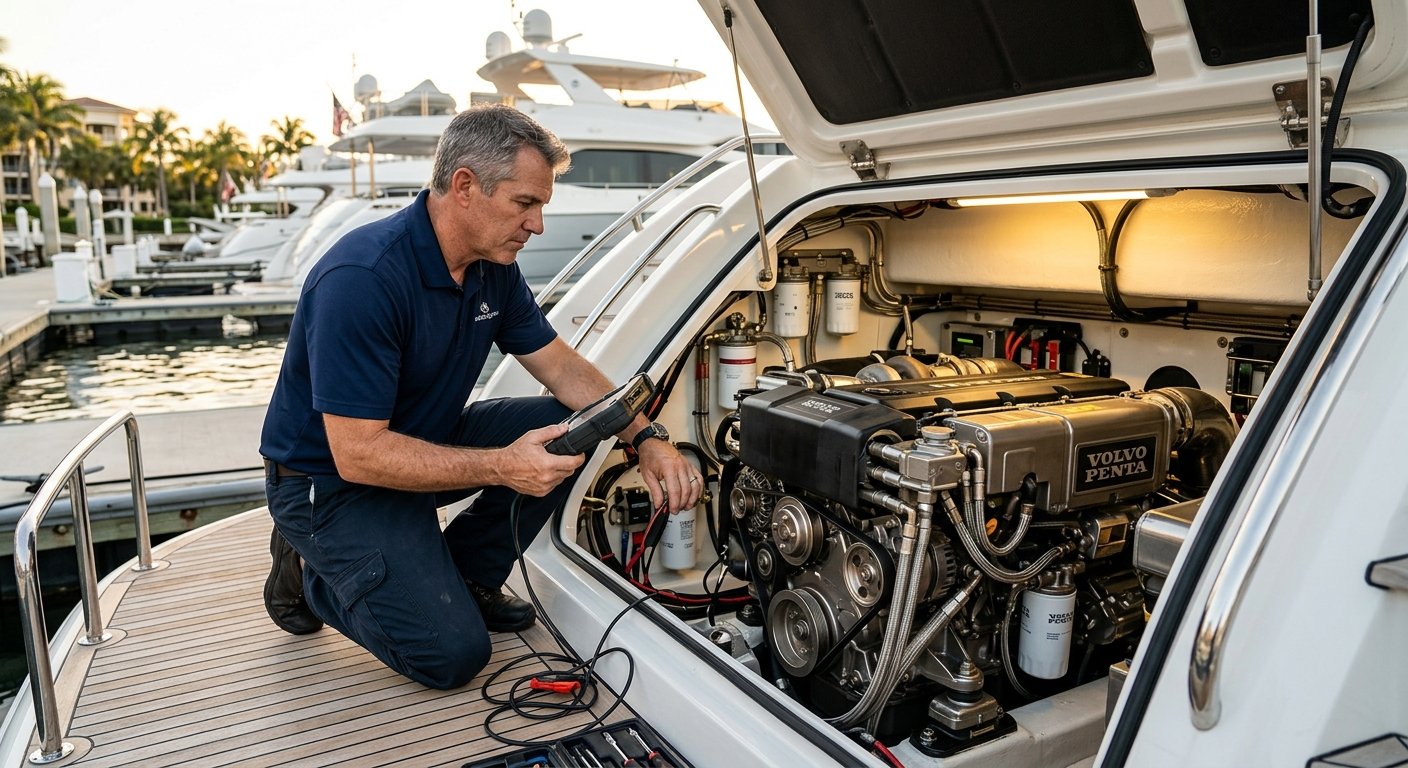
MTU marine engine service requires factory-authorized technicians following manufacturer specifications, OEM parts, and adherence to MTU’s prescribed maintenance intervals. For yacht and vessel owners in Palm Beach and Broward County, proper MTU service is not optional — it is the difference between an engine that lasts decades and one that fails offshore. These engines are precision-engineered systems, and they demand precision-trained care.
- MTU engines require factory-authorized service to maintain warranty validity and manufacturer-specified performance.
- Skipping scheduled maintenance intervals accelerates wear and can turn a minor issue into a major repair.
- OEM parts are non-negotiable — MTU’s tolerances are too tight for aftermarket substitutes to perform reliably.
- RPM Diesel is a factory-authorized Detroit Diesel/MTU service provider serving Palm Beach and Broward County.
- Properly maintained MTU marine diesels can deliver reliable service for 40 years or more.
Why MTU Engines Are Different
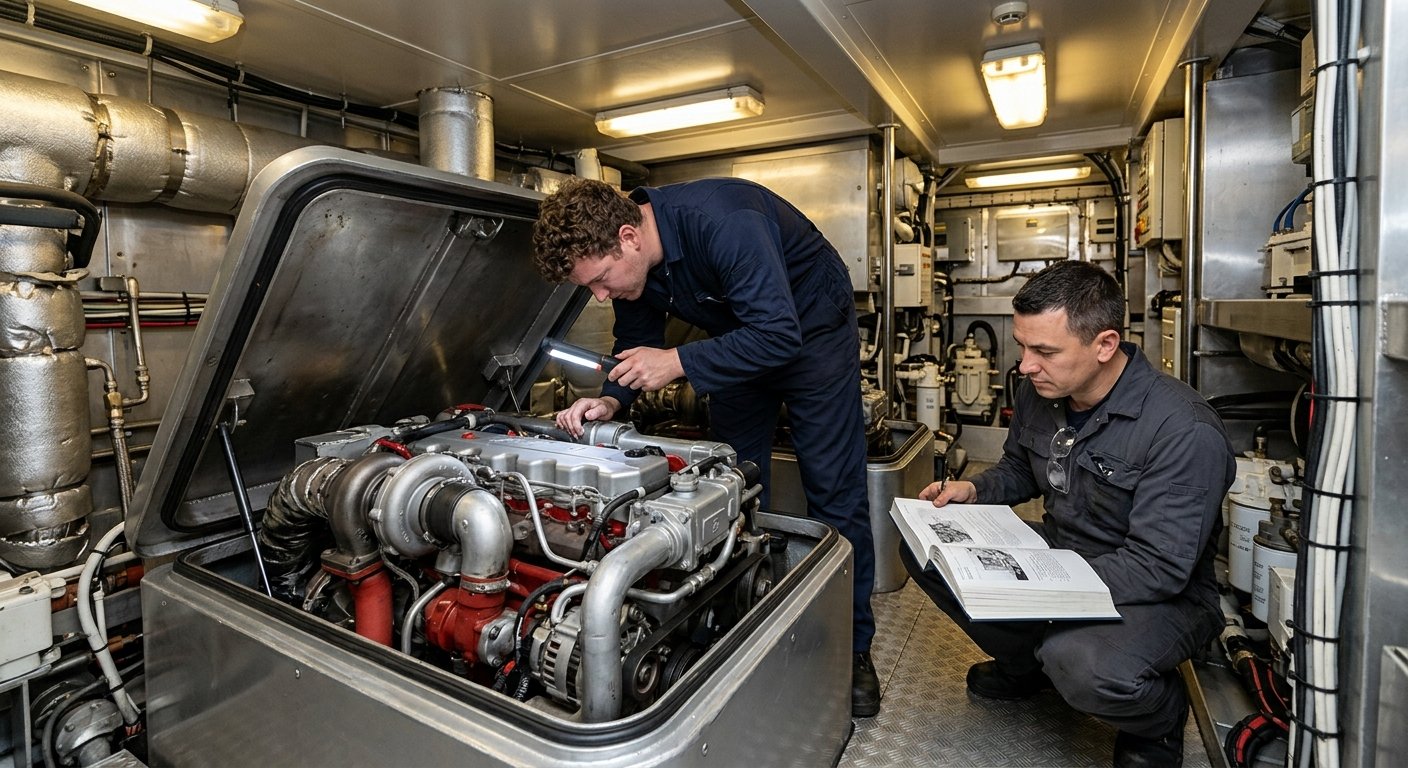
MTU — originally Motoren- und Turbinen-Union, now operating under Rolls-Royce Power Systems — produces some of the most sophisticated high-speed diesel engines in the marine industry. Found aboard sport fishers, superyachts, patrol vessels, and commercial craft, MTU engines are engineered for high power density and precision performance under demanding conditions. That sophistication is exactly why they require a different level of care than a standard diesel.
Unlike general-purpose marine diesels, MTU engines rely on tightly integrated electronic engine management systems, high-pressure common-rail fuel delivery (on modern Series 2000 and 4000 engines), and extremely close manufacturing tolerances. These characteristics deliver outstanding power-to-weight ratios and fuel efficiency — but they also mean that any deviation from factory service procedures can introduce problems that compound quickly.
MTU’s own service documentation makes clear that diagnostic access, calibration, and critical adjustments require factory-level tooling. Owners who rely on general marine mechanics — however skilled — are not getting the full picture of their engine’s health.
When you work with a factory-authorized Detroit Diesel/MTU service provider like RPM Diesel, you are not just getting a technician with training. You are getting access to the proprietary diagnostic software, calibrated tooling, and genuine OEM parts that MTU requires for specification-compliant service.
Understanding MTU Maintenance Intervals
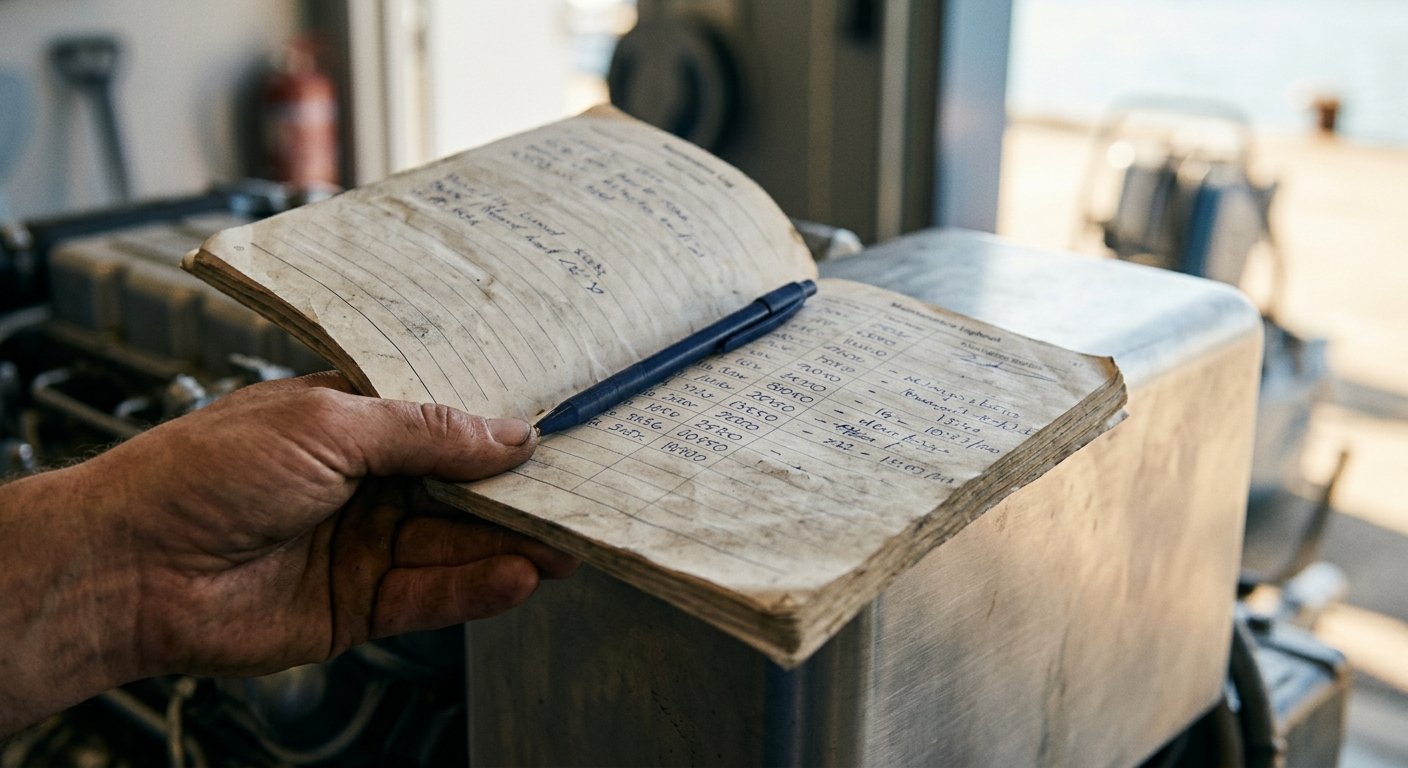
MTU publishes detailed maintenance schedules tied to operating hours, not calendar months. This is an important distinction for vessel owners: a yacht that logs 400 hours per season needs service far more frequently than one used only on weekends. Maintenance intervals typically follow a tiered structure — lighter inspections at shorter intervals, with progressively deeper service at major hour milestones.
According to MTU Solutions’ technical documentation, service intervals for Series 2000 and 4000 engines are organized around operating-hour thresholds with specific procedures assigned to each. A simplified breakdown of what those tiers typically address includes:
- Routine checks (every 250–500 hours): Engine oil and filter changes, fuel filter replacement, belt tension inspection, coolant concentration check, zinc anode inspection, and fluid level verification.
- Mid-interval service (500–1,000 hours): Injector system checks, heat exchanger inspection, turbocharger condition review, raw water pump impeller replacement, and exhaust system inspection.
- Major service (2,000+ hours or per MTU guidelines): Valve adjustment, fuel injector recalibration or replacement, full cooling system service, and comprehensive electronic diagnostics.
Extending oil change intervals beyond MTU specifications — even by 50 hours — can accelerate soot loading and increase wear metal concentrations to levels that damage bearings and cylinder walls. Always follow the manufacturer’s schedule.
For a comprehensive look at what professional marine diesel engine service involves across engine platforms, RPM Diesel’s service overview provides a solid foundation for understanding what each visit should accomplish.
The Role of OEM Parts in MTU Service
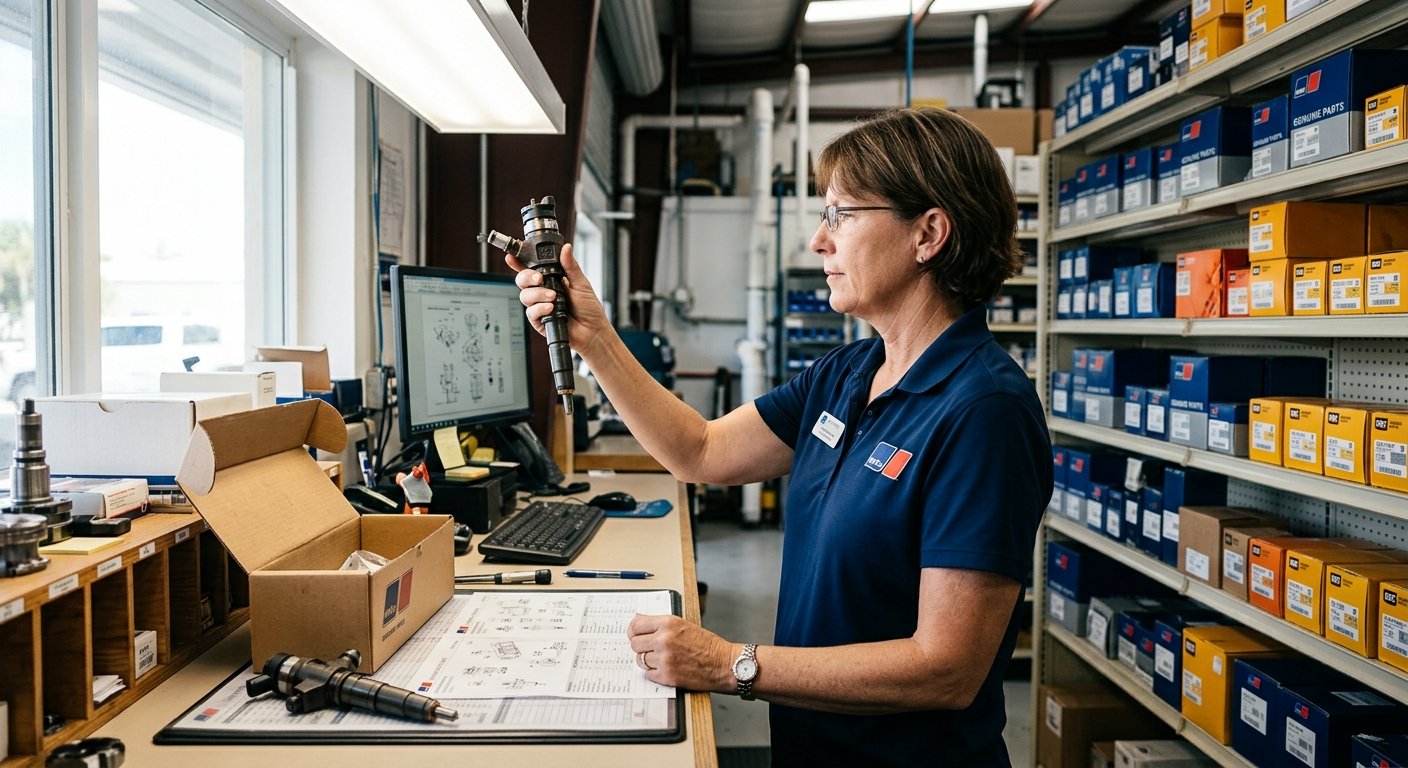
One of the most consequential decisions a vessel owner makes is whether to approve OEM or alternative parts during service. For MTU engines, this is not a gray area. MTU’s engineering tolerances — particularly in fuel system components, turbochargers, and cooling circuits — are specified to fractions of a millimeter. Components that do not meet factory specifications can alter fuel trim, combustion timing, and thermal management in ways that degrade performance and accelerate wear.
The EU nonroad diesel emissions standards that govern MTU engine certification are tied to specific calibrated injector and emissions control hardware. Substituting non-OEM components in these systems can affect emissions compliance and engine management calibration simultaneously.
RPM Diesel maintains an extensive parts inventory for Detroit Diesel/MTU engines, which means shorter turnaround on scheduled maintenance and fewer delays when a repair requires immediate parts access. This inventory depth is part of what makes a factory-authorized provider genuinely different from a general marine shop.
An MTU engine is not a system you maintain on approximation — it is a precision instrument that rewards exact compliance with manufacturer specifications.
Diagnosing MTU Engine Problems Correctly
When an MTU engine exhibits symptoms — unusual exhaust smoke, power loss, abnormal temperatures, fault codes on the helm display — the correct response is professional diagnosis, not assumption. MTU’s MDEC and X15 engine management systems generate fault codes that require factory diagnostic software to read and interpret correctly. A fault code is a starting point, not a conclusion.
Common symptoms that warrant immediate professional attention include:
- Black or blue exhaust smoke under load
- Active fault codes or warning lights on the engine management system
- Unexpected drops in boost pressure or fuel rail pressure readings
- Coolant temperature spikes or inconsistent thermostat behavior
- Unusual vibration at specific RPM ranges
- Oil pressure deviations outside the normal operating band
RPM Diesel’s marine diesel engine repair approach prioritizes proper diagnosis before any repair action. Chasing symptoms without accurate data leads to unnecessary parts replacement and recurring problems — a cycle that costs significantly more than getting the diagnosis right the first time.
Connect Factory Diagnostic Software
A factory-authorized technician connects MTU-specific diagnostic tools to read live data, fault codes, and historical logs stored in the engine management system.
Analyze System Data
Fuel trim, injector balance rates, boost curves, and coolant temperatures are reviewed against MTU’s specification parameters to isolate the root cause.
Confirm with Physical Inspection
Electronic data is cross-referenced with physical inspection of fuel system components, cooling circuits, turbocharger condition, and fluid quality.
Repair with OEM Parts
All replacement components are genuine MTU/Detroit Diesel OEM parts — no substitutions that could affect calibration or long-term reliability.
Post-Repair Verification
After repair, the engine management system is verified clear of codes and the engine is tested under operating load before the vessel is returned to service.
On-Site Service: Why It Matters for MTU Owners
Not every MTU service call requires hauling a vessel. RPM Diesel provides on-site diesel marine engine service throughout Palm Beach and Broward County — bringing factory-authorized capability dockside. For routine maintenance, fluid service, and many diagnostic calls, on-site service is faster and more convenient without compromising quality.
For major repairs or overhauls that require engine removal or bench work, RPM’s facility and parts inventory support those operations as well. The goal in either case is the same: factory-specification service that protects your investment and keeps your vessel reliable.
According to the National Marine Manufacturers Association, the recreational boating industry represents significant investment by vessel owners — which underscores why proper engine maintenance is a financial decision, not just a mechanical one. Engine failure is among the most expensive and disruptive events a yacht owner can face.
Frequently Asked Questions
How often should MTU marine engines be serviced?
MTU specifies service intervals based on operating hours rather than calendar time. Routine maintenance typically occurs every 250–500 hours, with more comprehensive service at 1,000-hour and 2,000-hour milestones. Owners should follow the specific schedule in their engine’s operator manual, as intervals vary by engine series and application.
Does servicing my MTU engine at a non-authorized shop void the warranty?
Service performed outside factory-authorized standards using non-OEM parts can affect warranty coverage. MTU’s warranty terms require that maintenance is performed according to manufacturer specifications. A factory-authorized provider like RPM Diesel ensures service is documented and performed to the standard MTU requires.
What is the difference between Detroit Diesel and MTU marine engines?
MTU and Detroit Diesel are both part of Rolls-Royce Power Systems. Detroit Diesel historically refers to the two-stroke and later four-stroke series popular in American marine and commercial applications. MTU engines are the higher-performance European-lineage series. Factory authorization for one typically covers the other, which is why RPM Diesel services both under the same certification framework.
Can MTU engines last 40 years with proper maintenance?
Yes. Marine diesel engines — MTU included — are capable of extraordinary longevity when maintained to manufacturer specifications with OEM parts. Forty-plus year service lives are achievable with consistent adherence to maintenance schedules, proper fuel and fluid quality, and prompt attention to emerging issues before they escalate.
What should I do if my MTU engine shows a fault code at sea?
Note the fault code displayed and reduce load if the engine indicates a critical warning (temperature, oil pressure). Do not clear codes without diagnosis — they contain important diagnostic information. Contact a factory-authorized service provider as soon as possible. Fault codes should be read with manufacturer-specific software to understand root cause before any repair action is taken.
Schedule Your MTU Engine Service
RPM Diesel is a factory-authorized Detroit Diesel/MTU service provider serving Palm Beach and Broward County — contact us to schedule factory-specification maintenance or diagnostics for your vessel.
About RPM Diesel
RPM Diesel is a factory-authorized marine diesel engine service provider specializing in yacht and boat engine maintenance, repair, and generator service throughout South Florida. With expertise in Detroit Diesel/MTU, Northern Lights, Kohler, and Westerbeke equipment, RPM combines deep technical knowledge with a comprehensive parts inventory to deliver reliable, manufacturer-specification service. The company serves recreational yacht owners, commercial marine operators, and vessel managers who value proper maintenance procedures and long-term engine reliability. Visit rpmdiesel.com →