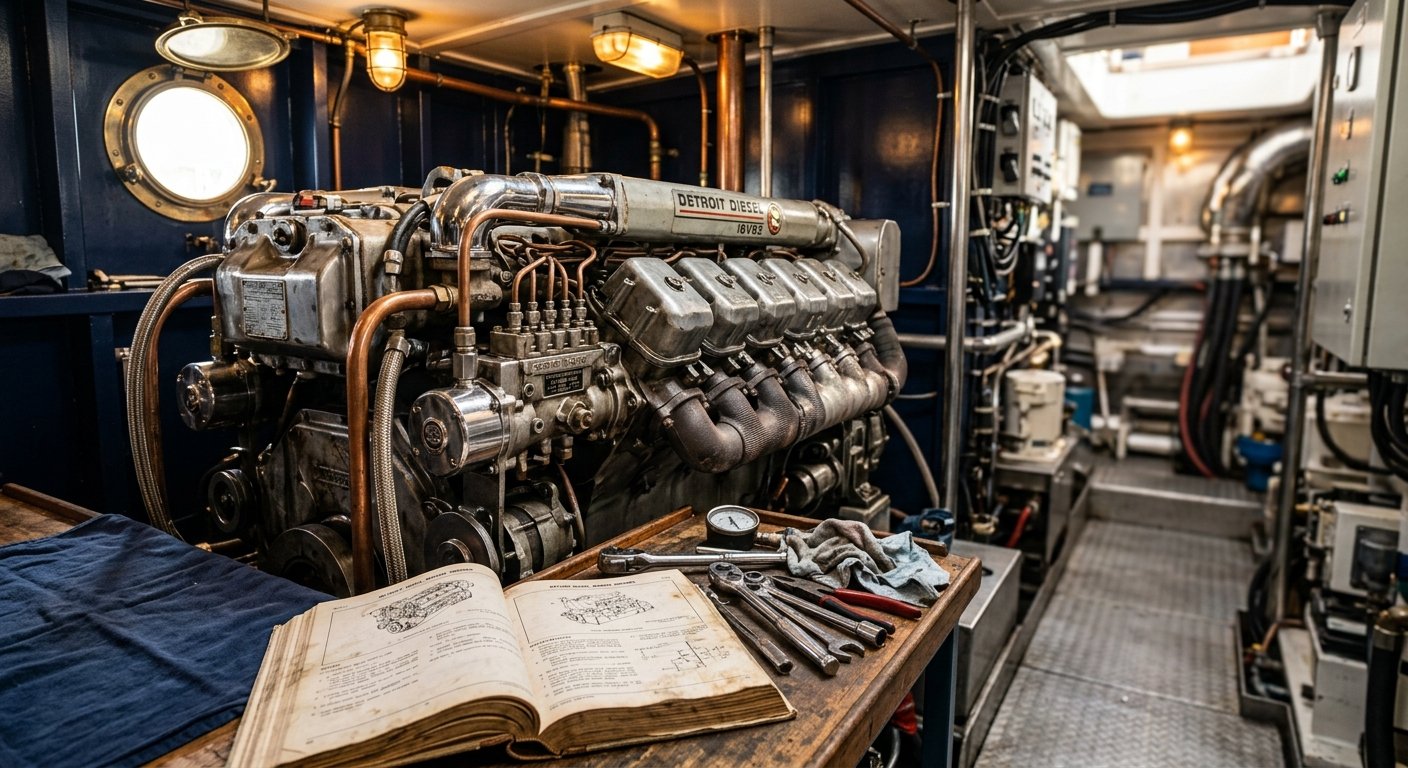
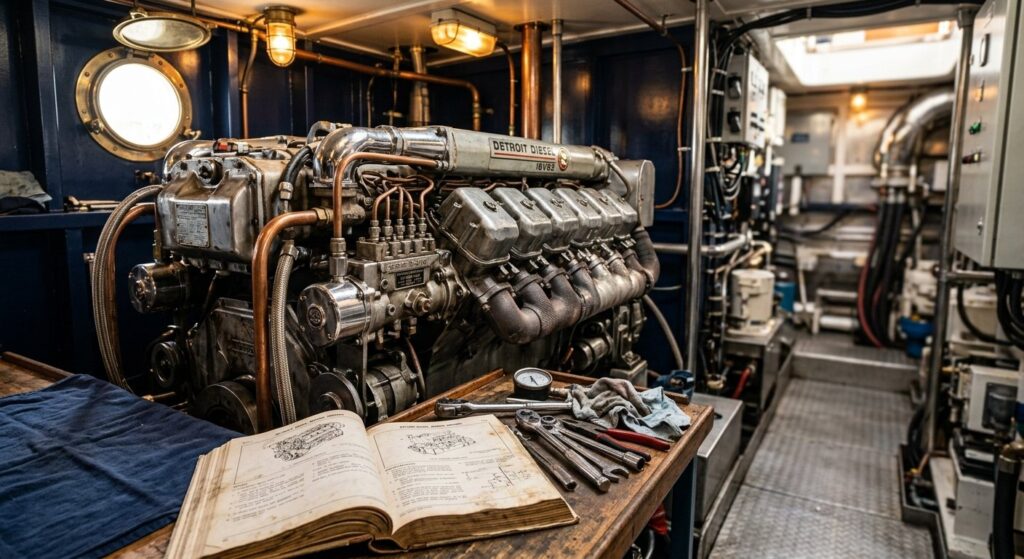
A Detroit Diesel engine running at full throttle offshore is one of the most satisfying sounds in boating. A Detroit Diesel that’s misfiring, overheating, or refusing to start at the dock is one of the most stressful. For yacht owners in Palm Beach and Broward County, understanding the fundamentals of Detroit Diesel marine engine repair — what to watch for, when to act, and why factory-authorized service matters — can be the difference between a minor maintenance visit and a major engine overhaul.
Detroit Diesel engines have powered commercial vessels, military craft, and luxury yachts for decades. Their reputation for durability is well-earned, but that durability depends entirely on proper maintenance and timely professional attention when problems arise. This guide walks through what yacht owners need to know about keeping their Detroit Diesel powerplants in peak condition.
Why Detroit Diesel Engines Are Built for Marine Duty
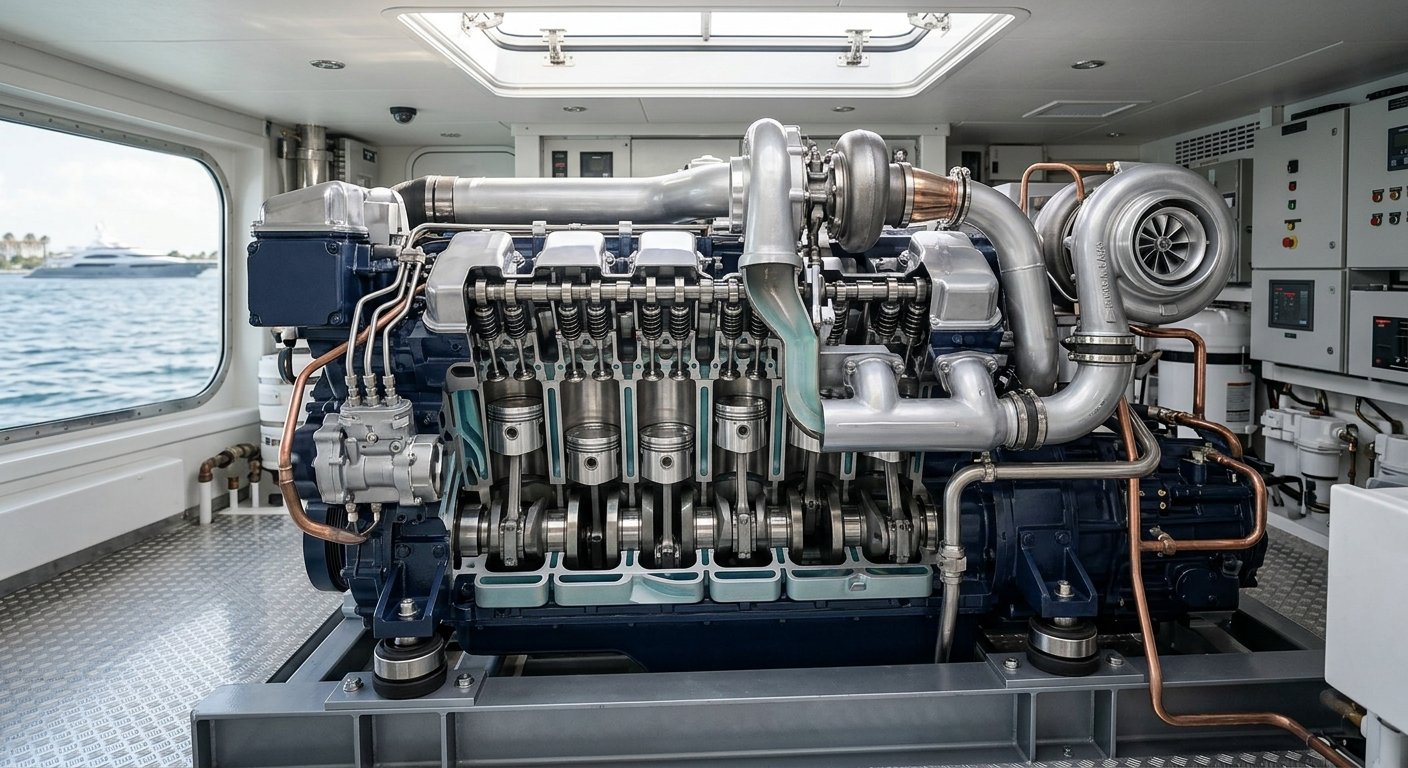
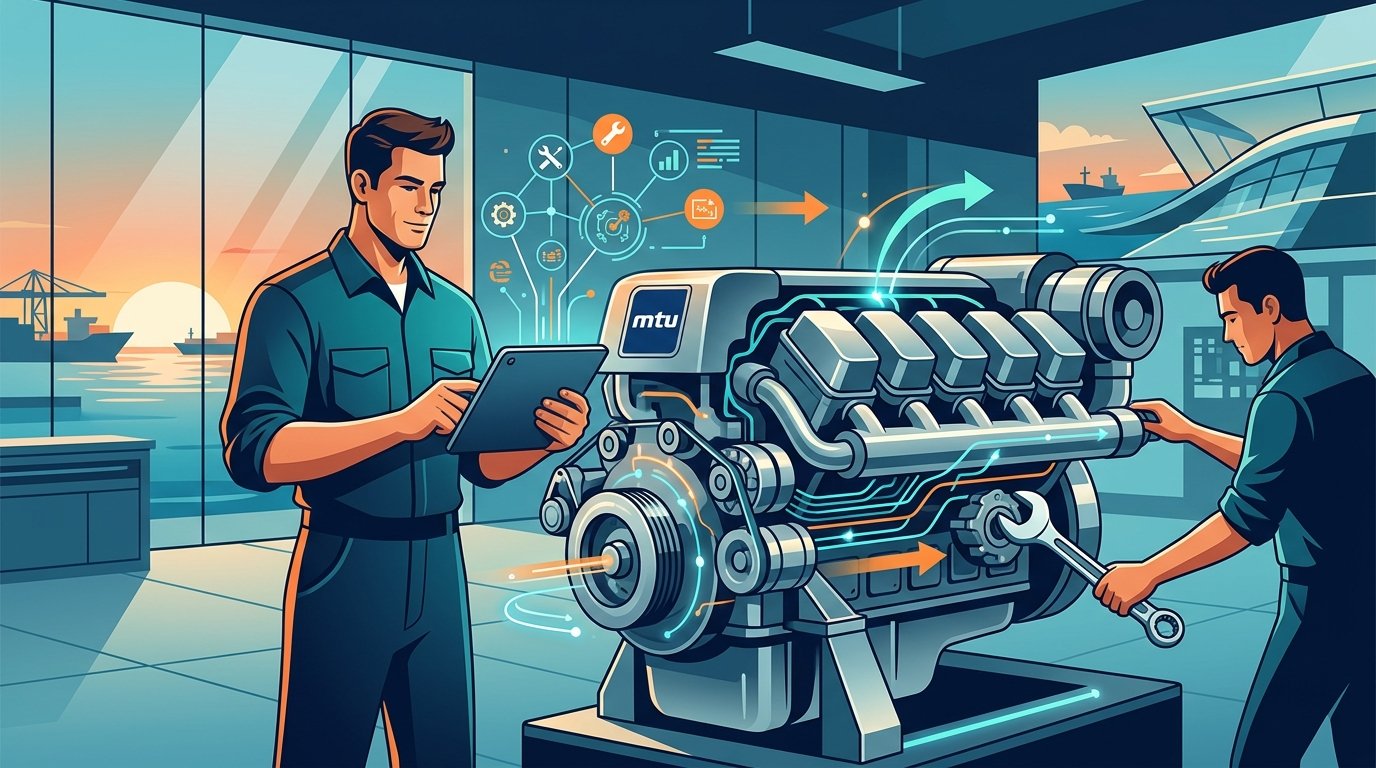
Detroit Diesel’s marine lineup — particularly through its MTU partnership — represents some of the most engineered power solutions available for yachts and large vessels. The MTU Series 60, 2000, and 4000 platforms are common in performance yachts and larger displacement vessels throughout South Florida’s waterways. These engines are engineered to operate in demanding saltwater environments, but they require a level of care that matches that engineering complexity.
According to the National Marine Manufacturers Association, proper engine maintenance is among the top factors influencing vessel longevity and resale value. A well-maintained Detroit Diesel/MTU engine can realistically reach 40,000 to 60,000 hours with scheduled service — a testament to what manufacturer-specified maintenance can achieve.
That kind of longevity doesn’t happen by accident. It requires adherence to OEM maintenance intervals, genuine OEM parts, and service performed by technicians trained to the manufacturer’s standards.
Common Detroit Diesel Marine Engine Problems
Recognizing early warning signs is one of the most valuable skills a yacht owner or captain can develop. Detroit Diesel engines rarely fail without warning — they communicate distress through performance changes, unusual sounds, and fluid irregularities before a serious failure occurs.
Excessive Black or White Exhaust Smoke
Black smoke typically indicates over-fueling, restricted air intake, or injector issues. White smoke often points to coolant entering the combustion chamber — a sign of a potential head gasket failure or cracked liner. Either condition warrants immediate professional diagnosis. Continuing to run an engine with these symptoms accelerates internal damage significantly.
Rough Running or Misfiring
Detroit Diesel’s unit injector system is precise and unforgiving of contaminated fuel. Rough running, uneven idle, or cylinder misfires are frequently traced back to injector wear, fuel quality issues, or air in the fuel system. Diagnosing which cylinders are affected and why requires electronic diagnostic equipment specific to the Detroit Diesel platform.
Overheating
Marine engine cooling systems are more complex than automotive equivalents because they rely on raw water from the sea or bay as part of the heat exchange process. Overheating in Detroit Diesel engines commonly stems from impeller failure, heat exchanger fouling from saltwater mineral deposits, failed thermostats, or low coolant levels. Overheating — even briefly — can warp cylinder heads and cause irreversible internal damage.
Oil Pressure Irregularities
Low oil pressure at idle or under load indicates potential wear in bearings, oil pump degradation, or inadequate oil viscosity. High oil consumption without visible leaks often suggests worn piston rings or valve seals. These conditions require prompt professional evaluation before they escalate into catastrophic engine failure.
Vibration and Unusual Noises
Knocking, rattling, or abnormal vibration in a Detroit Diesel should never be ignored. Diesel knock distinct from normal combustion noise can indicate injector timing issues, worn injectors, or in severe cases, damaged pistons or connecting rods. Identifying the source requires experienced ears and proper diagnostic tools.
The Importance of Factory-Authorized Detroit Diesel Service
Not all marine diesel shops are created equal. Detroit Diesel and MTU engines require technicians with factory-authorized training, access to current technical service bulletins, and the ability to run manufacturer-specific diagnostic software. Without those credentials, a shop is essentially working around the edges of what these complex engines require.
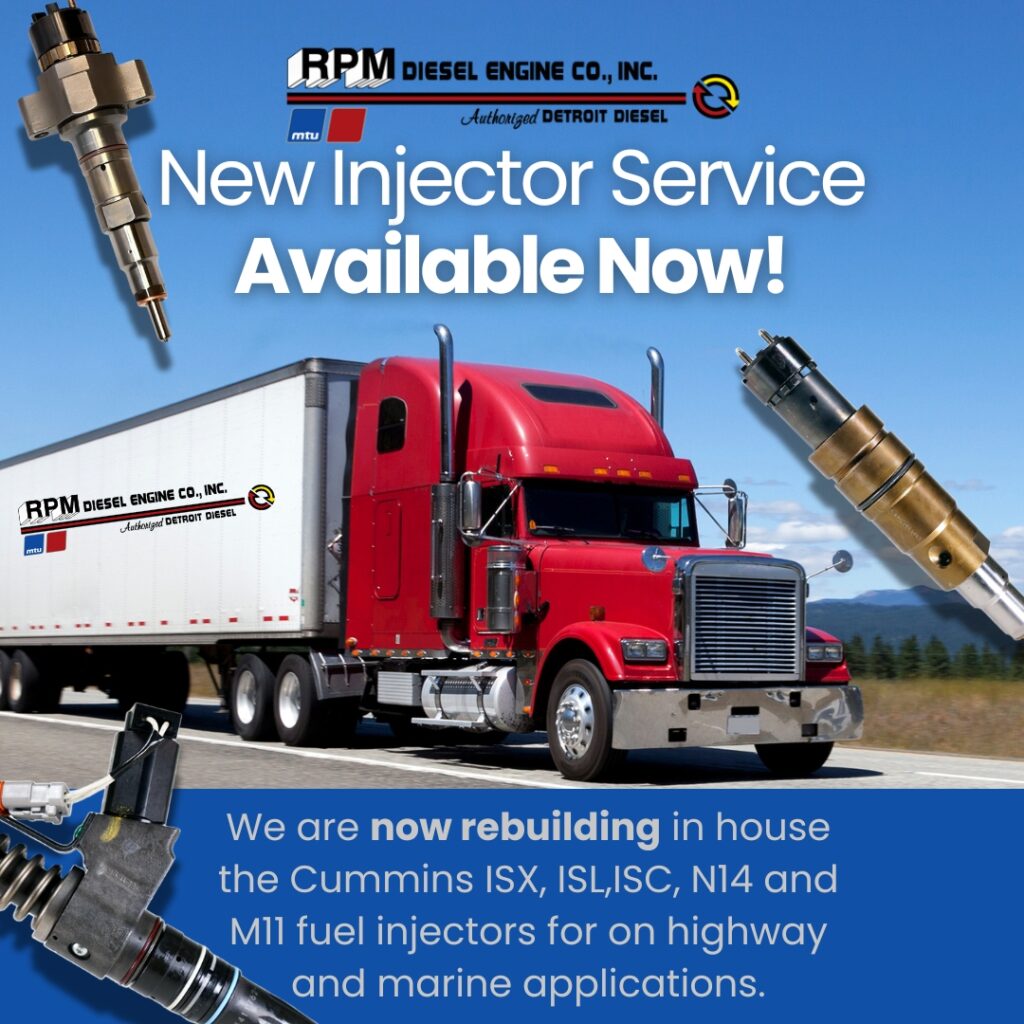
As a factory-authorized marine diesel service provider, RPM Diesel holds the certifications and technical training required to work on Detroit Diesel/MTU equipment to manufacturer specifications. That means diagnostic procedures follow the OEM protocol, replacement parts are genuine OEM components, and repairs are documented in a manner consistent with warranty requirements and resale standards.
This matters practically: an engine serviced with non-OEM parts or outside manufacturer specifications can face warranty complications and may develop premature wear from parts that don’t meet the tight tolerances Detroit Diesel engineering demands. Our marine diesel engine repair services cover the full spectrum of Detroit Diesel/MTU needs, from routine maintenance to complete engine overhaul.
Detroit Diesel Maintenance Schedule Essentials
The foundation of Detroit Diesel reliability is a disciplined maintenance schedule. While specific intervals vary by engine series, operating environment, and load profile, general guidelines from Detroit Diesel’s service documentation include:
- 250-hour or annual service: Engine oil and filter change, fuel filter replacement, raw water impeller inspection, belt and hose inspection, coolant testing, air cleaner service
- 500-hour service: All 250-hour items plus fresh water pump inspection, heat exchanger inspection and cleaning, fuel injection system check, valve adjustment (where applicable)
- 1,000-hour service: Comprehensive inspection including turbocharger condition, injector testing, coolant system flush and replacement, transmission service, and full engine performance analysis
- 2,000-hour or major service: Top-end inspection, potential injector replacement, heat exchanger tube bundle replacement, and full engine assessment
These are general benchmarks. The U.S. Coast Guard also provides guidance on vessel safety requirements that intersect with engine maintenance obligations, particularly for commercial operators in Florida waters.
Operating in South Florida’s saltwater environment adds urgency to cooling system maintenance specifically. Saltwater accelerates corrosion and mineral fouling in heat exchangers and coolers, making inspection and cleaning intervals critical rather than optional.
Boat Diesel Engine Troubleshooting: When to Call a Professional
There’s a meaningful difference between what a knowledgeable captain can check and what requires a certified technician. Captains and vessel managers should feel confident:
- Checking and recording engine hours to track maintenance intervals
- Monitoring oil level, coolant level, and belt condition during pre-departure checks
- Noting and logging performance anomalies — temperature readings, RPM behavior, fuel consumption changes
- Checking sea strainers and raw water intake for debris blockage
Professional factory-authorized service is required when:
- Warning lights or fault codes are triggered on the engine management system
- Any smoke, misfiring, or abnormal noise is detected
- Oil pressure or temperature readings are outside normal operating range
- Fuel consumption increases without a corresponding change in operating profile
- Any scheduled major service interval is approaching
Early intervention consistently costs less than deferred repairs. A diagnostic visit that identifies an injector issue is a fraction of the cost of the head gasket repair that follows if that injector continues operating improperly. Our marine diesel engine service team is equipped to diagnose Detroit Diesel/MTU issues accurately the first time, using manufacturer diagnostic tools and current technical service bulletins.
On-Site Service Capabilities in South Florida
Not every service need requires hauling a vessel. RPM Diesel provides on-site diesel marine engine service throughout Palm Beach and Broward County, bringing factory-authorized technical expertise directly to marinas, docks, and boatyards across the region. For routine maintenance, diagnostics, and many repair procedures, on-site service minimizes vessel downtime and eliminates the logistics of a haul-out.
For major repairs or overhauls, our facility provides the full infrastructure needed to service Detroit Diesel/MTU engines to manufacturer specifications, with access to a comprehensive parts inventory that supports both common service needs and hard-to-source components.
Frequently Asked Questions
How often should a Detroit Diesel marine engine be serviced?
Detroit Diesel marine engines should follow the manufacturer’s specified service intervals, typically beginning at 250 hours or annually — whichever comes first. Major service intervals at 500, 1,000, and 2,000 hours address progressively deeper systems. Operating in South Florida’s saltwater environment makes adherence to these intervals especially important for cooling system components.
What are the most common signs that a Detroit Diesel engine needs repair?
Key warning signs include excessive smoke (black or white), rough running or misfiring, overheating, abnormal oil pressure readings, increased fuel consumption, unusual knocking or vibration, and any active fault codes on the engine management display. Any of these symptoms warrant professional diagnostic evaluation before continued operation.
Why does factory-authorized service matter for Detroit Diesel engines?
Factory-authorized technicians have manufacturer-specific training, access to current technical service bulletins, and proprietary diagnostic software required to properly service Detroit Diesel/MTU engines. This ensures repairs meet OEM specifications, parts meet required tolerances, and service records support warranty compliance and vessel resale value.
Can Detroit Diesel marine engines last 40+ years?
Yes — properly maintained Detroit Diesel marine engines are known for exceptional longevity, with many examples in service for 40 years or more when maintained to manufacturer specifications with genuine OEM parts. This longevity is a direct result of disciplined maintenance, timely professional service, and avoiding shortcuts with non-OEM components.
Does RPM Diesel service Detroit Diesel engines on-site?
Yes. RPM Diesel provides factory-authorized on-site Detroit Diesel/MTU service throughout Palm Beach and Broward County, Florida. On-site service covers routine maintenance, diagnostics, and many repair procedures, bringing manufacturer-certified expertise directly to where your vessel is located.
Protect Your Investment With the Right Service Partner
A Detroit Diesel or MTU engine is one of the most significant investments aboard any yacht. Protecting that investment means more than responding to problems — it means establishing a relationship with a factory-authorized service provider who understands these engines at the manufacturer level and can deliver consistent, specification-compliant care throughout the engine’s service life.
RPM Diesel serves yacht owners, captains, and vessel managers throughout Palm Beach and Broward County as a factory-authorized Detroit Diesel/MTU specialist. Whether you’re scheduling routine maintenance, troubleshooting a performance concern, or planning a major service, our team delivers the technical expertise and OEM-standard workmanship these engines deserve.
Contact RPM Diesel today to schedule Detroit Diesel marine engine service for your vessel. Don’t wait for a small issue to become an expensive repair — let South Florida’s factory-authorized marine diesel specialists keep your engines performing at their best.