
MTU-powered yachts are engineered to perform at the highest level — but only when maintenance keeps pace with the manufacturer’s evolving specifications. In 2026, MTU (now fully integrated under the Rolls-Royce Power Systems umbrella) has released updated service interval guidance and revised fluid specifications that directly affect how diesel-powered yachts should be maintained. If your vessel runs MTU Series 2000 or Series 4000 engines, understanding these updates isn’t optional — it’s the foundation of protecting a significant investment.
For yacht owners and vessel managers throughout Palm Beach County and Broward County, staying current with MTU’s factory requirements means working with a service provider who receives those updates directly. As a factory-authorized MTU marine engine service provider, RPM Diesel ensures every service performed reflects the latest manufacturer specifications — not outdated procedures that may leave your engines vulnerable.
What MTU Engine Owners Need to Know in 2026
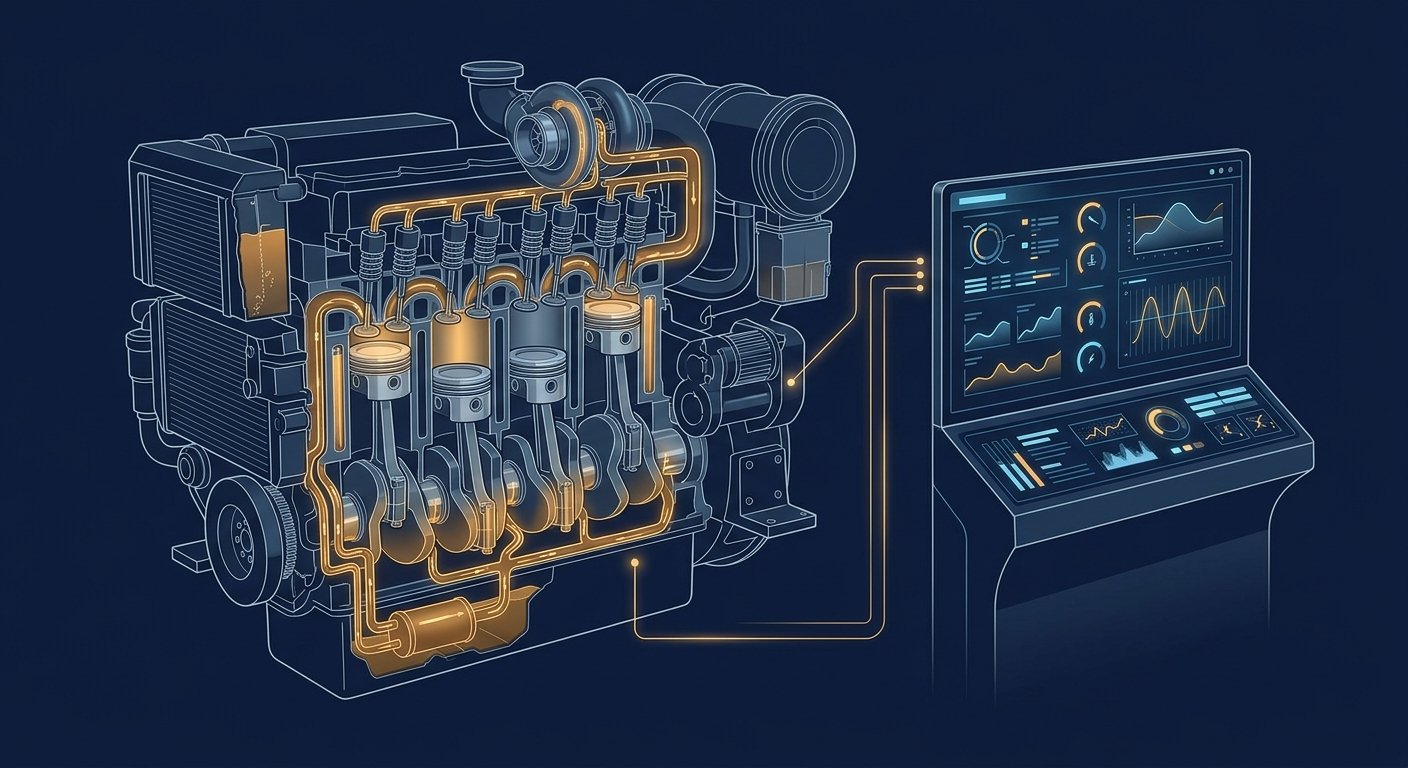
MTU’s 2026 service documentation reflects lessons learned from real-world fleet data collected across commercial and recreational marine applications. Two areas have received the most attention this year: lubrication standards and electronic diagnostic integration.
Updated Lubrication and Fluid Specifications
MTU has reinforced its position that only fluids meeting its own MTU Approved Product List (APL) specifications should be used in Series 2000 and Series 4000 engines. The 2026 guidance clarifies that extended-drain intervals — which some operators attempt to stretch beyond manufacturer parameters — are only valid when using MTU-approved lubricants and when operating hours are tracked through the engine’s onboard ECU data.
Using non-approved fluids, even those marketed as equivalent, voids the service warranty and can accelerate wear in high-load marine environments. MTU’s engineering documentation specifically addresses the unique thermal cycling experienced in marine propulsion, where engines move from cold start to full power and back repeatedly throughout a voyage.
ECU Software and Diagnostic Updates
MTU’s DiaSys diagnostic platform has received significant updates in 2026, improving fault code resolution and enabling more granular trend analysis for predictive maintenance. For vessel owners, this means a qualified technician using current DiaSys software can identify developing issues — injection system irregularities, turbocharger performance trends, cooling system anomalies — before they become failures at sea.
This capability only functions correctly when a service provider has current factory software access and trained technicians who understand how to interpret the data. DiaSys isn’t a consumer-grade tool; it requires factory-level credentials and regular software updates to function accurately.
The 2026 MTU Yacht Engine Maintenance Schedule
Proper MTU maintenance follows a tiered structure based on operating hours, not just calendar time. Below is a practical overview of what factory-authorized service intervals look like for typical recreational yacht applications:
- 250-hour service: Engine oil and filter change using MTU APL-approved lubricant, fuel filter replacement, visual inspection of belts and cooling system hoses, ECU fault code review
- 500-hour service: All 250-hour items plus air filter inspection, heat exchanger inspection, zincs inspection, turbocharger pre-screen, coolant analysis
- 1,000-hour service: Comprehensive inspection including valve clearance check, fuel injector condition assessment, full DiaSys diagnostic review, belt and tensioner replacement as needed, coolant replacement per MTU spec
- 2,000-hour / Major service: Full top-end inspection, injector service or replacement, turbocharger overhaul evaluation, heat exchanger cleaning and pressure test, gear oil analysis, structural inspection of mounts and coupling
These intervals represent minimum factory requirements. Vessels operating in high-load or high-RPM conditions — sportfishing boats pushing hard offshore, for example — may require compressed service intervals based on engine data rather than hours alone. A factory-authorized technician reviewing your ECU logs can make that determination accurately.
For a broader understanding of how these intervals fit into a complete marine diesel maintenance program, the marine diesel engine service overview on our site provides additional context on what comprehensive care looks like across different engine families.
Why Factory-Authorized Service Matters for MTU Engines
MTU propulsion systems are among the most sophisticated diesel engines in the recreational marine market. The engineering precision that makes them perform exceptionally also means they’re unforgiving of improper service. An incorrect injector adjustment, a non-spec coolant mixture, or a missed software update can compromise performance, increase fuel consumption, and accelerate internal wear in ways that aren’t immediately visible.
According to DieselNet’s marine engine technical documentation, modern high-speed marine diesels operate with significantly tighter tolerances than earlier generations, making precision service procedures increasingly critical to long-term reliability.
Factory authorization means a service provider has met MTU’s standards for technician training, tooling, and parts sourcing. It means the shop receives technical service bulletins as they’re issued — not months later — and that parts are sourced through authorized distribution channels with verified provenance. When your engines are worth more than many homes, the difference between an authorized service provider and a general diesel mechanic is not a minor distinction.
Common MTU Service Issues Seen in South Florida Vessels
Vessels operating out of Palm Beach County and Broward County face specific operating conditions that influence how MTU engines wear and what service issues arise most frequently.
Cooling System Scaling and Corrosion
South Florida’s warm coastal waters accelerate the growth of marine organisms and increase the rate of heat exchanger fouling. MTU’s 2026 guidance emphasizes annual heat exchanger inspections for vessels with high annual operating hours. Blocked heat exchangers reduce cooling efficiency, which leads to elevated operating temperatures and accelerated wear across the engine.
Fuel System Contamination
Marine diesel fuel quality in high-traffic marina environments can vary significantly. Microbial contamination — the dark, sludgy growth that develops in diesel fuel tanks — is a persistent issue in warm climates. MTU fuel system components, including high-precision injectors, are highly sensitive to contaminated fuel. If you’re noticing rough idle, black smoke under load, or loss of power, a fuel system diagnosis is the appropriate first step before assuming a more serious internal issue exists.
The marine diesel engine repair process begins with accurate diagnosis — not assumptions — which is the only reliable way to identify fuel system issues versus injector, turbocharger, or ECU-related faults.
Turbocharger Condition
High-performance MTU turbochargers require clean oil at specified pressure and temperature to maintain their service life. Short trips that don’t allow engines to reach full operating temperature, combined with irregular oil change intervals, are the leading contributors to premature turbocharger wear. Implementing a proper warm-down procedure — allowing turbos to cool before shutdown — and adhering to oil change schedules are the simplest ways vessel owners can extend turbocharger life between major service events.
On-Site Service for Yachts in Palm Beach and Broward
Not every service event requires a haul-out or marina visit. RPM Diesel provides on-site diesel marine engine service throughout Palm Beach County and Broward County, bringing factory-authorized technicians and necessary parts directly to your vessel. For routine service intervals and many diagnostic evaluations, on-site service reduces downtime and eliminates the logistics of moving large yachts unnecessarily.
With an extensive parts inventory covering MTU, Detroit Diesel, Northern Lights, Kohler, and Westerbeke equipment, most service calls can be completed without waiting for parts to arrive — a meaningful advantage for vessel managers operating on departure schedules.
Frequently Asked Questions
How often should MTU marine engines be serviced?
MTU recommends a tiered service schedule based on operating hours: 250-hour, 500-hour, 1,000-hour, and 2,000-hour intervals. Each tier involves progressively comprehensive inspection and component servicing. Calendar time is a secondary factor; operating hours logged through the ECU are the primary driver of service timing. Your factory-authorized technician can review engine data to determine the correct schedule for your specific operating profile.
What makes MTU service different from general marine diesel maintenance?
MTU engines use proprietary diagnostic software (DiaSys), require fluids meeting the MTU Approved Product List specifications, and involve components engineered to extremely tight tolerances. Factory-authorized service ensures technicians have current training, software access, and genuine OEM parts — all of which are required to maintain manufacturer compliance and protect engine longevity.
Can I use any marine diesel mechanic for MTU engine service?
MTU strongly recommends using factory-authorized service providers. General marine mechanics may lack access to DiaSys diagnostic software, current technical service bulletins, and MTU-approved parts. Using an unauthorized provider can result in non-spec service that voids warranty coverage and potentially accelerates engine wear.
What are signs my MTU engine needs immediate professional attention?
Warning signs that warrant prompt professional diagnosis include: increased fuel consumption without explanation, black or white exhaust smoke under normal operating conditions, rough idle or misfiring, abnormal oil pressure or coolant temperature readings, unusual mechanical noise, or active fault codes on the helm display. Early diagnosis consistently produces better outcomes than waiting for symptoms to resolve on their own.
Does RPM Diesel service MTU engines on-site in South Florida?
Yes. RPM Diesel provides factory-authorized MTU marine engine service on-site throughout Palm Beach County and Broward County, Florida. Both routine maintenance and diagnostic evaluations can often be completed at your marina or dock, minimizing downtime for vessel owners and managers.
Schedule Your 2026 MTU Service Today
MTU engines are built to last — according to Rolls-Royce Power Systems, properly maintained MTU marine engines have demonstrated service lives well beyond 20,000 hours in demanding applications. That longevity doesn’t happen by accident. It’s the result of consistent, factory-specification maintenance performed by technicians who understand these engines at a fundamental level.
If your vessel’s MTU engines are approaching a service interval, or if you’re uncertain whether previous service was performed to current manufacturer standards, now is the time to schedule a professional evaluation. RPM Diesel’s factory-authorized team serves yacht and vessel owners throughout Palm Beach County and Broward County with the technical depth and parts availability that MTU engines require.
Contact RPM Diesel to schedule your MTU marine engine service and keep your engines performing to factory specification through 2026 and beyond.