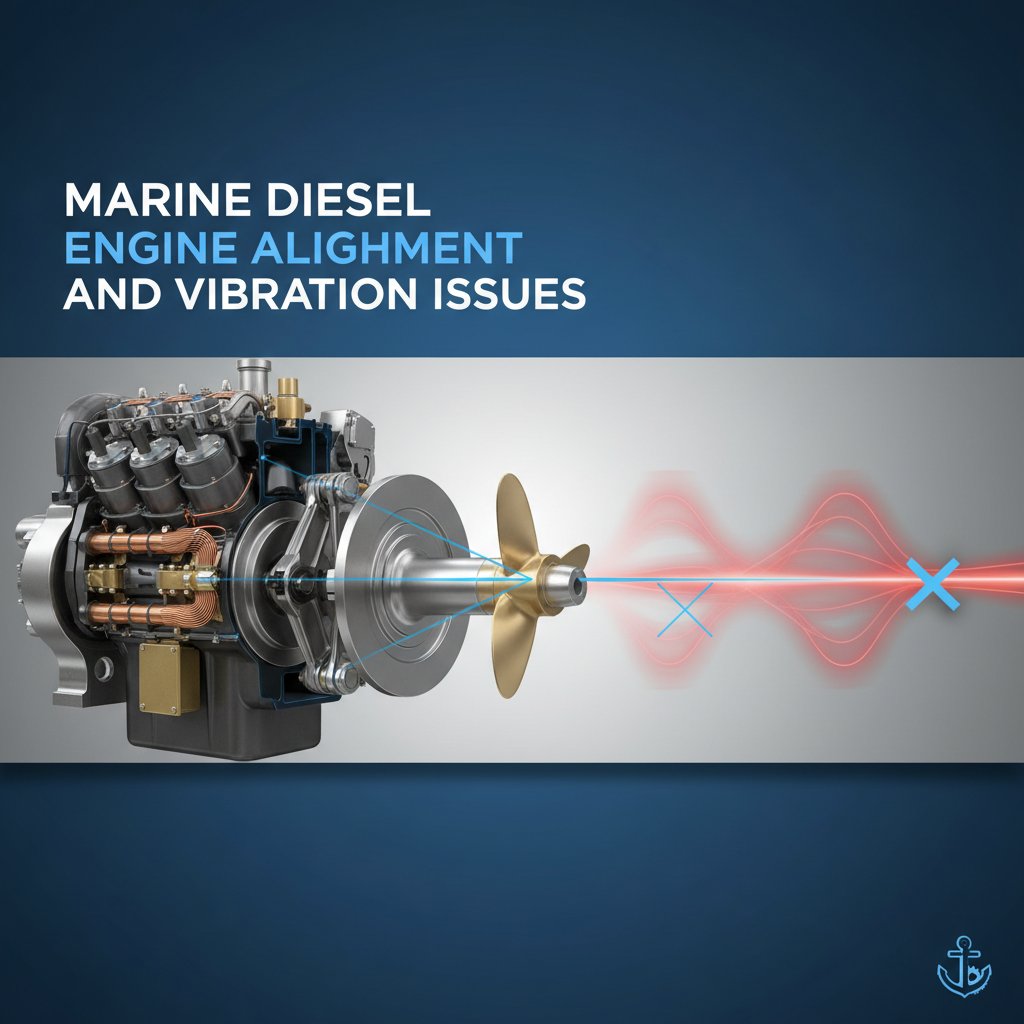
When your yacht’s engines are running, you should feel power—not a bone-rattling vibration that sends shudders through the hull. Yet misalignment remains one of the most common and misdiagnosed causes of excessive vibration in marine diesel installations. Unlike automotive applications where engines are rigidly mounted, marine engines must accommodate hull flexing, thermal expansion, and the constant motion of the sea while maintaining precise shaft alignment. When this delicate balance fails, the results range from annoying vibrations to catastrophic component failure.
Understanding engine alignment and its relationship to vibration problems is essential for every vessel owner who wants to protect their investment and ensure safe passage. Properly aligned marine diesel engines can deliver 40+ years of reliable service, but poor alignment can destroy transmissions, couplings, and shaft bearings in a single season.
Understanding Marine Engine Alignment Fundamentals
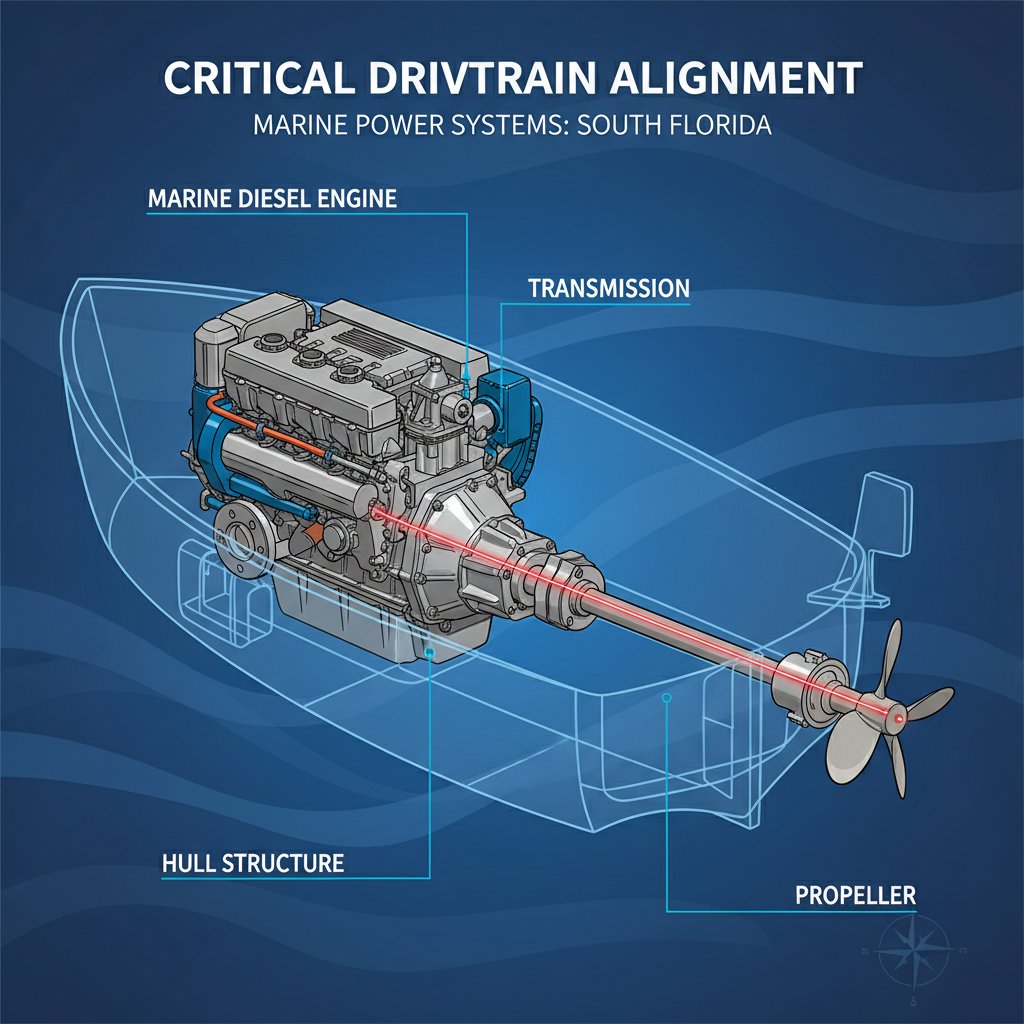
Marine diesel engine alignment refers to the precise positioning of the engine relative to the propeller shaft. The engine’s output flange, transmission coupling, and shaft must operate on the same centerline to prevent destructive loads and vibrations. Unlike land-based engines, marine installations must account for significant variables that affect this alignment throughout the vessel’s operation.
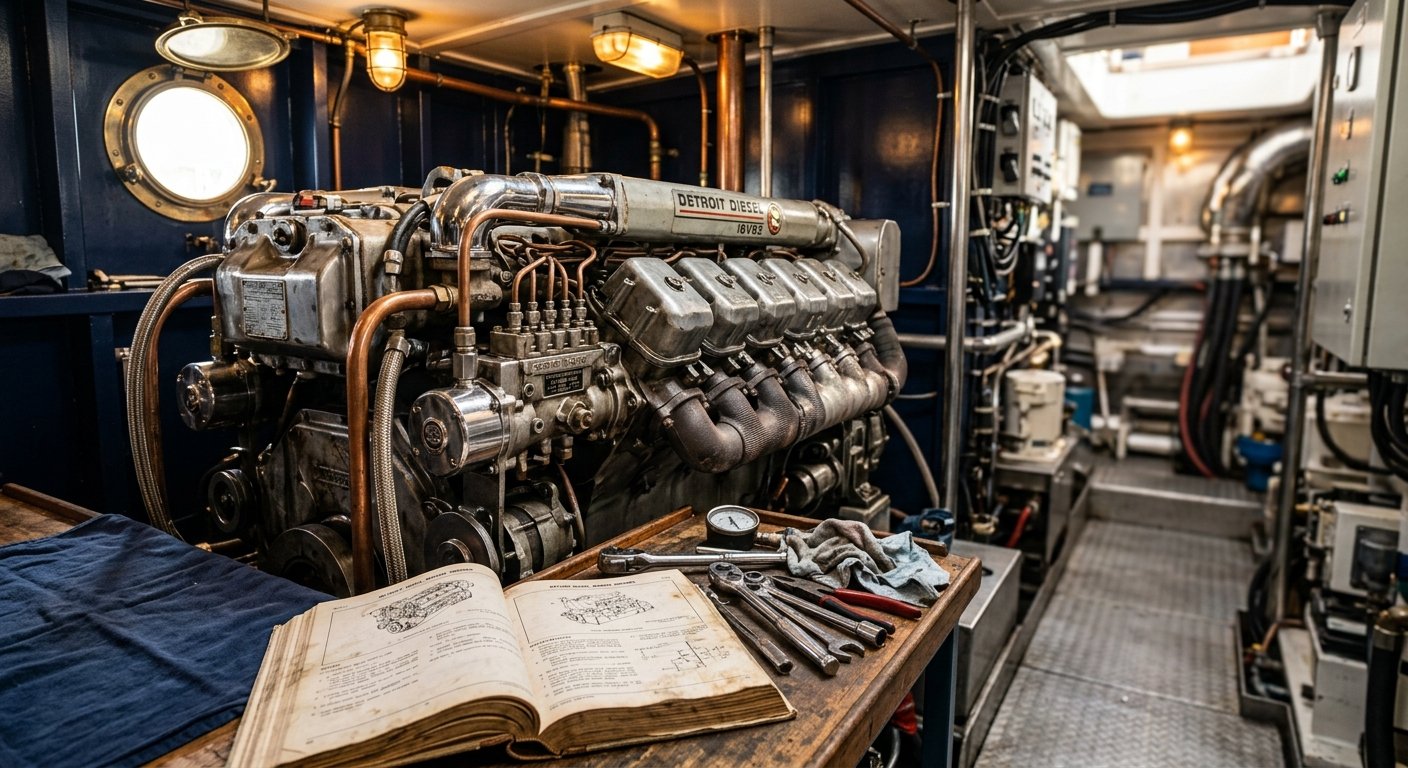
Factory-authorized specifications typically require alignment within 0.001 to 0.003 inches—tolerances that seem impossibly tight given the dynamic marine environment. Detroit Diesel and MTU installations, for instance, have specific alignment procedures that account for thermal growth as engines reach operating temperature. Cold alignment measurements differ significantly from hot alignment, and both must fall within manufacturer parameters.
The hull itself behaves as a flexible structure. As vessels age, fiberglass can delaminate, stringers can shift, and engine beds can settle. What was perfectly aligned during initial installation may drift out of specification over time. This is why alignment checks should be part of regular maintenance schedules, not just performed after obvious problems develop.
How Misalignment Creates Vibration
When engine and shaft centerlines don’t match, several destructive forces come into play. Angular misalignment occurs when the two shafts meet at an angle, creating a wobbling effect that intensifies with RPM. Parallel misalignment happens when shafts remain parallel but offset, generating side loads that wear bearings and flex couplings with every revolution.
These misalignment conditions force transmission output bearings, shaft couplings, and cutlass bearings to work against each other rather than in harmony. The resulting vibration frequency typically matches engine RPM or shaft speed, creating a diagnostic signature that experienced technicians recognize immediately.
As misalignment worsens, vibrations increase exponentially rather than linearly. A vessel that ran smoothly for years may suddenly develop severe vibration as worn engine mounts finally allow enough movement to exceed critical tolerances. The transmission begins fighting the shaft alignment, generating heat and accelerating wear throughout the drivetrain.
Identifying Alignment-Related Vibration
Not every vibration stems from alignment issues, making proper diagnosis critical before committing to expensive realignment procedures. Alignment-related vibrations exhibit specific characteristics that distinguish them from propeller imbalance, bent shafts, or worn engine mounts.
Alignment vibrations typically worsen under load and often change character when shifting between forward and reverse. The vibration may be most pronounced at specific RPM ranges where harmonic resonance amplifies the problem. Unlike propeller-related vibrations, alignment issues usually generate noticeable noise from the transmission or coupling area—clicking, clunking, or grinding sounds that accompany the shaking.
Experienced marine diesel engine repair specialists use several diagnostic techniques to isolate alignment problems. Dial indicator readings at the coupling reveal angular and parallel offset. Checking coupling bolt wear patterns shows which direction forces are pulling. Examining transmission output bearings for heat and wear provides additional confirmation. This systematic approach prevents misdiagnosis and unnecessary work.
Warning Signs Requiring Professional Assessment
- Vibration that intensifies when engaging forward or reverse gear
- Clicking or clunking sounds from the coupling area during operation
- Visible coupling bolt wear or loosening despite proper torque
- Transmission oil leaks developing around output shaft seals
- Accelerated wear on shaft log packing or dripless seals
- Bearing noise from the transmission or shaft log area
- Vibration that changes after hauling or when the boat settles on the bottom
Common Causes of Alignment Failure
Marine diesel engines don’t spontaneously fall out of alignment. Specific conditions and failures precipitate misalignment, and understanding these causes helps vessel owners prevent problems before they develop.
Engine mount deterioration ranks as the leading cause of alignment loss. These critical components isolate engine vibration while maintaining precise positioning. As mounts age, the rubber compounds harden, crack, and compress, allowing engines to sag or shift. Northern Lights and Kohler generator sets use similar mounting systems that require periodic inspection and replacement based on manufacturer schedules, not just when obvious failure occurs.
Stringer and engine bed movement represents another common culprit, particularly in older fiberglass vessels. The structural supports bonded to the hull can separate from the laminate, allowing the entire engine assembly to shift. Wooden stringers in classic yachts can rot or compress, changing the geometry that alignment depends upon.
Thermal expansion affects alignment as engines reach operating temperature. A cold-aligned engine may be significantly out of specification when hot, or vice versa. Factory-authorized procedures specify whether alignment should be performed cold, at operating temperature, or with specific offset measurements that account for thermal growth. Westerbeke installations, for example, have distinct hot and cold alignment specifications that must be followed precisely.
Hull hogging and sagging from aging or improper weight distribution can twist the entire structure, making proper alignment impossible without addressing the underlying structural issues. Even vessels hauled and blocked improperly can experience temporary misalignment from hull deflection.
The Professional Alignment Process
Proper marine engine alignment requires precision measuring equipment, manufacturer-specific procedures, and understanding of the vessel’s operational characteristics. This isn’t a job for improvised measurements or eyeball estimates.
The process begins with thorough inspection of all drivetrain components. Engine mounts are checked for deterioration, compression, and proper adjustment. Shaft condition is verified—a bent shaft makes alignment impossible and must be straightened or replaced first. Transmission mounts and integrity are confirmed before proceeding with alignment measurements.
Using precision dial indicators, technicians measure both angular and parallel alignment at the coupling. Readings are taken at four points around the coupling circumference to reveal the exact nature and magnitude of misalignment. These measurements are compared against manufacturer specifications, which vary by engine model, transmission type, and installation configuration.
Adjustment involves calculated shimming or repositioning of engine mounts to bring measurements within specification. This iterative process requires patience—adjusting one mount affects readings at all positions. The engine must be rotated through complete revolutions with measurements taken at each position to verify uniform alignment throughout the rotation.
For Detroit Diesel and MTU installations, thermal alignment procedures require running engines to operating temperature and reverifying measurements. Hot alignment often differs from cold readings by several thousandths of an inch. The final alignment must meet hot specifications while the vessel is in its normal at-rest waterline condition.
On-Site Marine Engine Maintenance Advantages
Engine alignment inherently requires in-vessel service. The engine must be in its operational environment, with the boat at proper waterline and all systems in place. This makes on-site marine engine maintenance capabilities essential for proper alignment work.
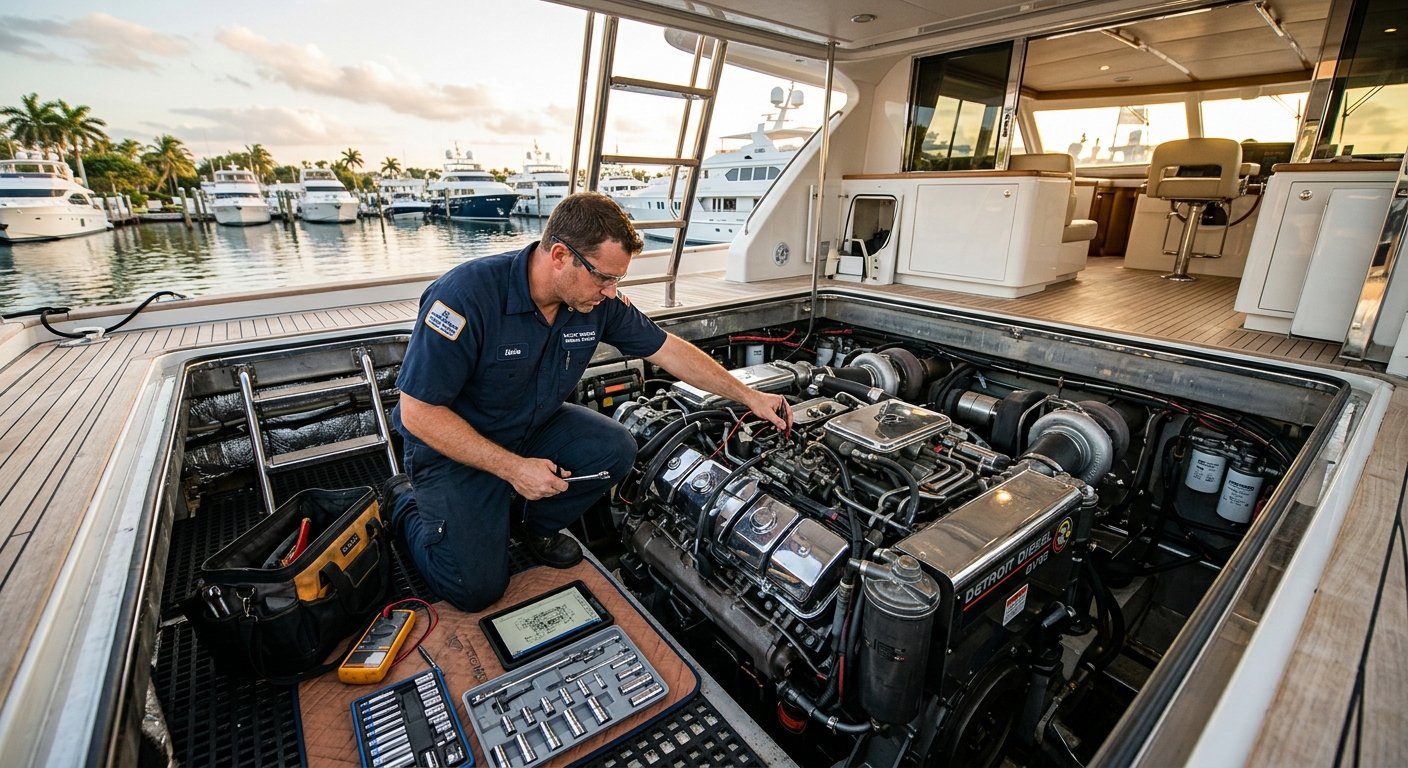
Mobile service eliminates the need to transport your vessel to a service facility—a significant advantage for larger yachts and vessels in yacht engine repair fort lauderdale marinas and throughout South Florida. Factory-authorized technicians arrive with precision tools, manufacturer-specific alignment data, and extensive experience with various hull types and engine configurations.
On-site capabilities also allow for operational testing immediately after alignment adjustments. Engines can be run at dockside to verify vibration elimination and confirm proper coupling operation. This immediate verification prevents the frustration of discovering continued problems during the next cruise.
Preventing Future Alignment Problems
Maintaining proper engine alignment requires ongoing attention rather than crisis response. Vessel owners who implement preventative maintenance schedules avoid the cascading damage that misalignment causes throughout drivetrain components.
Annual alignment checks should be standard practice for any vessel with significant operating hours. Boats experiencing hard use, those operating in rough conditions, or vessels over 15 years old benefit from semi-annual verification. These inspections catch alignment drift before it causes vibration or component damage.
Engine mount replacement follows manufacturer schedules, typically every 5-10 years depending on use and environment. Waiting for obvious mount failure guarantees alignment problems and potential damage to more expensive components. Quality OEM mounts cost far less than transmission rebuilds or shaft bearing replacements.
Documenting alignment measurements creates valuable baseline data for future reference. Knowing what measurements looked like when the boat ran smoothly helps diagnose subtle changes before they become obvious problems. This historical data proves particularly valuable for boat diesel engine troubleshooting when vibration develops.
When to Call Professional Marine Technicians
Engine alignment requires specialized knowledge, precision equipment, and manufacturer-specific procedures that go beyond general mechanical skills. Attempting alignment without proper tools and training often worsens problems while wasting time and money.
Factory-authorized service providers maintain current alignment specifications for specific engine models, understand thermal expansion requirements, and possess the precision instruments necessary for accurate measurement. Their experience with various hull types and installation configurations prevents the trial-and-error approach that characterizes amateur alignment attempts.
For marine engine service south florida vessel owners, choosing technicians with comprehensive experience across major brands ensures proper procedures regardless of your specific equipment. Detroit Diesel, MTU, Northern Lights, Kohler, and Westerbeke each have unique alignment requirements that must be followed precisely.
Beyond alignment expertise, established service providers offer comprehensive drivetrain inspection that identifies related issues contributing to vibration problems. Bent shafts, worn couplings, failing transmission bearings, and propeller problems may coexist with alignment issues. Comprehensive diagnosis prevents addressing one problem while leaving others to cause continued vibration.
The Long-Term Value of Proper Alignment
Precision engine alignment delivers returns that far exceed the service investment. Properly aligned engines run smoother, quieter, and more efficiently. Fuel consumption improves when engines aren’t fighting misalignment resistance. Component longevity extends dramatically when destructive vibration and side loads are eliminated.
Transmissions last decades rather than years when operated within alignment specifications. Shaft bearings, cutlass bearings, and seals reach their designed service life instead of failing prematurely. Even propellers maintain balance longer when shafts run true without vibration-induced stress.
For vessel owners planning long-term ownership, proper alignment represents an investment in achieving that 40+ year diesel engine lifespan that proper maintenance makes possible. The engines themselves are built to last—alignment ensures all supporting components can do likewise.
Trust Your Vessel to Experienced Professionals
When vibration signals potential alignment problems, don’t wait for component failure to force action. RPM Diesel has provided factory-authorized marine diesel service for 68 years, with comprehensive experience in engine alignment across all major marine diesel brands. Our 68,000+ parts inventory and worldwide service capabilities mean we’re equipped to diagnose, align, and repair your engines properly—the first time.
Whether your vessel is docked in Fort Lauderdale or anywhere throughout South Florida, our mobile service teams bring factory-authorized procedures and precision equipment directly to your slip. Contact RPM Diesel today to schedule a comprehensive alignment inspection and restore your vessel to smooth, reliable operation.