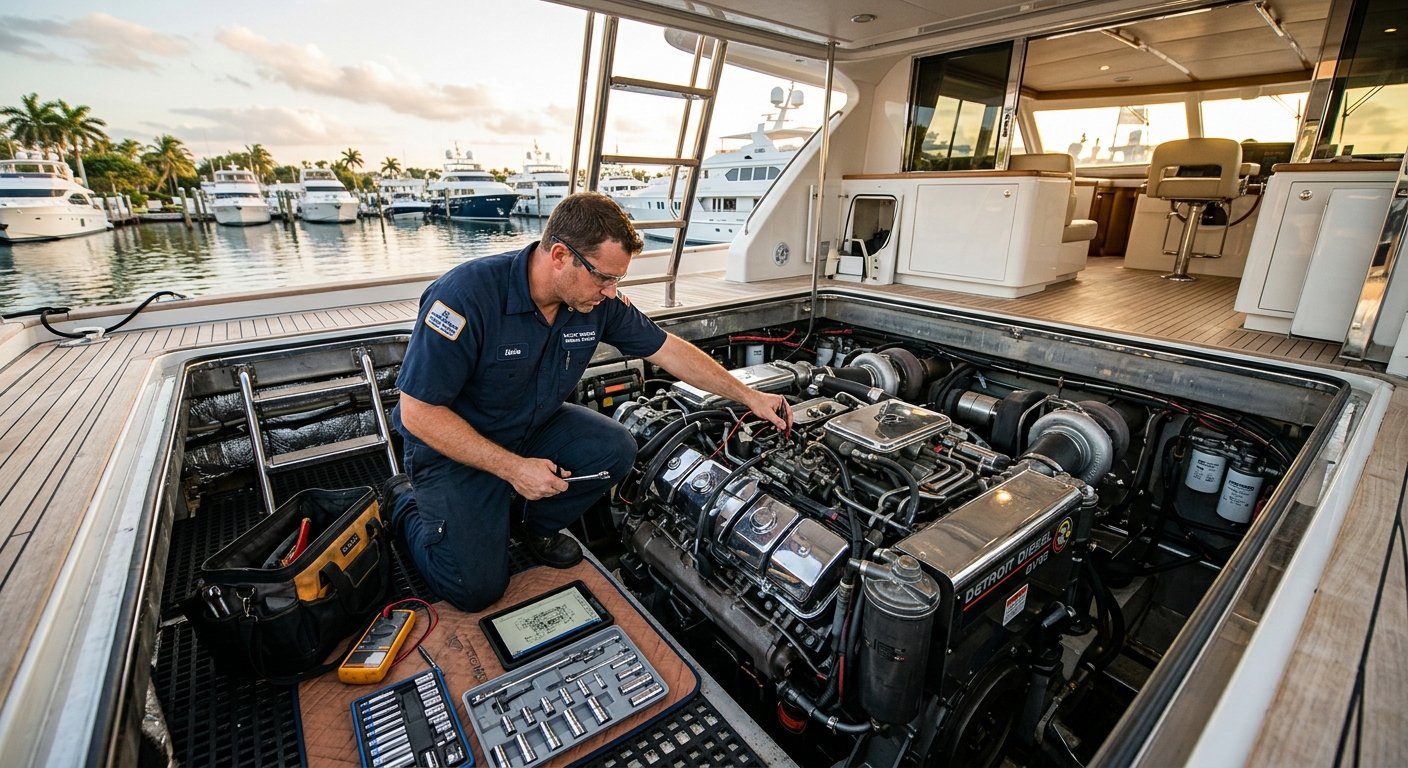
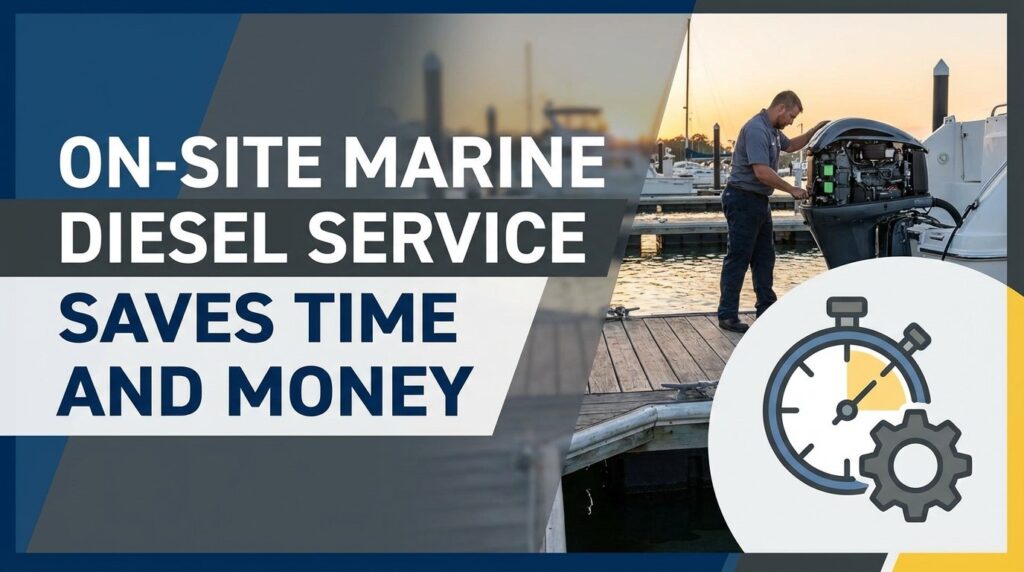
When your yacht’s diesel engine develops problems at the dock, the last thing you want is the complexity and expense of hauling your vessel to a distant service facility. On-site diesel engine service has transformed marine maintenance, bringing factory-trained technicians directly to your slip with the tools, diagnostics equipment, and expertise needed to resolve issues where your boat sits. For vessel owners throughout South Florida and beyond, this approach eliminates transport costs, reduces downtime, and provides immediate access to professional service when problems arise.
The economics are straightforward: transporting a 50-foot yacht to a service yard can cost thousands in haul-out fees, slip rental at the service location, and relocation logistics. Meanwhile, your vessel sits idle, missing cruising opportunities or charter bookings. Mobile marine diesel technicians eliminate these expenses while delivering the same quality service you’d receive at a fixed facility—often faster and with greater convenience.
The Evolution of Mobile Marine Diesel Service
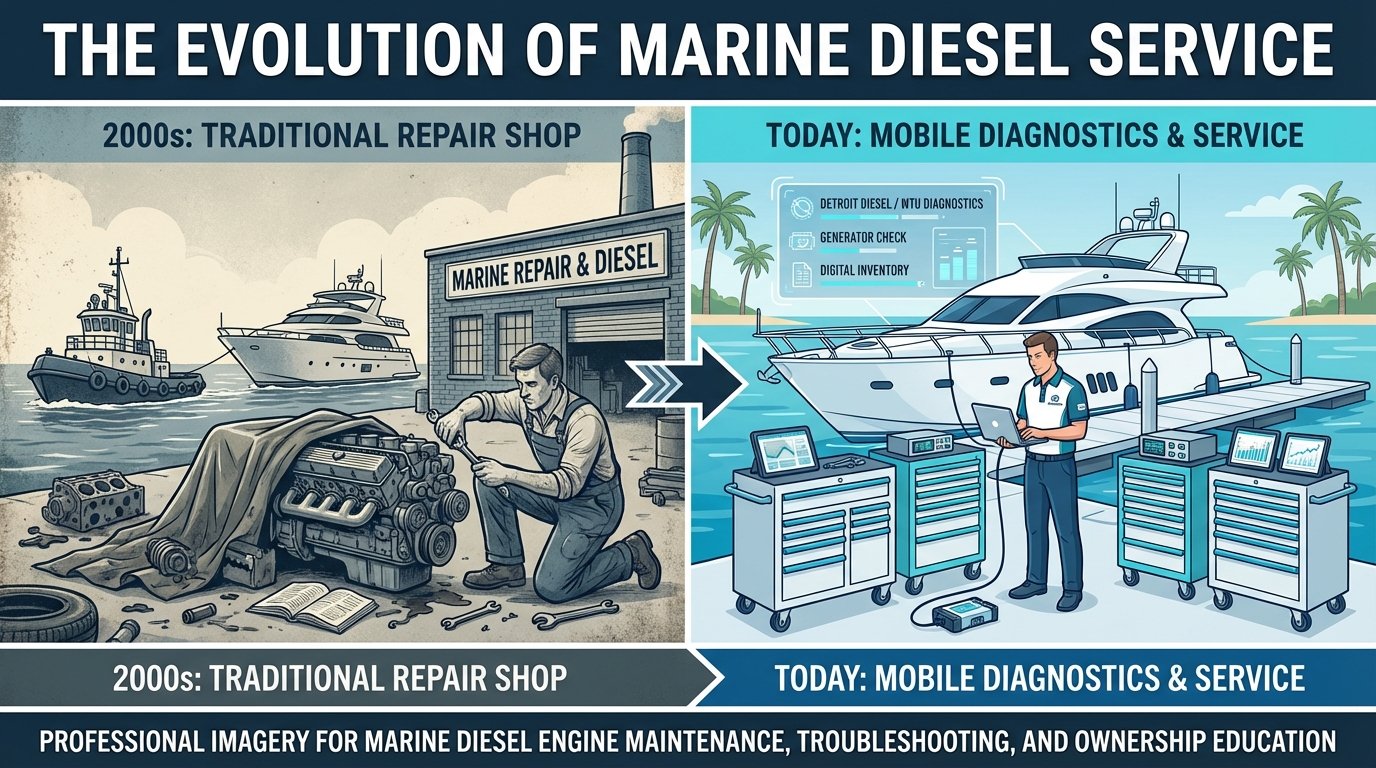
Marine diesel service has evolved significantly over the past two decades. What once required specialized shop equipment can now be performed dockside with advanced portable diagnostics, precision tools, and comprehensive parts inventory systems. Modern mobile technicians arrive equipped with laptop-based diagnostic systems that interface directly with engine control modules, providing real-time data on performance parameters, fault codes, and system health.
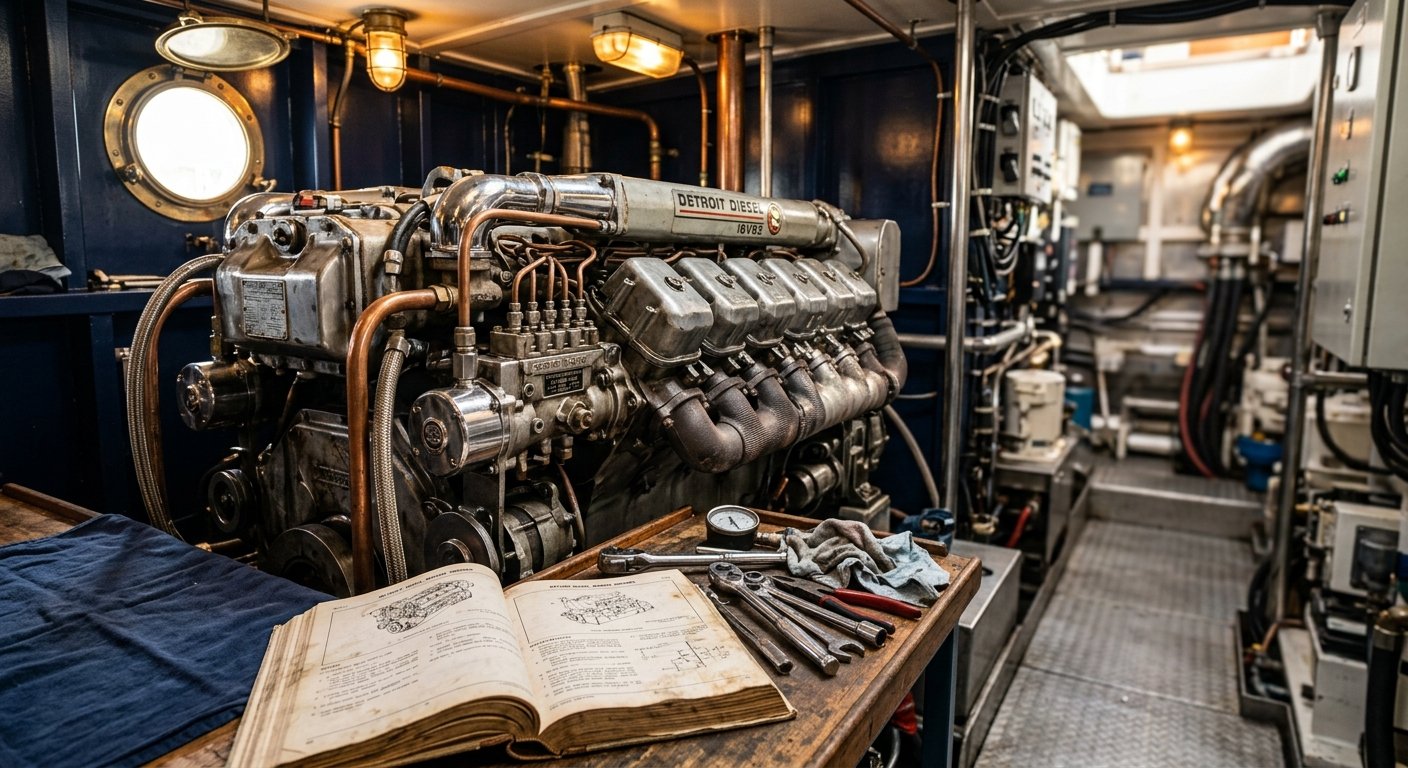
For brands like Detroit Diesel/MTU, Northern Lights, Kohler, and Westerbeke, manufacturer-specific diagnostic software has become increasingly sophisticated. Factory-authorized service providers maintain current versions of these systems, ensuring accurate troubleshooting that identifies root causes rather than symptoms. This precision prevents the costly trial-and-error approach that wastes time and money on unnecessary parts replacement.
The capability extends beyond diagnostics. Today’s on-site diesel engine service includes major repairs, preventative maintenance, complete system overhauls, and even repowers. With a comprehensive parts inventory system—like RPM Diesel’s 68,000+ parts stock developed over 68 years—technicians can source and install components quickly, often completing repairs in a single visit.
True Cost Comparison: Dockside vs. Traditional Service
Understanding the financial advantages requires examining the complete picture. Traditional service yard repairs involve multiple cost layers that vessel owners often overlook until the invoice arrives.
Transport and Haul-Out Expenses
Moving a yacht to a service facility typically involves professional captains or transport services, insurance considerations during transit, and fuel costs. If the vessel requires hauling, add crane fees, blocking, and storage. These expenses can easily reach $3,000-$10,000 before any actual repair work begins.
Facility Fees and Storage
Service yards charge daily storage rates while your vessel awaits parts or technician availability. In South Florida’s competitive marina market, these fees accumulate quickly. A repair that takes two weeks due to parts delays or scheduling could add $2,000-$5,000 in storage costs alone.
Opportunity Costs
For charter vessels, commercial operators, or owners with planned cruises, downtime translates directly to lost revenue or missed experiences. A yacht generating $10,000 weekly in charter fees loses substantial income during extended service yard stays. Even recreational owners lose valuable seasonal boating time that can’t be recovered.
Mobile Service Economics
Yacht engine service at marina locations eliminates most of these expenses. You pay for technician labor, parts, and a service call fee—that’s it. Your vessel remains in its slip, ready to use immediately after repairs. For routine maintenance, the savings are even more dramatic, as scheduled service visits prevent the emergency situations that create urgency premiums and rushed decision-making.
What On-Site Service Can Accomplish
Many vessel owners assume complex repairs require shop facilities. Modern mobile capabilities prove otherwise. Here’s what qualified boat engine repair at dock teams can handle:
Comprehensive Diagnostics and Troubleshooting
Electronic diagnostics reveal issues with fuel systems, cooling systems, electrical problems, transmission concerns, and performance anomalies. Factory-authorized technicians interpret this data within the context of manufacturer specifications, identifying problems other service providers might miss.
Engine Overhauls and Major Repairs
Complete engine rebuilds, cylinder head replacement, turbocharger service, and injection system overhauls can all be performed dockside. With proper planning and parts staging, even major repairs happen efficiently at your slip.
Preventative Maintenance Programs
Scheduled maintenance is where on-site service truly shines. Oil and filter changes, fuel system cleaning, cooling system service, belt and hose replacement, and comprehensive inspections happen on your schedule without vessel relocation. Properly maintained diesel engines routinely exceed 40 years of service life—but only with consistent, manufacturer-specified maintenance.
Generator Service and Repair
Marine generators from Northern Lights, Kohler, and Westerbeke require specialized knowledge. Mobile technicians service these systems completely, from routine maintenance to complete rebuilds, ensuring reliable power generation for onboard systems.
Emergency Repairs
When problems occur before departure or during a brief port stop, immediate response matters. Mobile marine diesel technician services provide rapid response, often diagnosing and resolving issues within hours rather than days.
The Importance of Factory Authorization
Not all mobile diesel services offer equivalent expertise. Factory authorization matters significantly, particularly for modern electronically controlled engines. Manufacturers like MTU and Detroit Diesel restrict access to proprietary diagnostic software, technical bulletins, and engineering support to authorized service centers.
This authorization ensures technicians receive ongoing training on new models, updated repair procedures, and emerging issues. They maintain direct communication channels with manufacturer engineers for complex problems requiring specialized knowledge. When service records show factory-authorized maintenance, vessel value and buyer confidence increase significantly.
Factory authorization also guarantees access to genuine OEM parts rather than aftermarket alternatives that may not meet specifications. While aftermarket components might appear identical and cost less, they often lack the engineering validation and quality control of manufacturer-supplied parts. The short-term savings disappear when premature failure requires repeat repairs.
Signs You Need Professional Service Now
Recognizing problems early prevents minor issues from becoming major failures. Watch for these indicators that professional marine engine service south florida expertise is needed:
- Performance Changes: Reduced maximum RPM, sluggish acceleration, or difficulty maintaining cruising speed suggest fuel system problems, turbocharger issues, or developing mechanical wear.
- Unusual Sounds: Knocking, rattling, or grinding noises indicate serious concerns requiring immediate diagnosis. Continuing to operate can transform repairable problems into complete engine failures.
- Smoke Color Changes: Black smoke suggests incomplete combustion from fuel system issues. Blue smoke indicates oil consumption. White smoke may signal coolant entering combustion chambers—a serious problem requiring prompt attention.
- Temperature Abnormalities: Operating temperatures outside normal ranges indicate cooling system problems, thermostat failures, or impeller damage. High temperatures cause rapid component wear and potential catastrophic failure.
- Fluid Leaks: Oil, coolant, or fuel leaks indicate seal failures, gasket problems, or component damage requiring diagnosis and repair.
- Starting Difficulties: Hard starting, extended cranking, or failure to start point to fuel delivery problems, electrical issues, or compression loss.
- Excessive Vibration: Increased vibration suggests engine mount deterioration, shaft alignment issues, or internal engine problems.
Maximizing Value from Mobile Service
Getting the most from yacht engine service at marina locations requires preparation and clear communication. These practices optimize service efficiency:
Maintain Detailed Service Records
Comprehensive maintenance logs help technicians understand your engine’s history, previous repairs, and maintenance intervals. This information speeds diagnosis and prevents redundant work.
Document Problems Thoroughly
Note when problems occur, under what conditions, and any associated symptoms. Does the issue happen at specific RPM ranges? During acceleration or deceleration? When cold or hot? This information guides efficient troubleshooting.
Schedule Preventative Maintenance
Regular scheduled service prevents most emergency repairs. Following manufacturer-recommended intervals for oil changes, filter replacements, and system inspections catches developing problems while they’re still minor and inexpensive to address.
Address Problems Promptly
Small issues become large expenses when ignored. That minor oil leak or slight performance decrease often signals developing problems that worsen rapidly under continued operation.
Plan Major Service During Off-Season
Schedule comprehensive service, overhauls, or upgrades during periods when you’re not using your vessel. This eliminates pressure to rush work and ensures thorough, quality service.
When Fixed Facility Service Makes Sense
While boat engine repair at dock handles most situations, certain scenarios benefit from fixed facility capabilities:
- Major Structural Work: Hull repairs, shaft replacements, or work requiring vessel stability beyond what dockside conditions provide.
- Complete Repowers: While possible dockside, engine replacement sometimes benefits from crane access and controlled shop environments.
- Bottom Work: Obviously, underwater repairs require haul-out, though these can be coordinated with needed engine service for efficiency.
- Extensive Refits: Projects involving multiple systems and trades benefit from coordinated shop environments.
Even in these situations, mobile service minimizes facility time by completing preparatory work dockside and final commissioning after relaunch.
The Long-Term Value Proposition
Marine diesel engines represent substantial investments—often $30,000-$150,000+ per engine depending on size and model. Generator sets add another $15,000-$50,000. Protecting these investments through proper maintenance and timely professional service extends their useful life dramatically while maintaining reliability and performance.
A properly maintained diesel engine exceeding 40 years of service isn’t exceptional—it’s expected. This longevity requires consistent manufacturer-specified maintenance, genuine parts, and expert service when needed. The cumulative savings from avoiding premature replacement, preventing major failures through early intervention, and maintaining fuel efficiency through proper tuning far exceed maintenance costs.
On-site diesel engine service makes this level of care accessible and convenient. Rather than delaying maintenance due to the hassle of vessel transport, owners can schedule regular service as easily as calling for dockside fuel delivery. This convenience translates directly to better-maintained engines and lower long-term ownership costs.
Expertise That Comes to You
The marine diesel service industry has evolved to meet vessel owners where they are—literally. With advanced diagnostics, comprehensive parts availability, and factory-trained expertise now available at your dock, there’s no reason to accept the delays, expenses, and complications of traditional service yard approaches for routine maintenance and most repairs.
For vessel owners throughout South Florida and beyond, selecting a mobile marine diesel technician service with deep experience, manufacturer authorization, and comprehensive capabilities ensures your engines receive the expert care they require without the logistical headaches and expenses of vessel transport.
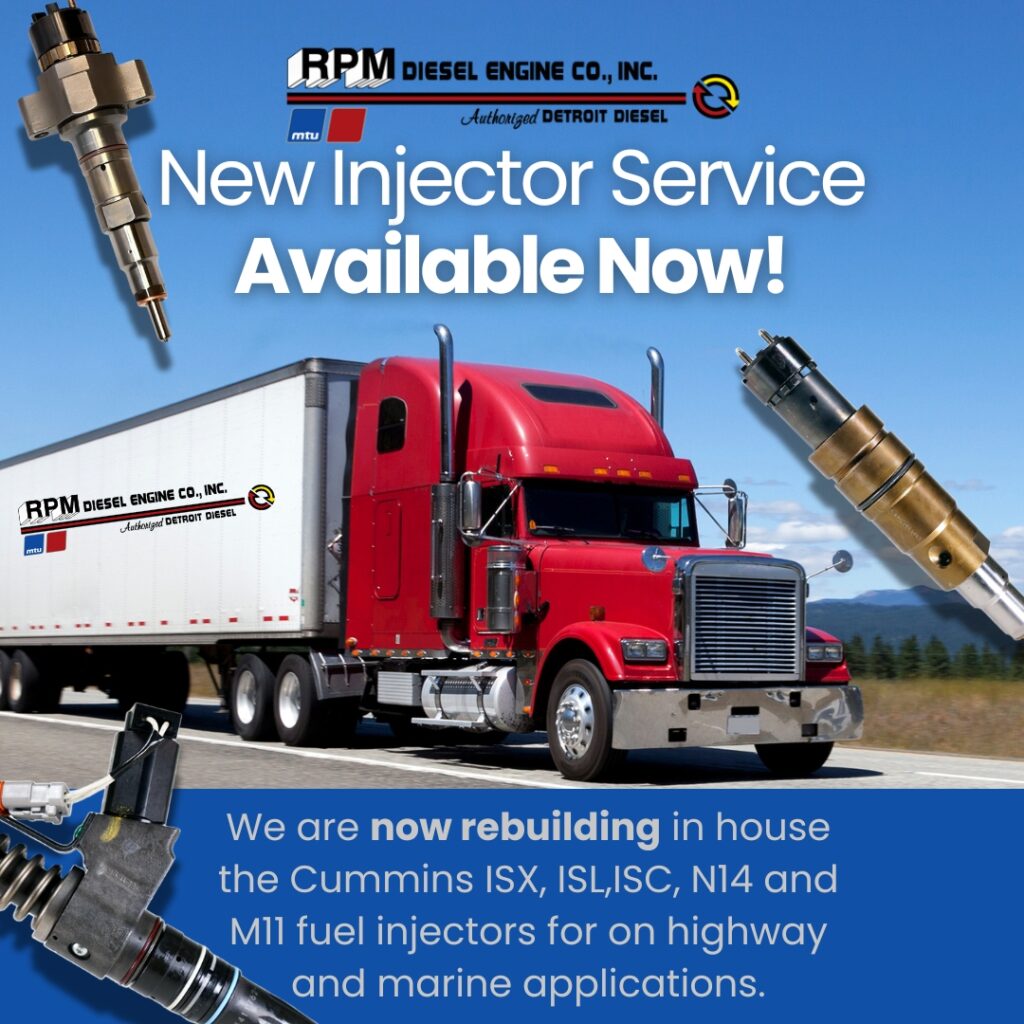
RPM Diesel brings 68 years of marine diesel expertise directly to your slip, with factory authorization for Detroit Diesel/MTU, Northern Lights, Kohler, and Westerbeke equipment. Our technicians carry manufacturer-specific diagnostic equipment and draw from a 68,000+ part inventory to resolve issues efficiently. Whether you need emergency repairs, scheduled maintenance, or major overhauls, our mobile service delivers factory-quality results at your dock.
Contact RPM Diesel today to schedule on-site service or discuss your vessel’s maintenance needs. Let us demonstrate how professional dockside service protects your investment while saving you time and money.