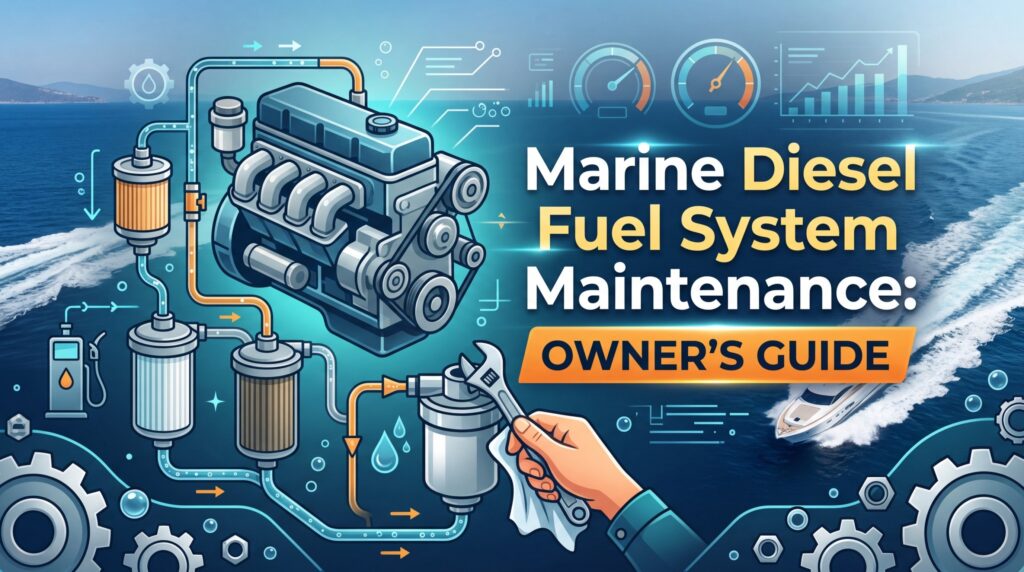
A marine diesel engine running poorly often traces back to a single culprit: contaminated fuel or degraded fuel system components. The fuel system represents the lifeblood of your vessel’s propulsion and power generation, yet it remains one of the most overlooked aspects of marine maintenance. Understanding how to properly maintain your diesel fuel system can mean the difference between a reliable vessel and one that leaves you stranded offshore.
Understanding Your Marine Diesel Fuel System
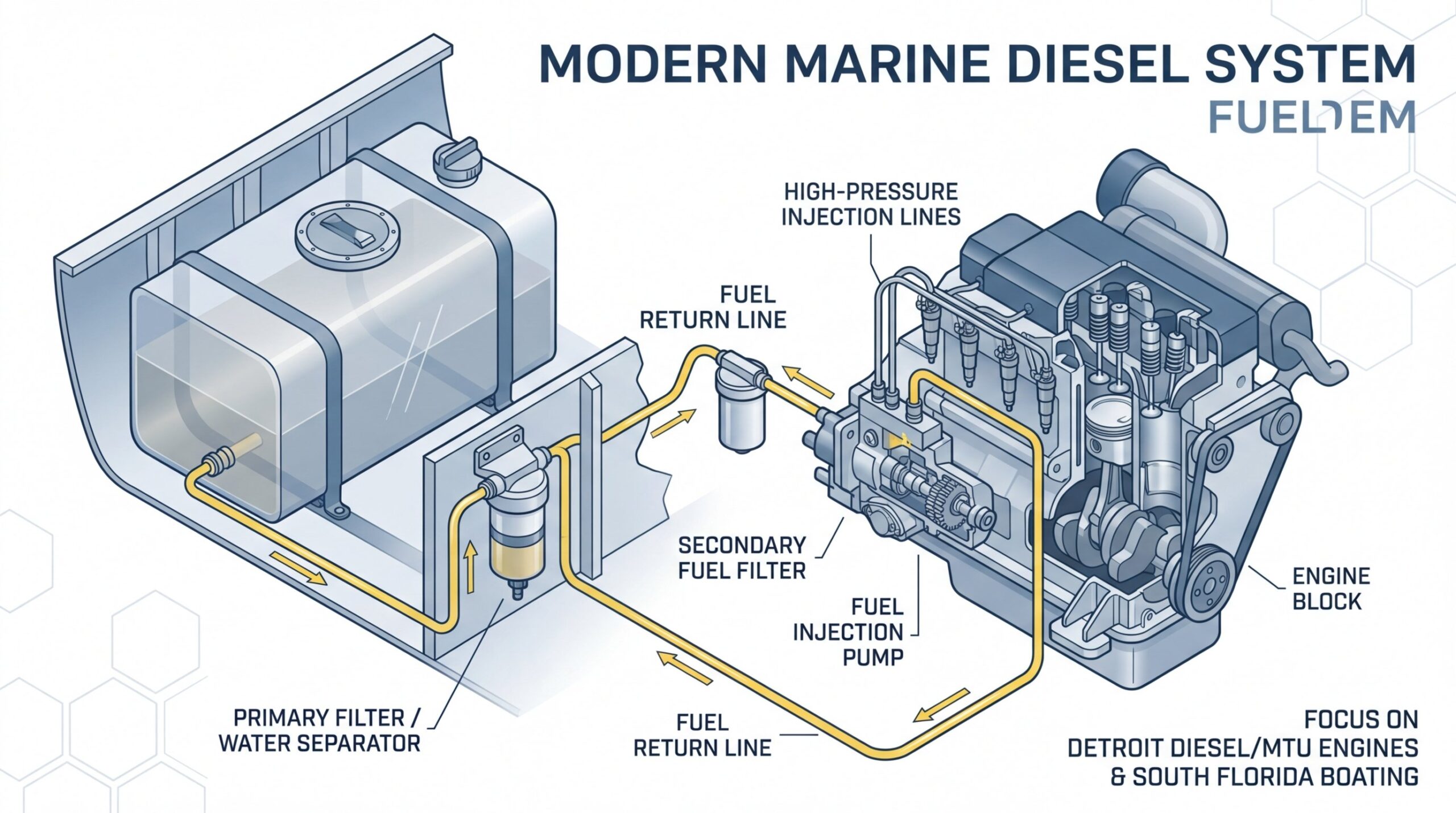
Modern marine diesel fuel systems operate under exacting specifications that demand cleanliness, precision, and consistent maintenance. Whether you’re running Detroit Diesel/MTU main engines or Northern Lights generators, these systems share common components that require methodical care.
The typical marine diesel fuel system includes fuel tanks, primary and secondary filters, lift pumps, high-pressure injection pumps, injectors, and return lines. Each component serves a critical function, and failure of any single element can cascade into expensive repairs or complete system failure. Factory specifications for fuel cleanliness have become increasingly stringent, with modern common rail systems requiring fuel cleanliness levels of ISO 4406 18/16/13 or better.
The Cost of Contamination
Fuel contamination causes approximately 70% of marine diesel fuel system failures. Water, biological growth, sediment, and oxidized fuel compounds create a corrosive environment that damages precision components. A set of high-pressure common rail injectors for a modern MTU engine can cost $15,000 or more to replace—an expense entirely preventable through proper marine diesel fuel system maintenance.
Essential Fuel System Maintenance Intervals
Manufacturer-specified maintenance schedules exist for good reason. These intervals are calculated based on extensive engineering data and real-world failure analysis. Deviating from these schedules voids warranties and dramatically increases failure risk.
Daily Checks
Before starting your engines or generators, inspect fuel system components visually. Check for leaks around fuel lines, filters, and pumps. Examine primary fuel filters for water accumulation in the sight bowl. Even small amounts of water indicate contamination requiring immediate attention. This simple five-minute inspection prevents the majority of fuel-related breakdowns.
Every 50 Operating Hours
Drain water separators and inspect fuel quality. Marine diesel fuel degrades over time, particularly in warm climates where biological growth accelerates. If you notice dark fuel, cloudiness, or slime, your fuel requires polishing and your tanks need cleaning. Replace primary fuel filters according to manufacturer specifications, typically every 200-400 hours depending on fuel quality.
Annual Service Requirements
Comprehensive yacht fuel system maintenance should occur annually regardless of operating hours. This service includes replacing all fuel filters, inspecting fuel lines for deterioration, checking injection pump operation, testing injector spray patterns, and analyzing fuel samples for contamination. Factory-authorized service providers use specialized diagnostic equipment to measure fuel pressure, flow rates, and injection timing—parameters impossible to assess without proper tools.
Critical Components Requiring Professional Service
High-Pressure Fuel Injection Systems
Modern common rail diesel engines operate at fuel pressures exceeding 30,000 PSI. These systems require factory-trained technicians using manufacturer-approved procedures and calibrated equipment. Attempting DIY repairs on high-pressure fuel systems creates serious safety hazards and typically results in component damage far exceeding the cost of professional service.
Detroit Diesel and MTU engines incorporate electronic controls that require diagnostic software for proper calibration. These systems adjust injection timing, duration, and pressure thousands of times per second. Only factory-authorized service centers have access to the proprietary software and training necessary for accurate diagnostics and repairs.
Fuel Injection Pumps
Whether your vessel uses inline injection pumps, distributor pumps, or unit injectors, these precision components demand exact specifications. Timing deviations of mere degrees cause hard starting, excessive smoke, poor fuel economy, and accelerated engine wear. Marine fuel pump service requires specialized test benches that simulate operating conditions while measuring flow rates and pressures across the entire RPM range.
Injectors and Nozzles
Fuel injectors atomize diesel fuel into microscopic droplets for efficient combustion. Carbon buildup, corrosion, or wear changes spray patterns, reducing power and increasing emissions. Professional injector testing reveals problems invisible during normal operation. Flow bench testing identifies injectors operating outside specifications before they cause engine damage.
Recognizing Fuel System Problems Early
Early detection of fuel system issues prevents catastrophic failures and minimizes repair costs. Understanding the warning signs allows you to schedule maintenance before problems escalate.
Performance Indicators
Hard starting, particularly when cold, often indicates fuel delivery problems or injector issues. Excessive white or black smoke signals incomplete combustion from worn injectors or incorrect injection timing. Loss of power under load suggests fuel starvation from clogged filters or failing lift pumps. Rough idle points to uneven fuel delivery between cylinders.
Monitor your fuel consumption carefully. A sudden increase in fuel burn rate, even with no change in operating patterns, indicates reduced combustion efficiency. This inefficiency typically stems from degraded fuel system components requiring professional boat fuel system diagnostics.
Physical Warning Signs
Fuel odors in the engine room indicate leaks requiring immediate attention. Diesel fuel dissolves rubber components and creates fire hazards. Black residue around injectors or fuel lines reveals combustion gas blowby from failed sealing surfaces. External fuel leaks from injection pumps typically indicate internal seal failure necessitating rebuild or replacement.
Proper Fuel Quality Management
The best fuel system maintenance begins with clean fuel. Poor fuel quality causes more marine diesel problems than mechanical failures.
Fuel Tank Maintenance
Fuel tanks accumulate water, sediment, and biological growth over time. Annual fuel polishing removes contaminants and stabilizes stored fuel. Professional fuel polishing services filter fuel through progressively finer filters while removing water and treating with biocides. Properly maintained fuel systems using clean fuel can operate 40+ years without major component replacement.
Tank cleaning should occur every 3-5 years depending on fuel quality and storage conditions. This service removes sludge accumulation that cannot be filtered out during normal operation. Clean tanks dramatically extend fuel system component life and improve engine reliability.
Fuel Additives and Treatments
Use only manufacturer-approved fuel additives. Many aftermarket additives contain chemicals incompatible with modern high-pressure fuel systems. Kohler and Westerbeke generators, for instance, have specific requirements for fuel treatment products. Factory-authorized service providers recommend appropriate additives for your specific equipment and operating conditions.
The Value of Factory-Authorized Service
Marine diesel fuel system maintenance requires specialized knowledge, diagnostic equipment, and access to technical service bulletins. Factory-authorized service centers maintain direct relationships with manufacturers, receiving updates on known issues, revised procedures, and component improvements.
RPM Diesel’s 70-year history servicing marine diesel systems provides institutional knowledge impossible to replicate. With parts in stock, factory-authorized technicians complete repairs efficiently using OEM components that meet exact specifications. This expertise extends vessel operating life and maintains resale value.
Diagnostic Capabilities
Professional boat fuel system diagnostics utilize manufacturer-specific software that reads fault codes, monitors sensor data in real-time, and performs component testing impossible with generic scan tools. Detroit Diesel DDEC systems, MTU MDEC controls, and Northern Lights electronic governors require proprietary diagnostic equipment for accurate troubleshooting.
Pressure testing identifies restrictions in fuel supply and return lines. Flow testing measures pump output across the operating range. Injector pop testing reveals opening pressure and spray pattern degradation. These diagnostic procedures pinpoint problems precisely, eliminating guesswork and preventing unnecessary parts replacement.
Long-Term Cost Benefits of Proper Maintenance
Vessel owners sometimes view professional diesel fuel system care as an expense rather than an investment. The mathematics tell a different story. Preventative maintenance costs a fraction of emergency repairs or component replacement from neglect.
A comprehensive annual fuel system service typically costs $1,500-3,000 depending on vessel size and engine configuration. Compare this to $30,000+ for injection system replacement on twin MTU engines, or $8,000+ for generator fuel system rebuild. Proper maintenance extends component life 3-5 times beyond neglected systems.
Fuel efficiency improvements from properly maintained injection systems typically save 10-15% on fuel costs. On vessels burning 50 gallons per hour, this represents thousands of dollars annually in reduced fuel consumption.
Worldwide Service Capabilities
Professional marine diesel service providers offer more than local support. Worldwide service networks ensure assistance wherever your vessel travels. This capability proves invaluable when problems occur away from home port.
Established service providers maintain relationships with authorized service centers globally, coordinating parts delivery and technical support across continents. This network transforms potential disasters into manageable situations, getting you back underway quickly regardless of location.
Take Action to Protect Your Investment
Your vessel represents a significant investment deserving professional care. Marine diesel fuel system maintenance protects that investment while ensuring reliability and safety. Whether you operate a sportfish with Detroit Diesel engines, a yacht with MTU power, or rely on Northern Lights, Kohler, or Westerbeke generators, factory-authorized service delivers peace of mind.
Don’t wait for problems to develop. Schedule a comprehensive fuel system inspection with experienced marine diesel professionals who understand the critical nature of proper maintenance. Contact RPM Diesel today to discuss your vessel’s specific maintenance requirements and develop a service schedule that protects your investment for decades to come.