
When your Detroit Diesel marine engine flashes a warning light or enters limp mode, the diagnostic codes it generates aren’t random—they’re a precise language telling you exactly what’s wrong. Understanding how to read and interpret Detroit Diesel diagnostic codes can mean the difference between a minor issue caught early and a catastrophic failure that leaves you stranded or facing a six-figure repair bill.
Modern Detroit Diesel engines equipped with Detroit Diesel Electronic Control (DDEC) systems continuously monitor dozens of parameters—from fuel pressure and boost levels to coolant temperature and oil pressure. When something falls outside factory specifications, the system logs a fault code. Learning to read these codes is essential for any vessel owner serious about protecting their marine investment.
Understanding Detroit Diesel DDEC Systems
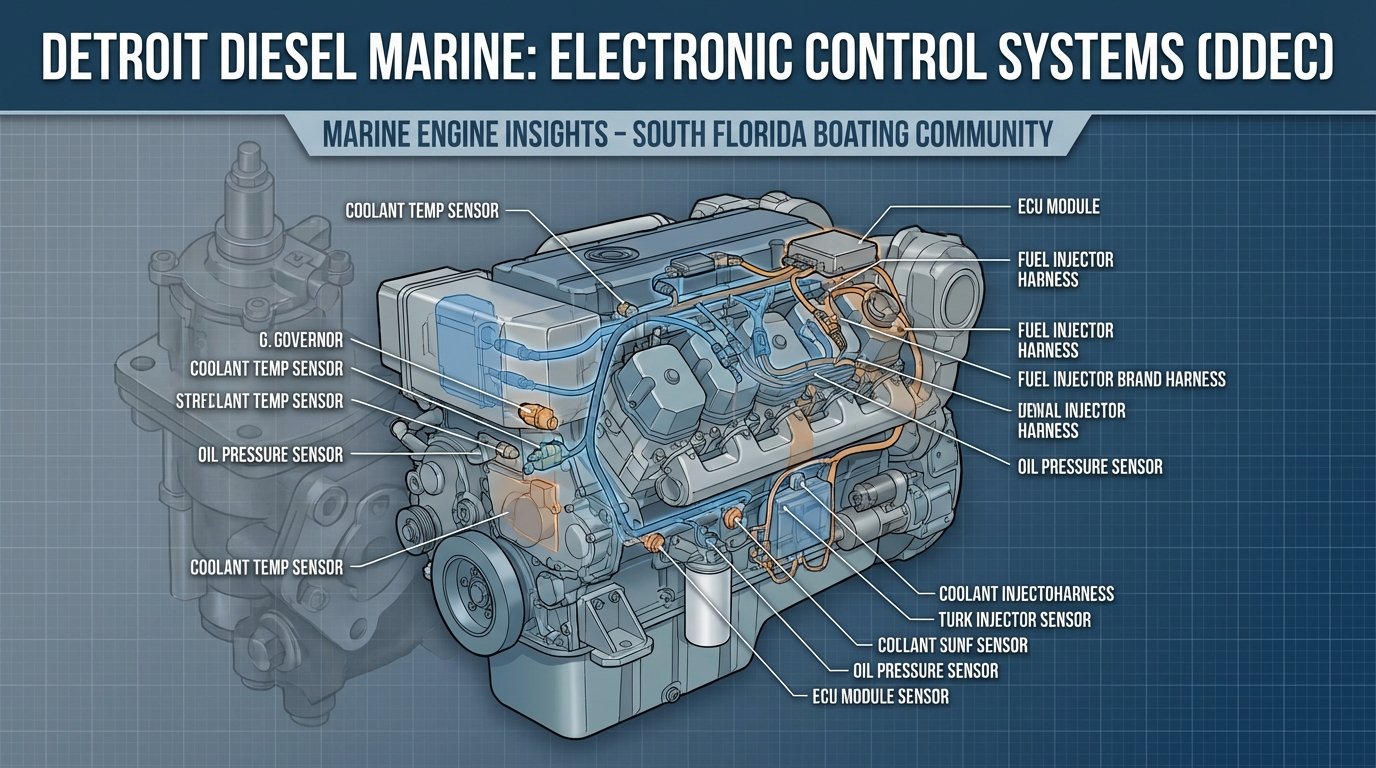
Detroit Diesel’s DDEC technology revolutionized marine diesel diagnostics by replacing mechanical governors with sophisticated electronic controls. The DDEC system functions as your engine’s central nervous system, constantly measuring performance parameters and comparing them against programmed thresholds set by Detroit Diesel engineers.
DDEC systems have evolved through several generations—from DDEC I through the current DDEC 10 platform found in modern MTU engines. Each generation brought increased diagnostic capabilities, more precise fuel control, and enhanced fault detection. Regardless of which generation powers your vessel, the fundamental principle remains: when the system detects an abnormality, it generates a specific fault code.
These Detroit Diesel fault codes consist of standardized identifiers that pinpoint the exact sensor, circuit, or system experiencing issues. The codes follow a structured format that trained technicians can interpret to diagnose problems quickly and accurately.
Types of Detroit Diesel Diagnostic Codes
Detroit Diesel diagnostic codes fall into several categories based on severity and type. Understanding these distinctions helps you assess urgency and appropriate response.
Active Codes vs. Inactive Codes
Active codes indicate a fault currently present in the system. The condition causing the code still exists, and the engine management system is actively responding to it—possibly by reducing power, limiting RPM, or triggering warning lights. Inactive codes represent historical faults that occurred previously but are no longer present. These codes remain stored in memory to help technicians identify intermittent issues or patterns.
SPN, FMI, and Legacy Code Formats
Modern Detroit Diesel engines use the J1939 protocol with Suspect Parameter Numbers (SPN) and Failure Mode Indicators (FMI). An SPN identifies which component or system is affected—for example, SPN 110 refers to coolant temperature. The FMI specifies the type of failure—FMI 3 indicates voltage above normal, while FMI 4 indicates voltage below normal.
Older DDEC systems may display legacy three-digit codes like “35” or “43.” While these older codes are less specific than SPN/FMI combinations, they still provide valuable diagnostic information when properly interpreted.
Severity Levels
Detroit Diesel fault codes include severity ratings that indicate how seriously the issue affects engine operation and longevity:
- Critical: Immediate shutdown required to prevent catastrophic damage
- Severe: Significant power reduction; service needed soon
- Moderate: Engine may continue operating with reduced performance
- Low: Minor issue requiring attention during next scheduled service
How to Access Your Diagnostic Codes
Several methods exist for retrieving Detroit Diesel diagnostic codes, depending on your engine configuration and available equipment.
Dash-Mounted Diagnostic Displays
Many vessels with Detroit Diesel power feature dash-mounted displays that show basic engine parameters and fault codes. These displays typically include a “Diagnostics” or “Faults” menu accessible through button presses. Consult your vessel’s manual for the specific sequence to access codes on your display system.
Flash Code Method
Older DDEC systems without digital displays use flash codes—a series of blinks from the Check Engine Light that correspond to specific faults. To retrieve flash codes, you typically activate a diagnostic switch or follow a specific key-on sequence. The Check Engine Light then blinks in patterns: long pauses separate different codes, while short pauses separate digits within a code. For example, three blinks, pause, five blinks would indicate code 35.
Flash codes require careful counting and patience, but they provide reliable diagnostic information when electronic readers aren’t available.
Professional Diagnostic Software
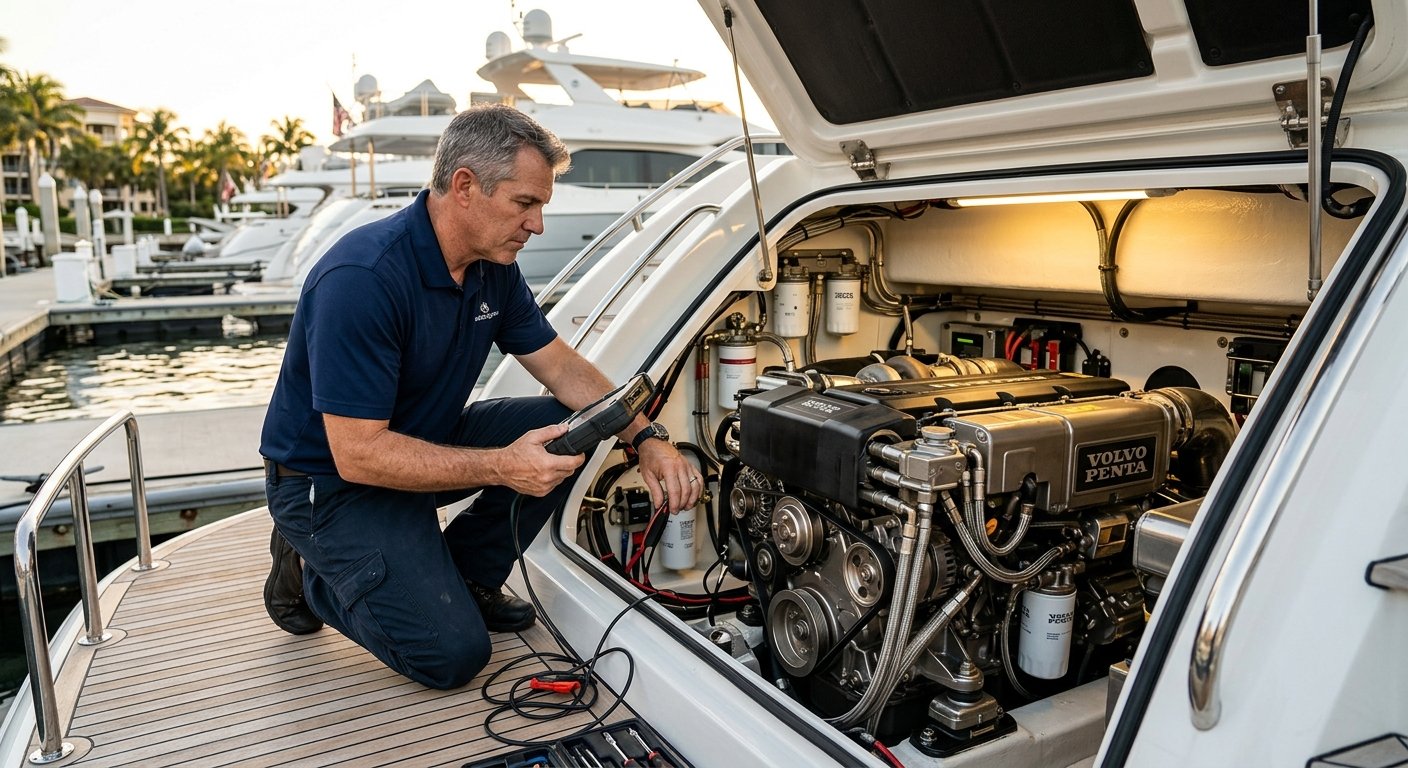
Factory-authorized service providers use Detroit Diesel Diagnostic Link (DDDL) software connected directly to the engine’s electronic control module. This sophisticated tool retrieves not just active and inactive codes, but also detailed parameter data, ECM calibration information, and complete system histories.
DDDL software allows technicians to see real-time sensor readings, perform active tests of various components, and even reprogram ECM parameters to factory specifications. This level of diagnostic capability far exceeds what dash displays or flash codes can provide.
Common Detroit Diesel Fault Codes and Their Meanings
While comprehensive code lists contain hundreds of possibilities, certain fault codes appear more frequently in marine applications.
Coolant System Codes
SPN 110 (coolant temperature) codes indicate the engine is running too hot or that temperature sensors are malfunctioning. High coolant temperature can result from restricted raw water flow, failing heat exchangers, low coolant levels, or thermostat failures. Marine diesel troubleshooting for temperature codes should always include inspection of raw water strainers, through-hull fittings, and heat exchanger condition.
Oil Pressure Codes
SPN 100 relates to oil pressure issues. Low oil pressure codes demand immediate attention—continuing to operate with insufficient oil pressure destroys bearings and can seize the engine within minutes. Causes range from simple low oil levels to failing oil pumps or worn main bearings.
Boost Pressure Codes
SPN 102 indicates problems with intake manifold pressure—typically related to turbocharger performance. Marine engines work hard, and turbochargers operate in harsh saltwater environments. Boost pressure codes may indicate turbo failures, intake leaks, or excessive exhaust backpressure.
Fuel System Codes
Various SPNs relate to fuel delivery, from low fuel pressure (often caused by clogged filters or failing lift pumps) to injector faults. Diesel engine diagnostics for fuel-related codes require careful attention to fuel quality, as contaminated or degraded fuel causes numerous fault conditions.
Sensor and Circuit Codes
Many codes indicate sensor or wiring problems rather than actual mechanical failures. FMI 3 (voltage high) and FMI 4 (voltage low) often point to disconnected sensors, corroded connections, or damaged wiring—issues particularly common in the marine environment where salt and moisture attack electrical connections.
What to Do When Codes Appear
Discovering fault codes triggers a decision process that depends on code severity, your location, and available resources.
Immediate Response Steps
First, note the exact code numbers and any associated warnings. If the engine demands shutdown or enters severe limp mode, comply immediately—operating an engine in distress multiplies damage and repair costs exponentially. A $500 sensor replacement can become a $50,000 engine rebuild if ignored.
For less severe codes, reduce engine load and RPM while you assess the situation. Many DDEC codes include occurrence counts showing how many times the fault has triggered. A code that’s occurred once may be a transient glitch; a code with 47 occurrences indicates a persistent problem requiring attention.
When to Call for Professional Service
While understanding diagnostic codes helps you make informed decisions, interpreting codes correctly requires experience with Detroit Diesel systems and marine applications specifically. A code indicating “high coolant temperature” might seem straightforward, but experienced technicians know it could result from dozens of different root causes—from simple thermostat failures to cracked heads or failing charge air coolers.
Factory-authorized service providers bring critical advantages beyond code reading. They maintain current technical bulletins, have access to complete wiring diagrams and specifications, stock genuine OEM parts, and understand the specific challenges facing marine installations versus highway applications.
The Importance of Proper Code Interpretation
Misinterpreting diagnostic codes leads to incorrect repairs, wasted money, and continued problems. A classic example: SPN 629 indicates “J1939 data link.” Inexperienced technicians might assume this requires ECM replacement—a $4,000+ mistake when the actual cause is often a loose connection or corroded pin in the J1939 network wiring.
Proper marine diesel troubleshooting combines code information with hands-on inspection, parameter analysis, and systematic testing. Codes point technicians toward problem areas but rarely provide complete answers by themselves.
Preventative Maintenance Reduces Fault Codes
The best diagnostic code is the one that never appears. Properly maintained Detroit Diesel engines, serviced according to manufacturer specifications with genuine parts, can operate 40+ years in marine service with minimal fault conditions.
Regular maintenance prevents the majority of fault codes:
- Scheduled fuel filter changes prevent fuel system codes
- Coolant system service prevents temperature-related faults
- Regular oil analysis catches developing problems before they trigger codes
- Electrical connection inspection prevents sensor circuit codes
- Turbocharger maintenance prevents boost-related faults
A comprehensive maintenance program costs far less than emergency repairs triggered by neglected systems.
Working with Factory-Authorized Service Centers
When diagnostic codes appear, partnering with a factory-authorized Detroit Diesel service provider ensures proper diagnosis and repair. Authorized centers maintain factory training, current technical information, and genuine parts inventories necessary for efficient repairs.
RPM Diesel Engine Company has served the marine industry since 1956, providing factory-authorized service for Detroit Diesel and MTU engines. With parts in stock and worldwide service capabilities, RPM technicians respond quickly when diagnostic codes threaten to sideline your vessel. Our experience with Detroit Diesel systems—from legacy Series 60 engines to current MTU platforms—means accurate diagnosis the first time, reducing your downtime and protecting your investment.
Get Expert Help with Your Detroit Diesel Diagnostics
Understanding Detroit Diesel diagnostic codes empowers you to make informed decisions about your vessel’s maintenance and repairs. However, proper code interpretation and repair requires factory-authorized expertise, specialized diagnostic equipment, and genuine OEM parts.
When your Detroit Diesel engine generates fault codes, contact RPM Diesel Engine Company for professional diagnosis and service. Our factory-trained technicians provide comprehensive diesel engine diagnostics, honest assessments, and quality repairs that keep your vessel operating reliably for decades. Don’t let diagnostic codes keep you from the water—call RPM today for expert service backed by 70 years of marine diesel excellence.