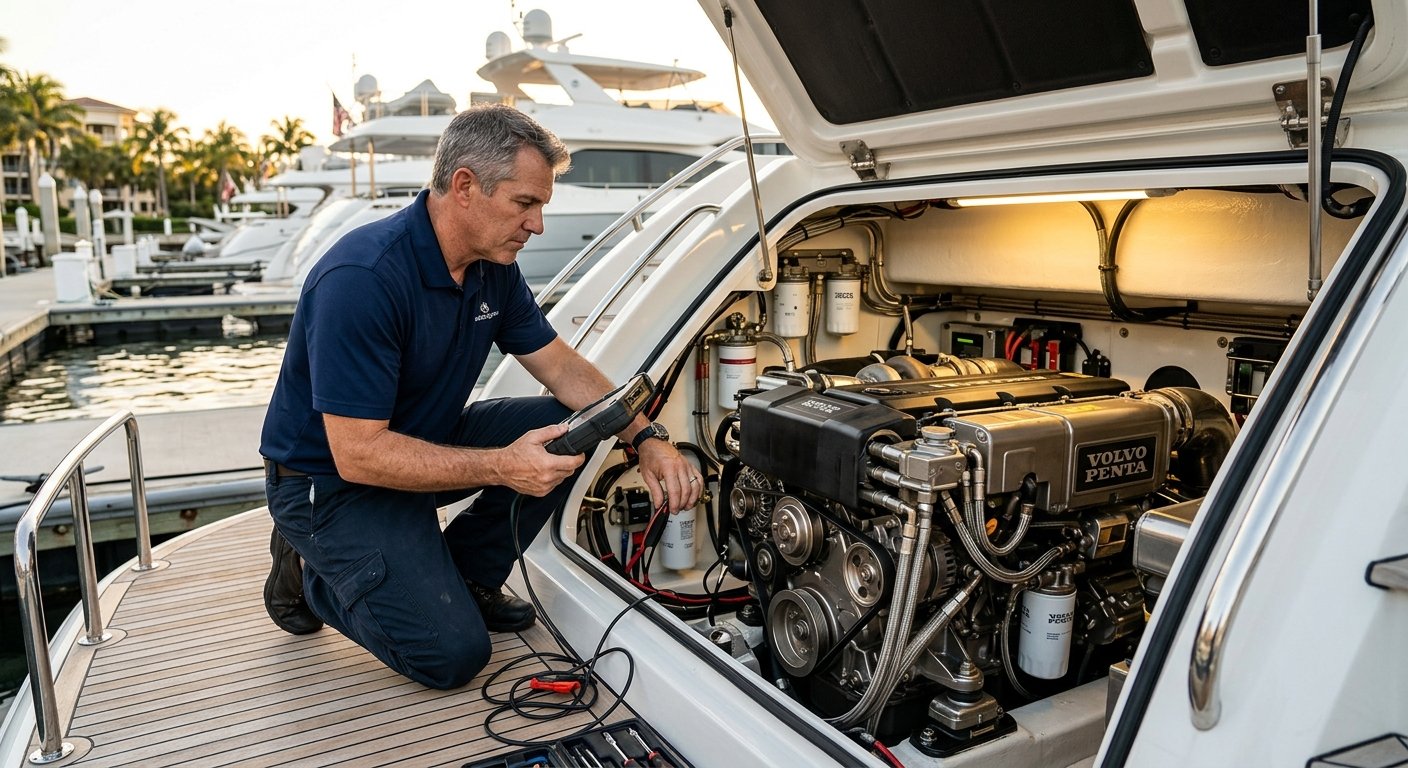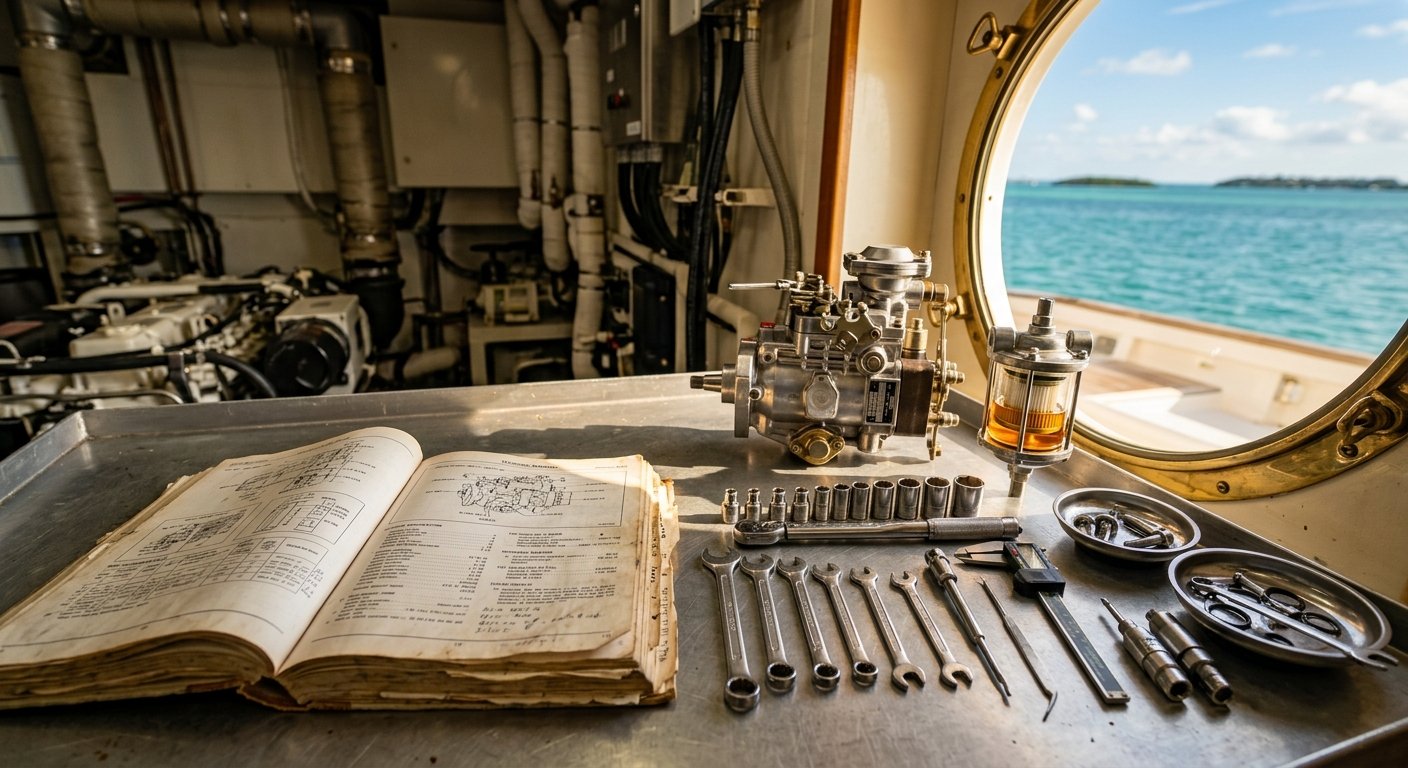
Choosing between Detroit Diesel and MTU marine engines represents one of the most significant decisions vessel owners face during new builds or repowers. While many don’t realize these two legendary brands share intertwined histories and ownership, understanding their distinct characteristics, performance profiles, and service requirements can mean the difference between a propulsion system that delivers decades of reliable service and one that falls short of expectations.
Both Detroit Diesel and MTU have powered everything from sportfishing yachts to commercial workboats, yet each brand carries unique engineering philosophies that make them better suited for different applications. This comprehensive comparison examines what truly matters to vessel owners: performance, reliability, maintenance requirements, parts availability, and long-term ownership costs.
The Detroit Diesel and MTU Connection

Before diving into comparisons, understanding the relationship between these brands provides crucial context. MTU (Motoren und Turbinen-Union) is a German manufacturer with roots dating back to 1909. Detroit Diesel, founded in 1938, became an American icon in heavy-duty diesel engines. In 2006, MTU’s parent company acquired the remaining stake in Detroit Diesel, bringing both brands under the same corporate umbrella while maintaining distinct product lines and engineering approaches.
Despite shared ownership, Detroit Diesel and MTU marine engines serve different market segments with distinct design philosophies. Detroit Diesel engines typically emphasize durability and serviceability for commercial applications, while MTU focuses on high-performance engines for luxury yachts and vessels where power density and speed are paramount.
Performance Characteristics and Applications
Detroit Diesel Marine Engines
Detroit Diesel marine engines, particularly the Series 60 and DD13/DD15 platforms, excel in mid-range commercial and recreational applications. These engines deliver reliable power outputs ranging from 250 to over 600 horsepower, depending on the model and configuration. Their design emphasizes:
- Robust construction suitable for continuous-duty commercial operations
- Moderate power-to-weight ratios that prioritize longevity over maximum performance
- Proven reliability in fishing vessels, charter boats, and displacement cruising yachts
- Fuel efficiency optimized for lower RPM ranges typical of displacement hulls
- Serviceability with conventional maintenance procedures
Detroit Diesel engines shine in applications where steady-state operation, durability, and straightforward maintenance trump outright performance. A properly maintained Detroit Diesel can easily achieve 15,000 to 20,000 hours before requiring major overhaul, with many examples exceeding 30,000 hours in well-managed fleets.
MTU Marine Engines
MTU marine engines represent the performance end of the spectrum, with the Series 2000, 4000, and 8000 platforms powering high-performance yachts, superyachts, and fast commercial vessels. MTU engines offer power outputs from 450 to over 10,000 horsepower in the largest configurations. Their distinguishing characteristics include:
- Exceptional power-to-weight ratios enabling higher speeds and better acceleration
- Advanced electronic engine management systems providing precise control
- Optimized for high-load, high-RPM applications typical of planing hulls
- Premium engineering with tighter tolerances and advanced materials
- Sophisticated common rail fuel injection for improved efficiency and emissions
MTU engines dominate the yacht market where performance matters. A 70-foot sportfish running triple MTU Series 2000 engines can achieve 40+ knot cruise speeds, while the same hull with displacement-oriented engines would struggle to reach 25 knots. This performance comes with specific maintenance requirements that demand factory-authorized service expertise.
Detroit Diesel vs MTU: Key Technical Differences
Engine Design Philosophy
Detroit Diesel employs a more traditional approach with inline configurations and proven mechanical systems that marine technicians can service with standard diagnostic tools. The engines feature straightforward fuel systems, accessible components, and designs that tolerate some variation in maintenance quality—though proper factory-authorized service always extends engine life significantly.
MTU utilizes sophisticated electronic controls, common rail fuel injection operating at pressures exceeding 2,000 bar, and precision-engineered components requiring specialized diagnostic equipment. These engines demand strict adherence to manufacturer specifications and maintenance intervals. Deviating from factory-authorized procedures can result in expensive failures that proper maintenance would prevent.
Operating Profiles
Detroit Diesel engines typically operate most efficiently between 1,800 and 2,100 RPM, making them ideal for displacement and semi-displacement hulls. They handle variable loads well and don’t suffer significantly from occasional low-load operation, though extended idling should still be avoided.
MTU engines often operate between 2,000 and 2,400 RPM at cruise, with rated speeds sometimes reaching 2,450 RPM. They’re engineered for consistent high-load operation and can experience issues if regularly operated below 40-50% load. Proper load management becomes critical for longevity.
Maintenance Requirements and Service Considerations
Routine Maintenance Intervals
Detroit Diesel marine engines typically follow 250-500 hour oil change intervals depending on operating conditions, with major services at 1,000-2,000 hour intervals. The maintenance procedures align with conventional marine diesel practices, though using OEM-specified fluids and filters remains essential for warranty compliance and optimal longevity.
MTU engines often require oil changes every 400-600 hours with synthetic lubricants meeting specific MTU specifications. Major services occur at 1,200-2,400 hour intervals and include comprehensive inspections requiring specialized diagnostic software that only factory-authorized service centers possess. These engines incorporate condition monitoring systems that track parameters beyond what standard gauges display, providing early warning of developing issues—but only when properly interpreted by trained technicians.
Parts Availability and Cost
Detroit Diesel parts are generally more accessible and cost-effective, with widespread distribution through commercial truck and marine channels. However, using genuine Detroit Diesel parts versus aftermarket alternatives significantly impacts reliability. A facility with a deep parts inventory, like RPM Diesel, ensures genuine OEM parts availability without delays that can sideline vessels.
MTU parts carry premium pricing reflecting their precision engineering and performance-oriented design. Parts availability through authorized dealers ensures genuine MTU components manufactured to exact specifications. While MTU parts cost more upfront, using anything other than factory-specified components in these high-performance engines risks catastrophic failure costing tens of thousands more than the parts savings.
Long-Term Ownership Costs
Initial Investment
Detroit Diesel marine engines typically cost 20-40% less than comparable MTU engines at similar power outputs. This lower initial investment makes them attractive for commercial operators and recreational boaters prioritizing value over ultimate performance.
MTU engines command premium pricing reflecting their performance capabilities, sophisticated engineering, and the prestige associated with the brand. For yacht owners where performance justifies the investment, MTU delivers capabilities that Detroit Diesel cannot match.
Operating Costs
Fuel consumption varies significantly based on application. In comparable displacement applications, properly matched engines from either manufacturer deliver similar fuel economy. However, MTU engines powering planing hulls at high speeds consume considerably more fuel—this reflects the physics of high-speed operation rather than engine inefficiency.
Maintenance costs favor Detroit Diesel for routine service, though the gap narrows when comparing total cost of ownership over 15-20 years. MTU’s more expensive scheduled maintenance is offset by sophisticated monitoring systems that catch problems early, potentially avoiding major failures. Both brands can deliver 40+ years of service when properly maintained through factory-authorized facilities.
Which Engine Is Right for Your Vessel?
Choose Detroit Diesel When:
- Operating displacement or semi-displacement hulls where speed isn’t the primary concern
- Running commercial operations where durability and lower operating costs matter most
- Seeking proven reliability with straightforward maintenance requirements
- Budget constraints make the lower initial investment appealing
- Your vessel operates in areas where service access might be limited
Choose MTU When:
- Performance is paramount—you need maximum speed and acceleration
- Operating planing hulls where power-to-weight ratios directly impact capability
- Your vessel requires engines in the 1,000+ horsepower range
- You have access to factory-authorized MTU service facilities
- Operating profiles involve consistent high-load conditions where MTU excels
- You’re building or repowering a yacht where MTU’s prestige matters
The Critical Importance of Factory-Authorized Service
Regardless of whether you choose Detroit Diesel or MTU, factory-authorized service represents the single most important factor in achieving optimal engine life. Modern marine diesel engines, particularly MTU’s high-performance models, incorporate sophisticated systems requiring specialized diagnostic equipment, proprietary software, and training that only authorized facilities possess.
A service provider with 70 years of experience and factory authorization for both Detroit Diesel and MTU brings irreplaceable value. They understand the subtle differences between engines, have access to technical service bulletins before problems become widespread, and maintain relationships with factory engineers for unusual situations. This expertise prevents the misdiagnosis and improper repairs that plague vessels serviced by non-authorized facilities.
Making Your Decision
The Detroit Diesel vs MTU decision ultimately depends on your vessel’s mission profile, performance requirements, and budget. Neither choice is inherently superior—they serve different needs equally well when properly matched to the application.
For commercial operators, charter vessels, and recreational boaters prioritizing reliability and value in displacement applications, Detroit Diesel delivers proven performance with manageable operating costs. For performance-oriented yacht owners where speed justifies premium investment, MTU provides capabilities that define the high-performance marine market.
Both manufacturers produce engines capable of 40+ years of service when maintained according to factory specifications through authorized service providers. The real decision isn’t just Detroit Diesel vs MTU—it’s committing to proper maintenance regardless of which brand you choose.
If you’re considering new engines or evaluating your current Detroit Diesel or MTU installation, consult with factory-authorized service experts who understand both brands’ strengths and limitations. With proper guidance, engine selection, and committed maintenance, your chosen propulsion system will deliver decades of reliable service, protecting your investment and ensuring your vessel is ready whenever you are.
Contact RPM Diesel’s factory-authorized technicians to discuss which marine engine platform best suits your vessel’s requirements. Our 70 years of experience servicing both Detroit Diesel and MTU engines, combined with our parts inventory and worldwide service capabilities, ensures your engines receive the expert care they deserve—regardless of which brand powers your vessel.