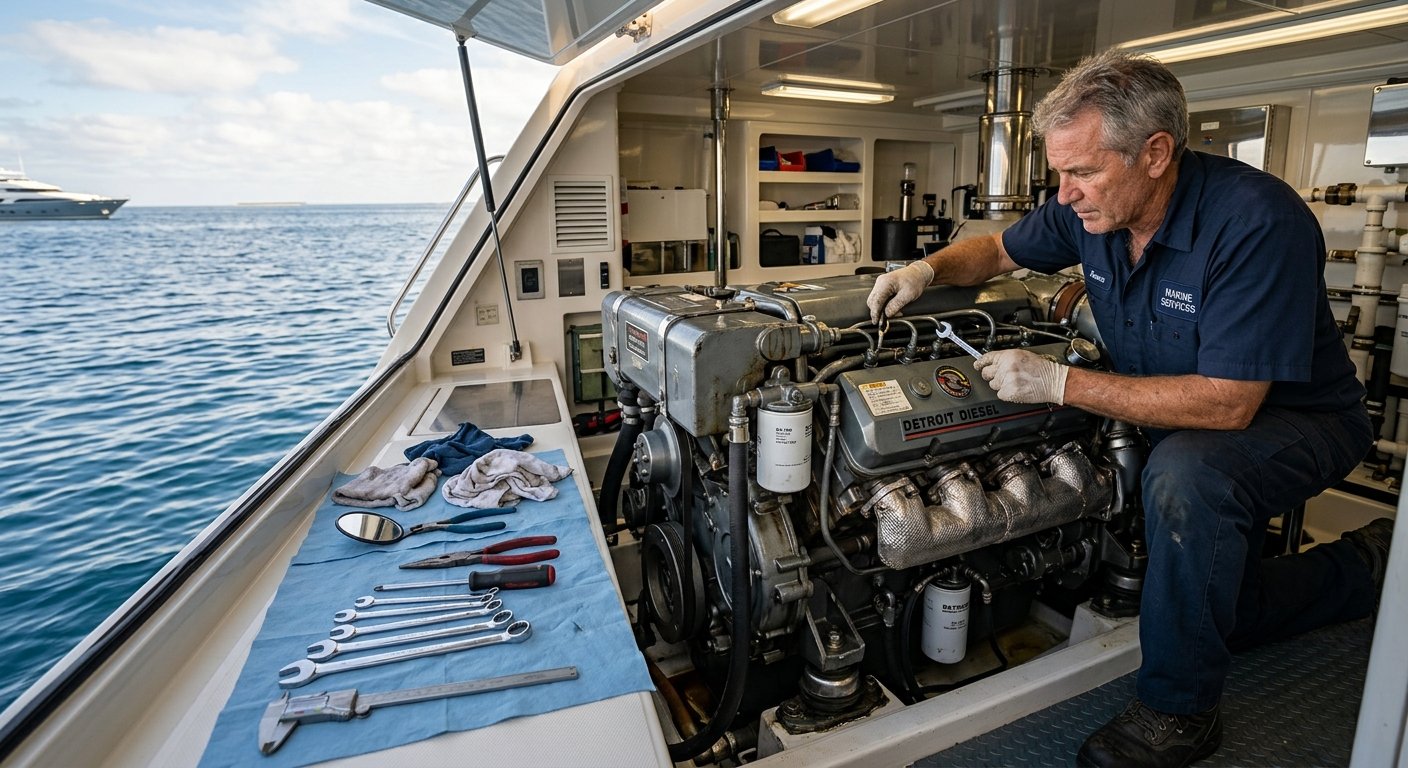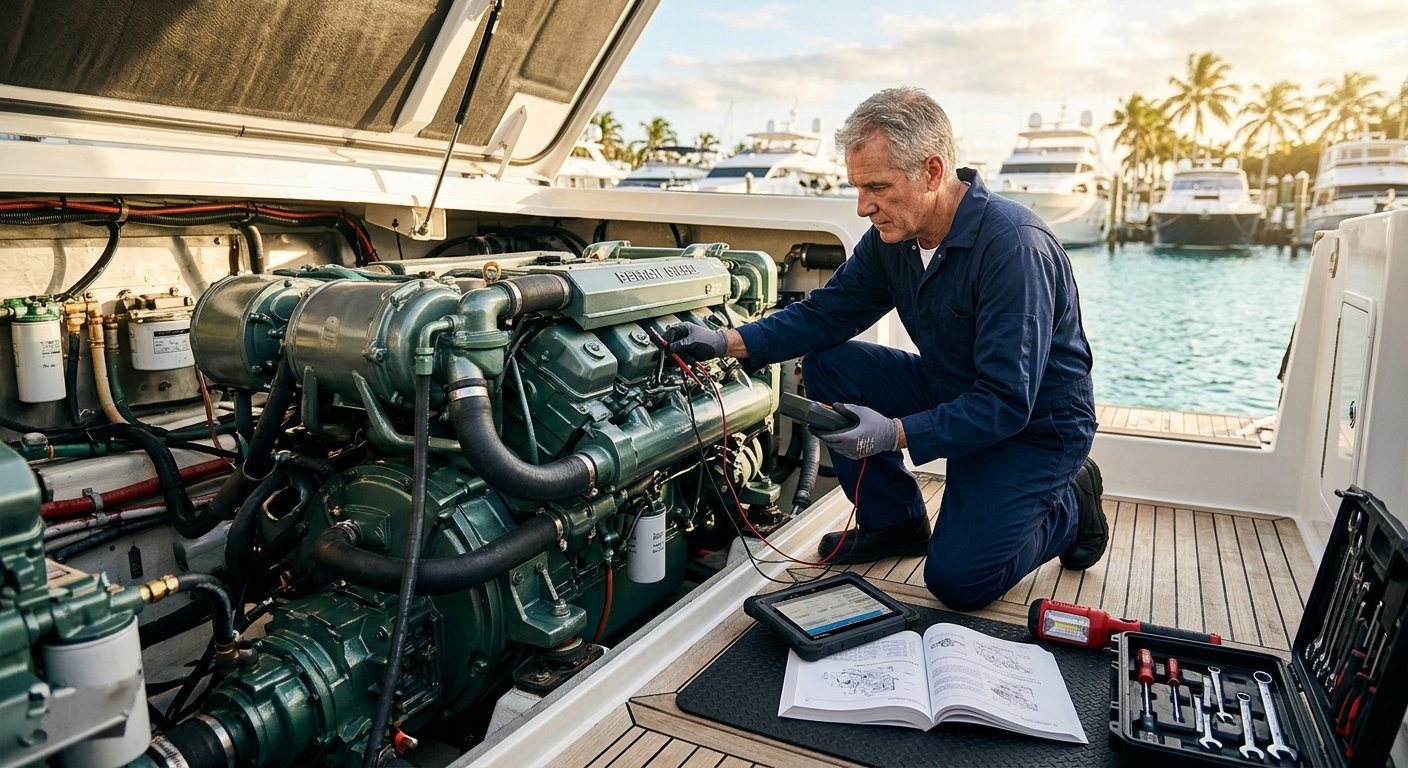
A marine diesel tune-up is a comprehensive service procedure that inspects, tests, and restores the core systems governing engine performance — including the fuel system, air intake, cooling circuit, and electrical components. Unlike a simple oil change, a proper tune-up follows manufacturer specifications and is designed to catch developing problems before they become costly failures. It applies to propulsion engines and onboard generators alike.
- A marine diesel tune-up covers far more than filters — it includes injector testing, cooling system inspection, belt and hose checks, and electrical system review.
- Following the manufacturer’s recommended service intervals is the single most effective way to extend engine life well beyond 40 years.
- Factory-authorized service ensures every procedure meets OEM specifications, protecting warranties and resale value.
- Skipping tune-up steps doesn’t save money — it shifts small repair costs into expensive emergency repairs.
- OEM parts used during service maintain the tolerances the engine was built with; substitutions can introduce hidden reliability risks.
Why a Tune-Up Is More Than Routine Maintenance
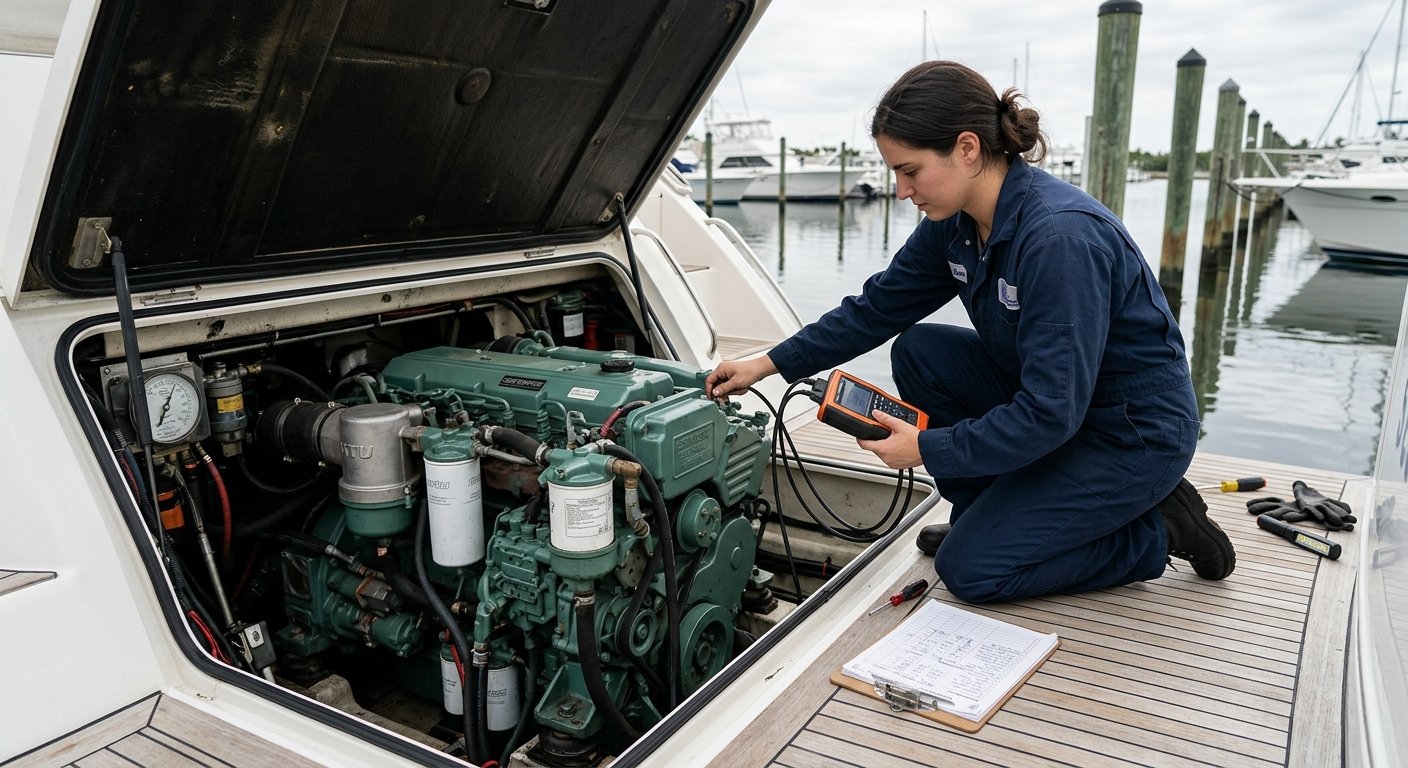
Many vessel owners think of a tune-up as a quick filter swap and oil check. In reality, a properly executed marine diesel tune-up is a structured diagnostic and preventative service event. It follows the engine manufacturer’s maintenance schedule — whether that’s a Detroit Diesel/MTU, Northern Lights generator, Kohler, or Westerbeke unit — and uses calibrated tools to verify system performance rather than just making visual checks.
The distinction matters because marine diesel engines operate in one of the most demanding environments any powerplant faces. Saltwater air accelerates corrosion, vibration is constant, and engines may sit unused for extended periods that accelerate fuel degradation and moisture intrusion. A checklist approach that follows factory guidelines catches what a surface-level inspection misses.
According to the Diesel Technology Forum, diesel engines are designed for durability, but that durability is contingent on adherence to maintenance schedules. Deviating from manufacturer intervals shortens service life and increases the probability of unplanned downtime.
The Fuel System: Where Most Problems Start
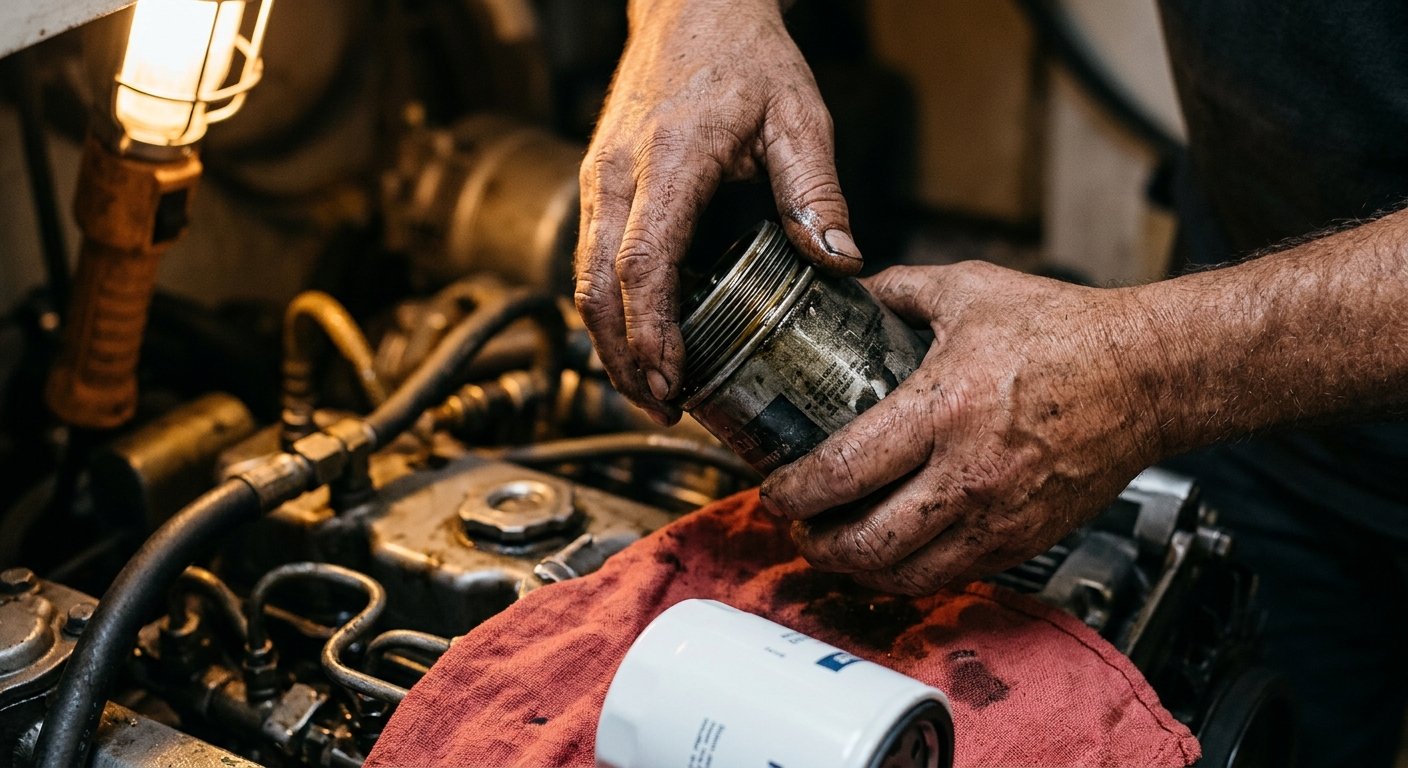
The fuel system is the starting point of every tune-up. Marine diesel engines are highly sensitive to fuel quality, and fuel degradation is among the leading causes of injector damage and hard starting. Tune-up service in this area covers several critical items.
Fuel Filter Replacement
Marine diesel filter replacement is not optional maintenance — it’s a core requirement. Primary and secondary fuel filters are inspected and replaced on schedule. In South Florida’s boating environment, where vessels may sit at dock between voyages, microbial growth in diesel fuel (commonly called “diesel bug”) is a real concern. Contaminated filters restrict flow and can push debris toward injectors. During a proper tune-up, filter housings are also inspected for water contamination and signs of biological fouling.
Injector Testing and Inspection
Fuel injectors are precision components that operate at extremely high pressures. Over time, injector spray patterns degrade, opening pressures drift from spec, and nozzles can foul or coke. A thorough tune-up includes removing injectors for bench testing against manufacturer specifications. This step identifies injectors that are underperforming before they cause uneven combustion, excessive smoke, or reduced power output. Injectors found out of spec are either reconditioned or replaced with OEM units — not aftermarket substitutes that may not hold calibration.
Using non-OEM injectors or skipping injector testing to cut service costs is a false economy. An injector delivering fuel at the wrong pressure or spray pattern can cause piston and cylinder damage that costs far more to correct than a proper tune-up. Learn more about the real cost of non-OEM marine diesel parts before making that trade-off.
Air Intake and Exhaust: The Engine’s Breathing System
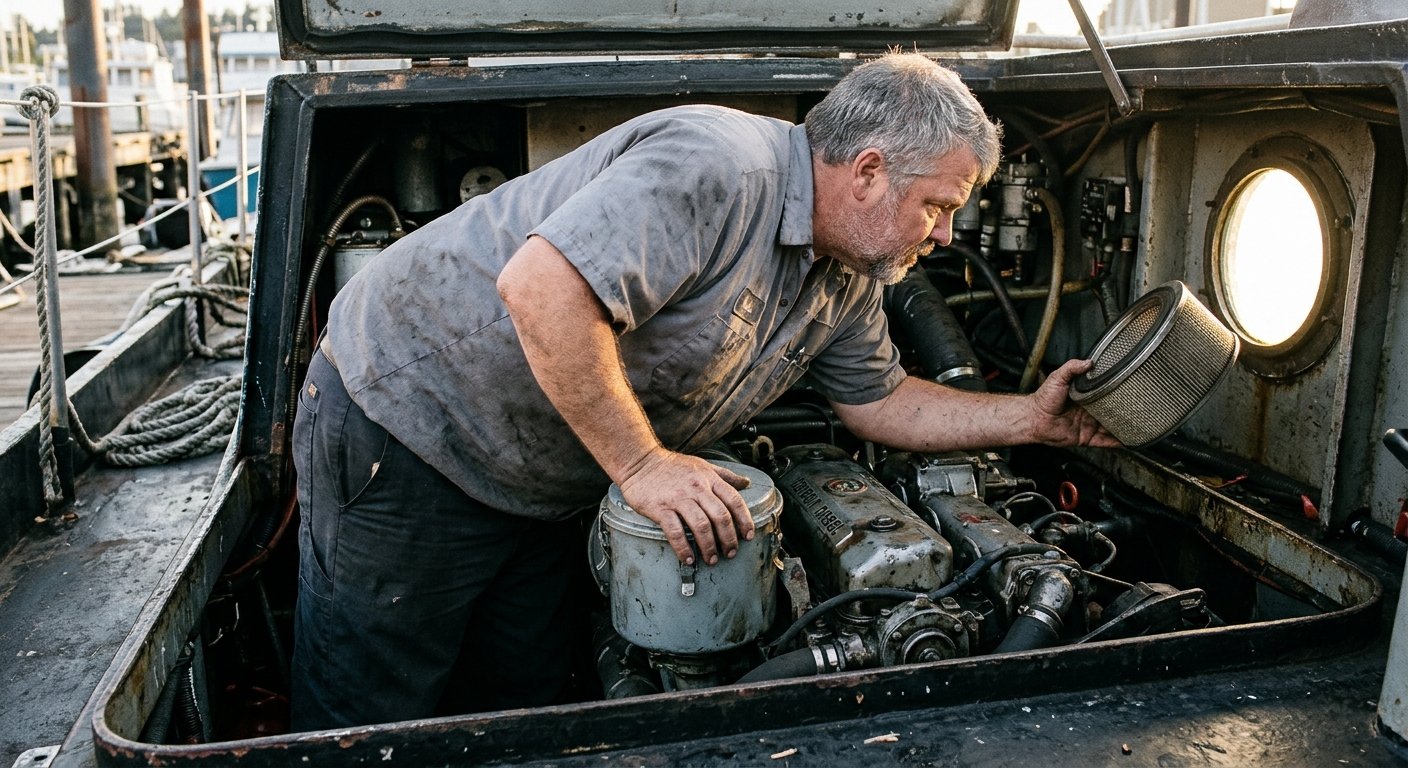
A diesel engine’s power output and combustion efficiency depend entirely on the volume and quality of air reaching the cylinders. During a tune-up, the air intake system is inspected from the filter housing inward. Air filter elements are checked for restriction and replaced per schedule. Turbocharger operation is verified — shaft play, oil seal condition, and boost pressure are evaluated where applicable. Intake manifolds are inspected for cracks or corrosion that could allow unmetered air or moisture to enter.
On the exhaust side, the system is checked for restrictions, leaks at manifold gaskets, and condition of wet exhaust components. An exhaust restriction starves the engine of its ability to expel combustion gases, which directly hurts performance and can cause overheating. These inspections are part of a complete boat engine tune-up because they affect every operating parameter downstream.
Cooling System Inspection
Marine diesel engines use both raw water and freshwater cooling circuits. Each is evaluated during a proper tune-up. The raw water pump impeller — a component that degrades predictably and fails without warning when overdue — is inspected and replaced on schedule. The freshwater circuit is checked for proper coolant concentration, signs of electrolysis damage, thermostat operation, and heat exchanger condition.
Hoses, clamps, and zinc anodes throughout the cooling system are examined. Zincs are sacrificial components that protect metal cooling passages from galvanic corrosion; they must be replaced before they’re fully consumed. These small components protect thousands of dollars in heat exchangers and cylinder head castings.
Raw water pump impeller check
Inspect and replace the impeller based on manufacturer intervals or hours of operation — failure here causes rapid overheating.
Freshwater coolant analysis
Check concentration, pH, and signs of combustion gas contamination that indicate a developing head gasket issue.
Thermostat and pressure testing
Verify the thermostat opens at the correct temperature and that the cooling circuit holds pressure as specified.
Zinc anode replacement
Replace zinc anodes protecting heat exchangers and cooling passages before corrosion reaches base metal.
Lubrication System and Oil Analysis
Engine oil and filter replacement is the most familiar element of any service, but a comprehensive tune-up goes further. During marine diesel engine service, technicians look at more than just fluid color — oil consumption trends are reviewed, and where oil analysis is part of the program, wear metal data can reveal early bearing wear or liner degradation before it becomes catastrophic. The crankcase breather system is also checked, as restrictions here pressurize the crankcase and cause oil leaks and seal damage.
Gear oil in the transmission and reduction gear is inspected for water intrusion and changed per specification. Transmission oil that looks milky or smells burned indicates problems that must be addressed rather than deferred.
Belts, Hoses, and Drive Components
Alternator belts, freshwater pump belts, and any auxiliary drive belts are inspected for cracking, glazing, and proper tension. In the South Florida heat and humidity, belt deterioration can accelerate. A belt failure at sea takes down charging, cooling, or both. Hoses are checked for softness, hardness, and internal collapse — a hose that looks acceptable externally can be collapsing internally under suction. Drive coupling condition and alignment are also reviewed as part of a thorough yacht engine maintenance schedule.
Electrical and Starting Systems
The electrical review covers battery condition and capacity testing, starter draw, alternator output, and the wiring associated with the engine management system. Corroded terminals are cleaned or replaced. In diesel engines that use electronic fuel management — as found in current Detroit Diesel/MTU and Westerbeke platforms — fault codes are pulled and reviewed. Active or stored codes may point to sensor drift or developing mechanical issues that aren’t yet visible through physical inspection alone. Understanding how Detroit Diesel and MTU platforms differ in their electronic architecture matters when interpreting diagnostic data correctly.
Generator Service: A Separate but Equal Priority
Onboard generators — whether Northern Lights, Kohler, or Westerbeke — require their own tune-up service on a separate schedule from propulsion engines. Generator tune-ups cover many of the same systems: fuel filtration, cooling circuit, oil and filter service, and electrical output testing. Additionally, load bank testing verifies that the generator can sustain its rated output under realistic demand — something that running the unit lightly at anchor never tests. Factory-authorized service for generator equipment ensures that OEM parts are used and that service is performed to manufacturer-specified torque values and procedures, which is required to maintain warranty coverage.
If your vessel has a cylinder showing irregular wear or oil consumption, a tune-up is the right time to document it. Catching a developing issue early — before it affects adjacent cylinders — is far less costly than a full overhaul. Review what’s involved in yacht engine cylinder repair to understand how that process differs from routine service.
How Tune-Up Intervals Are Determined
Manufacturer documentation is the authoritative source for service intervals, not industry rules of thumb. The American Boat and Yacht Council (ABYC) establishes baseline standards for marine systems, but engine-specific intervals come from the OEM’s service manual for each model and horsepower rating. For high-hour commercial vessels or engines operating under heavy loads, intervals may be shorter than the standard calendar or hour-based schedule. A factory-authorized service provider evaluates actual operating conditions rather than applying a single interval to every vessel.
Explore the full scope of what’s involved in professional marine diesel engine service to understand how scheduled maintenance connects to long-term engine health.
Frequently Asked Questions
How often should a marine diesel engine be tuned up?
Tune-up intervals vary by engine make, model, and operating hours. Most manufacturers recommend service events at specific hour thresholds — commonly 250, 500, or 1,000 hours — as well as annual inspections regardless of hours. Your engine’s OEM service manual is the definitive reference, and a factory-authorized technician can help you build a schedule based on actual usage patterns.
What is the difference between a tune-up and a major service?
A tune-up covers the systems that require regular attention — filters, fluids, belts, injector testing, and system inspections — typically on annual or intermediate-hour intervals. A major service includes all of that plus more invasive procedures like valve adjustments, injector pump calibration, and heat exchanger overhaul that are scheduled at longer intervals or based on condition findings during tune-ups.
Can I skip the injector testing to reduce service costs?
Skipping injector testing is not recommended. Injectors that are out of specification produce uneven combustion that stresses pistons, rings, and cylinder liners. The repair costs for that damage significantly exceed what injector testing adds to a tune-up. Proper diagnosis before any decision to defer service is always the right approach.
Do generator engines need separate tune-up service?
Yes. Onboard generators operate on their own hour accumulation and often run continuously for extended periods, which means they accumulate service hours quickly. Generator tune-ups follow OEM intervals specific to each unit — Northern Lights, Kohler, and Westerbeke each publish their own maintenance schedules — and include load bank testing that confirms output performance under real demand conditions.
Why does factory-authorized service matter for a tune-up?
Factory-authorized technicians are trained on the specific engine platforms they service and have access to current OEM technical bulletins, calibration data, and genuine parts. This means procedures are performed to the exact tolerances the manufacturer designed into the engine — not approximated. For engines still under warranty, factory-authorized service is typically a requirement to maintain that coverage.
Schedule Your Marine Diesel Tune-Up in South Florida
RPM Diesel is a factory-authorized marine diesel service provider serving Palm Beach and Broward Counties — contact us to schedule a comprehensive tune-up performed to manufacturer specifications.
About RPM Diesel
RPM Diesel is a factory-authorized marine diesel engine service provider specializing in yacht and boat engine maintenance, repair, and generator service throughout South Florida. With expertise in Detroit Diesel/MTU, Northern Lights, Kohler, and Westerbeke equipment, RPM combines deep technical knowledge with a comprehensive parts inventory to deliver reliable, manufacturer-specification service. The company serves recreational yacht owners, commercial marine operators, and vessel managers who value proper maintenance procedures and long-term engine reliability. Visit rpmdiesel.com →