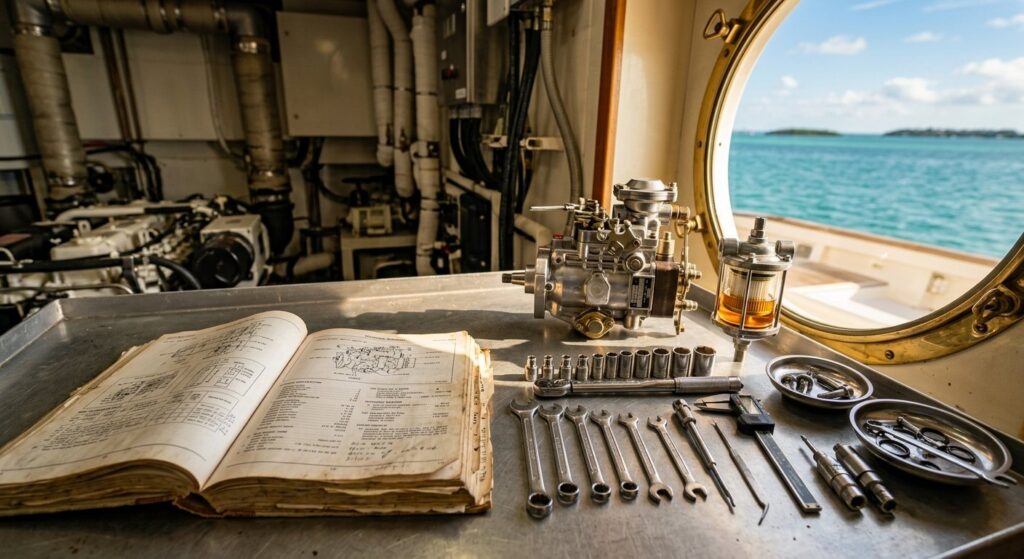
Proper yacht fuel system maintenance means regularly inspecting and servicing your tanks, lines, filters, lift pumps, and injection components on a schedule aligned with manufacturer specifications. For diesel-powered vessels, this work directly determines engine reliability, fuel efficiency, and the lifespan of your injection equipment. Neglecting it leads to injector damage, lift pump failure, and expensive emergency repairs that interrupt your time on the water.
- Marine diesel fuel degrades and grows microbial contamination faster than most owners realize — annual fuel polishing is a sound practice for vessels that sit between uses.
- Primary and secondary diesel fuel filters should be replaced on a schedule tied to engine hours and manufacturer specifications, not just visual inspection.
- Boat diesel fuel delivery problems often start subtly — hard starts, slight power loss, or rough idle — long before they escalate into a no-start situation offshore.
- OEM parts matter: injection pumps, lift pumps, and fuel lines built to manufacturer tolerances protect the precision components downstream.
- Factory-authorized service is the standard that preserves your warranty coverage and keeps your engine performing as designed.
Why Marine Fuel Systems Demand More Attention
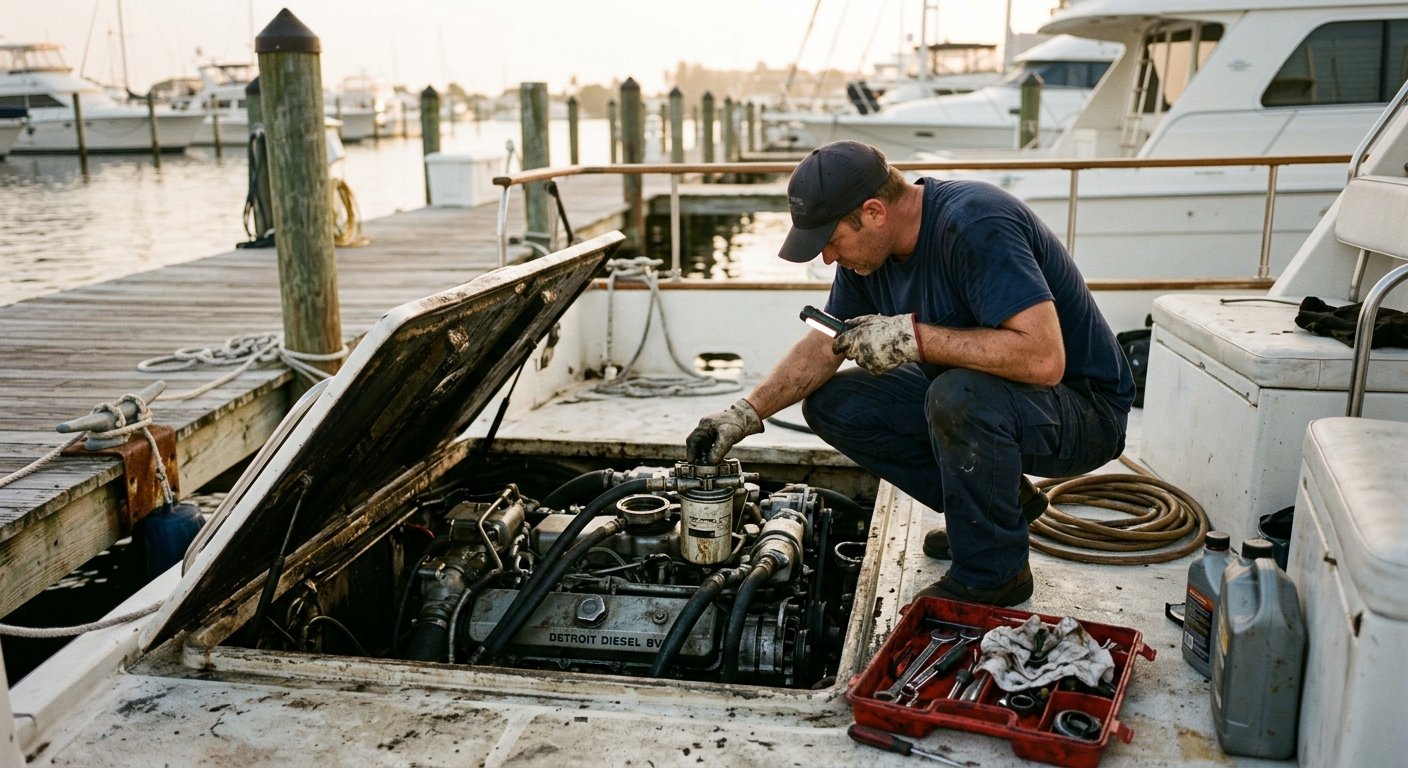
A diesel yacht’s fuel system operates in conditions no automotive engineer designs for. Salt air accelerates corrosion on fittings and tank vents. Vessels that sit at the dock for weeks accumulate water condensation inside fuel tanks. Biodiesel blends, now common throughout South Florida marinas, feed microbial growth — the dark, sludge-like contamination that clogs filters and attacks injection components with surprising speed.
The consequence is that marine fuel system care requires both a structured schedule and periodic professional diagnostics. Fuel that looks clean to the naked eye can carry dissolved water, microbial colonies, and oxidation byproducts that degrade injector performance over hundreds of hours. A properly maintained fuel system, by contrast, supports the kind of engine longevity diesel powerplants are known for — well-maintained marine diesels routinely achieve 40 or more years of reliable service when every upstream component is kept in specification.
Microbial contamination in diesel tanks — sometimes called “diesel bug” — accelerates significantly when biodiesel blends above B5 are stored in warm conditions. If your vessel sits unused between trips in South Florida’s climate, treat and polish your fuel annually. The EPA’s Renewable Fuel Standard program governs biodiesel blending requirements that affect the fuel reaching marina pumps nationwide.
Core Components of a Marine Fuel System
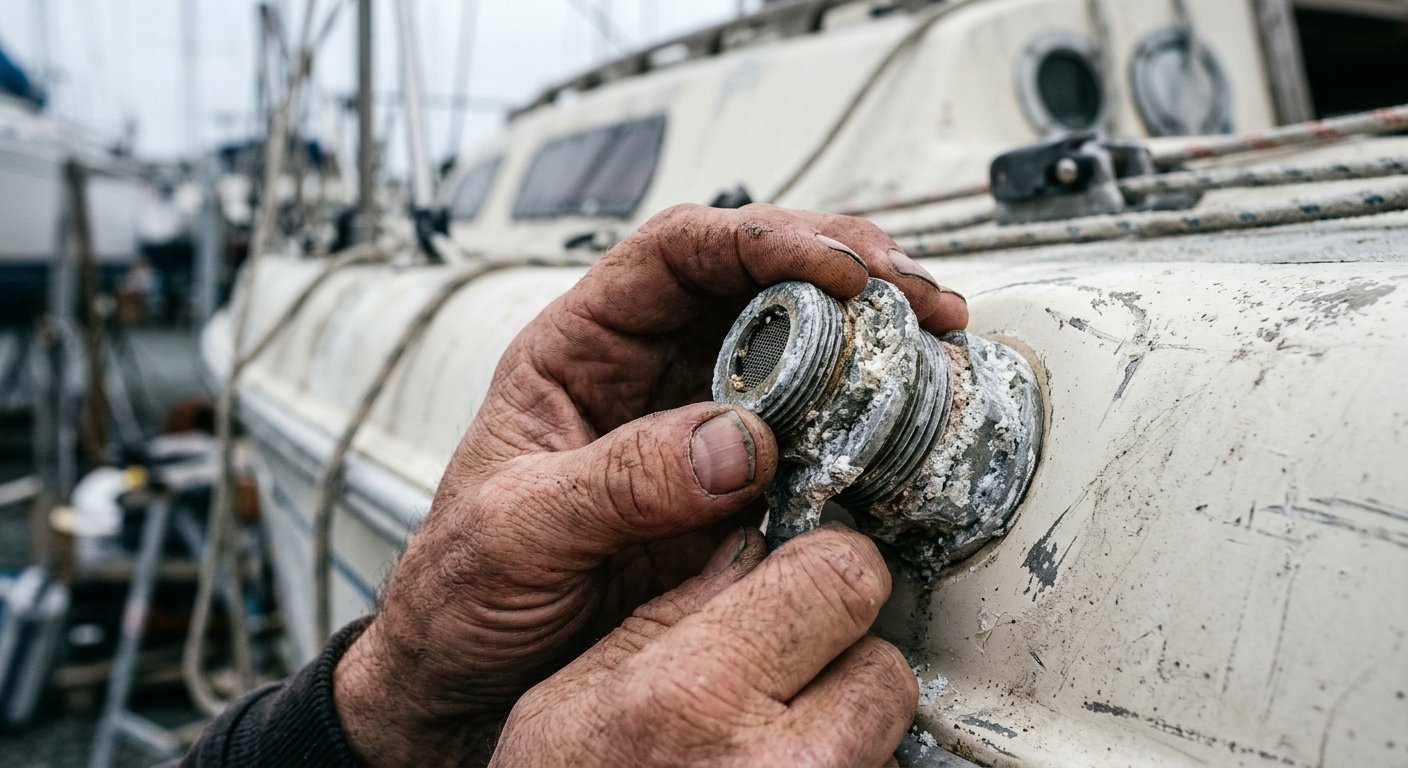
Understanding what you’re maintaining helps you recognize early warning signs and communicate clearly with your service technician. A marine diesel fuel system includes several interdependent components, each of which can introduce problems if neglected.
Fuel Tanks and Vents
Aluminum and fiberglass tanks both degrade over time. Tank vents accumulate salt deposits that restrict airflow, creating negative pressure that strains the lift pump. Tank interiors should be inspected at major service intervals for corrosion, scale, or sludge accumulation. If your vessel has aluminum tanks and you’ve been running biodiesel blends, have them inspected — higher biodiesel concentrations can attack aluminum surfaces and tank seams over time.
Primary and Secondary Fuel Filters
Marine diesel filter replacement is one of the highest-impact items in any maintenance program. Primary filters, typically Racor-style separators, catch water and large particulates before fuel reaches the lift pump. Secondary filters, mounted on the engine, protect the injection pump and injectors from fine contamination. Filter service intervals vary by engine — Detroit Diesel/MTU, Northern Lights, Kohler, and Westerbeke each publish specific hour-based schedules that should govern your filter change program, not calendar time alone.
Lift Pumps and Transfer Pumps
Marine fuel pump service is often deferred until failure, which is the wrong approach. Lift pumps that are working harder than designed — because of restricted filters, clogged tank pickups, or degraded fuel — wear significantly faster. By the time a lift pump shows obvious symptoms, it may already be delivering low-pressure fuel to the injection system, stressing injection pump seals and causing inconsistent fuel delivery. Proactive service on a schedule means the pump comes off the engine before it fails offshore.
Fuel Injection Components
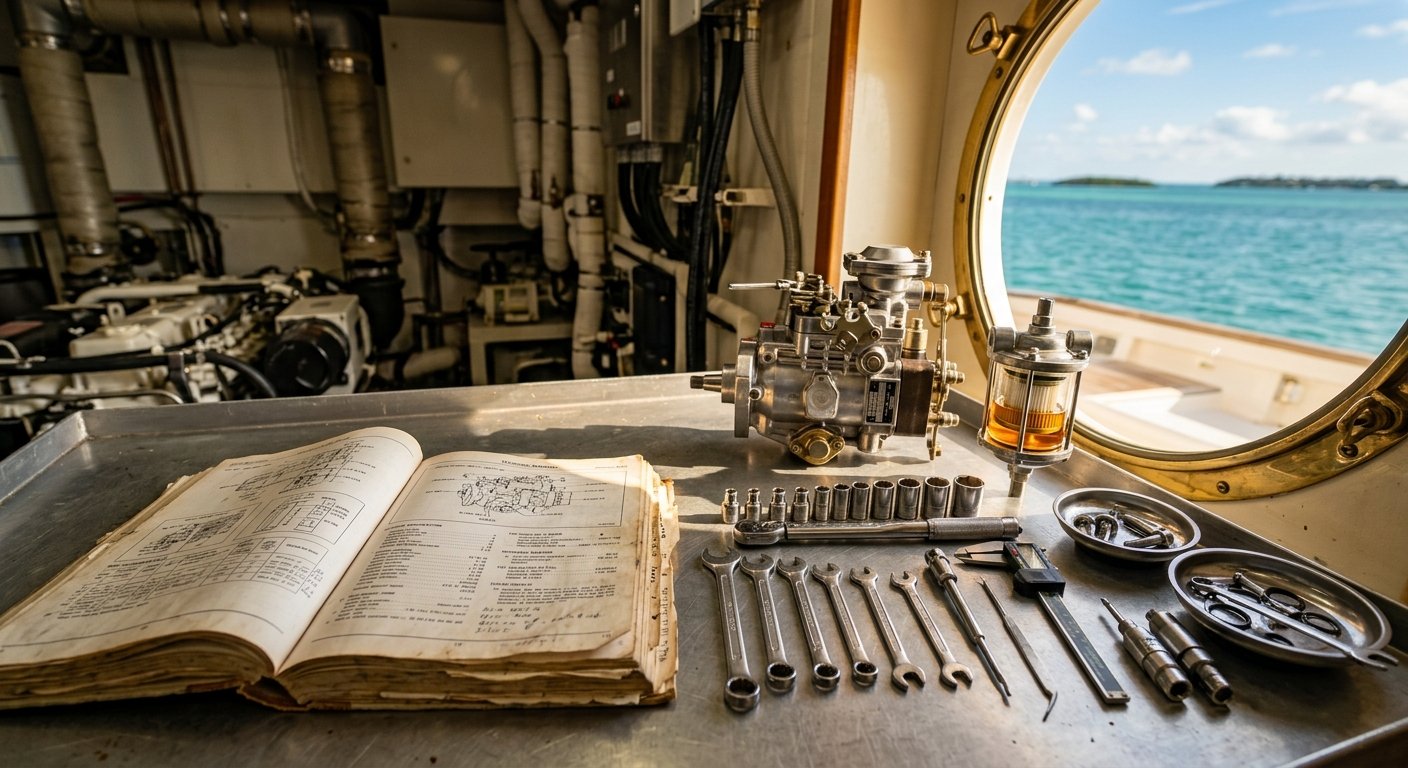
Injection pumps and injectors operate at tolerances measured in microns. Contaminated fuel is their primary enemy. Our fuel injection services address the full range of injection system work — from diagnostic testing to OEM-spec rebuild and replacement. These are not components where aftermarket substitutions deliver equivalent performance; injector spray patterns and injection timing specifications are calibrated to the engine’s design parameters, and only OEM-quality parts maintain those tolerances reliably.
Visual and operational baseline
Check tank levels, water separators, and filter vacuum gauges before every significant voyage. Log readings so your technician can see trends over time.
Primary filter service
Replace primary water-separating filters per manufacturer hour intervals or whenever the vacuum gauge shows elevated restriction. Always drain accumulated water from the bowl.
Secondary filter replacement
Secondary engine-mounted filters are replaced on the same schedule as primary filters or more frequently if contamination is found. Never reuse a secondary filter.
Fuel polishing
Annual fuel polishing removes microbial contamination, water, and oxidized fuel from the tank — essential for vessels that see seasonal or intermittent use.
Professional system diagnostics
At major service intervals, have a factory-authorized technician perform full fuel system diagnostics including lift pump pressure, injection system testing, and tank inspection.
Recognizing Early Signs of Fuel Delivery Problems

Boat diesel fuel delivery problems rarely announce themselves dramatically at first. The warning signs are subtle and easy to dismiss — until they aren’t. Knowing what to watch for protects both your engine and your schedule.
- Hard starts when warm: An engine that starts cold but cranks excessively when warm often has a lift pump losing prime or an injection timing issue tied to fuel delivery pressure.
- Rough idle or surging: Uneven combustion at idle can indicate partially clogged injectors or inconsistent fuel delivery from a failing pump.
- Loss of power under load: If the engine runs acceptably at low rpm but falls off under throttle, the fuel system may be starving at higher demand — often a primary filter nearing maximum restriction.
- Excessive smoke: Black smoke under load can indicate over-fueling from a worn injection pump; white smoke may point to water contamination reaching the combustion chamber.
- Filter contamination patterns: If your filters are filling with dark sludge or showing significant water accumulation, treat the tank before changing the filter again — otherwise you’ll simply keep repeating the cycle.
A filter that fails in less than half its rated service interval is telling you something about the fuel quality upstream, not the filter itself. Treat this as a diagnostic finding, not just a maintenance task. Have the tank professionally polished and sampled before returning to normal intervals.
Fuel System Care for Marine Generators
Generator sets — particularly Northern Lights, Kohler, and Westerbeke units common on South Florida yachts — share many of the same fuel system vulnerabilities as main propulsion engines. They often draw from the same tank, run at lower load levels that accelerate carbon accumulation, and are frequently the last component to receive scheduled service attention.
Generator fuel systems benefit from the same filter discipline and polishing schedule as propulsion engines. Low-load operation means injectors run cooler and accumulate deposits faster, making regular marine diesel engine service that covers generator fuel delivery essential — not optional. The National Marine Manufacturers Association notes that generator reliability is consistently among the top concerns for offshore voyaging — a reflection of how much modern vessels depend on them for navigation, climate systems, and safety equipment.
The OEM Parts Difference in Fuel System Repairs
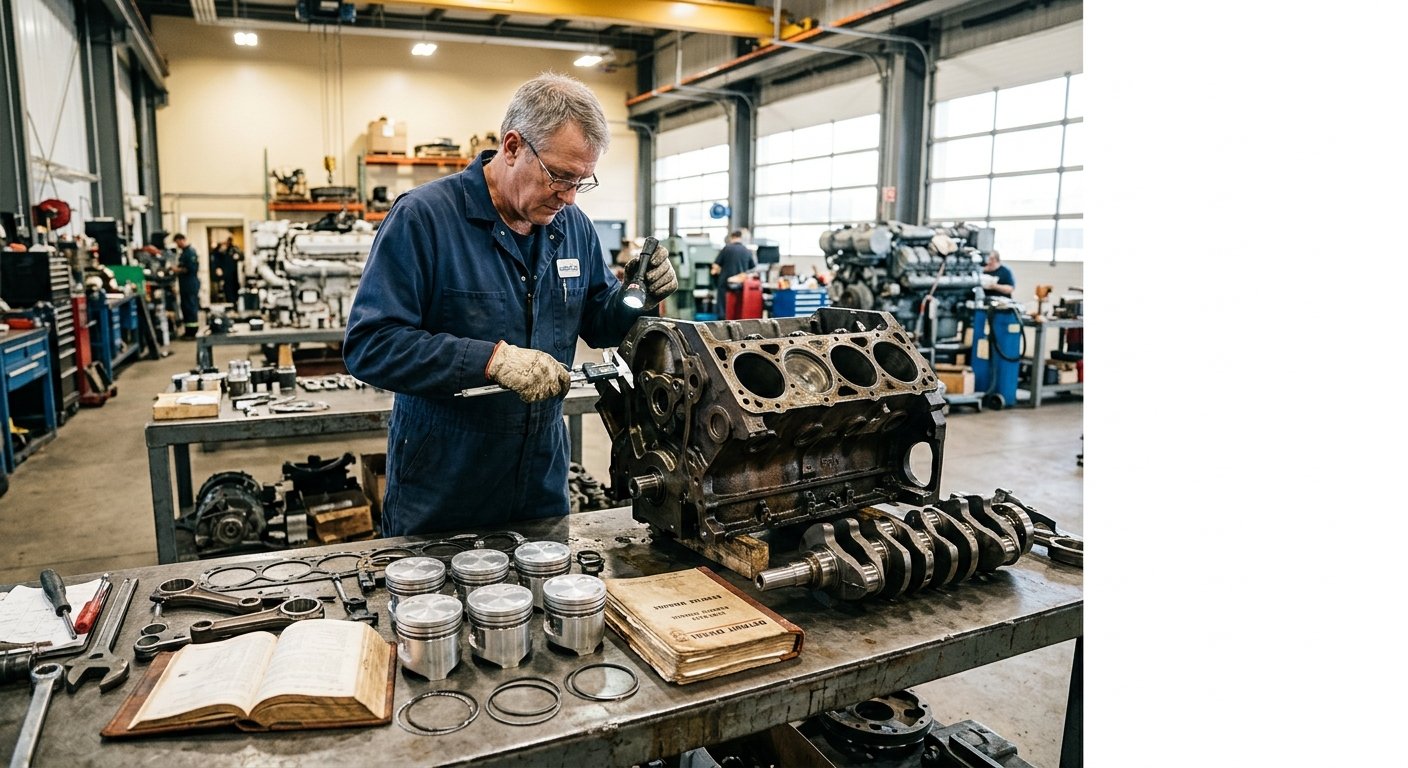
When fuel system components require replacement, the specification of parts matters as much as the repair procedure itself. Lift pump diaphragms, injection pump components, fuel line fittings, and filter housings built to OEM tolerances protect the precision equipment downstream. Our marine diesel engine repair work uses OEM-quality components throughout — because a fuel system is only as reliable as its weakest part.
A fuel system is only as reliable as its weakest part — and that part is never where you expect it when you’re forty miles offshore.
Factory-authorized service also means access to manufacturer technical service bulletins, updated torque specifications, and OEM parts pricing structures that independent shops can’t always access. For Detroit Diesel/MTU engines in particular, factory authorization matters for warranty compliance and access to the manufacturer’s diagnostic tooling.
Frequently Asked Questions
How often should marine diesel filters be replaced on a yacht?
Filter replacement intervals are set by each engine manufacturer and measured in operating hours, not calendar time. Most marine diesels specify primary filter service every 250-500 hours and secondary filter replacement at the same or shorter interval. Vessels operating in contaminated fuel conditions or running biodiesel blends may require shorter intervals. Always follow the published specification for your specific engine.
What causes water in a marine diesel fuel tank?
Water enters marine fuel tanks primarily through condensation when tanks are not kept full between voyages, through compromised tank vents that allow moisture-laden air in, or through contaminated fuel taken on at the dock. Biodiesel blends also absorb atmospheric moisture more readily than straight petroleum diesel. Regular water separator service and annual fuel polishing address the accumulation before it damages injection components.
What are the signs that a marine lift pump needs service?
A failing lift pump often presents as hard starting when the engine is warm, power loss under sustained load, or rough running that clears temporarily when the throttle is reduced. Low fuel rail pressure confirmed by a technician’s diagnostic test is definitive. Don’t wait for a complete failure — a lift pump that’s underperforming stresses every component downstream, including the injection pump.
Is boat fuel system diagnostics something I can do myself?
Basic checks — inspecting the water separator bowl, monitoring filter vacuum gauges, and logging fuel consumption — are appropriate for any attentive vessel owner. However, fuel pressure testing, injection system diagnostics, and tank inspection require factory-authorized tooling and training. Attempting injection system work without the correct diagnostic equipment risks damage to components that operate at extremely high pressures and precision tolerances.
Does generator fuel system maintenance differ from propulsion engine maintenance?
The components are similar, but generators typically run at lower loads and accumulate injector deposits more quickly as a result. They are also more likely to sit for extended periods between heavy use. Generator fuel systems need the same filter discipline and polishing schedule as main engines, with particular attention to injector condition given the low-load operating profile common on dockside applications.
Schedule Your Fuel System Service
RPM Diesel’s factory-authorized technicians serve Palm Beach County and Broward County with manufacturer-specification fuel system diagnostics, filter service, fuel polishing, and injection system repair for Detroit Diesel/MTU, Northern Lights, Kohler, and Westerbeke equipment.
About RPM Diesel
RPM Diesel is a factory-authorized marine diesel engine service provider specializing in yacht and boat engine maintenance, repair, and generator service throughout South Florida. With expertise in Detroit Diesel/MTU, Northern Lights, Kohler, and Westerbeke equipment, RPM combines deep technical knowledge with a comprehensive parts inventory to deliver reliable, manufacturer-specification service. The company serves recreational yacht owners, commercial marine operators, and vessel managers who value proper maintenance procedures and long-term engine reliability. Visit rpmdiesel.com →