Professional boat fuel injector service follows a five-step process: diagnostic testing, removal and inspection, ultrasonic cleaning and flow testing, calibration or OEM replacement, and post-reinstallation verification. For marine diesel owners in Palm Beach and Broward Counties, understanding each stage helps you make informed maintenance decisions and avoid the costlier engine damage that degraded injectors cause over time.
- Modern common-rail marine diesels operate at pressures exceeding 30,000 PSI — any calibration drift or contamination directly compromises combustion.
- Six warning signs of injector trouble include rough idle, black or white exhaust smoke, hard starting, power loss, rising fuel consumption, and unusual engine noise.
- Ultrasonic cleaning and flow testing can restore viable injectors at lower cost than full replacement; a bench test determines which path is appropriate.
- Most marine diesel manufacturers recommend fuel injector inspection every 1,000 to 2,000 hours.
- Properly maintained diesel engines routinely deliver 40 or more years of reliable service — precision fuel system work is central to reaching that lifespan.
A rough idle at the dock. Black smoke trailing behind your transom. Fuel consumption that’s climbed noticeably higher than it used to be. These aren’t just minor annoyances — they’re your diesel engine signaling that something’s wrong with its fuel delivery system. In most cases, the culprit traces back to the fuel injectors. For yacht owners throughout Palm Beach and Broward Counties, understanding what professional boat fuel injector service actually involves — and what to expect from start to finish — helps you make informed decisions about your vessel’s maintenance and avoid costly surprises.
Why Fuel Injectors Matter More Than You Think
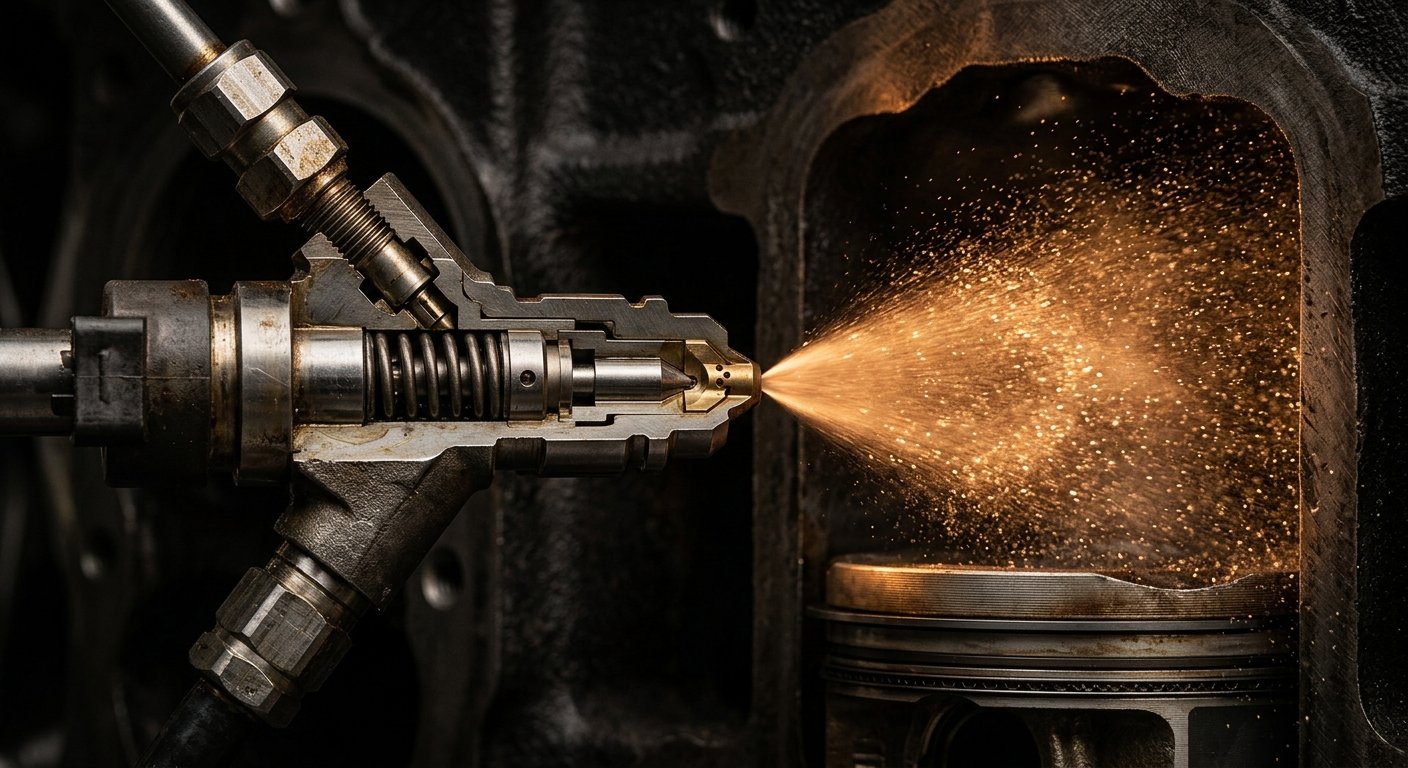
Marine diesel fuel injection systems are precision components engineered to deliver exact quantities of atomized fuel at precise moments in the combustion cycle. Modern common-rail injection systems found in engines like Detroit Diesel/MTU units operate at pressures exceeding 30,000 PSI. That level of precision leaves zero tolerance for contamination, wear, or calibration drift.
When injectors degrade, the entire combustion process is compromised. You lose power, burn more fuel, generate excess exhaust emissions, and — if left unaddressed — create conditions that accelerate wear on pistons, rings, and cylinder liners. What begins as a performance issue becomes a significantly more expensive mechanical failure.
According to the U.S. Environmental Protection Agency’s regulations on nonroad diesel engines, marine diesel systems are subject to strict emissions standards that depend directly on proper fuel injection performance. Out-of-spec injectors don’t just hurt your engine — they can put your vessel out of compliance.
Signs Your Marine Fuel Injectors Need Service

Recognizing the early warning signs of injector trouble allows you to schedule service before a problem escalates. Watch for these indicators:
- Rough or uneven idle: Misfiring cylinders due to inconsistent fuel delivery create noticeable vibration at low RPM.
- Excessive black or white exhaust smoke: Black smoke indicates over-fueling from a stuck-open or leaking injector. White smoke suggests incomplete combustion or an injector that’s not atomizing fuel properly.
- Hard starting: Worn injectors that can’t build proper injection pressure make cold starts difficult and prolonged.
- Loss of power or sluggish throttle response: An engine that no longer performs as it should under load often has injectors that can no longer meet fuel demand specifications.
- Increased fuel consumption: If your hours-per-gallon ratio has worsened without an obvious explanation, degraded injector efficiency is a prime suspect.
- Unusual engine noise: Knocking or rattling sounds that weren’t present before can result from erratic combustion caused by injector irregularities.
None of these symptoms should be diagnosed without proper equipment. Each can also indicate other mechanical conditions, which is why professional marine diesel fuel injection repair always begins with thorough diagnosis.
The Professional Fuel Injector Service Process
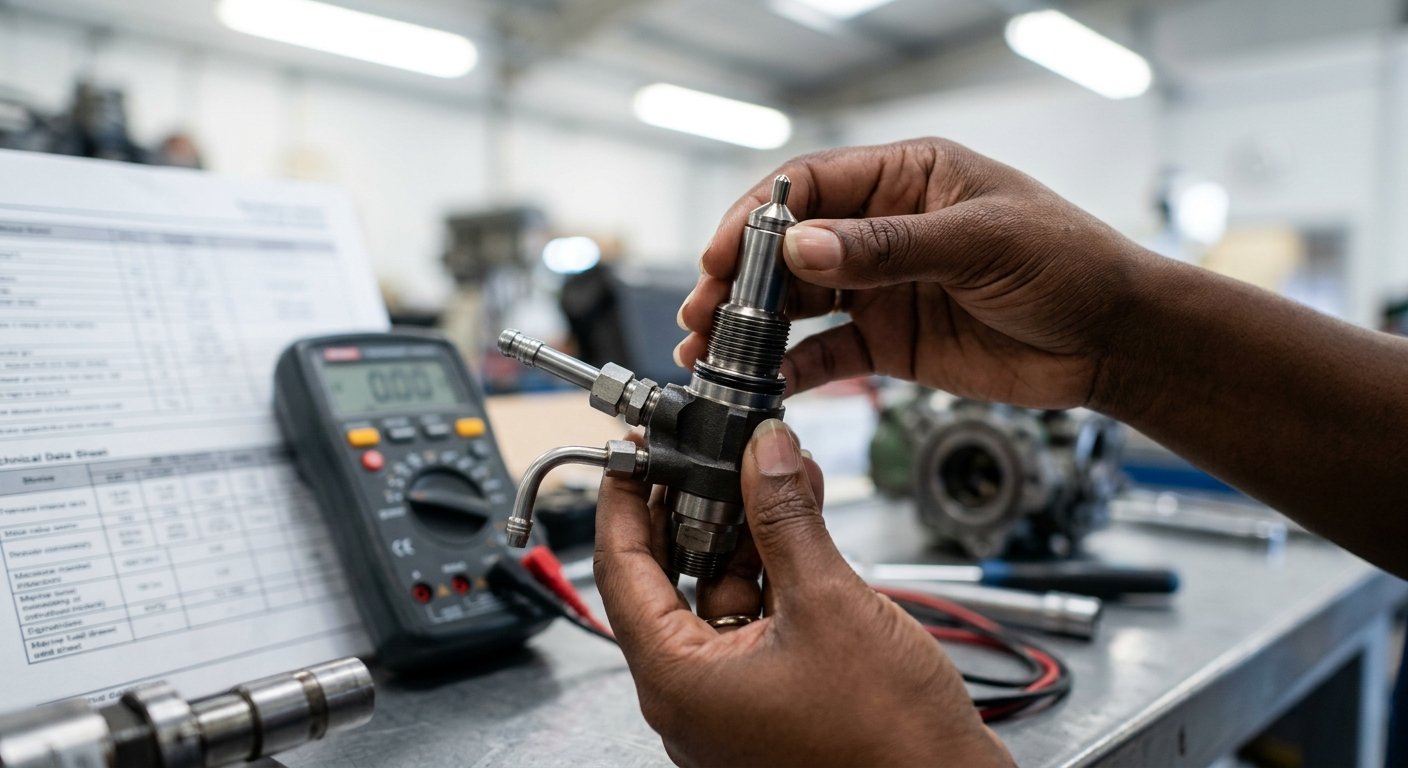
When you bring your vessel in for boat fuel injector service — or when a factory-authorized technician comes dockside — here’s what a thorough, manufacturer-specification service actually involves.
Diagnostic Testing
Before a single injector is removed, a qualified technician performs systematic diagnostic testing. This includes reading engine fault codes, evaluating injector balance rates (how much correction the ECM is applying per cylinder), and conducting compression tests where appropriate. On Detroit Diesel/MTU engines, manufacturer-specific diagnostic software connects directly to the engine management system to evaluate individual injector performance with precision that no visual inspection can match. Proper diagnosis determines whether you’re dealing with injector wear, contamination, electrical faults, or a supply-side fuel system problem. Replacing injectors without this step wastes money and may not resolve the actual issue.
Injector Removal and Inspection
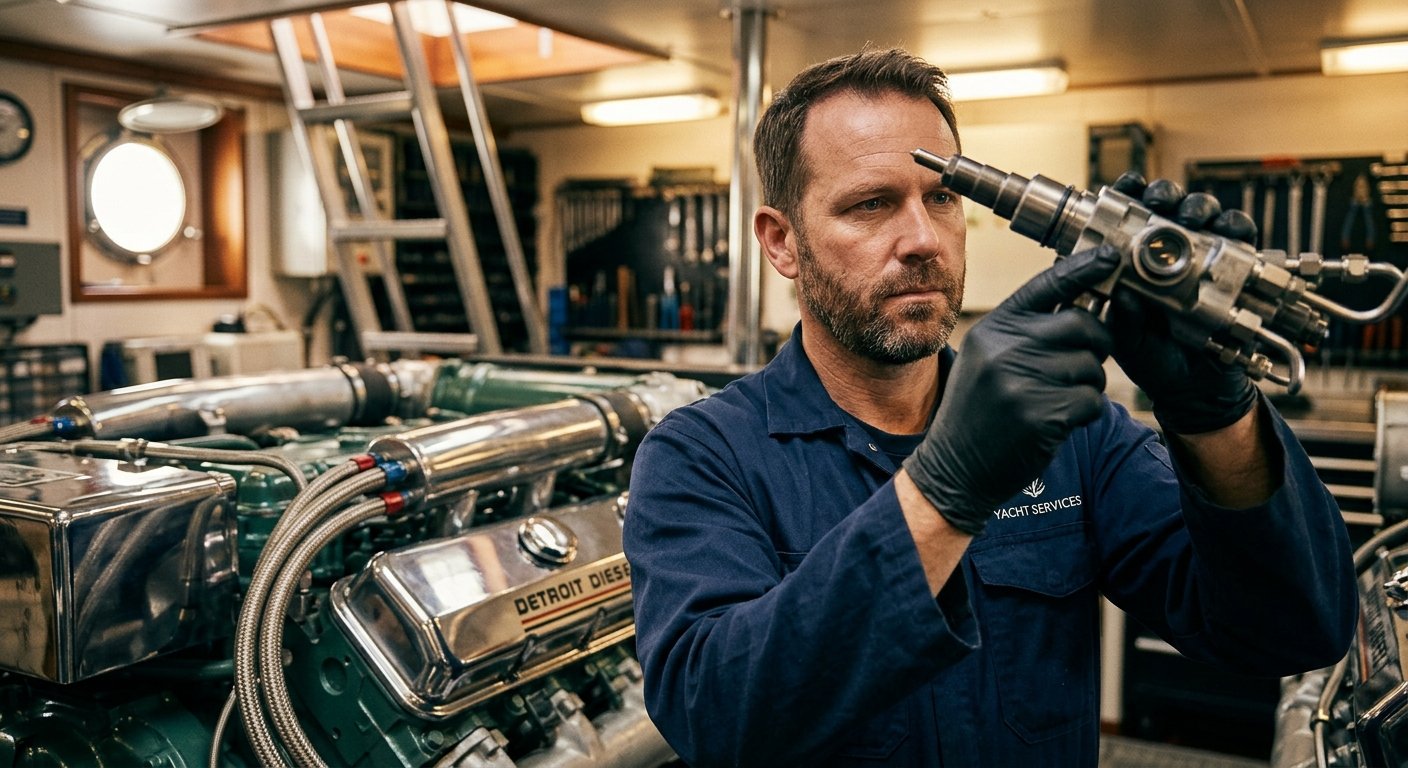
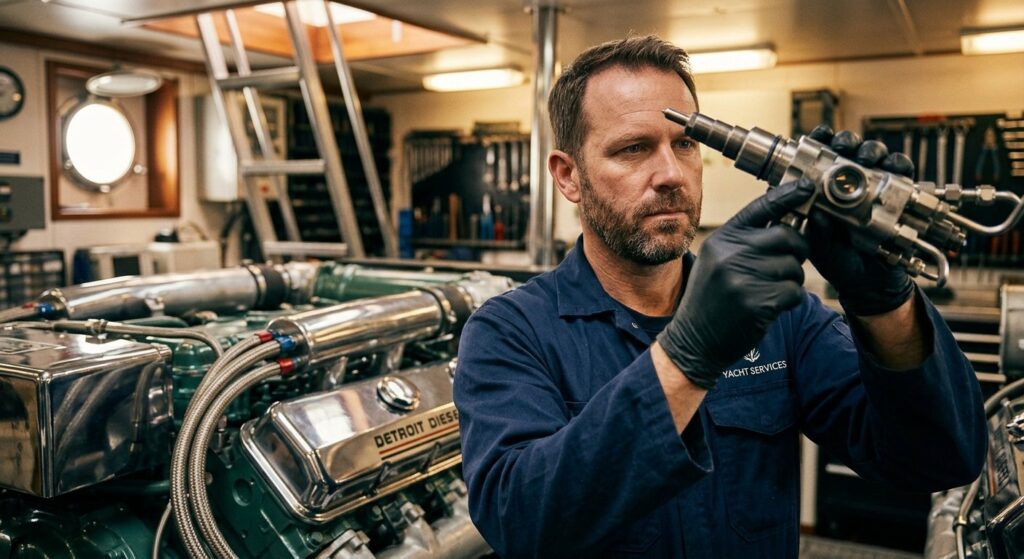
Injector removal on a marine diesel requires care and proper tooling. Carbon buildup around injector bores is common, particularly in engines that have seen extended service intervals or fuel quality issues. Rushing this step risks damaged injector seats or broken components in hard-to-reach locations. Once removed, each injector is visually inspected for external wear, tip erosion, corrosion, and carbon fouling. This inspection guides decisions about whether cleaning, calibration, or full replacement is the appropriate path.
Ultrasonic Cleaning and Flow Testing
Yacht fuel injection cleaning at a professional level involves ultrasonic cleaning equipment that removes internal deposits from injector passages without abrasive methods that could damage precision components. After cleaning, each injector is flow-tested on specialized equipment that measures delivery volume, spray pattern quality, and atomization characteristics. An injector that passes visual inspection may still fail flow testing — delivering too much or too little fuel, or producing a poor spray pattern that prevents proper combustion. This is why bench testing is non-negotiable in quality marine fuel injection repair.
Calibration or Replacement
Injectors that fall outside manufacturer specifications after cleaning are recalibrated or replaced. The American Boat and Yacht Council (ABYC) standards consistently support use of OEM-compliant components in marine systems. For engines like Northern Lights generators, Kohler marine generators, and Westerbeke systems, OEM replacement injectors ensure that fuel delivery characteristics remain within the tight parameters the engine management system expects. Our fuel injection services are performed using manufacturer-specified procedures and OEM parts, ensuring that every injector leaving our shop meets the original engineering intent of the engine platform.
Reinstallation and Post-Service Verification
Reinstallation isn’t simply the reverse of removal. New sealing washers, proper torque sequences, and correct installation depths are all critical. Improper reinstallation — even with perfectly functioning injectors — creates compression leaks, return fuel system issues, and premature re-fouling. After reinstallation, the engine is run through a systematic verification process: checking for leaks at each injector, monitoring exhaust for correct color and density, verifying that fault codes are cleared, and confirming that balance rates have returned to acceptable ranges across all cylinders.
Marine Fuel Injector Replacement: When Is It Necessary?
Not every service call results in complete marine fuel injector replacement. Injectors in good mechanical condition with manageable carbon deposits often respond well to professional cleaning and calibration. However, replacement becomes necessary when:
- Internal wear has exceeded manufacturer tolerances and calibration can no longer compensate
- Injector tips show erosion or physical damage
- Return flow rates indicate internal leakage that cleaning won’t resolve
- The engine has accumulated hours beyond the manufacturer’s recommended injector service life
- Fuel contamination — particularly water or microbial growth — has caused corrosion damage
On high-hour vessels, replacing the full set simultaneously rather than individual injectors is generally the right approach — mismatched injector condition across cylinders creates combustion imbalance that the ECM can only partially compensate for.
Diesel Fuel Injection Troubleshooting: What Owners Can Do
While complex marine diesel fuel injection troubleshooting requires professional equipment and training, vessel owners can take meaningful steps to protect their fuel systems between service intervals:
- Use quality marine diesel fuel: Low-quality fuel accelerates injector wear and increases the likelihood of contamination. Where possible, fuel from reputable marinas that maintain their tanks properly matters.
- Maintain your fuel filters religiously: Primary and secondary fuel filters are the last line of defense before fuel reaches your injectors. Clogged filters force injectors to work harder and can cause cavitation damage.
- Monitor your engine hours and follow manufacturer service intervals: Detroit Diesel/MTU, Northern Lights, Kohler, and Westerbeke all publish maintenance schedules that include fuel system inspection and injector service milestones. Following them is not optional if you value long-term reliability.
- Address fuel polishing before a problem becomes critical: Contaminated fuel tanks are a leading cause of premature injector failure in South Florida’s marina environment.
Our comprehensive marine diesel engine service includes fuel system evaluation as part of a complete preventative maintenance approach — because injector health doesn’t exist in isolation from the rest of the fuel delivery system.
Frequently Asked Questions
How often should marine fuel injectors be serviced?
Service intervals vary by engine platform and manufacturer specifications. Most marine diesel manufacturers recommend fuel injector inspection every 1,000 to 2,000 hours, with more thorough service at major interval milestones. Consult your engine’s service manual or ask a factory-authorized technician for the intervals specific to your equipment.
Can dirty injectors damage other engine components?
Yes. Misfiring or leaking injectors cause incomplete combustion, which washes cylinder walls with raw fuel (removing lubrication), overloads exhaust systems, and deposits carbon on pistons and valves. Prolonged operation with failing injectors accelerates wear throughout the engine and can lead to significantly more expensive repairs.
Is professional marine fuel injection cleaning worth it versus full replacement?
In many cases, professional ultrasonic cleaning and recalibration restores injectors to acceptable performance at lower cost than replacement. A flow test determines whether an injector is viable for continued service. A qualified marine diesel technician will give you an honest assessment based on test data, not assumptions.
What causes marine fuel injectors to fail prematurely?
The most common causes are contaminated fuel (water, sediment, or microbial growth), neglected fuel filters, extended service intervals beyond manufacturer recommendations, and operating conditions that cause excessive heat or cavitation in the fuel system. South Florida’s boating environment — particularly vessels that sit for extended periods — creates conditions favorable to microbial contamination in fuel tanks.
How do I know if I need on-site injector service or shop service?
Many fuel injection diagnostic and removal procedures can be performed dockside through our on-site diesel marine engine service. Bench testing and ultrasonic cleaning require shop equipment. A technician can evaluate your situation and recommend the most efficient service approach for your vessel’s location and needs.
Work With Factory-Authorized Marine Diesel Specialists
Fuel injection service is one area of marine diesel maintenance where the quality of the work directly determines outcomes — both immediate performance and long-term engine life. Properly maintained diesel engines routinely deliver 40 or more years of reliable service. Cutting corners on precision fuel system work is one of the fastest ways to shorten that lifespan.
As South Florida’s factory-authorized marine diesel specialists, RPM Diesel serves vessel owners throughout Palm Beach and Broward Counties with manufacturer-certified expertise in Detroit Diesel/MTU, Northern Lights, Kohler, and Westerbeke equipment. Our technicians perform fuel injection service to the same standards the engine manufacturers themselves require — because anything less isn’t worth putting back in your vessel.
Get a Clear Diagnosis for Your Fuel System
If your vessel is showing signs of fuel injection trouble, or if you’re due for scheduled injector service, contact RPM Diesel today — we’ll give you a clear, honest picture of what your fuel system needs, and what it doesn’t.
About RPM Diesel
RPM Diesel is a factory-authorized marine diesel engine service provider specializing in yacht and boat engine maintenance, repair, and generator service throughout South Florida. With expertise in Detroit Diesel/MTU, Northern Lights, Kohler, and Westerbeke equipment, RPM combines deep technical knowledge with a comprehensive parts inventory to deliver reliable, manufacturer-specification service. The company serves recreational yacht owners, commercial marine operators, and vessel managers who value proper maintenance procedures and long-term engine reliability. Visit rpmdiesel.com →