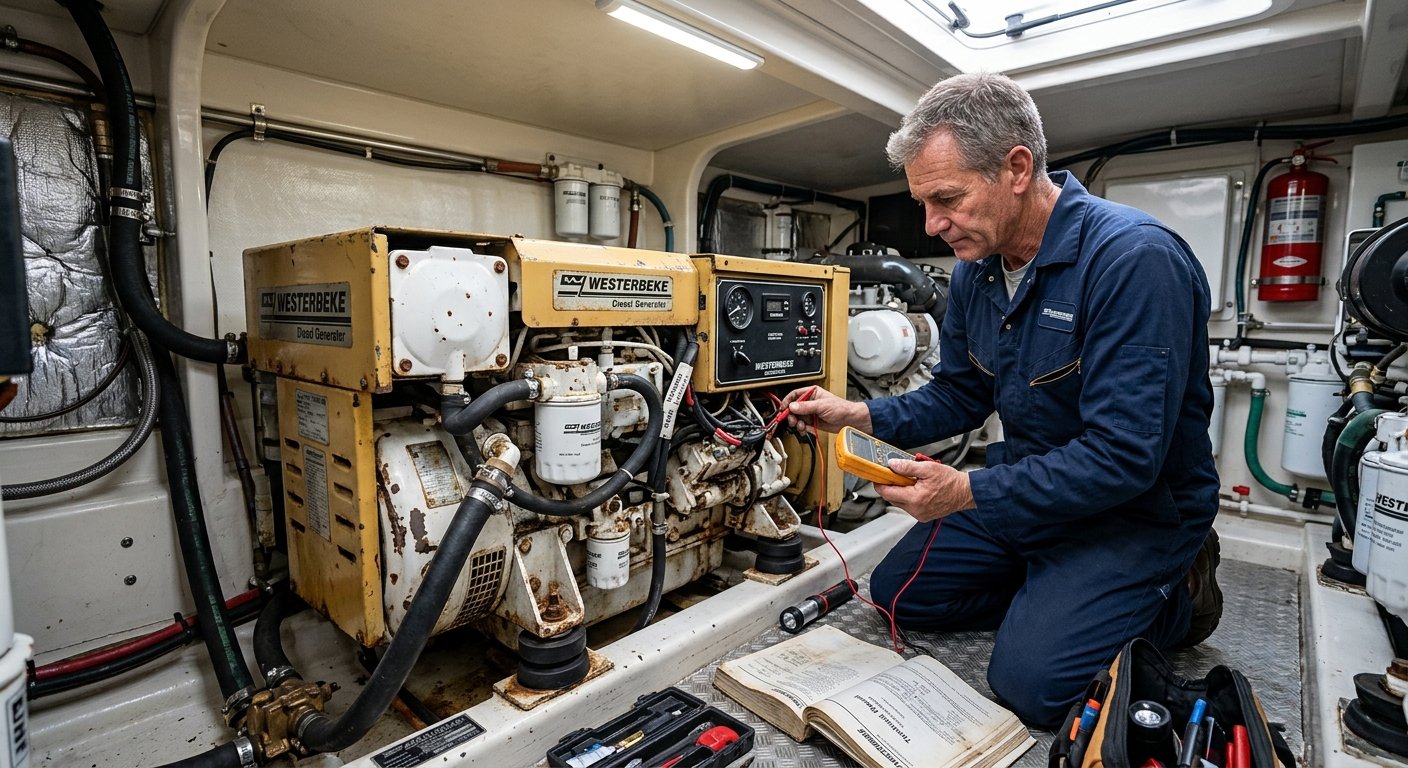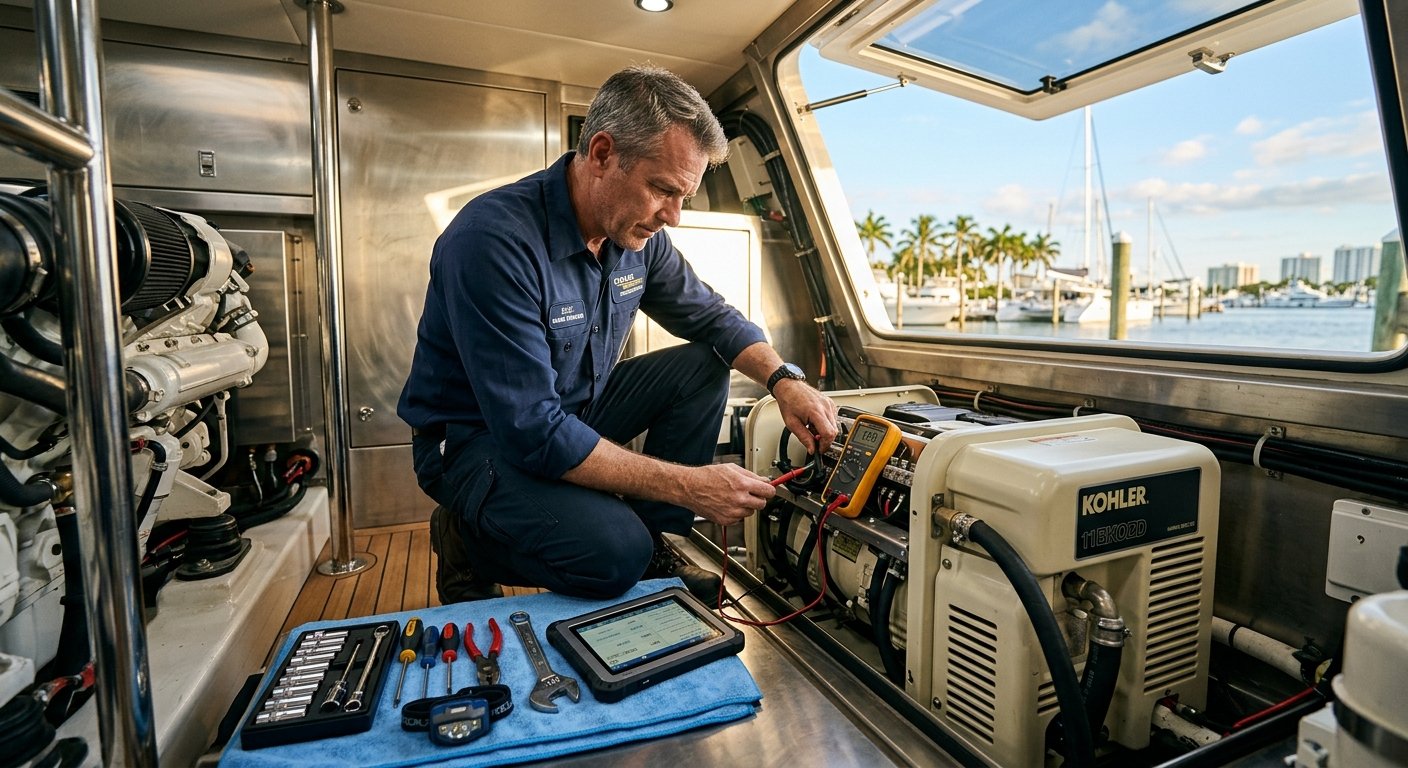
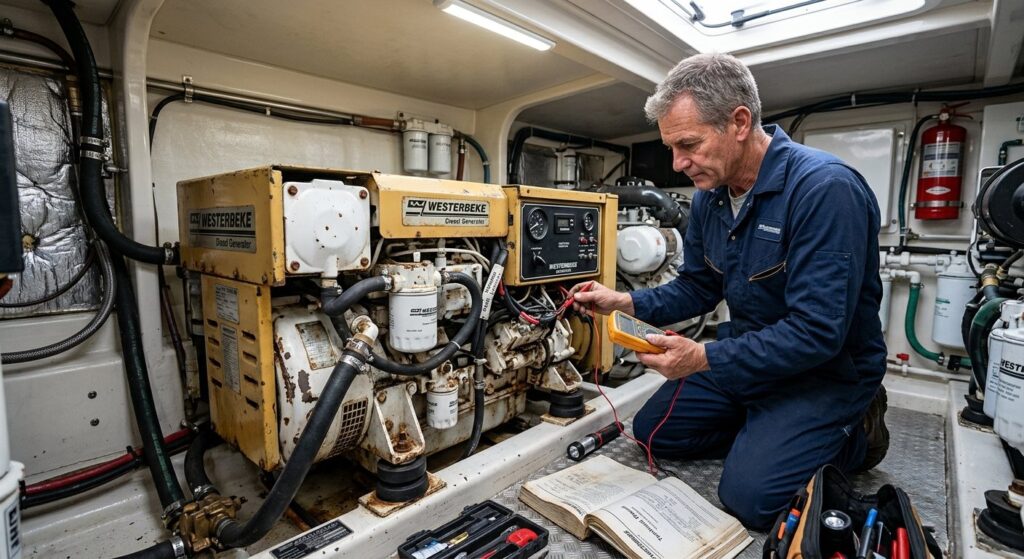
Your Westerbeke generator runs quietly in the background, powering air conditioning, electronics, and critical systems aboard your vessel. Most owners don’t think about it until something goes wrong — and on the water, that’s never a good time. The encouraging news is that Westerbeke generators typically send clear warning signals before a complete failure occurs. Knowing how to read those signals is the difference between a scheduled service call and an emergency breakdown mid-voyage.
This guide covers the most common signs that your Westerbeke generator needs professional attention, what causes those symptoms, and why factory-authorized service matters when it comes to protecting your investment.
Why Westerbeke Generators Deserve Specialized Attention
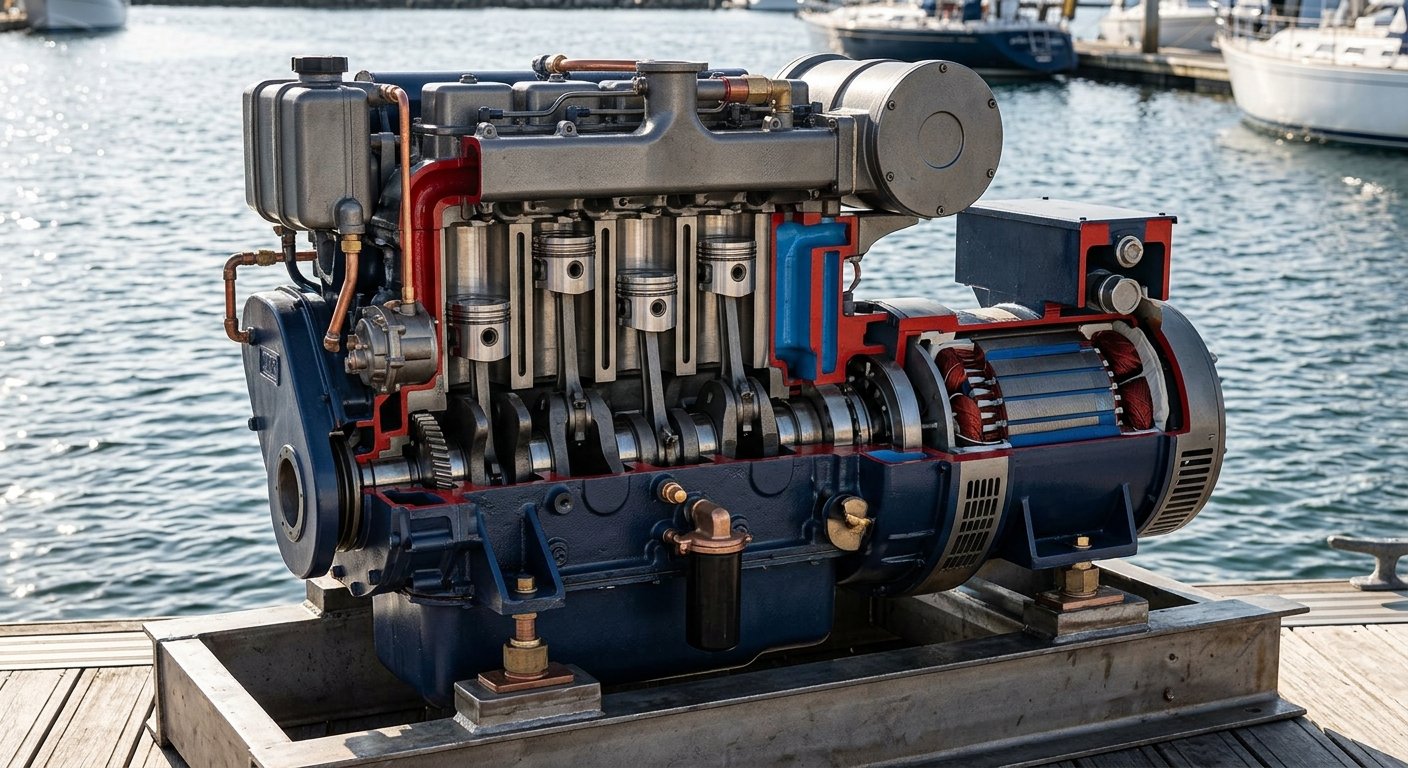
Westerbeke has been manufacturing marine generators and engines since 1937, and their equipment is designed specifically for the demanding marine environment — salt air, constant vibration, variable loads, and extended run cycles that no automotive or industrial generator is built to handle. According to the Westerbeke Corporation, proper maintenance under manufacturer specifications is essential to achieving the operational life these units are designed for.
That engineering precision also means Westerbeke generators require technicians who understand how the system operates as a complete unit — not just generic generator mechanics. When something goes wrong, the diagnosis needs to consider fuel delivery, cooling, exhaust, electrical output, and engine function together. A misdiagnosis doesn’t just delay the repair; it can cause downstream damage that multiplies your costs significantly.
Warning Sign #1: Your Boat Generator Won’t Start
A Westerbeke generator that cranks but fails to fire — or won’t crank at all — is one of the most common calls marine diesel technicians receive. Before assuming the worst, experienced technicians consider several likely culprits:
- Fuel supply issues: Clogged fuel filters, air in the fuel lines, or a failing fuel lift pump are frequent offenders, particularly on vessels that sit idle for extended periods.
- Raw water supply: Westerbeke generators are designed with safety shutdowns that prevent operation if raw water cooling flow is inadequate. A failed impeller, blocked seacock, or clogged strainer will trigger a no-start condition.
- Weak or failed batteries: Generator starting circuits require strong, healthy batteries. A battery that shows acceptable voltage under no load may collapse the moment the starter engages.
- Glow plug failure: Diesel generators depend on heat to ignite fuel. Faulty glow plugs, particularly in cooler conditions, can make starting difficult or impossible.
- Control board faults: Modern Westerbeke units include sophisticated control modules. A fault code stored in the controller may be preventing startup as a protective measure.
The critical point here is that a boat generator that won’t start is rarely solved by simply swapping parts without proper diagnosis. A factory-authorized technician will retrieve fault codes, test circuits systematically, and identify the root cause — not just the symptom.
Warning Sign #2: Unusual Exhaust Smoke
Exhaust color is one of the most reliable diagnostic indicators on any diesel generator. Each color tells a different story:
Black Smoke
Black or dark gray smoke typically points to an over-fueling condition — too much fuel, not enough air. Common causes include a clogged air filter, injector problems, or a malfunctioning fuel injection pump. Left unaddressed, over-fueling causes carbon buildup in the combustion chamber and accelerates wear on critical internal components.
White or Gray Smoke
White smoke at startup that clears quickly may simply be moisture burning off. However, persistent white smoke during operation suggests incomplete combustion, injector issues, or in more serious cases, coolant entering the combustion chamber — a symptom of a failing head gasket or cracked component that demands immediate professional attention.
Blue Smoke
Blue smoke indicates oil is being burned in the combustion chamber. This points to worn piston rings, valve seals, or other internal engine wear. It’s not a problem that self-corrects, and delaying service will increase repair scope significantly.
Warning Sign #3: Voltage Irregularities and Power Quality Issues
Your sensitive onboard electronics — navigation systems, inverters, battery chargers, and HVAC controls — depend on stable, clean power from your generator. If you’re noticing lights flickering, electronics resetting unexpectedly, or your air conditioning struggling to maintain temperature, the generator’s electrical output should be investigated.
Common electrical causes include:
- Worn or contaminated brushes on the alternator
- Failing voltage regulator
- Loose or corroded connections in the output circuit
- AVR (automatic voltage regulator) faults
- Rotor or stator winding degradation
Voltage problems are also a leading cause of damage to the expensive equipment your generator powers. If your generator is consistently running outside its rated voltage or frequency output, the cost of damaged electronics can far exceed the cost of the repair itself.
Warning Sign #4: Overheating
Marine diesel generators run in a harsh thermal environment. Westerbeke units use raw water cooling systems that pull seawater through a heat exchanger to manage engine temperatures. When that system is compromised, overheating follows quickly.
Warning signs of a cooling system problem include:
- High temperature alarms or automatic shutdowns
- Steam or unusual heat visible near the exhaust
- Reduced output power as the unit de-rates to protect itself
- Coolant loss without visible external leaks
The most common cause is a failed raw water impeller — a rubber component that should be replaced on a regular maintenance schedule. However, overheating can also result from a clogged heat exchanger, failed thermostat, or a blocked seacock. Per the American Boat and Yacht Council standards for marine systems, cooling system maintenance is among the highest-priority service items on any vessel.
An overheating generator that is allowed to shut down repeatedly under thermal stress can suffer permanent damage to cylinder heads, head gaskets, and internal sealing surfaces — converting a routine service item into a major overhaul.
Warning Sign #5: Excessive Vibration or Unusual Noise
Westerbeke generators are engineered to run smoothly. If you notice increased vibration transmitted through the vessel, knocking or rattling sounds from the generator compartment, or a rough idle that wasn’t present before, these are not symptoms to ignore.
Possible causes include:
- Deteriorated engine mounts allowing excessive movement
- Injector misfires causing uneven combustion
- Internal mechanical wear
- Exhaust system leaks that change the acoustic signature of the unit
Vibration problems tend to worsen progressively. A generator running out of balance stresses every component it’s connected to — from hose connections to wiring harnesses — and can ultimately cause failures far removed from the original source.
The Importance of Scheduled Yacht Generator Maintenance
Most Westerbeke generator problems that result in emergency service calls are preventable with proper scheduled maintenance. Westerbeke’s maintenance schedules include specific service intervals for oil and filter changes, raw water impeller replacement, fuel filter service, zinc anodes, and electrical system inspection.
A well-maintained Westerbeke generator can deliver decades of reliable service. Diesel engines, in general, are capable of operational lifespans exceeding 40 years when maintained to manufacturer specifications — a fact well understood by the commercial marine industry. Proper maintenance documentation also supports vessel value during any future sale or insurance claim.
For comprehensive information on marine diesel generator care, RPM Diesel’s marine diesel generator repair resource covers the full scope of generator services available for South Florida vessel owners. If your vessel’s propulsion systems also need attention, our marine diesel engine service and marine diesel engine repair pages provide additional guidance.
The National Association of State Boating Law Administrators consistently emphasizes that mechanical reliability is a fundamental component of vessel safety — a perspective that aligns directly with the investment preventative maintenance represents.
Frequently Asked Questions
How often should a Westerbeke marine generator be serviced?
Westerbeke recommends service intervals based on operating hours rather than calendar time. Generally, oil and filter changes occur every 150–250 hours depending on the model, with raw water impeller replacement at least annually or every 200 hours, whichever comes first. Your specific model’s owner’s manual provides the authoritative schedule, and a factory-authorized technician can help you establish a maintenance plan appropriate for your vessel’s usage patterns.
What should I check first if my boat generator won’t start?
Start with the basics: confirm the fuel supply valve is open, check that the raw water seacock is open and the strainer is clear, and verify the batteries are fully charged. If all of these check out and the unit still won’t start, professional diagnosis is the appropriate next step. Control board fault codes, fuel system issues, and electrical faults require proper tools and training to diagnose accurately.
Is it safe to run a Westerbeke generator that’s showing signs of overheating?
No. Operating an overheating diesel generator risks serious internal damage including warped cylinder heads and failed head gaskets. If your unit is triggering high-temperature alarms or shutting down on thermal protection, it should not be restarted until the cooling system has been inspected and the cause identified by a qualified marine diesel technician.
Can aftermarket parts be used for Westerbeke generator repairs?
Westerbeke specifies OEM components for a reason — marine generators operate under precise tolerances in demanding environments. Non-OEM parts may not meet those specifications and can compromise performance, reliability, and safety. Factory-authorized service centers maintain OEM parts inventories specifically to ensure repairs are performed to manufacturer standards.
How do I know if my generator needs repair versus a full replacement?
That determination requires a thorough professional evaluation. Many generators that appear to need replacement are actually candidates for cost-effective repair — particularly units from quality manufacturers like Westerbeke that are built for longevity. A proper diagnosis will identify exactly what’s needed, allowing you to make an informed decision based on real data rather than assumptions.
Contact RPM Diesel for Westerbeke Generator Service
RPM Diesel is a factory-authorized marine diesel service provider serving Palm Beach County and Broward County. Our technicians are specialists in Westerbeke generator repair and maintenance, with the diagnostic equipment, OEM parts inventory, and manufacturer-certified expertise to handle everything from routine service to complex electrical and mechanical failures.
If your Westerbeke generator is showing any of the warning signs discussed here, don’t wait for a complete failure. Contact RPM Diesel to schedule a professional diagnostic inspection and get your vessel’s generator back to reliable, manufacturer-specification operation.