A marine diesel engine represents one of the most significant investments in any vessel, yet many yacht and boat owners fail to follow the maintenance schedules that could extend their engine’s lifespan to 40 years or beyond. The difference between an engine that delivers decades of reliable service and one that fails prematurely often comes down to following a structured, manufacturer-specified maintenance protocol. Understanding what’s truly essential in your marine diesel engine service schedule protects your investment and ensures safe passage when you’re miles from shore.
Understanding Factory-Specified Maintenance Intervals
Every marine diesel engine manufacturer provides detailed maintenance schedules based on extensive testing and real-world performance data. These aren’t suggestions—they’re requirements for maintaining warranty coverage and ensuring optimal performance. Detroit Diesel/MTU, Northern Lights, Kohler, and Westerbeke each publish specific intervals that account for the unique operating characteristics of their engines.
Factory-authorized service providers maintain direct access to these specifications, including updates and technical service bulletins that modify original schedules based on field performance. This connection to manufacturer engineering departments ensures your yacht engine maintenance schedule reflects the most current best practices, not outdated information that may no longer apply to your specific engine model.
Daily and Pre-Departure Checks
Before every voyage, several critical checks take just minutes but prevent major problems. These visual inspections should become second nature:
- Check engine oil level on the dipstick—should be between marked indicators
- Inspect coolant level in expansion tank when engine is cold
- Verify raw water strainer is clean and seacock operates freely
- Look for fluid leaks around engine, connections, and bilge areas
- Check drive belt tension and condition for cracks or glazing
- Confirm fuel tank levels and inspect for water contamination
During engine startup, monitor instrument readings carefully. Oil pressure should rise within seconds, temperature gauges should respond normally, and no warning alarms should activate. Unusual smoke color, strange noises, or vibrations indicate problems requiring immediate professional diagnosis before departure.
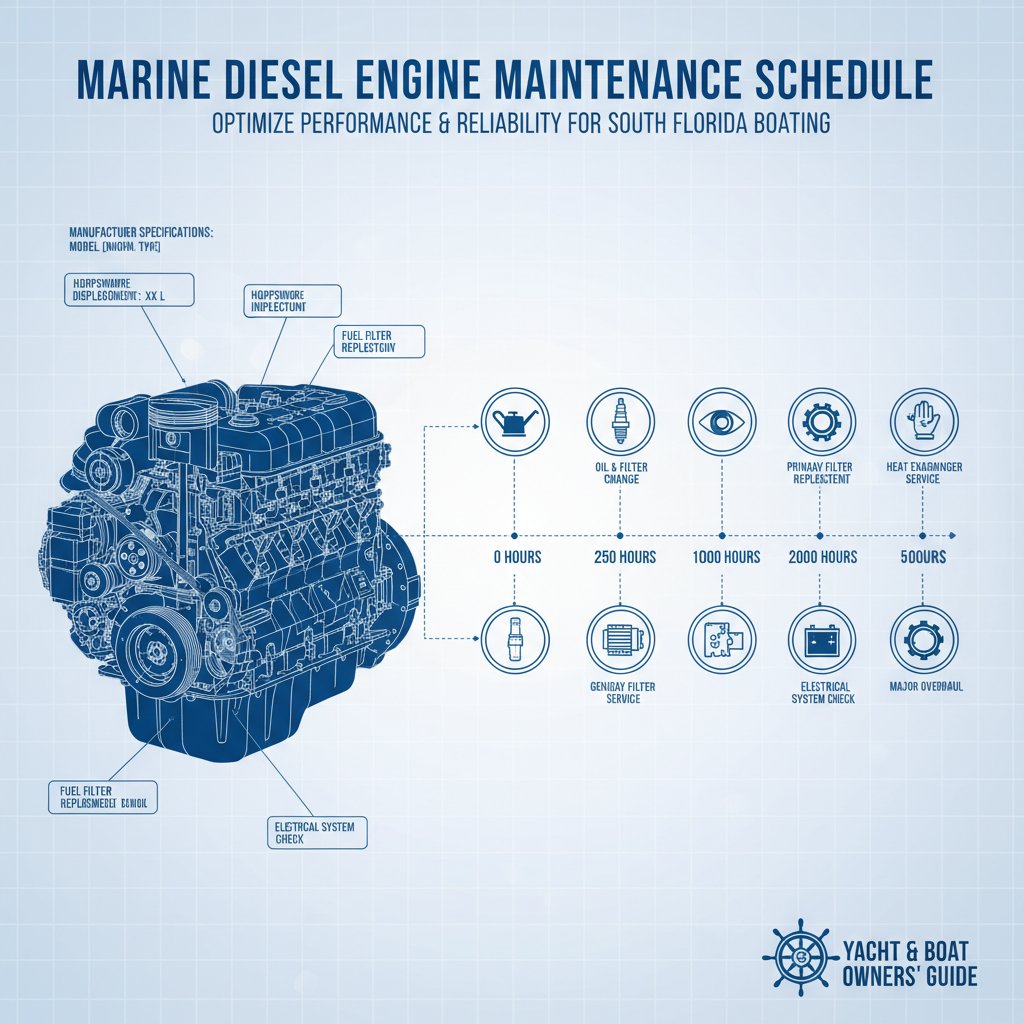
Every 50 Hours: Initial Service Interval
The first critical service point occurs at 50 hours of operation or monthly, whichever comes first. This boat diesel engine servicing interval catches developing issues before they cause damage:
Check and adjust valve clearances if specified by your engine manufacturer. Valve adjustments ensure proper combustion chamber sealing and prevent premature wear on valve train components. Some modern engines use hydraulic lifters that don’t require adjustment, but Detroit Diesel and many commercial engines need periodic checking.
Inspect and clean or replace air filters, particularly in marine environments where salt-laden air accelerates filter loading. A restricted air filter reduces power output, increases fuel consumption, and can cause black exhaust smoke indicating incomplete combustion.
Examine all hose connections, especially cooling system hoses where deterioration occurs internally before external signs appear. A failed hose at sea can result in catastrophic engine damage within minutes.
Every 100-250 Hours: Oil and Filter Service
Engine oil and filter changes represent the single most important marine engine preventive maintenance task. Operating hours vary by manufacturer, but most recommend intervals between 100-250 hours depending on duty cycle and fuel quality.
Modern low-ash diesel engine oils specifically formulated for marine applications protect against sulfur contamination from marine diesel fuel. Using automotive oils voids warranties and causes accelerated wear because they lack the necessary additive packages for continuous-duty marine operation.
Oil analysis during changes provides valuable insights into engine condition. A factory-authorized service facility examines used oil for metal particles, coolant contamination, or fuel dilution—early warning signs of developing problems that aren’t yet visible or symptomatic.
Always use OEM filters or filters meeting exact manufacturer specifications. Aftermarket filters may appear identical but often use inferior filter media or bypass valve springs that don’t protect properly under marine operating conditions.
Every 250-500 Hours: Comprehensive Systems Check
This interval requires professional marine diesel engine service from technicians with manufacturer-specific training. The comprehensive inspection includes:
Fuel system inspection covering injectors, fuel pumps, and all connections. Fuel injector spray patterns deteriorate gradually, reducing efficiency and causing incomplete combustion. Testing requires specialized equipment that measures injection pressure, spray pattern, and flow rate against factory specifications.
Cooling system pressure testing identifies leaks before they cause overheating. The raw water pump impeller needs inspection—these rubber impellers degrade in hot seawater and fail without warning. A 68,000+ parts inventory ensures immediate impeller replacement with correct OEM parts rather than waiting days for shipping.
Electrical system testing verifies charging system output, starter motor draw, and connection integrity. Corrosion on marine electrical connections causes voltage drops that prevent reliable starting and can mask sensor problems that affect engine performance.
Transmission Service Integration
Marine transmissions require service on schedules independent from engines but coordinated for efficiency. Transmission fluid and filter changes typically occur every 500 hours, and this service includes checking shift cable adjustments and inspecting transmission cooler operation.
Annual or 500-Hour Service: Major Maintenance
Your yacht engine annual service represents the most thorough scheduled maintenance and should never be postponed. Even if you haven’t reached 500 hours, perform this service annually because time degrades components regardless of operating hours.
Replace all drive belts regardless of appearance. Belts deteriorate internally from heat cycling and humidity exposure. Belt failure at sea leaves you without alternator output, raw water circulation, or in some configurations, even fresh water pump operation.
Service all heat exchangers by removing end caps and cleaning tube bundles. Marine growth and scale buildup restrict coolant flow, causing localized hot spots that lead to cylinder head gasket failures or cracked cylinder heads—repairs costing tens of thousands of dollars.
Inspect and test all sensors and safety shutdown systems. Temperature sensors drift out of calibration, causing inaccurate readings. Testing confirms sensors provide accurate data to your monitoring systems and automatic shutdown circuits that prevent catastrophic damage.
Perform comprehensive fuel system service including cleaning or replacing fuel filters, draining water separators, and treating fuel tanks for biological growth. Modern ultra-low sulfur diesel fuel supports microbial growth in warm climates, creating sludge that clogs filters and damages injection systems.
Every 1000 Hours or Biennially: Extended Service
Major component inspection occurs at this interval. Factory-authorized technicians perform detailed examinations that may include:
- Compression and leak-down testing on all cylinders
- Turbocharger inspection and cleaning
- Exhaust elbow and mixing elbow replacement
- Raw water pump complete rebuild or replacement
- Engine mount inspection and replacement if deteriorated
- Complete cooling system flush and refill with proper coolant mixture
Turbocharger service is particularly critical for vessels operating in tropical environments. Salt exposure accelerates turbine housing corrosion, and carbon buildup on turbine blades reduces efficiency. A properly maintained turbocharger contributes significantly to fuel efficiency and power output.
Generator-Specific Maintenance Requirements
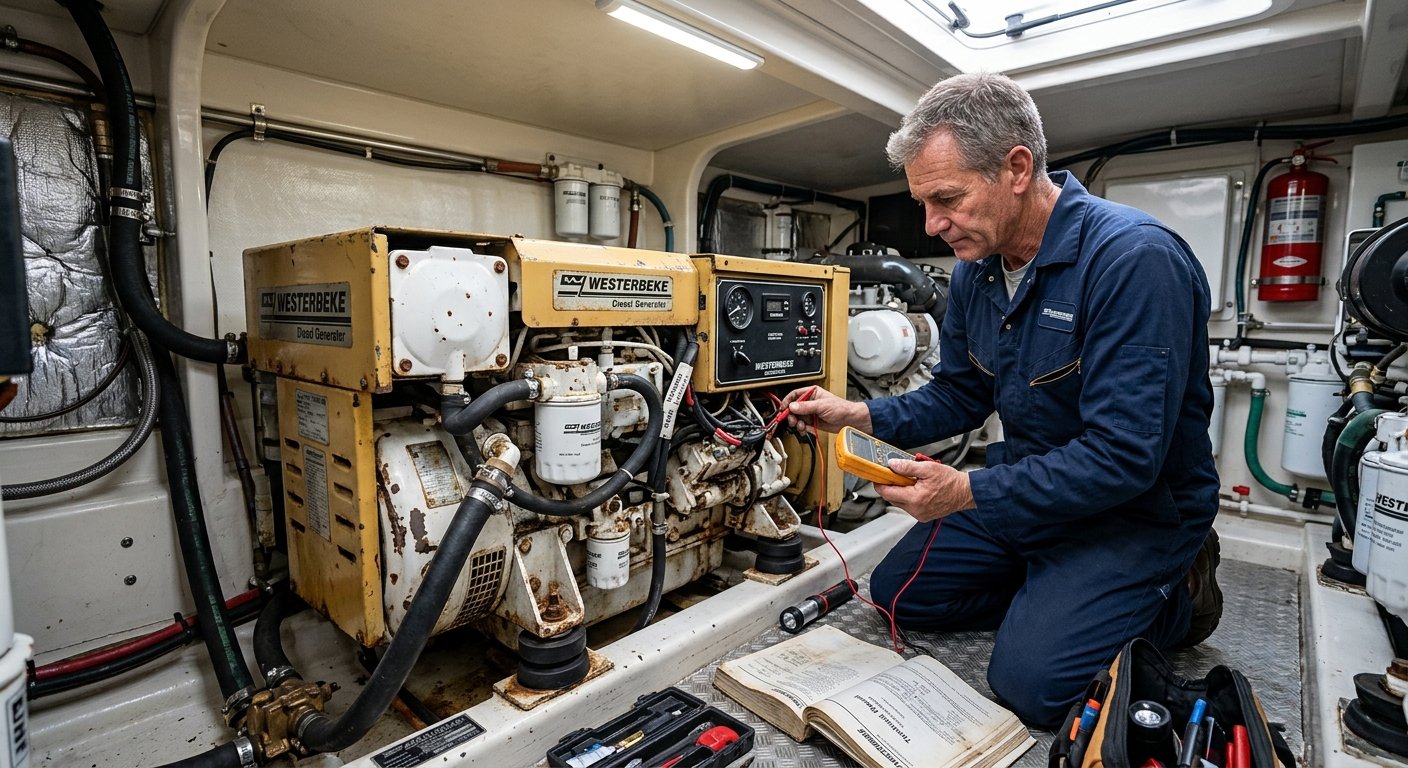
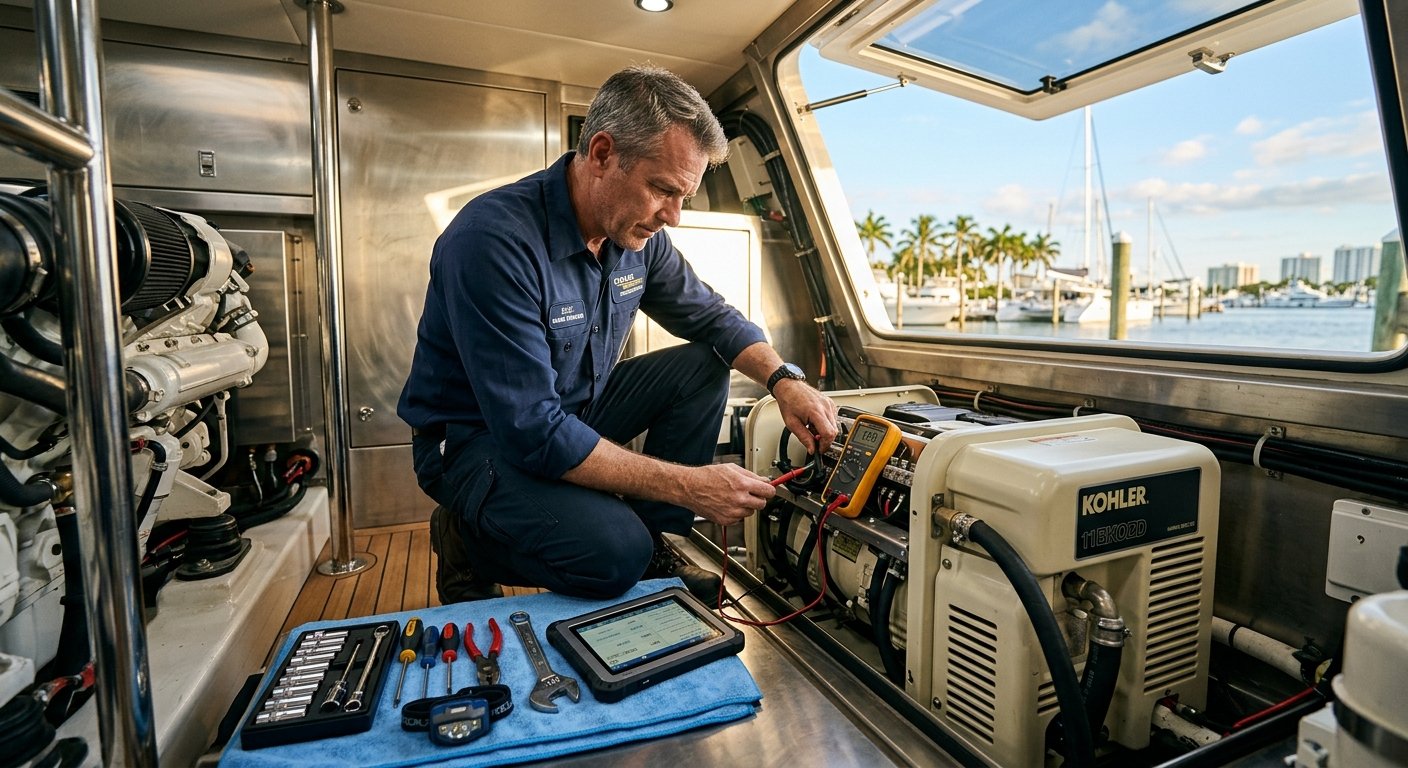
Marine generators from Northern Lights, Kohler, and Westerbeke follow similar but distinct maintenance schedules. Generators often accumulate hours faster than main engines, especially on vessels with extensive onboard systems.
Generator maintenance emphasizes electrical output quality testing. Load bank testing verifies the generator produces clean power at proper voltage and frequency under full load conditions. This testing identifies voltage regulator problems, winding insulation breakdown, or bearing wear before they cause equipment failures.
Soundshield inspection catches deteriorating insulation and ventilation blockages that cause generators to overheat in enclosed engine rooms. Proper airflow is critical for generator longevity.
Signs Your Engine Needs Immediate Professional Service
Between scheduled maintenance, certain symptoms demand immediate attention from factory-authorized technicians:
- Sudden changes in engine operating temperature
- Loss of power or unusual vibrations
- Changes in exhaust smoke color—white, blue, or excessive black
- Oil pressure fluctuations or warning light activation
- Unusual noises including knocking, grinding, or screeching
- Increased fuel consumption without operational changes
- Difficulty starting or rough idle conditions
Delaying diagnosis when these symptoms appear often transforms minor repairs into major overhauls. A cooling system problem caught early might require a $200 thermostat replacement, but ignored until overheating occurs, the same problem can necessitate a $15,000 cylinder head replacement.
The Value of Factory-Authorized Service
Maintenance performed by factory-authorized service providers offers advantages that directly impact your vessel’s reliability and value. Access to technical support from manufacturer engineering departments means complex diagnostic challenges get resolved correctly the first time. With 68 years of marine diesel specialization, established service providers maintain relationships with manufacturers that independent mechanics simply cannot replicate.
Detailed service documentation maintained by professional facilities provides complete maintenance history that significantly enhances resale value. Prospective buyers and marine surveyors recognize the value of professionally maintained engines with documented service records showing adherence to manufacturer schedules.
Worldwide service coordination ensures you’re never stranded. If problems develop during extended cruising, your primary service facility can coordinate with other factory-authorized locations to provide parts and technical support anywhere your travels take you.
Protecting Your Investment
A properly maintained marine diesel engine routinely exceeds 10,000 operating hours and 40 years of service life. This longevity isn’t accidental—it results from following manufacturer-specified maintenance schedules without compromise. The cost of preventive maintenance represents a small fraction of premature engine replacement or emergency repairs performed far from home port.
Your maintenance schedule should be customized to your specific operating conditions. Vessels operating in tropical waters need more frequent cooling system service than those in temperate climates. Commercial vessels with high-hour operations may require shortened intervals. Factory-authorized service providers help develop maintenance programs that balance manufacturer requirements with your unique operating profile.
Don’t compromise on maintenance quality or timing. The engine room might be out of sight, but it should never be out of mind. Establish a relationship with experienced marine diesel professionals who understand your engines, maintain proper parts inventory, and prioritize your vessel’s reliability as much as you do.
Contact RPM Diesel’s factory-authorized technicians to establish your comprehensive maintenance schedule. Our 68,000+ parts inventory and manufacturer-direct technical support ensure your engines receive the exact service they need, when they need it, keeping you safely underway for decades to come.