# Marine Diesel Fuel Injection Repair Guide 2026
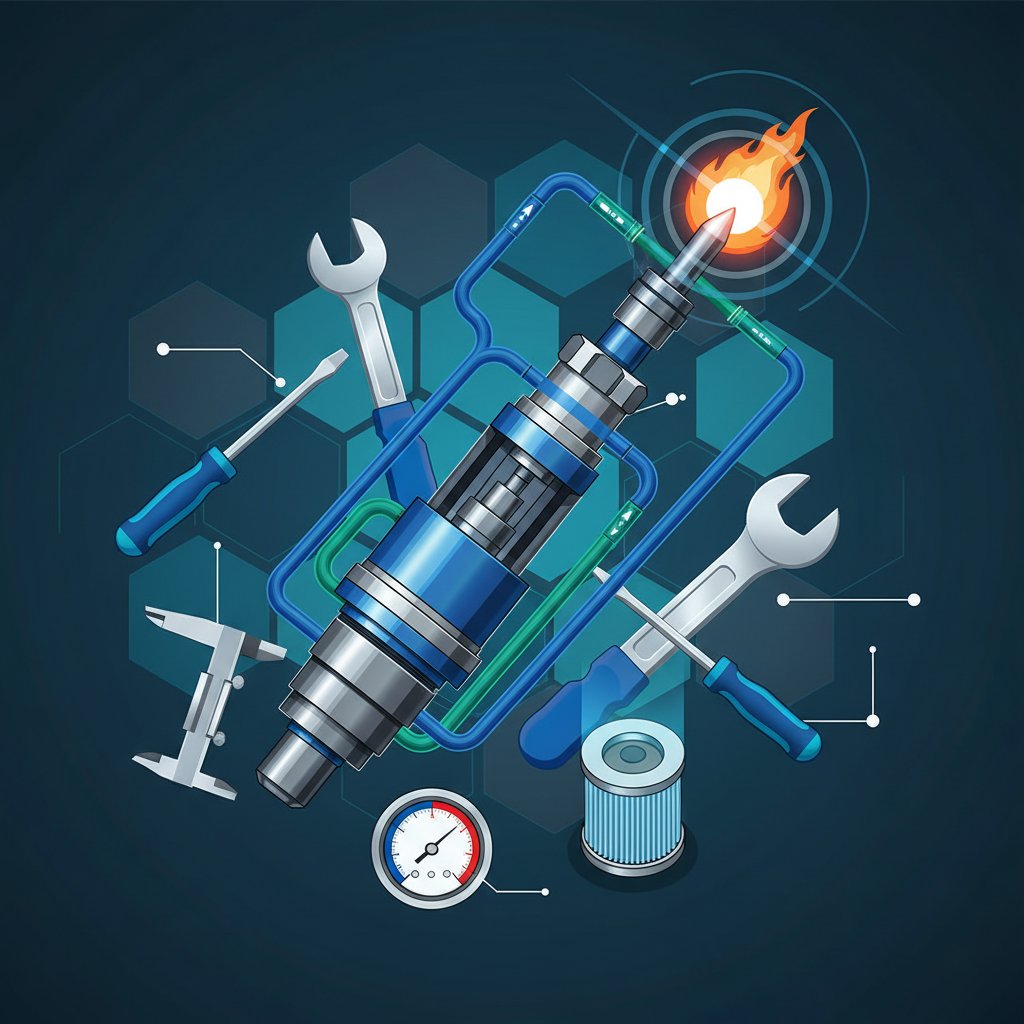
Marine diesel fuel injection systems represent the technological heart of your vessel’s engine, converting fuel into the precisely metered, atomized spray that powers your yacht across open waters. When these systems fail or operate inefficiently, the consequences extend far beyond reduced performance—you’re looking at increased fuel consumption, potential engine damage, and the very real possibility of being stranded offshore. Understanding how these systems work and when they require professional service is essential knowledge for every serious vessel owner.
How Marine Diesel Fuel Injection Systems Function
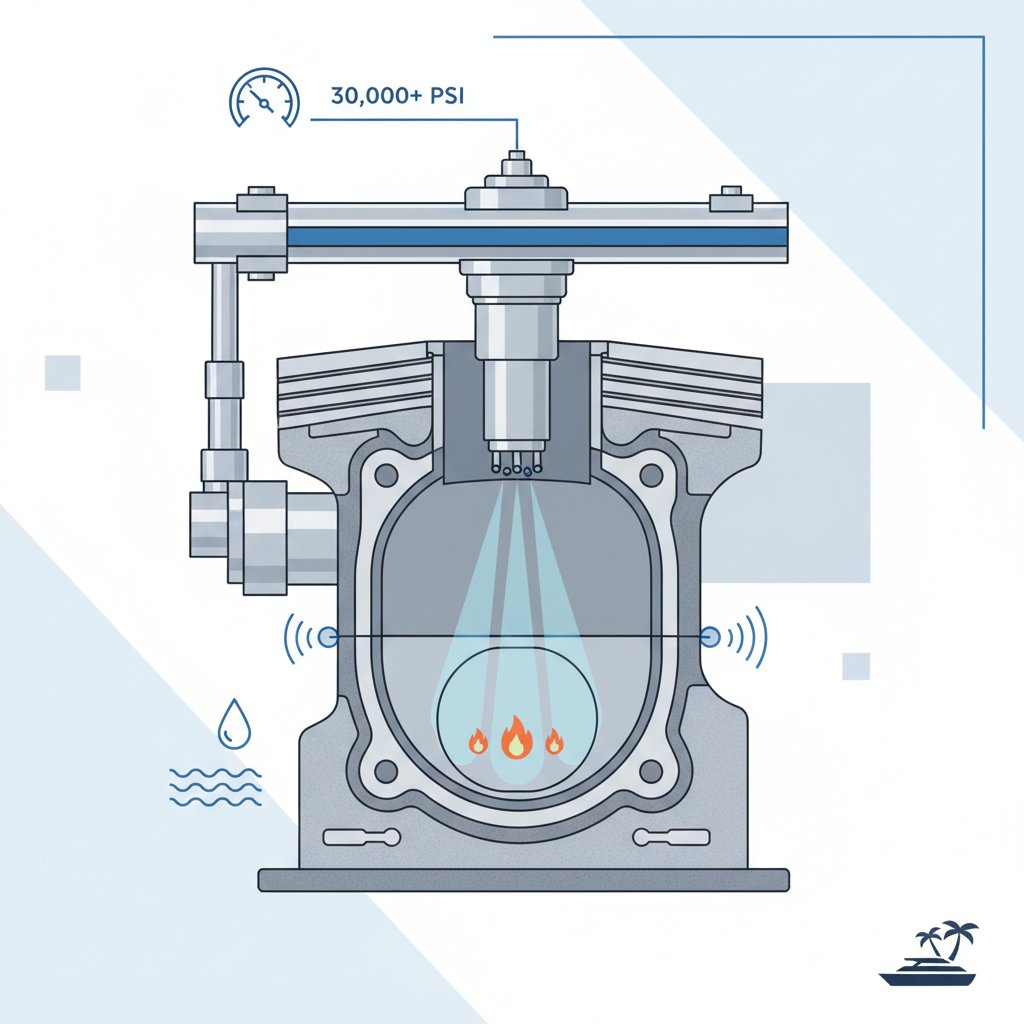
Unlike automotive diesel engines, marine applications demand fuel injection systems capable of withstanding constant vibration, saltwater exposure, and extended operating periods at varying loads. Modern marine diesel fuel injection systems deliver fuel at pressures exceeding 30,000 PSI in common rail applications, with timing precision measured in microseconds. This extraordinary engineering enables complete combustion, maximum power output, and compliance with increasingly strict EPA emissions standards.
The fuel injection process begins with the lift pump drawing fuel from your tanks through primary filters. The injection pump then pressurizes this fuel to operational levels before distributing it to individual injectors. Each injector atomizes the fuel into a fine mist pattern specifically designed for your engine’s combustion chamber geometry. This coordinated dance happens thousands of times per minute, and any degradation in system components directly impacts engine performance.
Common Rail vs. Mechanical Injection Systems
Mechanical injection systems, still prevalent in Detroit Diesel Series 60 and many older MTU engines, use cam-driven pumps and mechanical linkages to control fuel delivery. These proven systems offer excellent reliability and can be rebuilt multiple times throughout their service life. Common rail systems, found in newer MTU Series 2000 and 4000 engines, use electronic control units to manage fuel pressure and injection timing with unprecedented precision. Both systems require specialized knowledge and factory-authorized tools for proper marine diesel fuel injection repair.
Signs Your Fuel Injection System Needs Professional Service
Recognizing the early warning signs of fuel injection problems can save thousands in repair costs and prevent catastrophic engine failure. After 70 years servicing marine diesel engines, we’ve identified the most critical indicators that demand immediate attention.
Performance and Operational Symptoms
- Hard starting or extended cranking periods: When fuel injectors develop internal leakage or injection pumps lose pressure, your engine requires more cranking time to build sufficient fuel pressure for ignition
- Rough idle or misfiring: Inconsistent fuel delivery from worn injectors creates noticeable vibration and irregular engine operation, particularly at lower RPMs
- Black or white exhaust smoke: Black smoke indicates incomplete combustion from over-fueling or poor atomization, while white smoke suggests fuel entering cylinders without igniting
- Loss of power under load: Degraded injection components cannot deliver the fuel volume required for peak power, especially noticeable during acceleration or when operating against heavy seas
- Increased fuel consumption: Leaking injectors or inefficient spray patterns waste fuel while reducing power output
Diagnostic Indicators
Modern engine monitoring systems provide invaluable data for boat fuel system diagnostics. Elevated exhaust gas temperatures on specific cylinders often indicate injector problems affecting that cylinder. Unusual pressure readings from fuel system sensors may signal injection pump wear or restricted fuel supply. However, proper interpretation of these diagnostic codes requires factory-authorized scan tools and extensive experience with specific engine families.
The Fuel Injection Repair and Rebuild Process
Professional marine diesel fuel injection repair follows manufacturer-specific procedures that ensure your system returns to original factory specifications. This process cannot be replicated with generic automotive tools or universal rebuild kits—marine applications demand precision that only OEM parts and factory-authorized procedures can deliver.
Initial Diagnostics and Testing
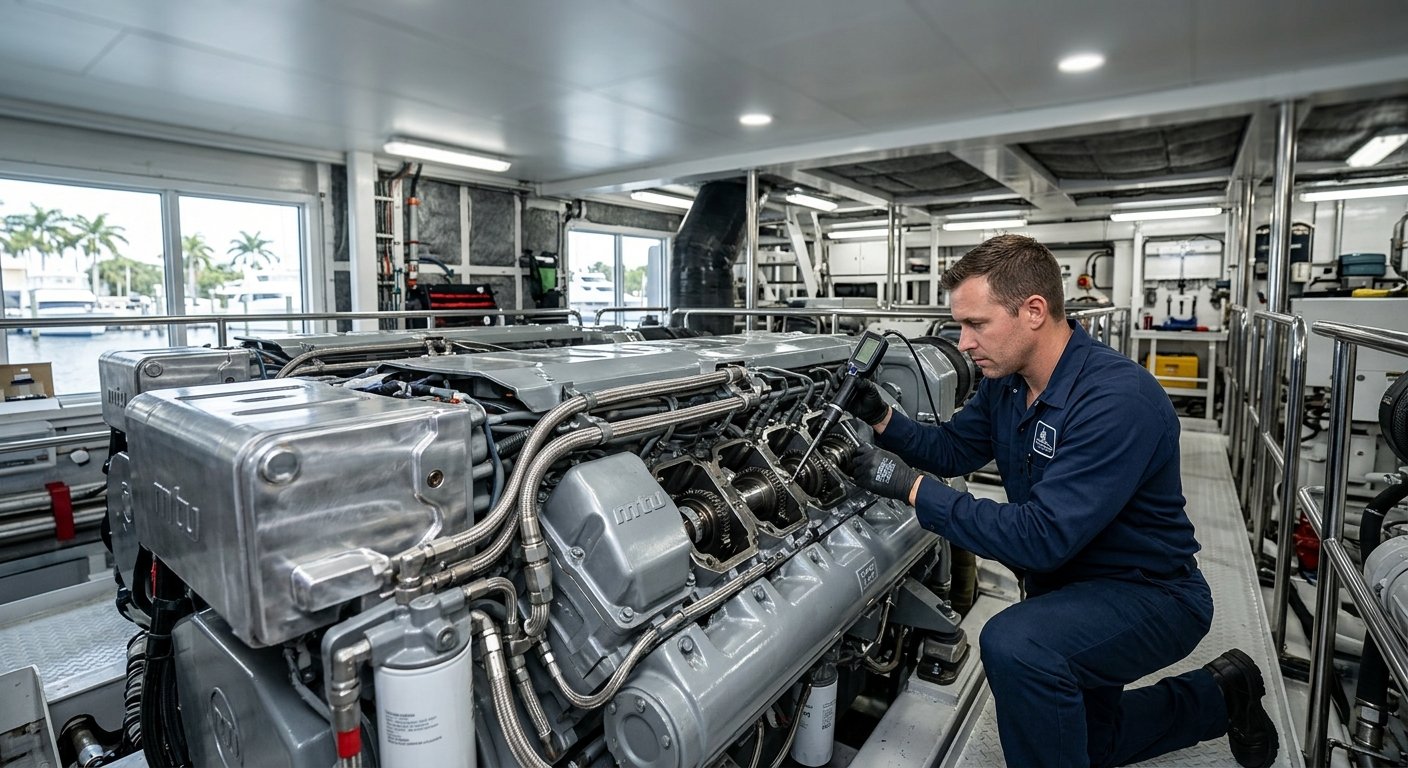
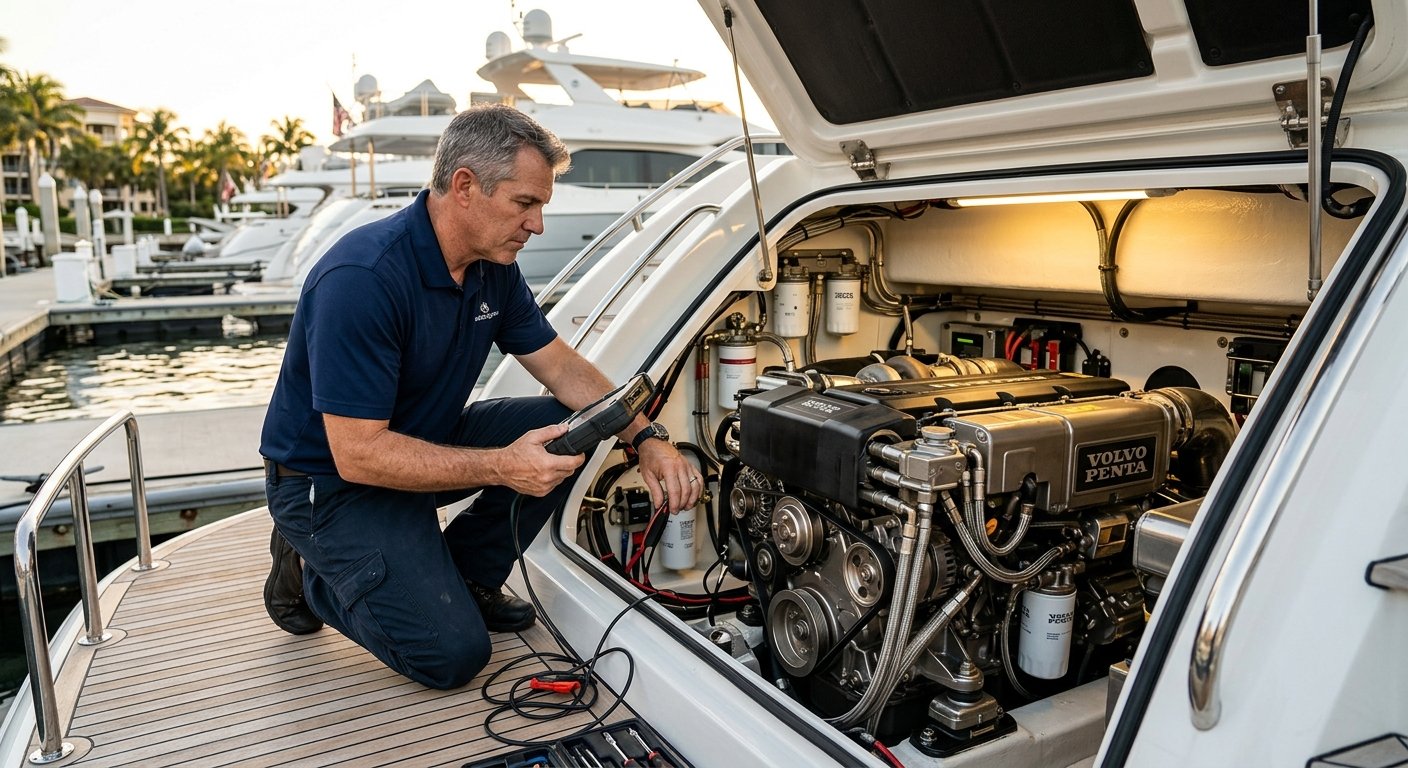
Proper diagnosis begins with comprehensive fuel system testing using calibrated equipment. We measure injection pump output pressures, test individual injector spray patterns, and analyze fuel quality for contamination. Detroit Diesel Electronic Controls (DDEC) systems require proprietary diagnostic software to read injection timing, duration, and pressure data. MTU engines utilize BlueLine diagnostic tools that access detailed fuel system parameters unavailable to generic scan tools.
Cylinder contribution tests reveal which injectors are underperforming by measuring each cylinder’s power contribution. This non-invasive testing identifies problem areas before disassembly, ensuring accurate repair estimates and preventing unnecessary work.
Injector Service and Restoration
Yacht fuel injection cleaning involves far more than simply running chemical additives through your fuel system. Professional injector service requires removing injectors from the engine, disassembling them in a controlled environment, and testing each component against factory specifications.
During rebuilding, technicians replace precision components including nozzles, needle valves, springs, and sealing surfaces. Each injector undergoes flow testing on specialized equipment that measures spray pattern, fuel delivery volume, and opening pressure. For common rail injectors, electrical characteristics including solenoid response time must meet manufacturer tolerances measured in milliseconds.
Northern Lights and Westerbeke generator injectors require specific attention to heat exchanger proximity and extended idle operation common in generator applications. Kohler marine generators present unique service requirements due to their integration with vessel electrical systems. Our parts inventory provides access to genuine OEM components for all these applications.
Injection Pump Repair and Calibration
Marine diesel injection pump repair demands specialized expertise few service providers possess. Bosch inline pumps used in many recreational marine diesels require bench testing equipment calibrated to measure delivery volumes within cubic millimeters per stroke. Detroit Diesel DDEC pumps integrate electronic controls that must be programmed to match engine serial numbers and application specifications.
Pump rebuilds involve replacing internal components subject to wear: plungers, delivery valves, governor mechanisms, and sealing elements. After assembly, pumps undergo extensive testing across the entire operating range to verify proper fuel delivery curves. This calibration ensures your engine develops rated power while maintaining optimal fuel efficiency.
Preventative Maintenance for Fuel Injection Longevity
Properly maintained marine diesel fuel injection systems routinely exceed 10,000 operating hours before requiring major service. Following manufacturer-recommended maintenance schedules protects your investment and ensures reliable operation when you need it most.
Fuel Quality Management
Contaminated fuel represents the single greatest threat to injection system longevity. Water infiltration, biological growth, and particulate contamination cause the majority of premature injector failures we encounter. Installing properly sized fuel filtration meeting manufacturer specifications provides your first line of defense.
Primary filters should trap particles down to 30 microns, while secondary filters provide 10-micron or finer protection immediately before injection pumps. Replace filter elements according to manufacturer intervals—typically every 200-400 hours—regardless of visual appearance. Many degraded filters appear clean externally while their internal media has collapsed or become saturated.
For vessels operating in tropical waters, biocide treatments prevent microbial growth in fuel tanks. However, dead microbes create sludge that clogs filters and injectors, making fuel polishing necessary before returning to service. Annual fuel tank inspection and cleaning eliminates accumulated water and contaminants before they enter your fuel system.
Scheduled Service Intervals
Manufacturer service schedules provide specific guidance for your engine model. Detroit Diesel recommends injector testing every 2,400 hours for Series 60 engines, with replacement or rebuilding based on test results. MTU Series 4000 engines require fuel injection system inspection at 4,000-hour intervals, with injector replacement typically occurring around 8,000-12,000 hours depending on operating conditions.
Generator sets present different service requirements due to lighter loading and frequent start-stop cycles. Northern Lights generators typically require injector service at 3,000-hour intervals, while Kohler marine generators specify inspection every 2,000 hours. These intervals may shorten for vessels operating in extreme conditions or using fuel of questionable quality.
Why Factory-Authorized Service Matters for Fuel Injection Work
The precision required for boat fuel injector service exceeds what general marine mechanics can provide without proper training, tooling, and OEM parts access. Injection components manufactured to tolerances measured in microns cannot be properly serviced using generic rebuild kits or automotive-grade replacement parts.
Factory-authorized service centers maintain calibrated test equipment traceable to national standards, ensuring accuracy across all measurements and adjustments. We invest hundreds of thousands of dollars in manufacturer-specific diagnostic tools, technical training, and genuine OEM parts inventory that independent shops cannot justify. This commitment enables us to restore fuel injection systems to factory specifications, not merely “good enough” approximations.
Our technicians receive ongoing training directly from Detroit Diesel, MTU, Northern Lights, Kohler, and Westerbeke, keeping current with latest service procedures and technical bulletins. This manufacturer relationship provides access to engineering support when complex problems arise, ensuring even unusual failures receive proper diagnosis and repair.
Cost Considerations and Long-term Value
Professional marine diesel fuel injection repair represents a significant investment, with individual injector rebuilds ranging from several hundred to over a thousand dollars depending on engine type. Complete injection pump rebuilds for larger engines may exceed ten thousand dollars including labor, testing, and calibration.
However, consider these costs against the alternative. Improperly repaired injection systems cause secondary damage to pistons, rings, cylinder walls, and turbochargers through poor combustion and fuel dilution of engine oil. A $5,000 injection system repair performed correctly prevents a $50,000 engine overhaul caused by deferred maintenance or substandard repairs.
Quality fuel injection service extends engine life to 40+ years, dramatically improving return on your vessel investment. Engines receiving proper maintenance and factory-authorized service routinely accumulate 15,000-20,000 hours before requiring major overhauls—double or triple the lifespan of poorly maintained powerplants.
When to Schedule Fuel Injection Service
Don’t wait until complete system failure forces you into emergency repairs at premium rates. Schedule proactive service when you notice early warning signs or as your engine approaches manufacturer-recommended intervals. Off-season scheduling often provides better availability and allows time for thorough diagnostics without pressure to return your vessel to service immediately.
For vessels with upcoming long-range cruising plans, pre-departure fuel injection inspection provides peace of mind and prevents mid-voyage breakdowns in remote locations where factory-authorized service may be unavailable. Our worldwide service capabilities support customers wherever their vessels travel, but prevention remains the best strategy.
Trust Your Fuel Injection Service to the Experts
Your marine diesel fuel injection system demands expertise that comes only from decades of specialized experience and unwavering commitment to manufacturer specifications. RPM Diesel has provided factory-authorized service for 70 years, building a reputation for excellence that vessel owners worldwide depend upon. Our technicians understand that your engine represents more than machinery—it’s the reliable power that brings you and your family home safely.
Contact RPM Diesel today to schedule comprehensive fuel injection diagnostics or discuss your engine’s service requirements. Our team provides transparent assessments, detailed repair estimates, and workmanship that ensures your diesel engine delivers another 40+ years of dependable service. Don’t compromise on the precision systems that power your vessel—choose the factory-authorized expertise your investment deserves.