# Marine Diesel Turbo Failure: Warning Signs & Prevention
A failing turbocharger on your yacht’s main engine or generator can transform from a minor issue into catastrophic damage costing tens of thousands of dollars in remarkably little time. When a marine diesel turbocharger begins to fail, it rarely announces itself with obvious symptoms until significant damage has already occurred. Understanding the warning signs and implementing proper maintenance protocols can mean the difference between a simple turbocharger service and a complete engine rebuild.
Understanding Marine Diesel Turbocharger Function
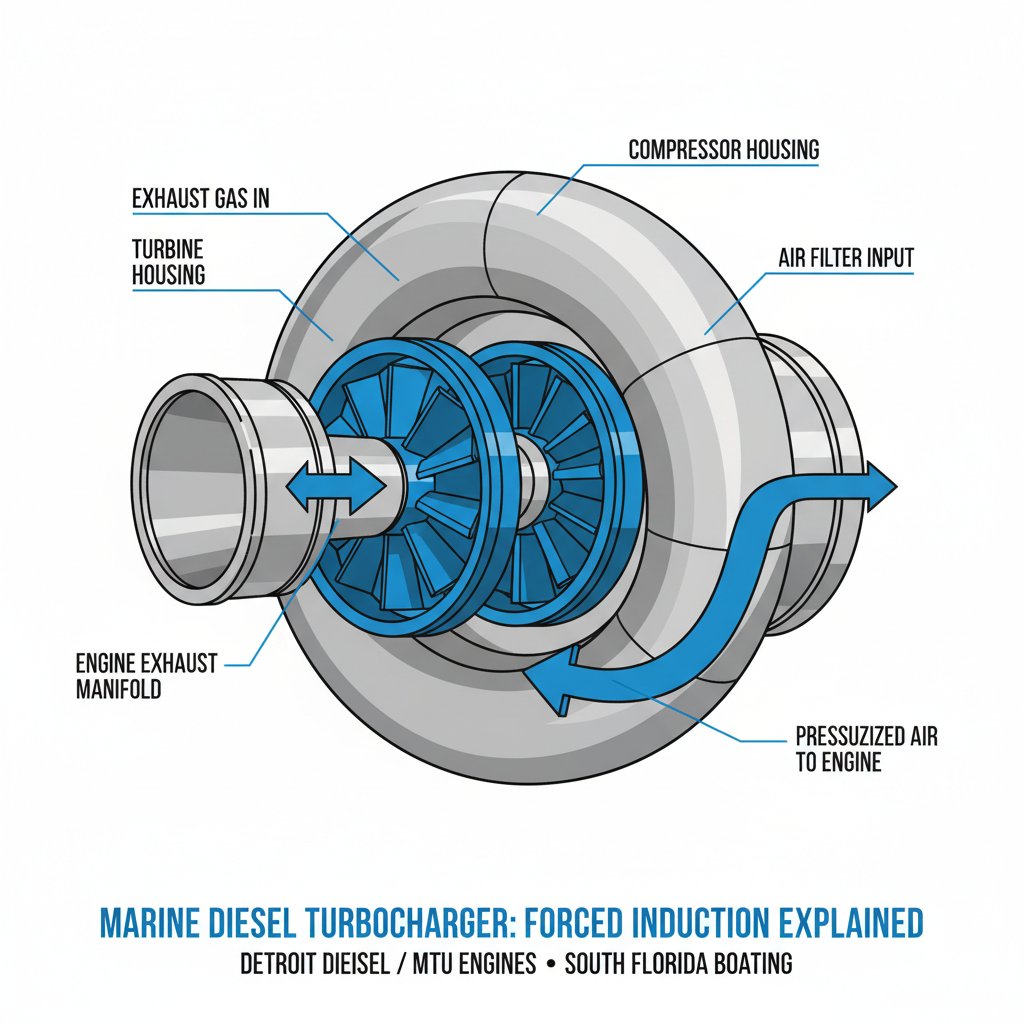
Marine diesel turbochargers operate under extreme conditions that would destroy automotive turbos in short order. These precision-engineered components force compressed air into your engine’s combustion chambers, enabling your Detroit Diesel, MTU, Northern Lights, Kohler, or Westerbeke engine to generate substantially more power from the same displacement. The turbocharger shaft spins at speeds exceeding 100,000 RPM while enduring exhaust gas temperatures approaching 1,400°F—all while subjected to the corrosive marine environment.
The turbocharger consists of two primary sections: the turbine housing, where exhaust gases spin the turbine wheel, and the compressor housing, where ambient air is compressed before entering the engine. These components are connected by a center bearing housing containing precision bearings that must maintain exact tolerances while spinning at incredible speeds. This bearing section depends entirely on proper oil supply and quality for survival.
Critical Warning Signs of Marine Diesel Turbocharger Failure
Unusual Noise Characteristics
One of the earliest indicators of turbocharger problems is abnormal noise. A healthy marine turbo produces a distinctive whine that experienced operators recognize as normal. When bearing wear begins, you’ll notice a high-pitched screaming sound or a grinding metallic noise, particularly during acceleration or when operating at higher RPMs. These sounds indicate the turbocharger shaft is making contact with the housing—a condition that will rapidly worsen.
Some yacht owners dismiss new turbo sounds as normal operation, but factory-authorized technicians know that changes in turbocharger acoustics always warrant immediate inspection. By the time you hear grinding or rattling, bearing damage has likely already occurred, and metal particles may be circulating through your lubrication system.
Blue or Black Smoke From Exhaust
Excessive exhaust smoke represents more than an environmental concern—it’s a diagnostic indicator. Blue smoke typically signals oil entering the combustion chamber, often through worn turbocharger seals. When turbo bearings wear, they allow oil to pass from the bearing housing into either the turbine or compressor side, where it burns in the exhaust stream or enters the intake system.
Black smoke during acceleration indicates incomplete combustion, frequently caused by insufficient boost pressure from a failing turbocharger. The turbo cannot compress enough air to properly burn the fuel being injected, resulting in unburned fuel exiting through the exhaust. This condition not only wastes fuel but can lead to carbon buildup throughout the exhaust system.
Unexpected Performance Loss
Marine diesel performance loss manifests in several ways. Your vessel may struggle to reach normal cruising speeds, exhibit sluggish acceleration, or require higher throttle positions to maintain previous performance levels. These symptoms often develop gradually, making them easy to dismiss as normal aging. However, a properly maintained Detroit Diesel or MTU engine with a healthy turbocharger should maintain consistent performance for decades.
Boost pressure below manufacturer specifications directly indicates turbocharger problems. Factory-authorized service technicians measure actual boost pressure against OEM specifications to diagnose turbo performance degradation before complete failure occurs. This preventative approach can save vessel owners from catastrophic engine damage.
Increased Oil Consumption
When oil consumption increases without visible external leaks, the turbocharger often deserves scrutiny. Worn turbo seals and bearings allow engine oil to escape into the exhaust or intake systems. Some yacht owners add oil regularly without investigating the root cause—a costly mistake that allows turbocharger damage to progress while contaminating other engine components.
Tracking oil consumption provides valuable diagnostic data. If your engine suddenly requires an additional quart between service intervals, professional inspection is warranted immediately. Factory-trained technicians can perform pressure tests and visual inspections to identify turbocharger seal failures before they cause secondary damage.
Visible Compressor or Turbine Wheel Damage
During routine inspections, technicians examine both the compressor inlet and turbine outlet for visible damage. Compressor wheel damage typically results from foreign object ingestion—anything from failed intake hoses to improperly secured air filter components. Turbine damage often indicates excessive exhaust gas temperatures or catastrophic bearing failure allowing wheel contact with housing.
Even minor blade damage affects turbocharger balance at extreme rotational speeds, accelerating bearing wear and potentially causing complete failure. What appears as small blade nicks can create vibrations that destroy bearings within hours of operation.
Common Causes of Yacht Turbo Problems
Lubrication System Failures
Approximately 90% of marine diesel turbocharger failures trace back to lubrication issues. Turbocharger bearings depend on continuous oil flow at proper pressure and temperature. Oil starvation—even for seconds—can cause permanent bearing damage. Common lubrication failures include clogged oil feed lines, failed oil pressure regulators, contaminated oil, and improper oil viscosity for operating conditions.
Many turbo failures occur during startup or shutdown. Without proper oil pressure, the turbo shaft contacts the bearing surfaces. Factory procedures for Detroit Diesel and MTU engines specify minimum idle periods before shutdown to allow turbocharger speeds to decrease while maintaining oil flow. Immediate shutdown after high-load operation frequently damages turbochargers.
Air Filter Neglect
Contaminated or damaged air filtration systems allow particulates to enter the compressor wheel at supersonic speeds. Salt air, dust, and debris act as abrasive projectiles that erode compressor blades, creating imbalance and reducing efficiency. The marine environment presents particular challenges, with salt crystals proving especially destructive to aluminum compressor wheels.
Air filter maintenance intervals specified by manufacturers like Northern Lights, Kohler, and Westerbeke account for typical operating conditions. Vessels operating in dusty environments or areas with high particulate levels require more frequent filter service. A quality air filter costs a fraction of turbocharger replacement.
Exhaust System Restrictions
Blocked exhaust systems force turbochargers to work against excessive backpressure, increasing bearing loads and exhaust temperatures. Carbon buildup in exhaust elbows, failed exhaust components, or improperly designed exhaust systems all contribute to premature MTU turbo failure and damage to other manufacturers’ equipment.
Factory-authorized technicians measure exhaust backpressure during comprehensive diagnostics, comparing actual readings against manufacturer specifications. Excessive backpressure not only damages turbochargers but can cause valve damage, piston failures, and complete engine destruction.
Boat Turbocharger Maintenance Best Practices
Oil Quality and Change Intervals
Using OEM-specified oil and adhering to factory change intervals represents the single most effective turbocharger protection strategy. Marine diesel engines require oils meeting specific performance standards—cutting corners with automotive-grade oils or extending change intervals invites disaster. The harsh marine environment accelerates oil degradation through moisture contamination, fuel dilution, and thermal breakdown.
Professional oil analysis programs identify contamination and wear metals before they cause failures. RPM Diesel’s 70-year history servicing marine engines has demonstrated that vessels following manufacturer-specified maintenance schedules routinely achieve 40+ years of reliable operation, while those neglecting proper service face repeated costly repairs.
Regular Inspection Protocols
Factory-authorized service includes visual turbocharger inspection, checking for oil leaks around seals, examining intake and exhaust connections for damage, and verifying proper hose and clamp condition. These inspections identify developing problems before they cause failures. Experienced technicians also check for shaft play—excessive movement indicating bearing wear requiring immediate attention.
Professional boost pressure testing confirms turbocharger performance matches factory specifications. This objective measurement removes guesswork from diagnostics, providing clear data about turbocharger health and engine performance.
Proper Operating Procedures
Turbocharger longevity depends on proper operating procedures. Allow engines to reach operating temperature before applying heavy loads. This practice ensures proper oil viscosity and flow to turbocharger bearings. Similarly, cool-down periods before shutdown allow turbocharger speeds to decrease while maintaining oil circulation, preventing heat-soaking that can carbonize oil in bearing passages.
Avoid prolonged idling, which can cause incomplete combustion and carbon buildup affecting turbocharger components. When possible, operate engines under moderate load, which promotes complete combustion and maintains proper operating temperatures throughout the system.
When Professional Marine Engine Turbo Repair Becomes Necessary
Certain conditions absolutely require professional intervention. Any unusual noise from the turbocharger area demands immediate inspection. Visible smoke changes, especially blue smoke indicating oil consumption, warrant expert diagnosis. Performance loss exceeding normal expectations should trigger professional evaluation, not acceptance as inevitable aging.
Attempting DIY turbocharger repairs on Detroit Diesel, MTU, Northern Lights, Kohler, or Westerbeke engines risks catastrophic damage. These precision components require specialized knowledge, proper tooling, and access to genuine OEM parts. Factory-authorized facilities maintain relationships with manufacturers, ensuring access to technical bulletins, updated specifications, and genuine replacement components.
RPM Diesel’s parts inventory supports immediate service for major marine diesel brands, minimizing vessel downtime. Worldwide service capabilities mean expert support wherever your vessel operates, backed by decades of factory-authorized training and experience.
The True Cost of Neglecting Turbocharger Maintenance
A failing turbocharger rarely damages only itself. When turbine or compressor wheels disintegrate, metal fragments travel through your engine. Turbine debris exits through the exhaust system—expensive but manageable. Compressor wheel failures send metal fragments directly into engine cylinders, destroying pistons, valves, and cylinder walls. What begins as a $5,000 turbocharger replacement becomes a $50,000+ engine rebuild.
Oil contamination from failed turbo seals circulates throughout the lubrication system, accelerating wear on main bearings, rod bearings, and camshaft components. The cascade effect of turbocharger failure extends far beyond the turbo itself, potentially requiring complete engine replacement rather than repair.
Protecting Your Investment Through Factory-Authorized Service
Marine diesel engines represent substantial investments deserving professional care. Factory-authorized service providers understand manufacturer specifications, maintain access to genuine OEM parts, and employ technicians trained on specific engine platforms. This expertise proves invaluable when diagnosing complex issues affecting Detroit Diesel turbochargers, MTU systems, or generator sets from Northern Lights, Kohler, and Westerbeke.
Preventative maintenance costs a fraction of emergency repairs. Regular service identifies developing problems during their early stages when repairs remain simple and affordable. This approach maximizes your engine’s potential 40+ year service life while minimizing unexpected failures and costly downtime.
If you’ve noticed any warning signs discussed here—unusual sounds, smoke, performance changes, or increased oil consumption—contact RPM Diesel’s factory-authorized technicians immediately. Our 70 years of marine diesel expertise and comprehensive parts inventory ensure your turbocharger receives proper diagnosis and repair using genuine OEM components. Don’t wait for a minor issue to become a major failure. Schedule your professional turbocharger inspection today and protect your marine diesel investment for decades to come.