# Marine Diesel Oil Analysis: Early Warning System
A catastrophic engine failure at sea doesn’t announce itself with fanfare. It whispers through microscopic metal particles suspended in your engine oil weeks or even months before disaster strikes. Marine diesel oil analysis serves as your engine’s medical laboratory, detecting these early warning signs when intervention is still simple and affordable rather than waiting for a breakdown that costs tens of thousands of dollars and leaves you stranded.
For vessel owners operating Detroit Diesel, MTU, Northern Lights, Kohler, or Westerbeke equipment, oil analysis represents one of the most cost-effective predictive maintenance tools available. This diagnostic process examines used oil samples to identify wear metals, contamination, and chemical changes that indicate developing problems long before traditional symptoms appear.
Understanding Marine Diesel Oil Analysis
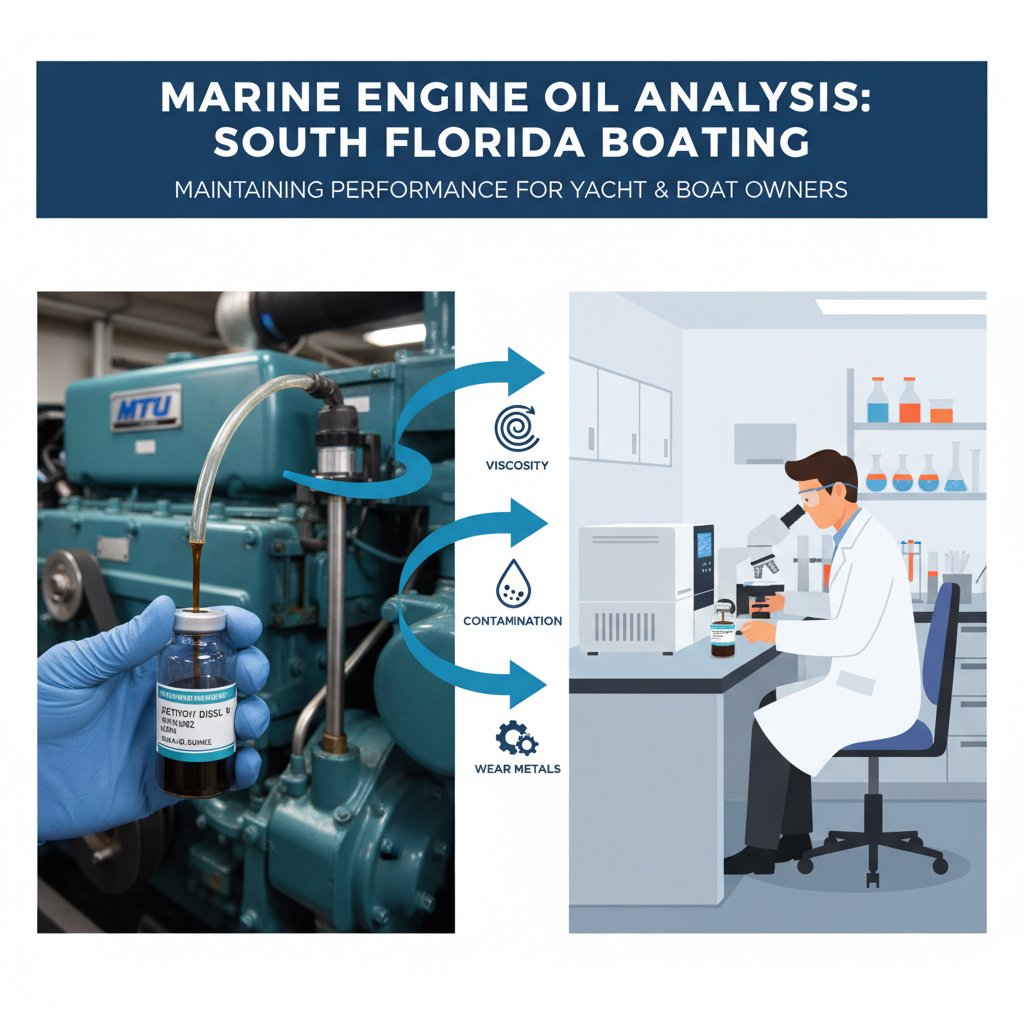
Oil analysis goes far beyond simply checking if your oil looks dirty. Laboratory testing measures dozens of parameters that reveal your engine’s internal condition. When you send a properly collected oil sample to a qualified laboratory, technicians examine three critical categories of information.
Wear metals analysis identifies microscopic particles of iron, copper, aluminum, chromium, and other metals that indicate component wear. Each metal corresponds to specific engine parts. Elevated iron levels might suggest cylinder liner wear, while increased copper could point to bearing problems. Aluminum particles often indicate piston wear, and chromium typically comes from piston rings.
Contamination testing detects foreign materials that shouldn’t be in your oil. Water intrusion, fuel dilution, coolant contamination, and dirt ingestion all leave distinct chemical signatures. These contaminants accelerate wear and can cause rapid engine deterioration if not addressed promptly.
Oil condition assessment measures the oil’s remaining useful life by analyzing viscosity, oxidation levels, additive depletion, and total acid number (TAN). Even if wear metals look acceptable, degraded oil fails to protect your engine properly.
The Economics of Predictive Maintenance
A comprehensive oil analysis typically costs between $35 and $60 per sample. Compare this modest investment to the cost of replacing a destroyed turbocharger ($8,000-$25,000), rebuilding cylinder heads ($15,000-$40,000), or conducting a complete engine overhaul ($50,000-$200,000+ depending on engine size).
Oil analysis doesn’t just prevent catastrophic failures. It optimizes your entire yacht engine maintenance schedule by providing data-driven decisions rather than guesswork. Instead of changing oil based solely on hours or calendar intervals, you can extend or shorten intervals based on actual oil condition and your specific operating profile.
For commercial operators running multiple vessels, oil analysis programs have demonstrated 25-40% reductions in unscheduled maintenance events. The data allows you to plan maintenance during convenient periods rather than responding to emergencies that always seem to happen at the worst possible moment.
Establishing Your Oil Analysis Program
Successful oil analysis requires consistency and proper technique. Random, sporadic sampling provides minimal value. A structured program comparing results over time reveals trends that single samples cannot.
Selecting the Right Laboratory
Choose laboratories specializing in marine diesel applications rather than automotive facilities. Marine engines operate under different conditions—continuous high loads, marine environment exposure, and extended run times—that require specialized interpretation. Many engine manufacturers, including Detroit Diesel and MTU, recommend specific laboratories familiar with their equipment.
Quality laboratories should offer spectrometric analysis for wear metals, Karl Fischer testing for water content, infrared spectroscopy for contamination and oxidation, and viscosity measurement. Basic test packages missing any of these elements provide incomplete information.
Proper Sample Collection Technique
Sample quality determines result accuracy. Always collect samples when oil is warm and thoroughly mixed—ideally mid-way through operation or immediately after shutdown. Cold oil allows particles to settle, producing samples that don’t represent actual conditions.
Extract samples from the same location every time, preferably from the engine’s pressurized oil system using a sample valve if installed. Many factory-authorized service providers install sampling valves during routine marine diesel engine service for this exact purpose. If using a vacuum pump to extract samples through the dipstick tube, ensure the pump and tubing are clean to prevent contamination.
Label each sample with complete information: vessel name, engine identification, oil brand and grade, hours on current oil, total engine hours, and sampling date. Incomplete information makes trend analysis impossible and reduces the laboratory’s ability to provide meaningful interpretation.
Interpreting Results and Taking Action
Understanding your oil analysis report requires context. Absolute numbers matter less than trends and rates of change. An iron reading of 25 parts per million might be perfectly normal for a well-maintained engine or dangerously high for another, depending on engine type, hours, and historical patterns.
Critical Warning Signs
Certain findings demand immediate attention regardless of trends. Water content exceeding 0.5% indicates serious contamination requiring urgent investigation. Fuel dilution above 2-3% suggests injector leakage, worn rings, or other fuel system problems that will rapidly destroy your engine if ignored.
Coolant contamination, identified by elevated sodium, potassium, or glycol levels, points to head gasket failure, liner problems, or oil cooler leaks. Continuing to operate with coolant in your oil causes bearing failure and accelerated wear throughout the engine.
Sharp increases in wear metals—doubling or tripling between consecutive samples—indicate accelerating wear that won’t stop without intervention. This situation requires immediate professional diagnosis from factory-authorized technicians familiar with Detroit Diesel marine service, MTU marine engine service, or whatever equipment you’re operating.
Trending Analysis
Gradual increases in wear metals over many samples often represent normal aging. Engines don’t remain static; all mechanical components experience some wear. The key question is whether wear rates remain acceptable or indicate developing problems.
Quality laboratories provide trending graphs comparing your current sample against previous results. Watch for changes in the rate of increase rather than absolute values. An engine showing steady 2-3 ppm increases in iron over multiple samples, then suddenly jumping 15 ppm, is telling you something changed.
Integration with Comprehensive Maintenance Programs
Oil analysis complements but doesn’t replace comprehensive marine engine preventive maintenance programs. It provides internal engine visibility that external inspections cannot, but external issues like cooling system deterioration, fuel system problems, or exhaust component failure require different diagnostic approaches.
Coordinate oil sampling with your scheduled marine diesel oil change intervals. Most experts recommend sampling every 100-250 operating hours for recreational vessels and every 50-100 hours for commercial applications or severe-duty operations. Generators often benefit from more frequent analysis due to varying load conditions.
When analysis reveals developing problems, consult factory-authorized service providers rather than attempting diagnosis yourself. Modern marine diesels contain sophisticated fuel injection systems, turbochargers, and emissions controls requiring specialized diagnostic equipment and technical training. What appears to be a simple bearing wear problem might actually stem from injection timing issues, inadequate cooling, or fuel quality problems that surface-level troubleshooting won’t identify.
Oil Analysis for Different Equipment Types
Main propulsion engines, generators, and auxiliary equipment each present unique analysis considerations. Main engines operating at relatively constant RPM under steady loads produce more consistent wear patterns than generators cycling between loads or operating at light duty for extended periods.
Northern Lights, Kohler, and Westerbeke generators often show different wear characteristics than propulsion engines despite similar fundamental design. Generator sets may experience more fuel dilution from light-load operation and different thermal cycling patterns. Establishing separate baseline trends for each piece of equipment provides more accurate problem detection.
For vessels with multiple engines, analyze each engine separately. Identical engines operating under similar conditions should produce similar results. When one engine’s analysis diverges from its siblings, you’ve identified a problem before it becomes obvious through performance degradation or failure.
Advanced Analysis Techniques
Standard oil analysis packages provide excellent value for routine monitoring, but certain situations warrant additional testing. Particle counting determines the total quantity of particles in specific size ranges, useful for assessing filter efficiency and contamination severity.
Analytical ferrography examines wear particle size, shape, and composition under microscopy, distinguishing between normal wear particles and abnormal failure-mode debris. Large, chunky particles indicate severe wear or early failure stages that spectrometric analysis might miss.
For engines with suspected problems, these advanced techniques help pinpoint failure locations and mechanisms, guiding repair strategies and preventing unnecessary disassembly.
Building Your Historical Database
Oil analysis value compounds over time. Your first sample establishes a baseline but provides limited insight. By the fifth or sixth sample, clear trends emerge. After several years, you possess an invaluable database documenting your engine’s normal characteristics.
This historical data proves particularly valuable when selling your vessel. Documented oil analysis records demonstrating consistent monitoring and trending within normal parameters provide compelling evidence of proper care, potentially increasing resale value and buyer confidence.
Conversely, when purchasing a used vessel, requesting oil analysis history offers insight into the seller’s maintenance practices and engine condition. Absence of any analysis history or refusal to conduct pre-purchase analysis should raise concerns.
The Long-Term Perspective
Marine diesel engines properly maintained and monitored routinely exceed 40 years of service life, accumulating 20,000+ hours while maintaining reliability and performance. Oil analysis plays a crucial role in achieving this longevity by detecting and addressing problems during early stages when corrections are simple rather than waiting for expensive failures.
The minimal cost and effort of regular sampling—literally five minutes every few hundred hours—provides insurance against the cascading failures that transform minor issues into major financial disasters. A $50 oil analysis detecting bearing wear early might prevent a $75,000 engine replacement.
Professional Support and Expertise
Implementing an effective oil analysis program is straightforward, but interpreting results and making informed decisions benefits from professional expertise. Factory-authorized service providers maintain extensive databases of normal values and common problem patterns for specific engine models.
RPM Diesel’s 70 years of marine diesel experience and comprehensive work with Detroit Diesel, MTU, Northern Lights, Kohler, and Westerbeke equipment provides the interpretive expertise that transforms raw data into actionable maintenance decisions. With parts in stock and worldwide service capabilities, identifying problems early means having solutions readily available.
Don’t wait for temperature alarms, pressure warnings, or performance degradation to tell you something’s wrong. Implement oil analysis as part of your routine maintenance schedule and gain the confidence that comes from knowing your engine’s true condition. Contact factory-authorized service professionals to establish your analysis program, ensure proper sampling technique, and receive expert interpretation of your results. Your engine’s longevity and your peace of mind depend on knowing what’s happening inside before problems become failures.