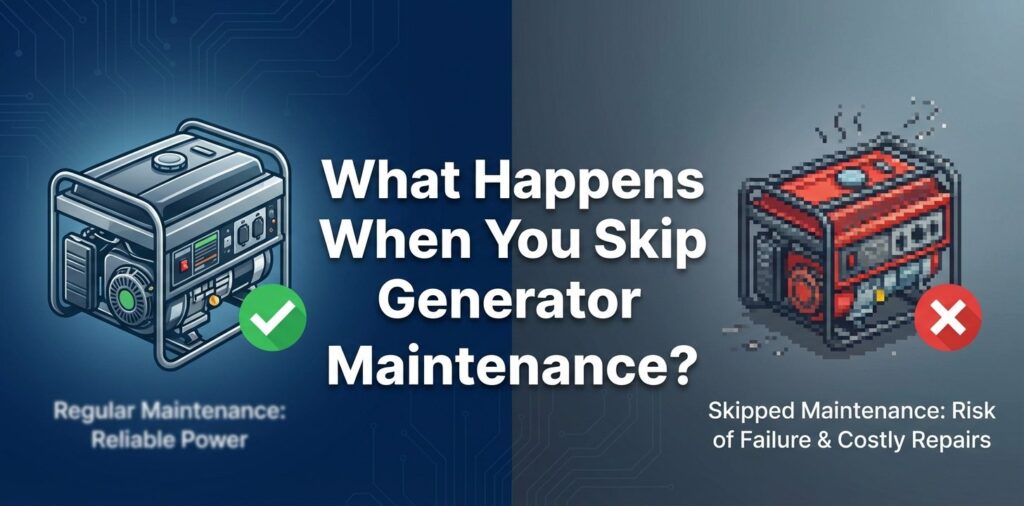
A marine generator that stops working during a weekend cruise is more than an inconvenience—it’s a safety issue that can leave you without refrigeration, air conditioning, navigation systems, and critical bilge pumps. Yet thousands of vessel owners delay or skip marine generator maintenance until something goes wrong, often turning a $500 service appointment into a $15,000 repair bill or complete unit replacement.
The reality is stark: marine generators operate in one of the harshest environments imaginable, and neglecting their maintenance schedule accelerates wear at an exponential rate. Understanding what actually happens inside your generator when maintenance lapses can mean the difference between decades of reliable service and catastrophic failure at the worst possible moment.
The Immediate Consequences of Deferred Maintenance
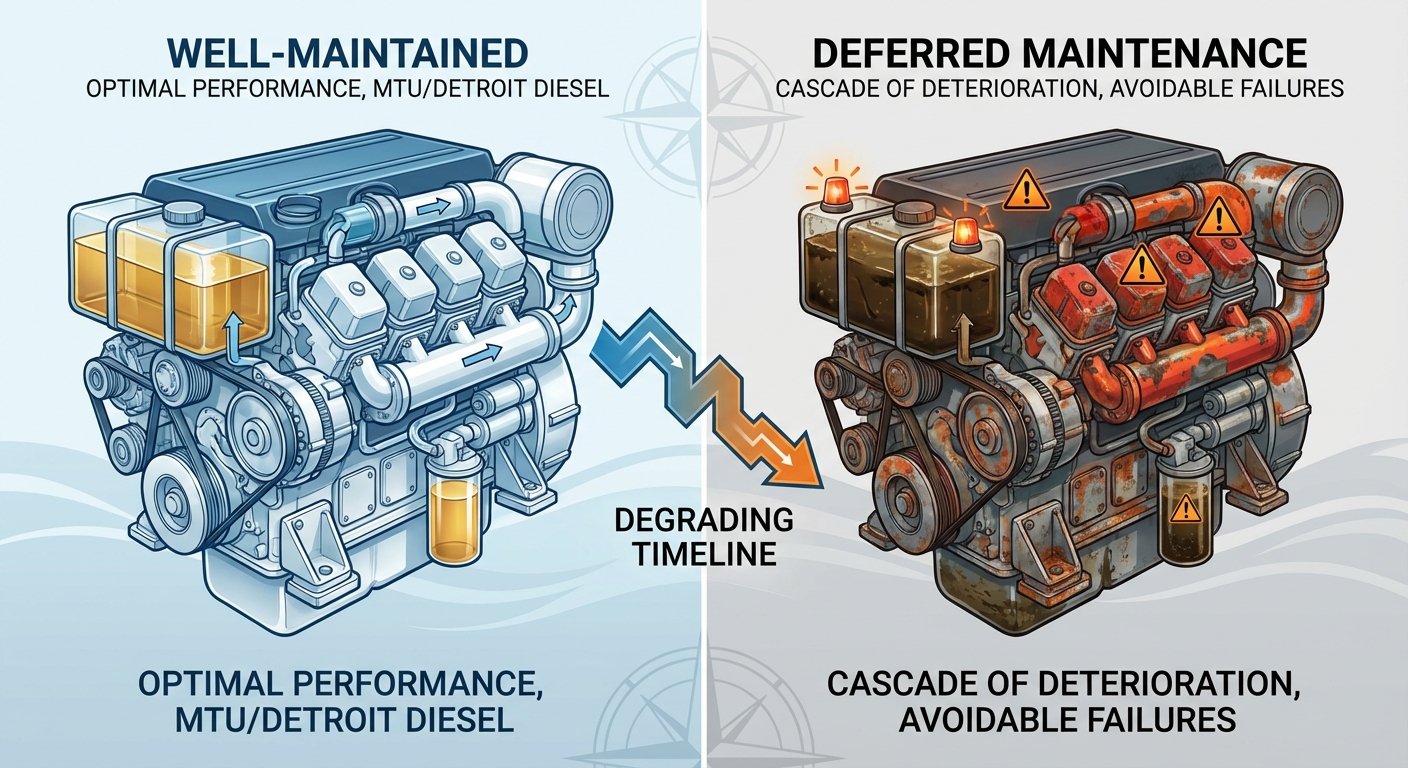
When you postpone scheduled marine generator maintenance, deterioration begins immediately, even if you don’t notice symptoms right away. The effects compound with each missed service interval, creating a cascade of problems that eventually culminate in failure.
Oil Breakdown and Contamination
Marine diesel generator oil doesn’t just lubricate—it suspends combustion byproducts, neutralizes acids, and transfers heat away from critical components. After 100-150 hours of operation (or annually, whichever comes first), oil loses its protective properties. Acid buildup from combustion begins etching bearing surfaces, while carbon particles act as abrasive compounds grinding away at cylinder walls and piston rings.
Northern Lights generators, known for their longevity when properly maintained, can suffer irreversible cylinder wear within 300 hours of operating on degraded oil. What should be a $200 oil change becomes a $8,000 cylinder rebuild because the damage occurred at the microscopic level long before any performance symptoms appeared.
Cooling System Deterioration
Raw water impellers on marine generators typically require replacement every 500-750 hours or every two years. These rubber components harden, crack, and shed pieces that circulate through your cooling system. A failed impeller doesn’t just stop cooling—it sends rubber fragments into heat exchangers, creating blockages that cause localized overheating even after impeller replacement.
Kohler marine generators equipped with heat exchangers are particularly vulnerable to this cascading failure. The generator maintenance cost of replacing an impeller is approximately $250-350 including labor. The cost of replacing a heat exchanger clogged with impeller debris? Between $2,500 and $4,500, plus downtime.
Hidden Damage You Won’t See Until It’s Too Late
The insidious nature of skipped maintenance is that generators often continue running even as internal damage accumulates. By the time symptoms become obvious, repair costs have multiplied substantially.
Fuel System Contamination
Diesel fuel degrades over time, particularly in marine environments where temperature fluctuations promote condensation in tanks. Without regular fuel filter changes (typically every 250 hours), microbial growth and water accumulation pass through to injection systems. Modern common-rail injection systems operate at pressures exceeding 25,000 PSI—contamination at these pressures destroys precision components instantly.
Westerbeke generator problems frequently stem from fuel system neglect. A complete fuel system rehabilitation including injector replacement, high-pressure pump, and fuel lines can exceed $12,000 on newer electronic-controlled models. The preventative maintenance that would have avoided this? Fuel filter changes at $150 per service interval.
Electrical System Degradation
Generator windings and electrical connections corrode in the salt-laden marine atmosphere. Regular inspection and cleaning during scheduled maintenance prevents resistance buildup that causes voltage irregularities. When electrical connections corrode, resistance creates heat, which accelerates corrosion, which increases resistance further—a destructive feedback loop.
Voltage regulation problems destroy expensive electronics aboard your vessel. A generator producing inconsistent voltage can damage navigation systems, entertainment equipment, and appliances worth tens of thousands of dollars. Factory-authorized service includes electrical system testing that identifies these problems before they damage connected equipment.
The Exponential Cost Curve of Neglect
Marine generator maintenance follows a predictable cost pattern. Regular maintenance costs remain relatively flat and predictable—typically $400-700 annually depending on generator size and hours of operation. This investment protects against the exponential cost increases that occur once maintenance lapses.
Consider a Northern Lights 8kW generator, one of the most popular sizes for 40-50 foot vessels. Annual maintenance including oil, filters, coolant testing, and inspection runs approximately $500-600. After three years of proper maintenance, you’ve invested roughly $1,800.
Now consider the same generator with zero maintenance over three years. Oil has broken down, causing bearing wear. The raw water impeller failed 18 months ago, but the generator continued running hot, warping the cylinder head. Corroded fuel injectors are leaking, contaminating the oil further. Salt corrosion on electrical connections created voltage spikes that damaged the automatic voltage regulator.
The repair estimate? New cylinder head ($3,200), injector set ($1,800), oil pan cleaning and bearing inspection ($1,400), voltage regulator ($850), complete servicing to manufacturer specifications ($600), plus labor for diagnosis and assembly. Total: $7,850, or more than four times what three years of proper maintenance would have cost—and that assumes no additional damage is discovered during teardown.
How Manufacturers Design for Maintenance
Quality marine generator manufacturers like Detroit Diesel/MTU, Northern Lights, Kohler, and Westerbeke engineer their products with scheduled maintenance as a fundamental assumption. Their published service intervals aren’t suggestions—they’re requirements for achieving the design life expectancy of 20,000+ hours.
These manufacturers conduct extensive testing to determine exactly when various components reach the end of their service life under normal operating conditions. When you skip maintenance, you’re not just ignoring a recommendation—you’re operating equipment outside its engineered parameters.
Factory-authorized service centers like RPM Diesel Engine Co., with 68 years of experience and 68,000+ parts in inventory, follow manufacturer-specific procedures that address the unique requirements of each generator model. These procedures evolve as manufacturers identify common wear patterns and issue technical service bulletins. Independent shops often lack access to these critical updates.
The 40-Year Generator vs. The 8-Year Generator
Properly maintained marine generators routinely exceed 40 years of service life. RPM Diesel regularly services Northern Lights and Westerbeke units from the 1980s that continue providing reliable power because their owners followed maintenance schedules without exception.
Conversely, neglected generators rarely make it past 8-10 years before requiring replacement. The difference isn’t in the quality of the generator—it’s entirely about maintenance consistency. A $15,000 generator that lasts 40 years costs $375 per year. The same generator replaced every 8 years due to neglect costs $1,875 annually—five times as much, not including the higher repair costs experienced throughout its shortened lifespan.
Warning Signs That Damage Has Already Begun
If you’ve been delaying marine generator maintenance, certain symptoms indicate internal damage has already started:
- Excessive exhaust smoke: Blue smoke indicates oil burning (worn rings/cylinders), black smoke suggests fuel system problems
- Oil consumption: Adding oil between changes means combustion gases are bypassing worn piston rings
- Hard starting: Often indicates compression loss from valve or ring wear, or fuel system contamination
- Rough running: Misfiring can stem from injector fouling, valve problems, or carbon buildup
- Overheating: Points to cooling system failure, possibly with secondary damage already occurring
- Voltage fluctuations: Suggests electrical system corrosion or failing regulation components
- Unusual noises: Knocking or rattling indicates bearing wear or loose components from vibration
Any of these symptoms requires immediate professional diagnosis. Continuing to operate a generator showing these signs accelerates damage and increases repair costs substantially. Factory-authorized technicians can assess whether damage is still repairable or has progressed to the point where replacement is more economical.
The True Cost of Generator Maintenance
When vessel owners say generator maintenance costs too much, they’re typically comparing the wrong numbers. They’re comparing the cost of service against not spending money, rather than comparing scheduled maintenance against eventual repair or replacement costs.
Annual Kohler marine generator maintenance averages $500-650 for typical recreational use. Over a 40-year lifespan, that’s $20,000-26,000 in maintenance. A single generator replacement costs $15,000-25,000 installed. If neglect forces you to replace your generator even once during that 40-year period, you’ve spent more than if you’d maintained it properly—and you’ve experienced the inconvenience and risk of failure.
This calculation doesn’t include the secondary costs: ruined provisions when refrigeration fails, hotel costs when air conditioning stops working in summer heat, towing fees if navigation systems lose power, or the safety implications of losing power in challenging conditions.
Taking Action Before Problems Escalate
If your marine generator maintenance has lapsed, the best time to address it is immediately. Every hour of operation on missed maintenance accelerates wear. Even if you’ve exceeded service intervals significantly, professional inspection can identify what damage has occurred and what can still be prevented.
Factory-authorized service providers maintain detailed service histories that help predict which components may need attention based on your specific operating patterns. This institutional knowledge, combined with access to OEM parts and manufacturer technical support, provides the best possible outcome when addressing deferred maintenance.
RPM Diesel’s worldwide service capabilities mean you’re not alone if problems occur during extended cruising. With comprehensive support infrastructure and expedited parts availability, even serious issues can be resolved quickly when you’ve established a relationship with a qualified service provider.
Protect Your Investment With Professional Service
Your marine generator represents a significant investment in your vessel’s capability and your safety on the water. Protecting that investment requires following manufacturer-specified maintenance intervals without exception. The cost of proper maintenance is modest compared to repair or replacement expenses, and the reliability difference is substantial.
Don’t wait for symptoms to appear—by then, damage has already begun. Schedule your marine generator maintenance with factory-authorized technicians who understand the specific requirements of Northern Lights, Kohler, Westerbeke, and Detroit Diesel/MTU equipment. Contact RPM Diesel Engine Co. at (954) 781-3464 to establish a maintenance schedule that will keep your generator running reliably for decades to come.