A commercial fishing vessel limped into port last month after experiencing sudden power loss twelve miles offshore. The diagnosis? Fuel injectors that hadn’t been serviced in over 3,000 hours. What should have been routine maintenance became an expensive emergency repair with lost operating time. This scenario plays out more often than most vessel owners realize, yet the warning signs were present for weeks before the breakdown.
Marine diesel fuel injection systems operate under extreme conditions—high pressures exceeding 30,000 PSI in modern common rail systems, constant exposure to marine environments, and fuel quality variations that would never be tolerated in highway applications. Understanding the early symptoms of fuel injector problems can mean the difference between scheduled maintenance and catastrophic failure.
How Marine Fuel Injection Systems Work
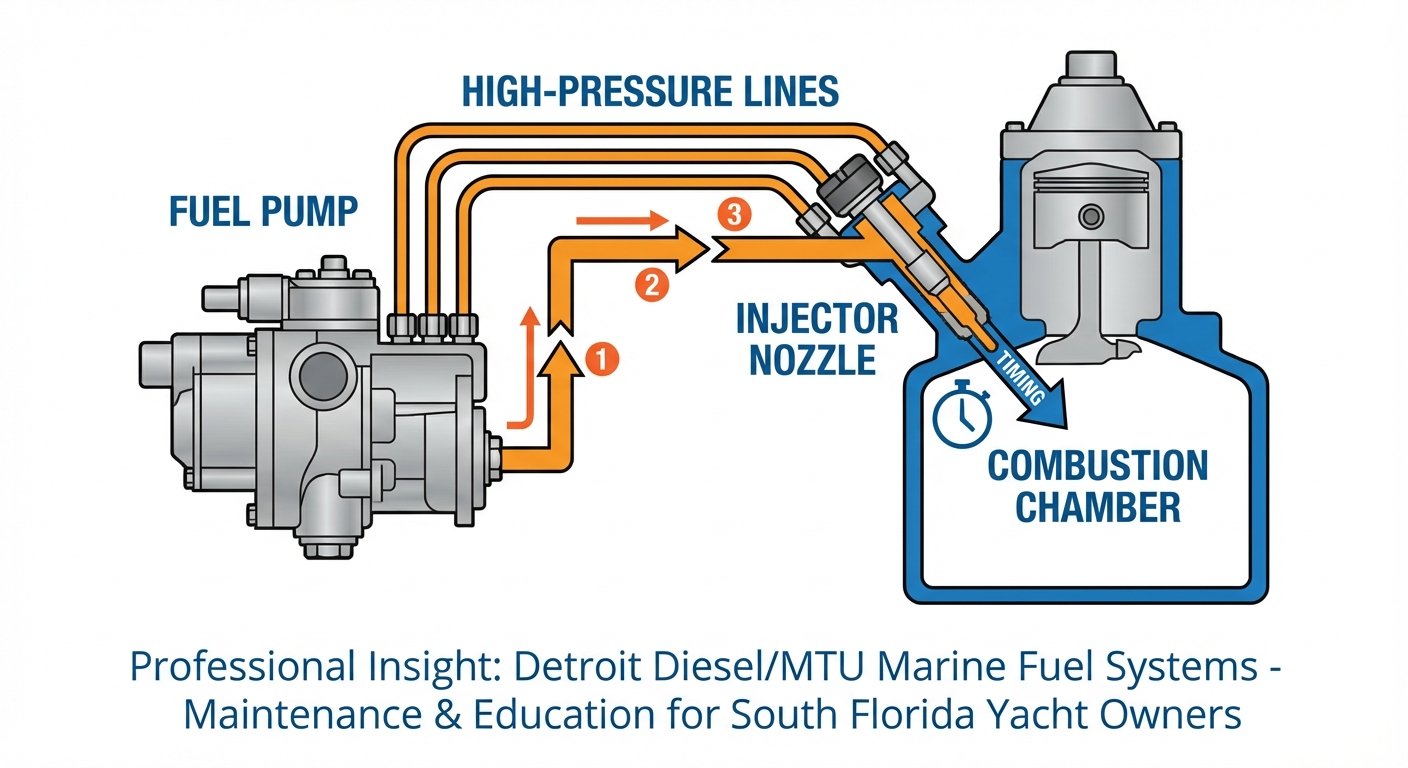
Before identifying problems, understanding the basics helps vessel owners recognize what’s actually failing. Marine diesel fuel injection systems have evolved significantly, but their core function remains unchanged: deliver precisely metered fuel at the exact moment and pressure required for complete combustion.
Modern systems from Detroit Diesel/MTU, Northern Lights, Kohler, and Westerbeke use electronic controls that monitor dozens of parameters hundreds of times per second. These systems adjust injection timing, duration, and pressure based on load, RPM, temperature, and other factors. When injectors begin failing, these sophisticated control systems can sometimes compensate temporarily—masking problems until they become severe.
The injector itself contains precision-machined components with tolerances measured in microns. The needle valve opens and closes with extraordinary speed and accuracy, while the nozzle spray pattern must atomize fuel into a fine mist for efficient combustion. Any deviation from manufacturer specifications affects performance, fuel economy, and emissions.
Primary Symptoms of Fuel Injector Failure
Rough Idling and Inconsistent RPM
One of the earliest indicators of injector problems appears at idle. A healthy diesel engine maintains steady RPM with minimal vibration. When injectors start failing, you’ll notice the engine hunting—RPM rising and falling without throttle input. This occurs because one or more cylinders aren’t receiving consistent fuel delivery.
On multi-engine vessels, compare the idle quality between engines. If one runs noticeably rougher despite similar operating hours and maintenance, suspect fuel injection issues. Document the behavior with video on your phone; this information helps technicians during marine fuel system diagnostics.
Increased Fuel Consumption
Veteran captains know their vessel’s fuel burn rates intimately. A sudden increase in consumption—even 10-15%—often points to fuel injection problems before other symptoms appear. Failed injectors either deliver too much fuel or atomize it poorly, resulting in incomplete combustion and wasted diesel.
Track fuel consumption against engine hours and operating conditions. Modern vessel monitoring systems make this easier, but even a simple logbook reveals trends. When a Detroit Diesel that normally burns 12 gallons per hour suddenly jumps to 14 GPH under identical conditions, schedule diesel fuel injection troubleshooting immediately.
Black or Gray Exhaust Smoke
Exhaust smoke color provides direct insight into combustion quality. Black smoke indicates unburned fuel—classic evidence of injector problems. The injector either delivers excessive fuel, atomizes poorly, or has incorrect spray pattern geometry.
Gray or blue-gray smoke suggests oil consumption, which can result from prolonged injector problems. When injectors spray incorrectly, excessive cylinder pressures and temperatures damage piston rings and cylinder walls. What started as a fuel injection issue becomes a major engine overhaul.
Some smoke during initial startup is normal, particularly in cooler weather. The concern arises when smoke persists after the engine reaches operating temperature or appears suddenly when it never existed before.
Hard Starting or Extended Cranking
Diesel engines require proper compression, adequate air, and correctly timed fuel injection to start. If your Northern Lights or Kohler generator suddenly requires extended cranking when it previously fired immediately, suspect fuel delivery issues.
Hard starting can indicate multiple problems, but when combined with other symptoms on this list, injectors move to the top of the diagnostic list. Worn injector nozzles may not seal properly, allowing fuel to dribble into cylinders rather than atomizing correctly. This creates hard starting, rough running, and carbon buildup that accelerates wear.
Power Loss Under Load
Nothing reveals injector problems like placing demands on the engine. A vessel that planes smoothly one week but struggles the next likely has developing fuel injection issues. The engine may reach maximum RPM without delivering expected performance, or it may fall short of rated RPM entirely.
Power loss often appears gradually. Operators adapt unconsciously, adding slightly more throttle to maintain cruising speed. By the time they notice something’s wrong, performance has degraded significantly. This is particularly dangerous when maneuvering in tight quarters or heavy weather when full power may be needed instantly.
Engine Knocking or Unusual Noises
Diesel knock occurs when fuel ignites too early or too abruptly. While some combustion noise is normal in diesels, a sharp metallic knocking that worsens under load often indicates injection timing problems or poor fuel atomization.
Faulty injectors can cause detonation—an uncontrolled explosion rather than smooth combustion. This generates tremendous stress on pistons, connecting rods, and crankshafts. Continued operation with severe knocking can destroy engines worth tens of thousands of dollars.
Advanced Symptoms Requiring Immediate Attention
Cylinder Washdown
When injectors leak or spray improperly, raw fuel washes oil from cylinder walls. This removes the protective lubricant film, causing accelerated wear and potential seizure. Operators may notice oil that appears thin or smells strongly of diesel during routine checks.
Cylinder washdown is particularly insidious because it rarely produces dramatic symptoms until catastrophic damage occurs. Regular oil analysis—a service RPM Diesel has provided for 68 years—detects fuel contamination before it destroys engines.
Excessive Crankcase Pressure
Blowby from poorly sealing injectors or combustion problems caused by injection faults increases crankcase pressure. You might notice oil leaking from seals that were previously fine, or oil mist accumulating in the engine room. Check the crankcase ventilation system; excessive discharge indicates internal problems.
Check Engine Lights and Fault Codes
Modern electronic engines monitor fuel injection performance continuously. MTU systems, for example, track injection duration, rail pressure, and individual cylinder contribution. When parameters fall outside specifications, the system logs fault codes.
Never ignore check engine lights. Even if the engine seems to run acceptably, logged codes provide early warning of developing problems. Factory-authorized service centers have the diagnostic tools and software to interpret these codes correctly and perform boat fuel injector service according to manufacturer specifications.
Common Causes of Injector Failure
Understanding why injectors fail helps prevent problems. Contaminated fuel tops the list—water, particulates, biological growth, and chemical contaminants damage precision components. Marine environments make fuel quality control challenging, but proper filtration and fuel polishing are essential.
Extended service intervals contribute to many failures. Manufacturers specify maintenance schedules based on extensive testing. A Westerbeke generator rated for 500-hour oil changes includes fuel system inspection at those intervals for good reason. Extending maintenance “just a little longer” allows small problems to become major failures.
Fuel quality varies significantly by region and supplier. Low-sulfur diesel fuels, while environmentally beneficial, provide less lubrication than older formulations. Injectors designed for higher-sulfur fuel may experience accelerated wear without proper fuel additives.
The Importance of Professional Diagnosis
Modern marine diesel fuel injection repair requires sophisticated equipment and factory training. Injector pop testers, flow benches, electronic diagnostic tools, and access to manufacturer technical bulletins are essential for accurate diagnosis. Guessing wastes money replacing components that aren’t actually failing.
RPM Diesel maintains a 68,000+ parts inventory specifically because accurate diagnosis often reveals multiple components requiring attention. An injector may have failed due to contaminated fuel, but that same contamination likely damaged fuel pumps, filters, and other injectors. Comprehensive marine fuel system diagnostics identify all affected components, preventing repeat failures.
Factory-authorized service means technicians trained directly by Detroit Diesel, MTU, Northern Lights, Kohler, and Westerbeke. They understand the specific characteristics of each engine family and have access to technical support when unusual problems arise. This expertise matters when diagnosing intermittent issues or symptoms that could indicate multiple problems.
Preventative Maintenance Best Practices
Preventing injector problems costs far less than repairing failures. Start with fuel quality—use reputable suppliers, maintain fuel polishing systems, and test fuel regularly for water and contamination. Install and maintain high-quality fuel filters, changing them at manufacturer-specified intervals regardless of appearance.
Follow maintenance schedules religiously. A properly maintained marine diesel engine easily achieves 40+ years of reliable service, but only if manufacturers’ recommendations are followed. Yacht fuel injection cleaning should be performed at specified intervals, not when problems appear.
Keep detailed maintenance logs. Document fuel consumption, operating hours, oil consumption, and any unusual behavior. These records help technicians identify developing trends and provide valuable information when warranty claims or insurance issues arise.
Consider extending your relationship with a factory-authorized service provider beyond emergency repairs. Scheduled inspections catch problems early, often during convenient haul-outs or scheduled downtime rather than in the middle of a charter season or long voyage.
When to Call for Professional Service
Any symptom listed above warrants professional evaluation. Don’t wait for multiple symptoms or dramatic failures. Early intervention prevents minor issues from becoming major expenses.
Schedule service before critical operations—departing for the Bahamas, beginning charter season, or long passages. Discovering injector problems at the dock beats finding them 50 miles offshore.
If fault codes appear, even without obvious symptoms, have them diagnosed promptly. Electronic systems detect problems before human operators notice, providing an early-warning system that shouldn’t be ignored.
Protect Your Investment with Expert Care
Marine diesel fuel injection systems represent sophisticated engineering operating in demanding conditions. Recognizing symptoms early and responding with professional service protects your vessel and ensures reliable operation when you need it most.
RPM Diesel has provided factory-authorized service for 68 years, combining deep technical expertise with comprehensive parts inventory and worldwide service capabilities. Whether you’re dealing with a Detroit Diesel main engine, MTU high-performance power, or a Northern Lights generator, our technicians understand the specific requirements of your equipment.
Don’t wait for complete failure. Contact RPM Diesel at the first sign of fuel injection problems. Schedule a comprehensive diagnostic evaluation and protect your investment with service from technicians who understand that properly maintained marine diesels deliver decades of reliable performance. Your vessel deserves nothing less than factory-authorized expertise and genuine OEM parts.