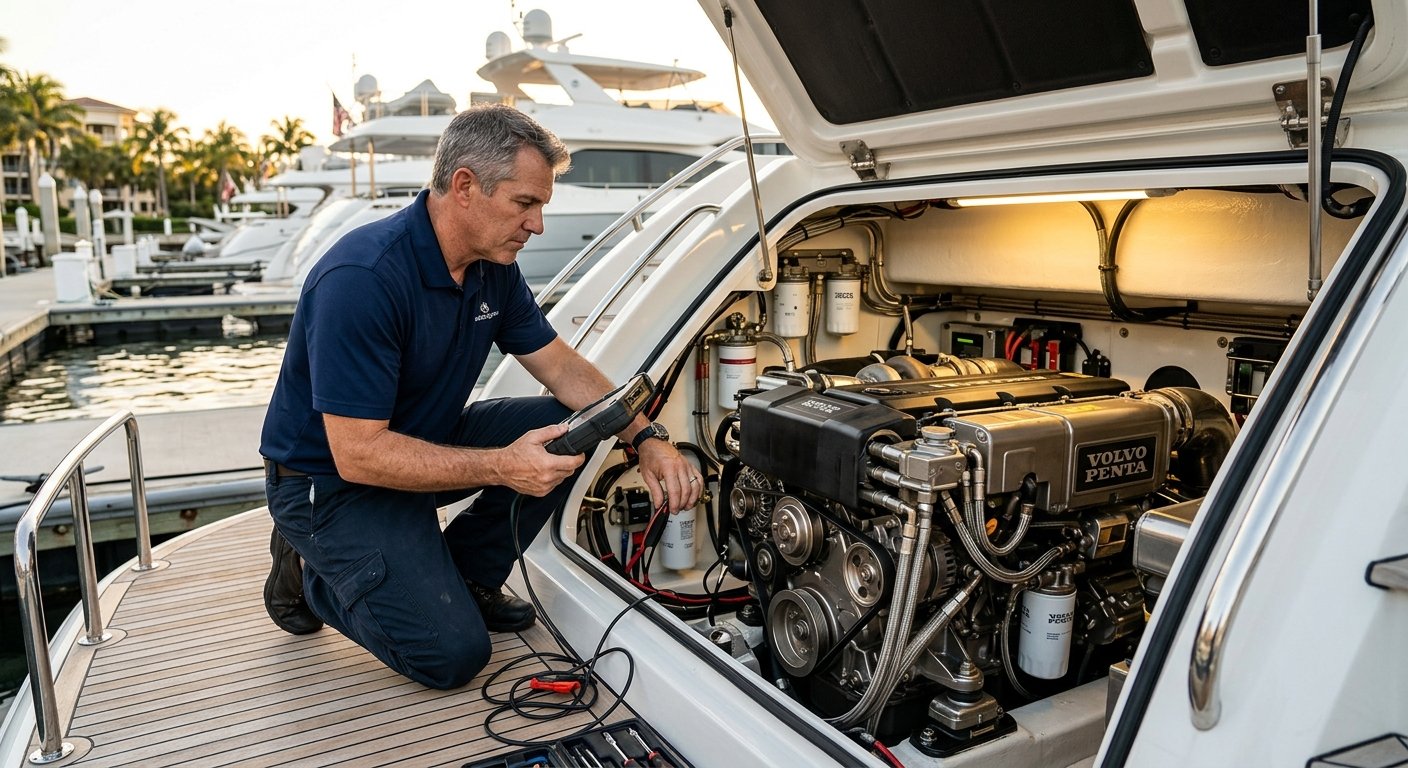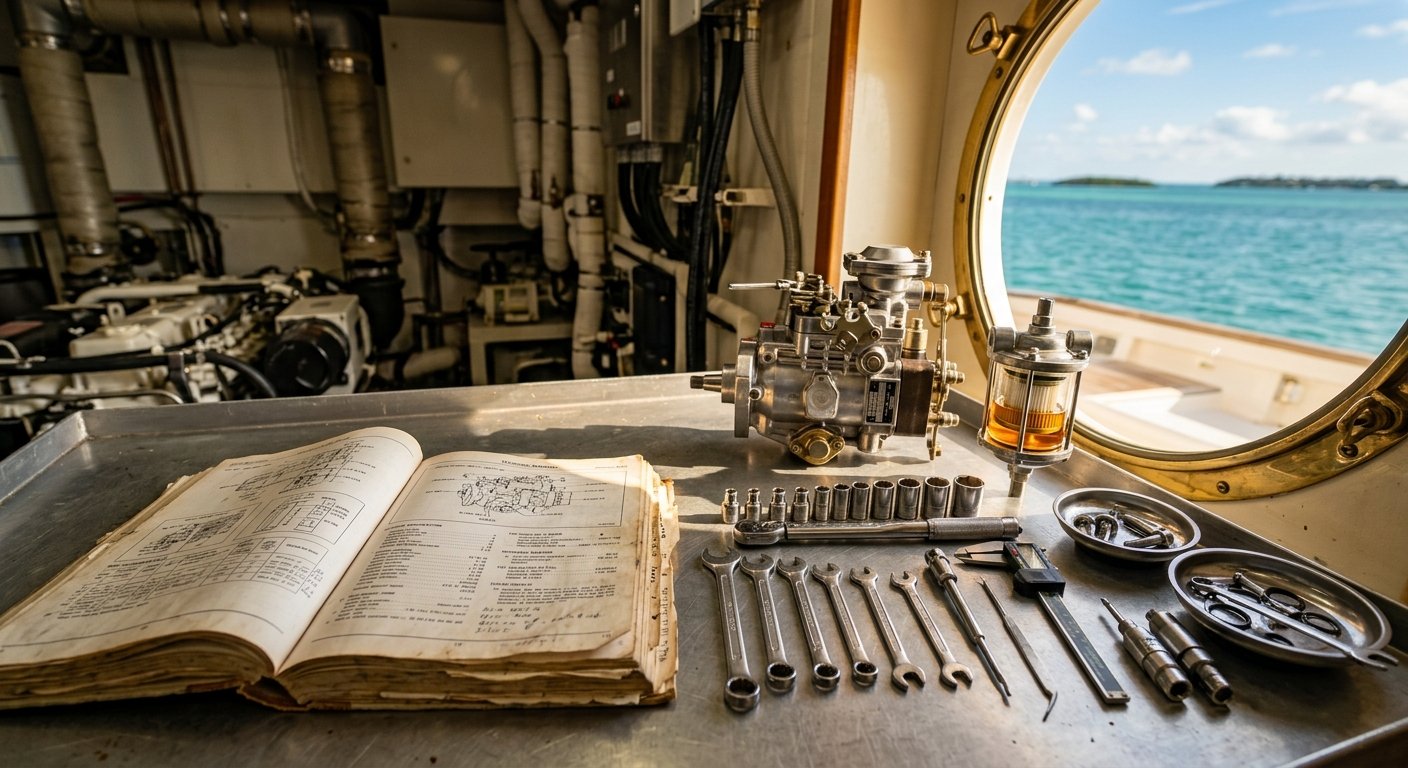
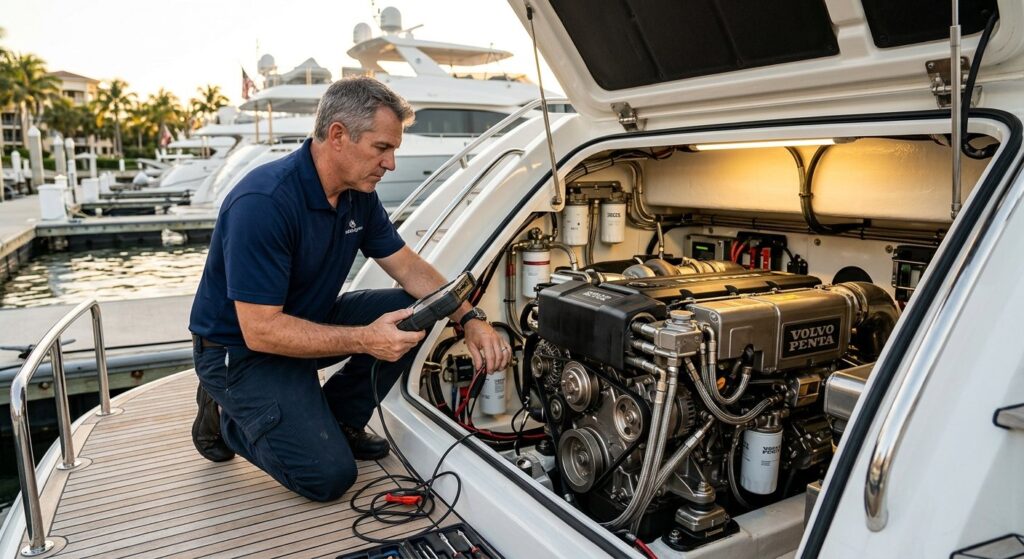
When a marine generator refuses to start, the cause is almost always one of a handful of well-known culprits: fuel delivery problems, a discharged or failing starting battery, a tripped safety shutdown, or an electrical fault in the control circuit. Identifying which one is causing the problem requires a systematic approach — not guesswork — and for diesel gensets, that diagnosis is best performed by a factory-authorized technician using the correct service procedures.
- Most no-start conditions trace back to fuel, battery, safety interlocks, or control wiring — in that order.
- Northern Lights, Kohler, and Westerbeke generators each have brand-specific shutdown logic that affects diagnosis.
- Skipping proper diagnosis and using non-OEM parts are the fastest ways to turn a minor fault into a major repair.
- Factory-authorized service ensures safety system resets and fuel system work meet manufacturer specifications.
- Preventative maintenance schedules are the most effective way to avoid unexpected no-start failures offshore.
Why Systematic Diagnosis Matters Before Touching Anything
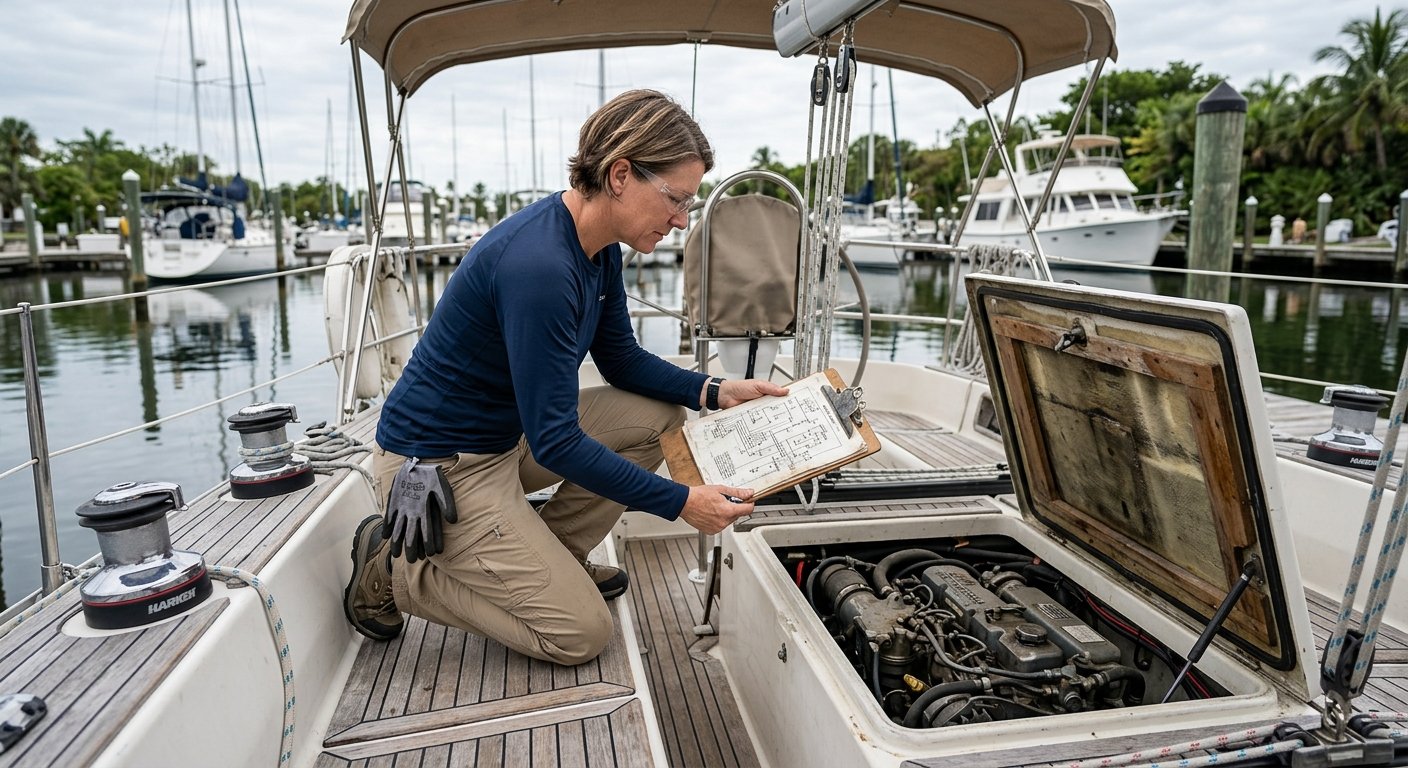
A marine generator is not a simple engine. It is a precision power system with multiple interlocked safety shutdowns designed to protect the vessel and everyone aboard. The American Boat and Yacht Council (ABYC) publishes electrical and mechanical standards specifically for marine power systems, and those standards exist for good reason — an incorrect diagnosis or an improper repair on a marine genset can create fuel leaks, electrical faults, or carbon monoxide hazards.
Before assuming the worst, work through the most common causes methodically. Each generator platform — whether it is a Northern Lights, a Kohler marine unit, or a Westerbeke — has its own control architecture, and understanding the differences matters during diagnosis.
The Most Common Reasons a Marine Generator Won’t Start
1. Fuel Supply Problems
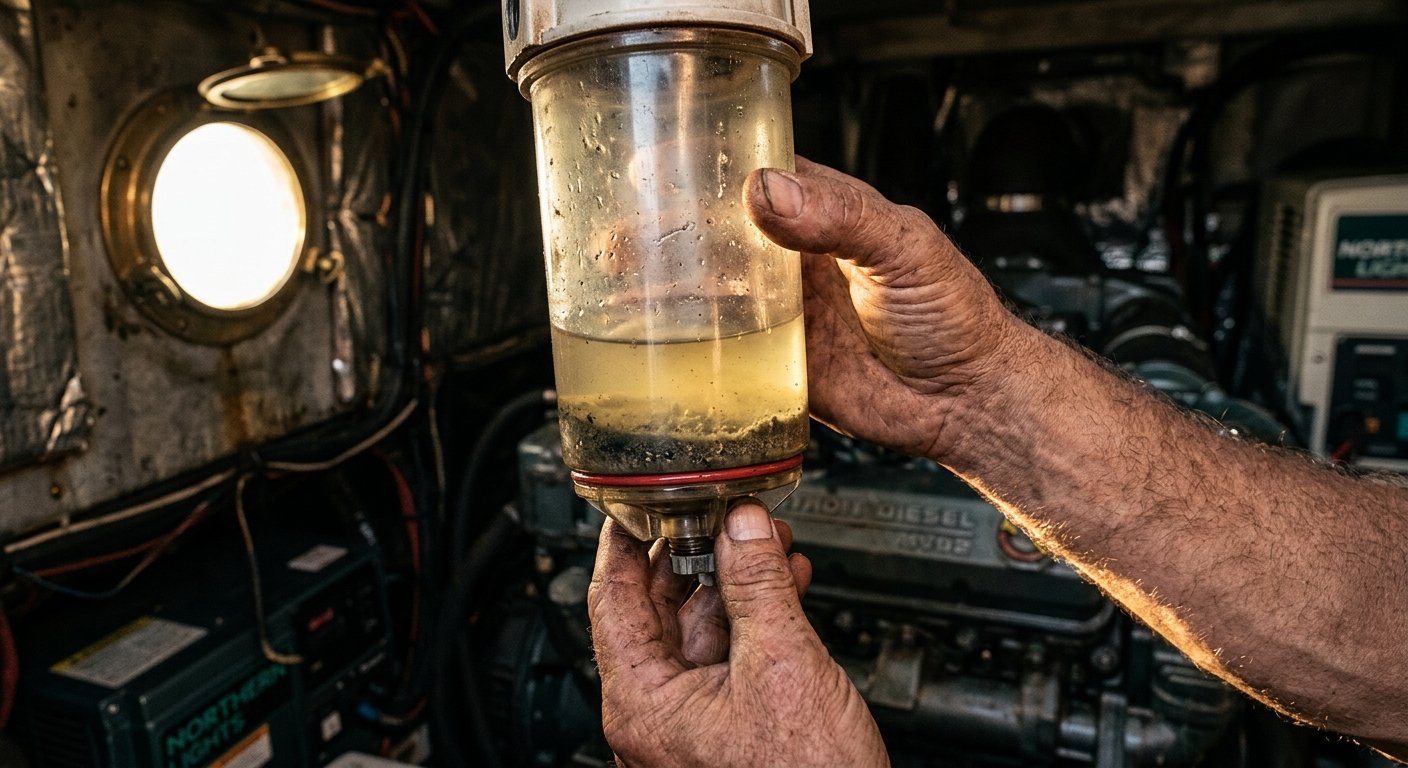
Fuel starvation is the single most frequent cause of a marine genset that cranks but will not fire. On vessels with multiple engines sharing a common tank, the generator feed line and its dedicated Racor filter assembly are often the first to see contaminated fuel, water ingress, or a clogged primary element. A cloudy or water-laden filter bowl is a clear indicator that the fuel system needs attention before any further diagnosis proceeds.
Air in the fuel line — commonly introduced after a filter change or a tank that was run too low — will also prevent startup. Some generator models will self-bleed after a few crank cycles; others require manual priming at the injection pump. Always consult the OEM service manual for the correct bleed procedure for your specific unit.
Never run a diesel generator with a suspected fuel leak or a fuel system that has been opened without proper bleeding. Starting a genset with air-locked injectors can cause hard starting, white smoke, and long-term damage to injection components.
2. Battery and Starting Circuit Failures
A generator starting battery that reads 12 volts at rest but drops below 9.6 volts under load during cranking does not have sufficient capacity to engage the starter motor reliably. Marine generator batteries are frequently neglected because the house bank and engine starting batteries receive more attention. A dedicated load test — not just a resting voltage check — is the only reliable way to assess battery health.
Beyond the battery itself, inspect the starter solenoid, battery cables, and ground connections. Saltwater environments accelerate terminal corrosion, and a high-resistance connection can mimic a dead battery while leaving the battery itself in perfectly serviceable condition. Clean, tight, properly sized connections throughout the starting circuit are a non-negotiable maintenance item.
3. Safety Shutdown Interlocks
Modern marine generators are equipped with a network of shutdown sensors designed to prevent operation when conditions are unsafe. Common interlocks include:
- Low oil pressure shutdown — the generator will not start if oil pressure is not sensed within a few seconds of cranking
- High coolant temperature — a stuck thermostat or blocked raw water strainer can leave residual heat that triggers a shutdown before the unit ever fires
- Raw water flow switch — if the impeller has failed or the seacock is closed, the water temperature protection system will prevent startup
- Low coolant level sensor — present on many Northern Lights and Kohler units
- Generator AC output fault — some control boards require a clean no-load condition before allowing a restart after a previous fault
Resetting a tripped interlock without understanding why it tripped is a mistake. A proper marine diesel generator repair evaluation identifies the root cause of any safety system activation before the unit is returned to service.
4. Control Board and Electrical Faults
The electronic control module (ECM) or control board governs start sequencing, shutdown logic, and fault code storage on most current generator platforms. A failed board, a blown fuse on the control circuit, or a corroded connector in the harness can all produce a no-start condition that has nothing to do with the engine itself. Factory-authorized technicians have access to the brand-specific diagnostic software and wiring diagrams needed to trace these faults accurately — an important advantage when the alternative is replacing expensive components by guesswork.
A no-start condition diagnosed incorrectly costs far more to fix than the same fault found right the first time.
5. Mechanical Issues Requiring Professional Assessment
If the generator does not crank at all and the starting circuit checks out, or if it cranks freely with no compression, the fault has moved into mechanical territory. Seized injectors, a hydrolocked cylinder from raw water ingress through the exhaust, or a failed injection pump all require professional marine diesel expertise and OEM components to repair correctly. Our marine diesel engine repair team handles these more complex mechanical failures with the proper tools and factory-specification procedures.
Raw water ingress through an exhaust system that is not equipped with a proper anti-siphon loop is one of the most destructive — and entirely preventable — failure modes on a marine generator. If your vessel does not have this protection, it is worth addressing immediately.
Brand-Specific Considerations for Common Generator Platforms
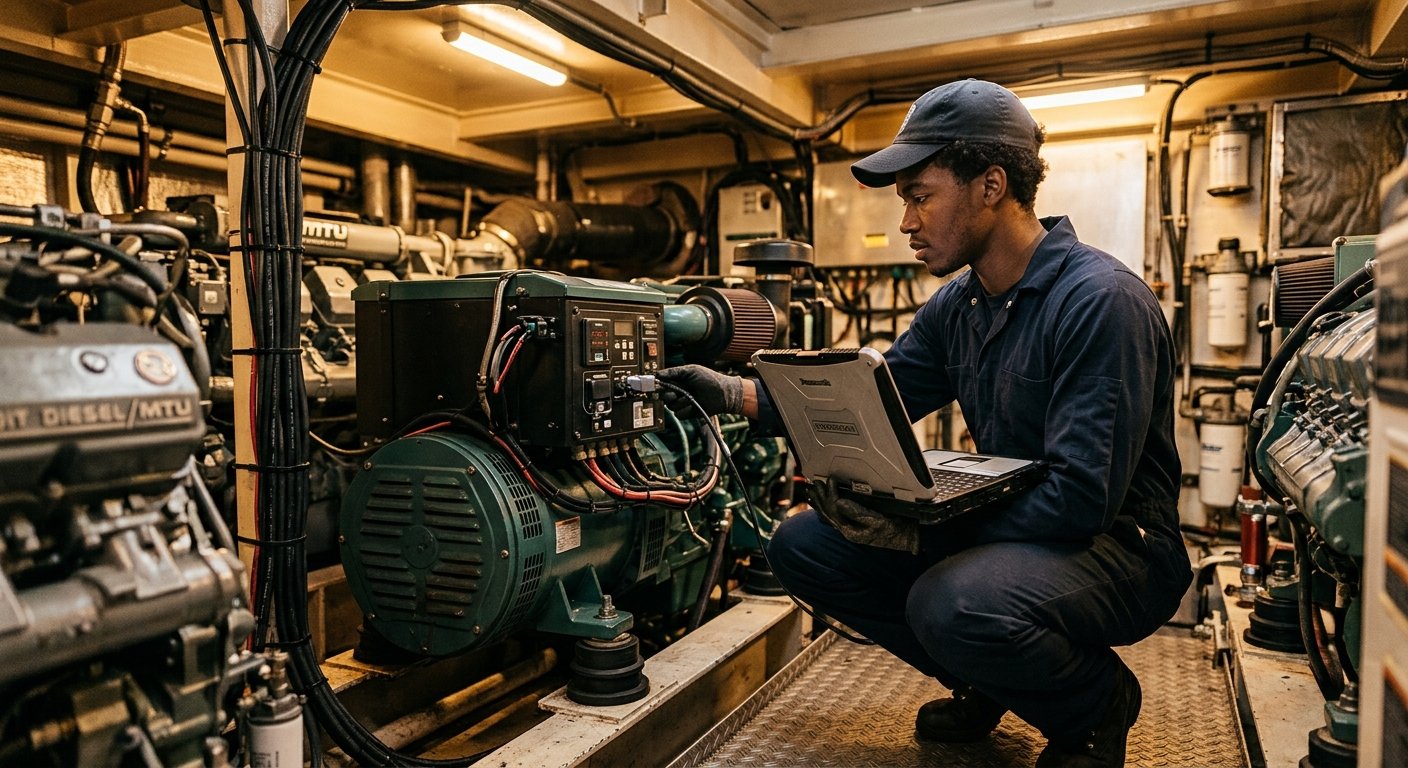
Not every generator platform behaves the same way during a fault condition, and that matters during diagnosis.
Northern Lights generators are known for robust construction, but their control systems store fault codes that require brand-specific software to retrieve and clear properly. Attempting a northern lights generator repair without access to those diagnostic tools means working blind.
Kohler marine generators use the Decision-Maker control system on many current models. This platform provides detailed fault indication, but interpreting those codes correctly and performing kohler marine generator service within factory parameters requires authorization and the current service documentation.
Westerbeke generators often share mechanical architecture with their propulsion engine counterparts, but the generating set governor and voltage regulator introduce additional diagnostic layers. Westerbeke generator repair should always include a review of both the engine-side and the electrical generation side of the system.
For any of these platforms, marine diesel engine service performed by a factory-authorized provider ensures that OEM parts, correct specifications, and proper warranty procedures are maintained throughout the repair.
Check the basics first
Confirm the seacock is open, the raw water strainer is clear, and there are no active fault lights or alarm codes on the control panel before proceeding.
Evaluate the fuel system
Inspect the primary Racor filter element and bowl, check for water contamination, and verify fuel pressure at the lift pump if accessible.
Load-test the starting battery
A resting voltage check is not sufficient. A proper load test reveals whether the battery can deliver adequate cranking amperage under real-world conditions.
Check safety interlock status
Review oil level, coolant level, raw water flow, and any stored fault codes before attempting to restart a unit that has previously shut down on its own.
Call a factory-authorized technician
If the cause is not immediately apparent from steps 1–4, professional diagnosis is the right next move. Continued cranking attempts without a diagnosis can worsen the fault.
Prevention: The Maintenance Schedule That Keeps Generators Running
The National Association of State Boating Law Administrators consistently identifies deferred maintenance as a leading factor in on-water mechanical incidents. For marine generators specifically, the most effective prevention strategy is adherence to the manufacturer’s published maintenance intervals — not a generic schedule, but the one written for your specific genset model.
For most diesel marine generators, that schedule includes oil and filter changes at OEM-specified hours, impeller inspection and replacement, Racor element service, coolant testing, battery load testing, and annual inspection of the exhaust system for leaks or deterioration. Vessels operating in Palm Beach County and Broward County face consistent saltwater exposure that accelerates corrosion on electrical connections and raw water system components, making those inspections particularly important in this environment.
Frequently Asked Questions
Why does my boat generator crank but not start?
A generator that cranks without starting typically has a fuel delivery problem, air in the fuel system, or a failed safety interlock that is preventing the injection sequence from completing. In some cases, a faulty control board or injection component is the cause. A factory-authorized technician can retrieve stored fault codes and perform fuel pressure testing to identify the exact fault.
How often should a marine generator be serviced?
Service intervals vary by manufacturer and operating hours, but most diesel marine generators require an oil and filter service every 150–250 hours, raw water impeller inspection annually or per season, and a comprehensive inspection of fuel and electrical systems at least once per year. Always follow the OEM schedule for your specific model rather than a generic guideline.
Can I reset a generator safety shutdown myself?
You can clear a shutdown alarm on the panel, but you should not restart the generator until the cause of the shutdown has been identified. A low oil pressure or high temperature shutdown indicates a real condition that can cause serious engine damage if ignored. Contact a qualified marine diesel technician before attempting a restart after any automatic safety shutdown.
What is the difference between an authorized service provider and a general marine mechanic?
A factory-authorized service provider has brand-specific training, access to OEM diagnostic software, and access to genuine manufacturer parts. For generators like Northern Lights, Kohler, and Westerbeke, factory authorization means the technician can retrieve and interpret proprietary fault codes, perform warranty repairs, and ensure the unit is returned to factory specification rather than a generalized standard.
Is yacht generator troubleshooting something I can do myself?
Basic checks — strainer condition, seacock position, fuel filter inspection, battery voltage — are appropriate for vessel owners to perform. However, diagnosis beyond those preliminary checks involves electrical testing, fuel system work, and safety interlock evaluation that requires professional tools and training. Incorrect handling of a diesel fuel system or a generator electrical fault creates real safety hazards.
Generator Down? Get It Diagnosed the Right Way.
RPM Diesel is a factory-authorized marine diesel generator service provider serving Palm Beach County and Broward County — with OEM parts on hand and the brand-specific expertise your Northern Lights, Kohler, or Westerbeke generator deserves.
About RPM Diesel
RPM Diesel is a factory-authorized marine diesel engine service provider specializing in yacht and boat engine maintenance, repair, and generator service throughout South Florida. With expertise in Detroit Diesel/MTU, Northern Lights, Kohler, and Westerbeke equipment, RPM combines deep technical knowledge with a comprehensive parts inventory to deliver reliable, manufacturer-specification service. The company serves recreational yacht owners, commercial marine operators, and vessel managers who value proper maintenance procedures and long-term engine reliability. Visit rpmdiesel.com →