Understanding Detroit Diesel Engine Models
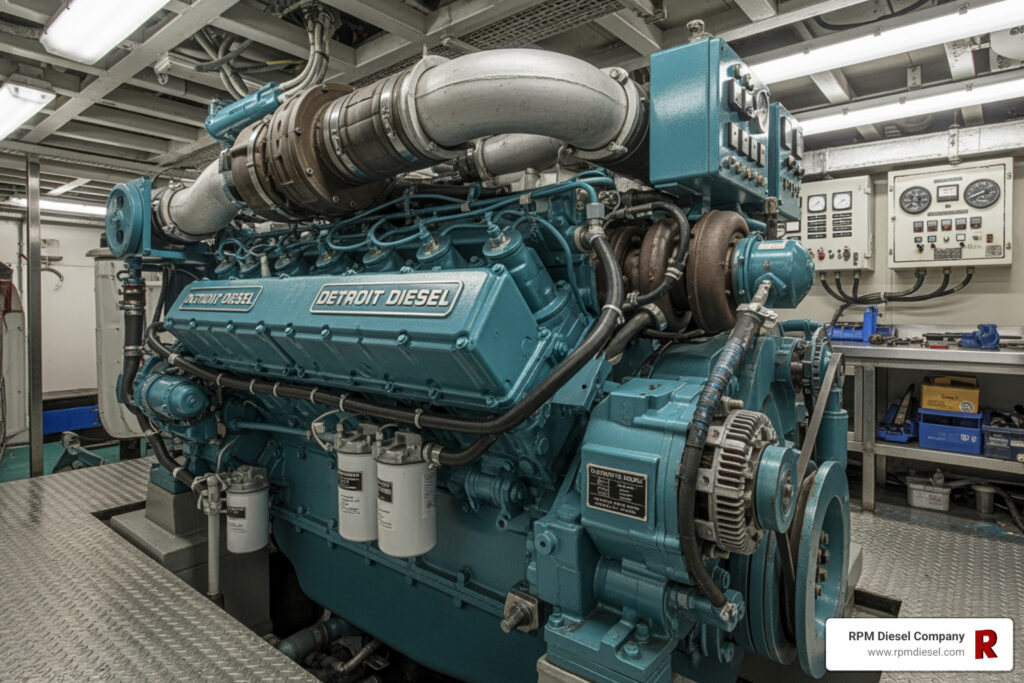
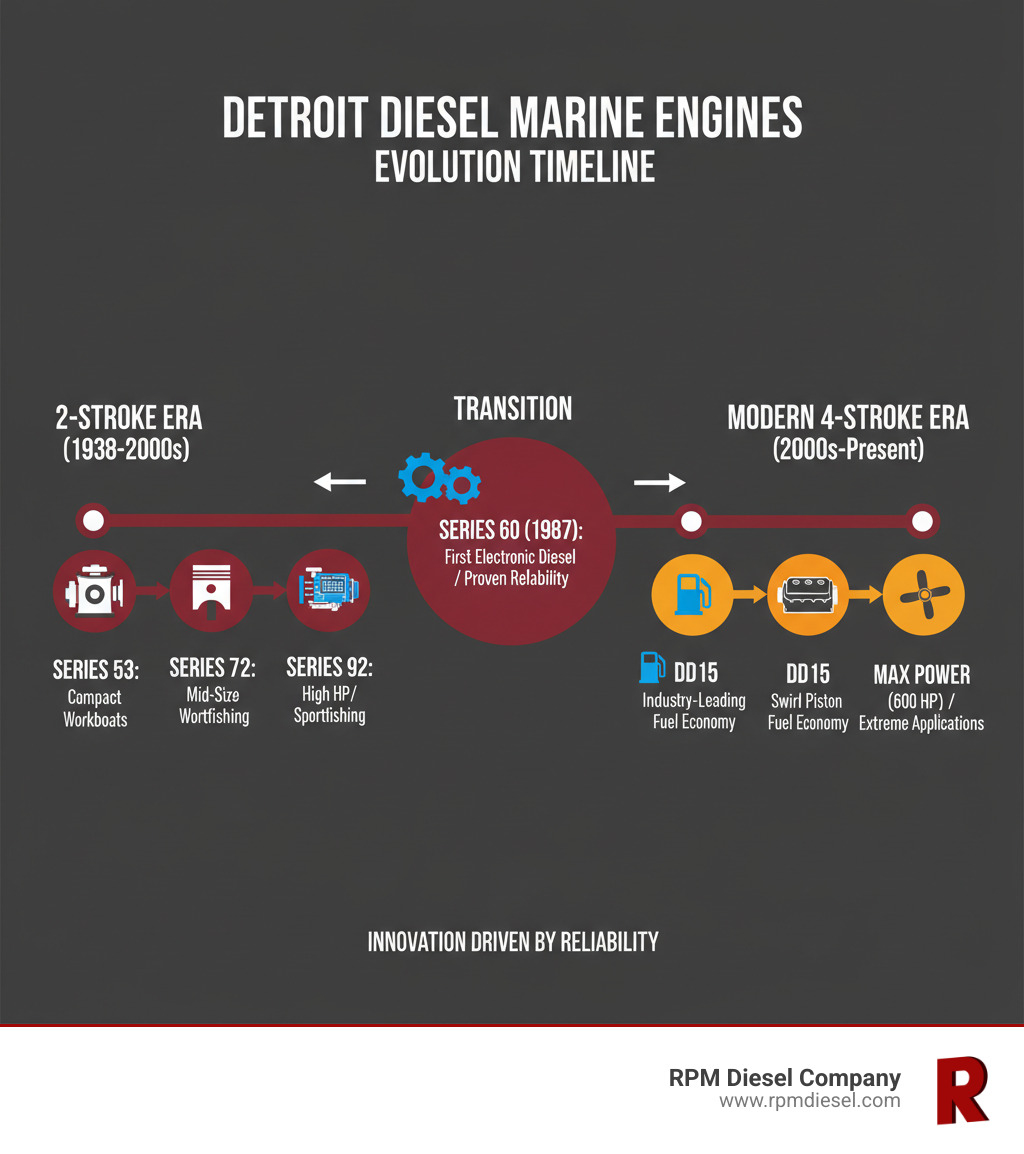
Detroit Diesel engine models have powered marine vessels for over 85 years, from compact pleasure craft to heavy-duty commercial workboats. Here’s a quick overview of the main series:
Legacy Two-Stroke Engines:
- 53 Series – Compact power for smaller vessels
- 71 Series – Most popular for mid-size yachts and workboats
- 92 Series – Higher horsepower for sportfishing and larger boats
- 149 Series – Heavy-duty power for tugs and commercial vessels
Four-Stroke Engines:
- Series 60 – First fully electronic diesel engine, proven reliability
- DD13 – Modern efficiency with swirl piston design
- DD15 – Industry-leading power and fuel economy
- DD16 – Maximum power (up to 600 HP) for extreme applications
Detroit Diesel engines are synonymous with reliability in marine diesel engineering. Founded in 1938 as a division of General Motors, the company played a pivotal role during World War II by powering landing craft and military vessels with compact, lightweight two-cycle engines.
Over the decades, Detroit Diesel has evolved from the legendary “Screamin’ Jimmies” of the two-stroke era to sophisticated modern powerplants. The Series 60 was the first engine in the world to fully use electronic engine controls, revolutionizing the industry. Today’s DD-series engines combine cutting-edge technology with that same heritage of durability.
Whether you’re running a classic yacht with a trusty 6-71 or considering an upgrade to a fuel-efficient DD13, understanding the different Detroit Diesel models helps you make informed decisions about maintenance, parts, and potential repowers.
A Legacy Forged at Sea: The History of Detroit Diesel
The story of Detroit Diesel engine models begins in 1938, when General Motors established the Detroit Diesel Engine Division. What started as a new venture would become one of the most trusted names in marine power—a reputation built not in boardrooms, but on the decks of vessels facing real-world challenges.
World War II became Detroit Diesel’s proving ground. The company’s compact, lightweight two-cycle engines powered thousands of landing craft and military vessels during the war effort. These engines earned their stripes in the harshest conditions imaginable—saltwater, combat zones, and missions where failure simply wasn’t an option. The reliability and robust performance demonstrated during these critical years established a foundation of trust that continues today.
After the war ended, Detroit Diesel turned its attention to civilian markets, and the marine industry welcomed them with open arms. The same durability that powered Allied forces now drove fishing boats, workboats, and pleasure craft. As Motor Boating magazine noted in 1967, “‘Jimmy’ marks a milestone”—referring to the affectionate nickname sailors gave these dependable engines. The 1950s and 60s saw explosive growth, with the company’s collective horsepower output reaching 150 million by 1967.
The Penske era brought renewed energy and innovation. When Roger Penske took over as CEO in 1988, he brought a racer’s mentality to the business—a relentless focus on performance and customer satisfaction. This period saw the introduction of the Series 60, a engine that would change everything. It was the world’s first fully electronic engine, using integrated electronic controls (DDEC) that set new standards for the entire industry.
In 2000, Daimler acquired Detroit Diesel, integrating the company into a global platform for heavy-duty engine development. This partnership brought new resources and technology, leading to the advanced DD-series engines that represent the cutting edge of marine diesel engineering today. From wartime workhorse to modern technological leader, Detroit Diesel has continuously evolved while maintaining the core values of reliability and innovation that defined those first engines back in 1938.
An In-Depth Guide to Marine Detroit Diesel Engine Models
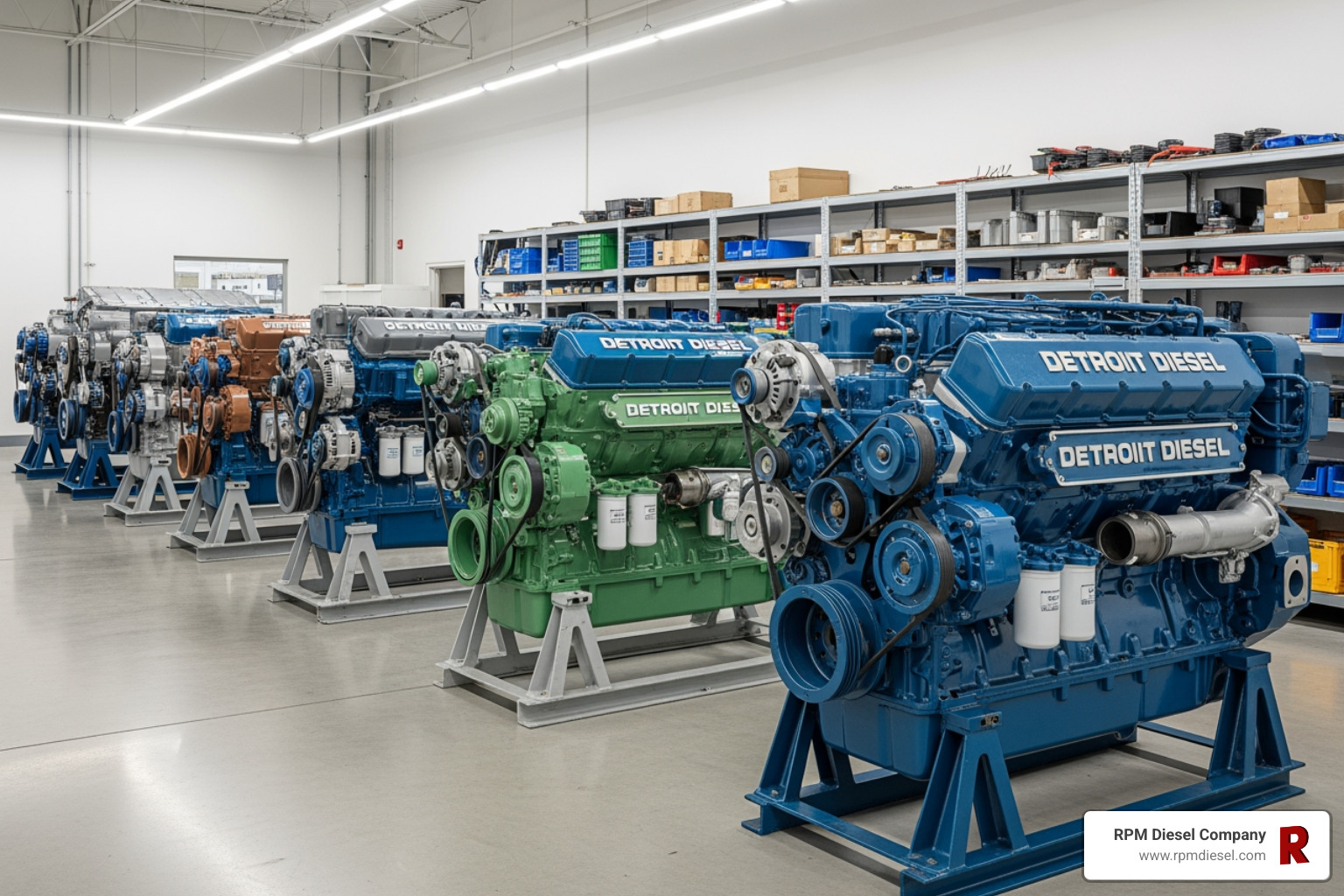
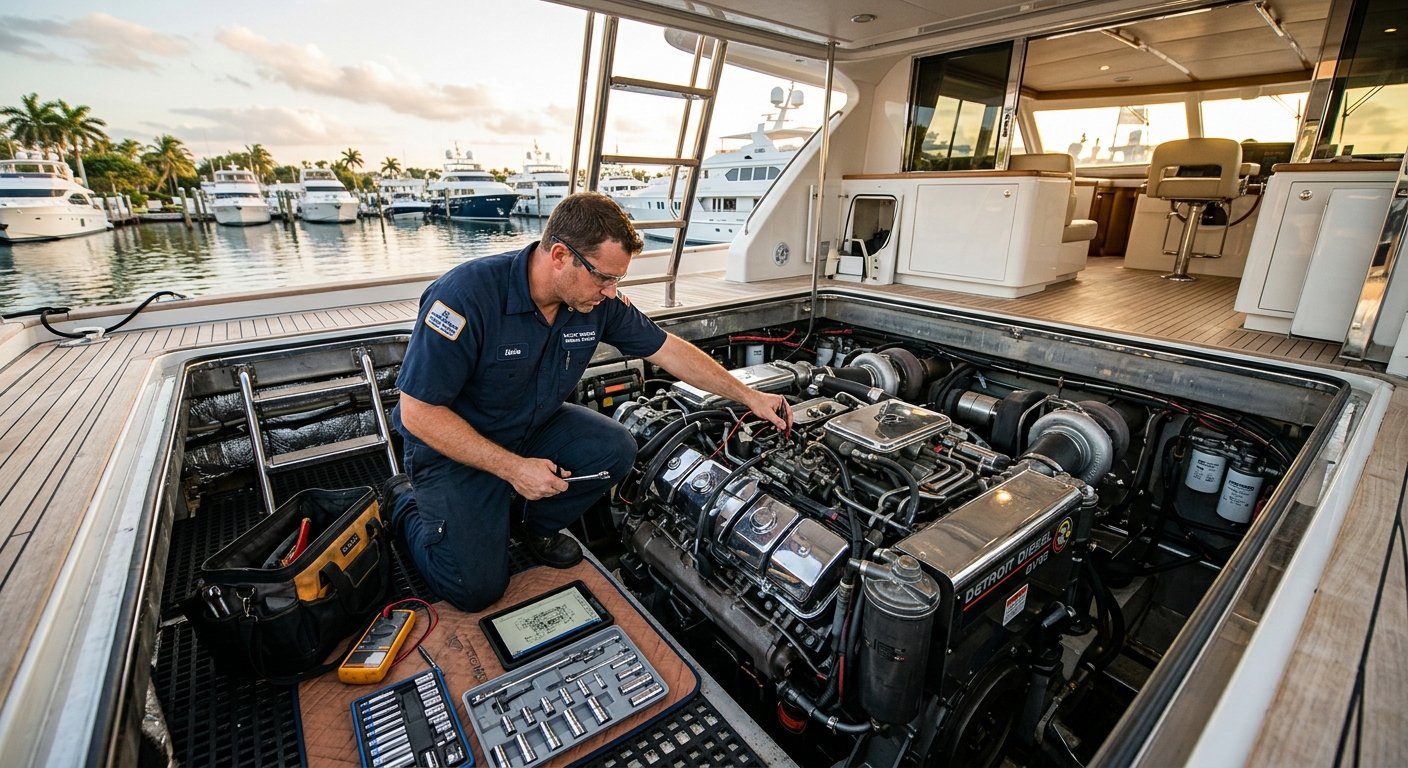
If you’ve spent any time around boats in South Florida, you’ve probably heard the distinctive rumble of a Detroit Diesel engine. Understanding the different Detroit Diesel engine models is like learning a new language—one that helps you make smarter decisions about maintenance, parts, and potential upgrades for your vessel.
The Detroit Diesel family is remarkably diverse, spanning decades of engineering evolution. Each series was designed with specific marine applications in mind, from compact fishing boats to massive commercial tugs. The model number conventions might seem cryptic at first—numbers like 6V-71 or 12V-92—but they actually tell you a lot about what’s under the hatch. The first number indicates how many cylinders, the “V” means V-configuration (versus inline), and the second number refers to the displacement per cylinder in cubic inches.
We’ve worked on everything from classic two-stroke “Screamin’ Jimmies” still powering vintage yachts in the Keys to cutting-edge DD-series engines on brand-new commercial vessels out of Fort Lauderdale. Each engine family has its own personality, strengths, and ideal applications.
Legacy Two-Stroke Marine Powerhouses
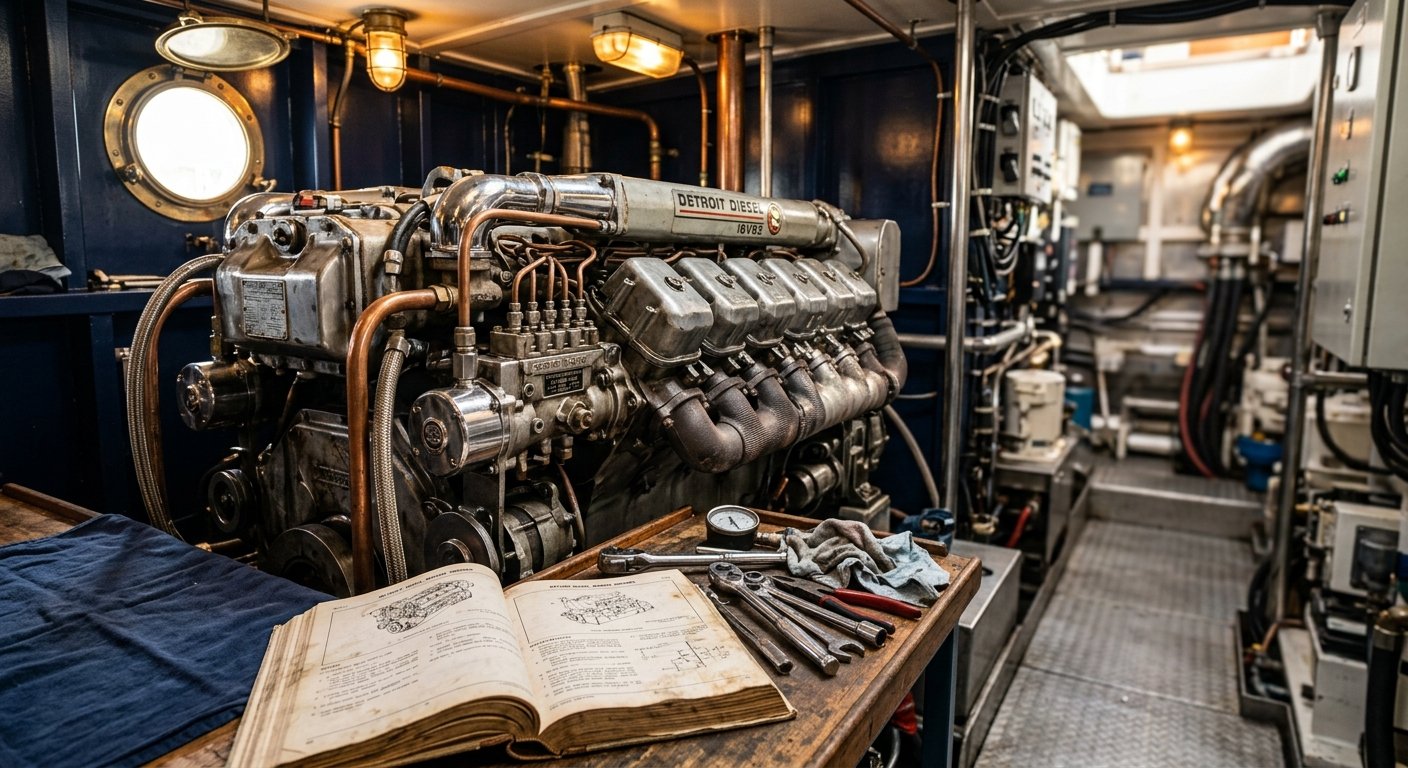
There’s something special about the old two-stroke Detroit Diesels. These engines earned the nickname “Screamin’ Jimmies” for good reason—their distinctive high-pitched sound is unmistakable once you’ve heard it. But beyond the noise, these powerplants built a reputation on simple, robust design and exceptional durability in saltwater environments.
The beauty of these legacy engines lies in their straightforward mechanics. Fewer electronic components meant fewer things to go wrong when you’re miles offshore. Their high power-to-weight ratio made them perfect for marine vessels where every pound matters. Even today, decades after they rolled off the production line, we regularly service two-stroke Detroits that are still running strong throughout South Florida.
The 53 Series was Detroit’s compact offering, providing reliable power for smaller vessels. These engines delivered efficient performance in a lighter package, making them ideal for applications where space and weight were at a premium. Despite their smaller stature, they embodied the same Detroit Diesel principles of durability and ease of service that defined the entire lineup. You can find detailed specifications in the “Series Inline 53 Model Description Chart” and “Series V 53 Model Description Chart”.
The 71 Series became the workhorse of the marine industry. These engines, available in both inline and V-configurations, were absolutely everywhere—mid-size yachts, patrol boats, fishing vessels, and workboats throughout Florida waters. Their popularity wasn’t accidental. The 71 Series struck the perfect balance between power and maintainability. When something needed attention, you could actually work on it without a computer diagnostic system. The “Series V 71 Model Description Chart” provides detailed specifications for these beloved engines.
When boat owners needed more muscle, they turned to the 92 Series. These V-block engines delivered higher horsepower than the 71 Series, making them the go-to choice for sportfishing boats chasing marlin offshore and larger vessels that demanded serious power. The 92 Series maintained that legendary Detroit reliability while giving captains the extra push they needed for speed and heavy loads. We’ve seen these engines take a beating in commercial applications and keep coming back for more. The “Series V 92 Model Description Chart” offers complete details on their capabilities.
For the most demanding heavy-duty marine work, nothing matched the 149 Series. These massive engines were built like tanks, delivering incredible torque and resilience for large workboats, tugs, and ferries. When you needed to move serious weight through challenging seas, the 149 Series was your answer. Their sheer strength made them legends in the commercial marine world. The “Series 149 Model Description Chart” showcases the impressive specifications of these powerhouses.
The Revolutionary Four-Stroke: The Series 60
The Series 60 changed everything. When Detroit Diesel launched this engine in 1987, they weren’t just introducing another powerplant—they were revolutionizing the entire diesel engine industry. This was the world’s first heavy-duty engine to fully integrate electronic controls through the Detroit Diesel Electronic Control (DDEC) system.
That might not sound dramatic, but the DDEC system was genuinely groundbreaking. For the first time, fuel delivery and engine management could be controlled with computer precision. This meant dramatically better fuel efficiency and significantly lower emissions—both huge advantages for marine operators watching their bottom line and environmental impact.
The Series 60 quickly became a favorite in the marine industry, and for good reason. These engines delivered exceptional reliability and remarkably long service lives. We’ve worked on Series 60 engines throughout Fort Lauderdale, Miami, and beyond that are still performing beautifully decades after installation. The combination of electronic sophistication and Detroit’s legendary durability created something special. You can explore detailed specifications in the “Series 60 Model Description Chart”.
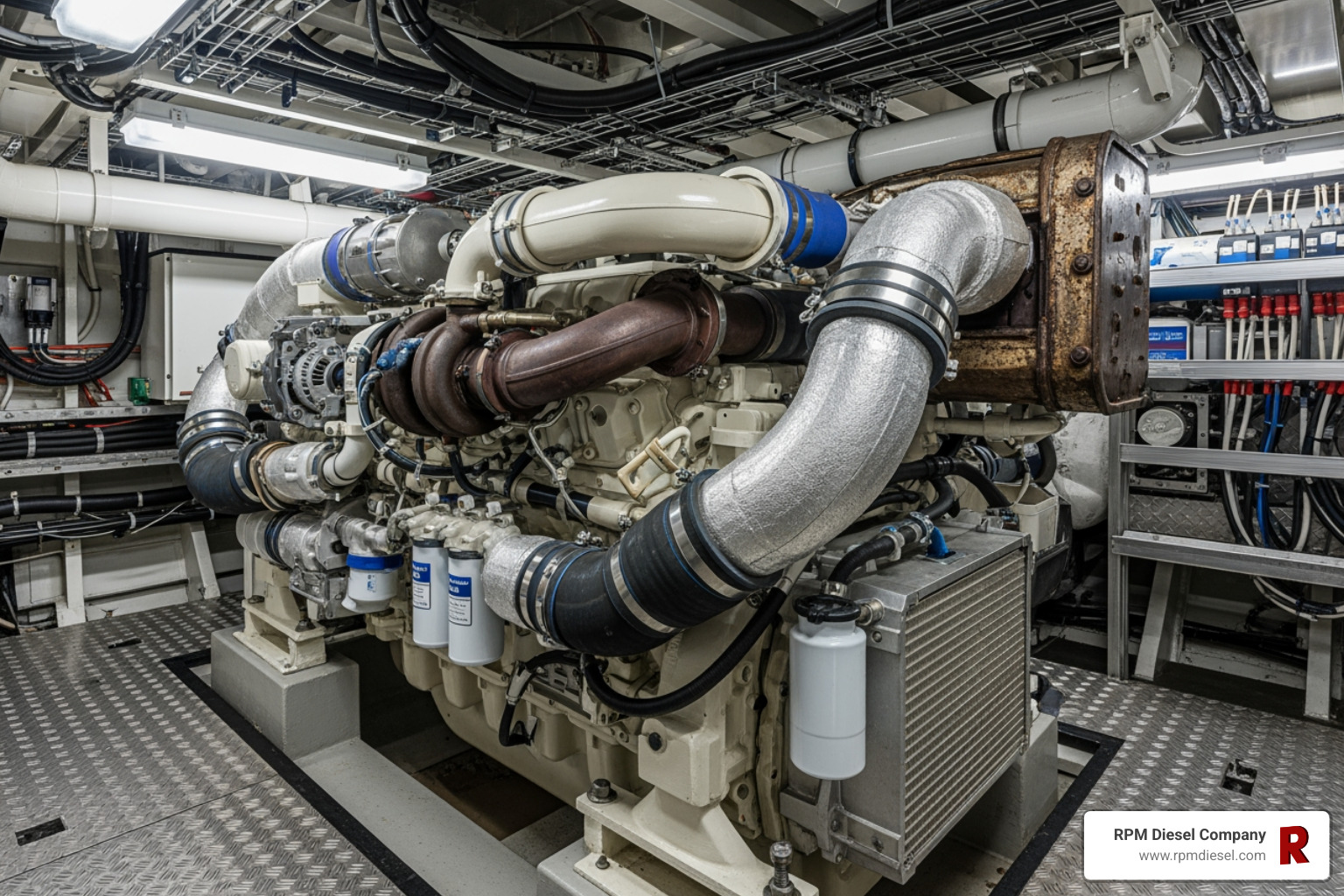
The Modern Era of Detroit Diesel Engine Models
Today’s Detroit Diesel engine models represent the cutting edge of marine power technology. The modern DD-series engines—the DD13, DD15, and DD16—incorporate innovations that would have seemed like science fiction just a few decades ago. Common Rail Fuel Systems deliver precise fuel injection, BlueTec Emissions Technology keeps them clean, and advanced turbocharging extracts maximum performance from every drop of fuel.
These engines meet the latest EPA and CARB emissions standards without sacrificing the power and reliability that made Detroit Diesel famous. You can explore the complete lineup at Detroit Engines | Detroit.
| Model | Horsepower Range | Torque Range (lb-ft) | Displacement (L) | Ideal Marine Application (Approx.) |
|---|---|---|---|---|
| DD13 | 350-505 | 1,250-1,850 | 12.8 | Mid-size yachts, efficient workboats, patrol vessels |
| DD15 | 455-505 | 1,550-1,750 | 14.8 | Large yachts, commercial fishing, coastal freight |
| DD16 | 475-600 | 1,850-2,050 | 15.6 | Heavy-duty tugs, large commercial vessels, offshore support |
The DD13 showcases Detroit’s commitment to efficiency without compromise. Its innovative swirl piston design significantly improves combustion efficiency, while the advanced turbocharger delivers rapid torque response. For marine applications where fuel economy and consistent reliability are paramount, the DD13 makes tremendous sense. It’s an investment that pays dividends through optimized running costs and dependable performance.
When you need serious power, the DD15 and DD16 deliver in a big way. The DD15 achieves superior fuel economy through increased downspeeding—maintaining power at lower RPMs, which is perfect for long-range marine operations. The DD16 is pure muscle, engineered for extreme hauling and the most demanding heavy-duty marine work. With up to 600 horsepower and an impressive 2,050 lb-ft of torque, this powerhouse can handle whatever you throw at it. For large commercial vessels, tugs, or any marine application requiring exceptional strength, the DD16 truly means business.
Legacy vs. Modern: Which Detroit Engine is Right for Your Vessel?
Choosing between a legacy Detroit Diesel engine and a modern DD-series engine for your vessel is a decision that often comes down to balancing initial cost, long-term operational savings, and the specific demands of your marine application. Both types of engines have their distinct advantages, and understanding these differences is crucial. We often help clients in South Florida steer this choice, considering factors like Total Cost of Ownership (TCO), which encompasses everything from purchase price to fuel consumption, maintenance, and parts availability.
Performance, Reliability, and Durability
Detroit Diesel engines, regardless of their era, share a foundational reputation for reliability and durability. Legacy engines, like the 71 and 92 Series, are renowned for their mechanical simplicity. Their robust design makes them relatively easy to repair, and parts for these workhorse engines are often readily available. As Speer noted in Boating magazine in 1989, these engines were “reworking a workhorse,” a testament to their enduring design and the ability to maintain them over decades. They are known for their ability to run for thousands of hours with proper care, a characteristic that has endeared them to generations of marine operators.
Modern DD-series engines, while more complex with their advanced diagnostics and electronic controls, offer a different kind of performance. They are engineered for optimized power delivery, smoother operation, and greater efficiency. Their sophisticated systems allow for precise control and monitoring, often predicting maintenance needs before they become critical issues. While the initial investment might be higher, their advanced technology can translate to superior performance, especially in terms of fuel efficiency and reduced emissions. Both legacy and modern engines maintain Detroit Diesel’s reputation for longevity, though the approach to achieving that durability has evolved with technology.
Fuel Efficiency and Emissions Control in Detroit Diesel Engine Models
The evolution of Detroit Diesel engines clearly illustrates the industry’s progression in fuel efficiency and emissions control. Legacy two-stroke engines, while powerful and reliable, were designed in an era with less stringent environmental regulations. Their fuel consumption and emissions, while acceptable for their time, are higher compared to today’s standards.
The turning point came with the Series 60 and its Detroit Diesel Electronic Control (DDEC) system. This electronic integration was a significant innovation, allowing for much more precise fuel delivery, which in turn improved fuel efficiency and reduced emissions. The Series 60 was a trailblazer, demonstrating that powerful diesel engines could also be cleaner and more economical.
Today’s DD-series engines take this a giant leap further. They incorporate advanced technologies such as common rail fuel injection, variable-geometry turbos, and sophisticated exhaust aftertreatment systems (like BlueTec) to meet the latest EPA and CARB standards. For instance, the DD13 uses a swirl piston design for improved combustion efficiency, while the DD15 is engineered for increased downspeeding, maintaining power at lower RPMs to maximize fuel economy. These advancements mean that modern Detroit Diesel engine models offer exceptional fuel efficiency and significantly reduced emissions, a crucial benefit for long-range cruising and commercial operations in environmentally sensitive areas, including the beautiful waters of Florida. While the company has faced and resolved past issues related to emissions compliance, such as the 2016 settlement for Clean Air Act violations, these incidents underscore Detroit Diesel’s continuous efforts to meet and exceed environmental regulations with its current product lines.
Frequently Asked Questions about Detroit Diesel Marine Engines
Are Detroit Diesel engines good for marine use?
This is one of the first questions we hear from boat owners, and the answer is a resounding yes. Detroit Diesel engine models have earned their exceptional reputation through decades of proven performance in marine applications. These engines are specifically built to deliver consistent power and efficiency over long distances, whether you’re cruising the Intracoastal Waterway or running a commercial operation in open waters.
What sets Detroit Diesel apart is their robust construction and ability to withstand the relentless challenges of saltwater environments. From the legendary two-stroke engines that powered vessels for generations to today’s technologically advanced DD-series, these powerplants are engineered for the unique demands of marine life. Their key strengths lie in fuel efficiency, dependable operation under load, and the kind of reliability that lets you leave the dock with confidence.
We see this in our Fort Lauderdale and Miami operations. Whether it’s a classic yacht with a trusty 6-71 or a modern sportfish with a DD15, these engines consistently deliver the performance marine operators need.
What are the main advantages of choosing a Detroit Diesel engine for marine applications?
When you choose a Detroit Diesel for your vessel, you’re getting more than just an engine—you’re investing in a proven marine power solution. The durability and longevity of these engines is legendary. They’re specifically engineered to handle saltwater’s corrosive nature and the constant vibration of marine use, often providing decades of reliable service when properly maintained.
The versatility across the Detroit Diesel lineup means there’s likely a perfect match for your vessel. Need compact power for a smaller cruiser? The legacy 53 Series or modern DD13 might be ideal. Running a large commercial vessel or tug? The DD16’s massive torque and horsepower are built for exactly that kind of heavy-duty work.
Their reputation for reliability isn’t just marketing talk—it’s earned through real-world performance. Talk to any experienced captain who’s run Detroit Diesel engines, and you’ll hear stories of engines that just keep going, season after season. This track record matters when you’re miles offshore or depending on your engine for your livelihood.
Finally, the service and parts network is a huge practical advantage. In marine hubs throughout South Florida and beyond, finding expert service and maintenance for Detroit Diesel engine models is straightforward. At RPM Diesel Company, we specialize in keeping these engines running at peak performance, and our extensive parts inventory means we can source even hard-to-find components for legacy models. This support network is invaluable when you need service quickly.
How do legacy Detroit Diesel engines compare to the newer DD series engines?
This comparison comes up frequently in our shop, and the answer really depends on what matters most to you and your vessel’s mission. Legacy engines like the 71 and 92 Series are celebrated for their mechanical simplicity and ease of maintenance. These engines were designed in an era when straightforward, robust engineering was paramount. For skilled marine technicians, they’re relatively easy to troubleshoot and repair. Many of these workhorses are still running strong today—some with tens of thousands of hours on them—which speaks volumes about their original design and build quality.
The newer DD-series engines (DD13, DD15, DD16) represent a completely different approach, incorporating the latest diesel technology. They offer superior fuel efficiency, which translates directly to lower operating costs and extended range. Their emissions are significantly lower, meeting modern EPA and CARB standards—increasingly important in environmentally sensitive areas and for commercial operators facing regulatory requirements. The advanced electronic controls provide optimized performance, and while these systems are more complex, they offer precision and predictive maintenance capabilities that weren’t possible with mechanical engines.
While modern DD-series engines have more sophisticated components, their integrated diagnostic systems often make identifying issues faster and more accurate. The choice between legacy and modern often comes down to your priorities: the straightforward, proven reliability of a classic engine that’s been perfected over decades, or the advanced efficiency and technological sophistication of a contemporary powerhouse that can save you money at the fuel dock and reduce your environmental impact.
Both paths have merit, and we work with vessel owners running everything from original 6-71s to brand-new DD15s. The right choice depends on your specific needs, budget, and how you use your vessel.
Conclusion: The Enduring Power of Detroit Diesel
The story of Detroit Diesel is truly remarkable when you step back and look at the full picture. From those unmistakable “Screamin’ Jimmies” that powered countless vessels through the mid-20th century to today’s sophisticated, electronically controlled DD-series engines, this company has remained a constant presence in marine power. What strikes us most, working with these engines day in and day out here in South Florida, is how Detroit Diesel has managed to evolve with the times while staying true to what made them legendary in the first place: uncompromising reliability and durability.
The journey from those simple, robust two-stroke engines to modern technological powerhouses reflects something bigger than just engineering progress. It shows a company that listens to what marine operators actually need. Whether that’s a commercial captain running a tight schedule between Miami and the Keys, or a yacht owner who wants the peace of mind that comes with proven performance, Detroit Diesel has consistently delivered.
Today, there truly is a Detroit Diesel engine model for every marine application you can imagine. Running a classic sportfisher with a trusty 92 Series? Those engines are still going strong, and we’re here to keep them that way. Considering a repower to a fuel-efficient DD13 for those long-range cruises? That’s where modern technology really shines. Operating a commercial vessel that needs the raw power of a DD16? These engines are built for exactly that kind of demanding work.
What we appreciate most about working with Detroit Diesel engines is their proven track record. These aren’t engines that make big promises and fall short. They’re engines that show up, do the work, and keep running year after year. That’s the kind of reliability that matters when you’re out on the water.
For expert service, maintenance, and parts for all Detroit Diesel engine models, trust the specialists at RPM Diesel Company. We know these engines inside and out, we stock the hard-to-find parts you need, and we’re dedicated to keeping your vessel performing at its peak. Whether you’re docked in Fort Lauderdale, cruising off Miami, or anywhere else your marine adventures take you, we’re here to make sure your Detroit Diesel keeps delivering the power and reliability you depend on.